May and June represent the most extreme heat period in Vietnam — outdoor temperatures regularly exceed 39–42°C in the North and Central regions, while the South approaches the final stretch of the dry season before rains arrive. This period is uniquely dangerous for bonsai because peak sunlight intensity, air temperature, and evaporation rates all coincide. If you're unsure how to care for bonsai during this extreme heat, this guide provides a specific care schedule, emergency interventions, and a list of things you should absolutely avoid in the two hottest months of the year.
Why May–June Is More Dangerous Than Any Other Month
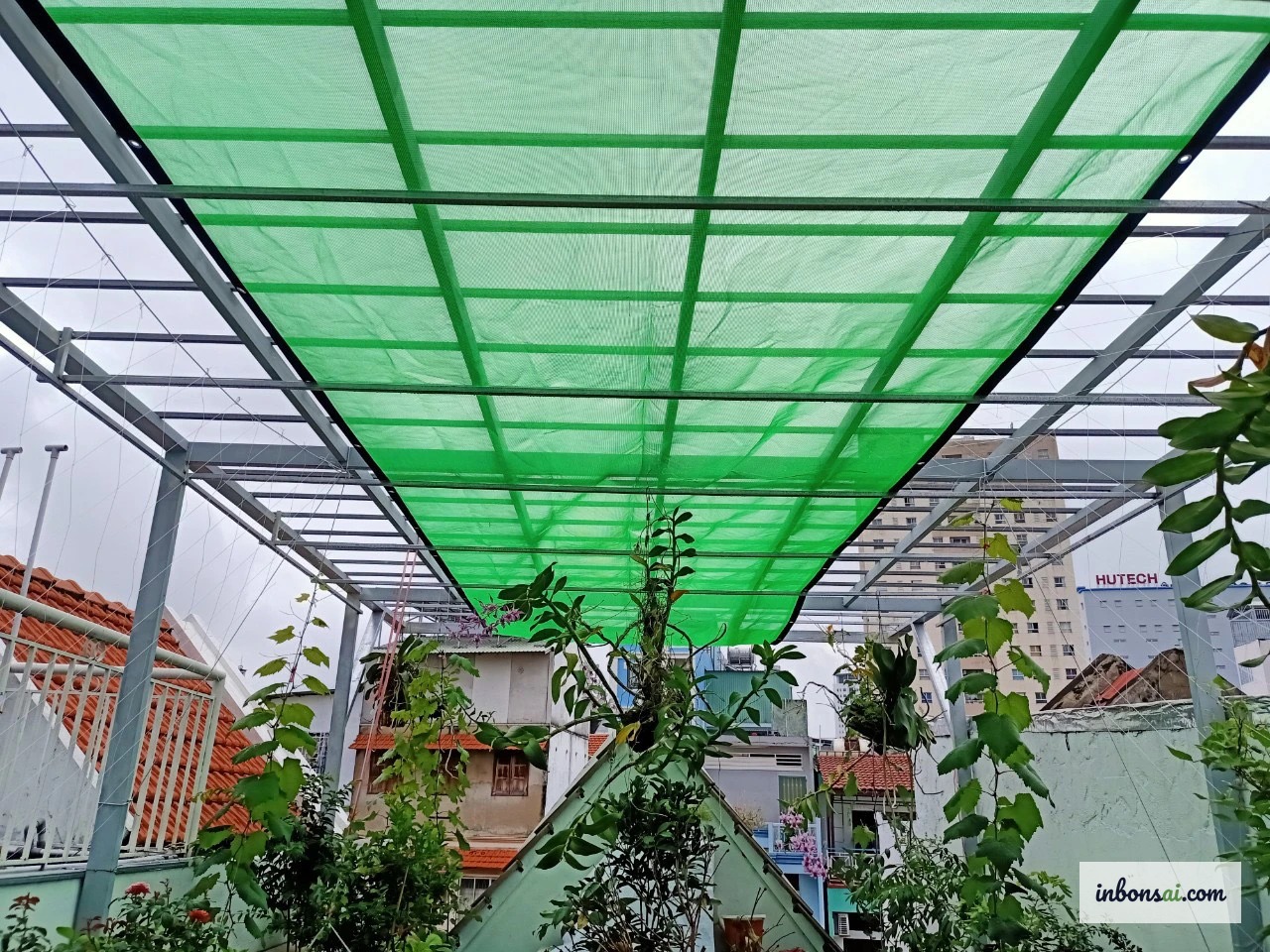
Not all summer months are equal. During May–June, Vietnam experiences peak solar radiation (the longest days of the year) combined with the dry Lao winds that sweep through the North and Central regions. This creates a double threat: high temperatures plus low humidity, which can increase a bonsai's water loss rate 3–4 times compared to March.
What makes bonsai particularly vulnerable is the small volume of soil in their pots. When a pot is exposed to direct sunlight, internal soil temperature can reach 60–65°C — hot enough to kill all feeder roots within hours. A bonsai that has lost its feeder roots cannot absorb water or nutrients, causing it to wilt even if you water it daily.
Additionally, high-intensity direct sunlight in May–June causes sunburn on species with thin leaves, such as juniper, Fukien tea, or Japanese black pine. Burned leaf tissue does not recover and damages both photosynthetic capacity and the tree's aesthetic appeal for the rest of the year.
Adjusted Bonsai Watering Schedule for May–June
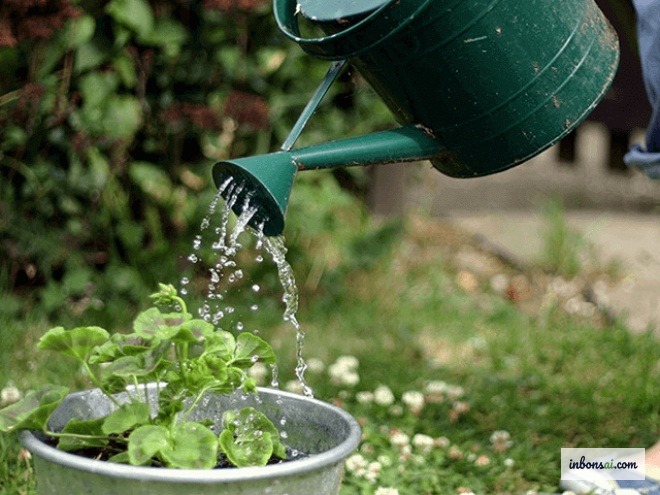
During peak heat days, your bonsai watering schedule needs a complete overhaul from normal months. The fundamental principle is water when temperatures are low and avoid watering during peak heat.
Ideal watering windows:
- 5:30–7:00 AM: First deep watering — soil has dried out overnight and trees need water before the heat begins
- 5:30–7:00 PM: Second deep watering — after temperatures have dropped below 35°C
Strictly avoid watering between 10:00 AM–4:00 PM when the sun is at its strongest. Cold water contacting overheated roots causes thermal shock and opens entry points for fungal pathogens. Additionally, water droplets remaining on leaves in intense sunlight act like a magnifying glass, burning leaf tissue.
On days with Lao winds or temperatures above 40°C, you may need a third watering around 2:00–3:00 PM — but water only into the soil, keeping water off leaves and trunk. For a comprehensive guide on technique, refer to proper bonsai watering methods.
Emergency Shading: Shade Net Types and Correct Installation
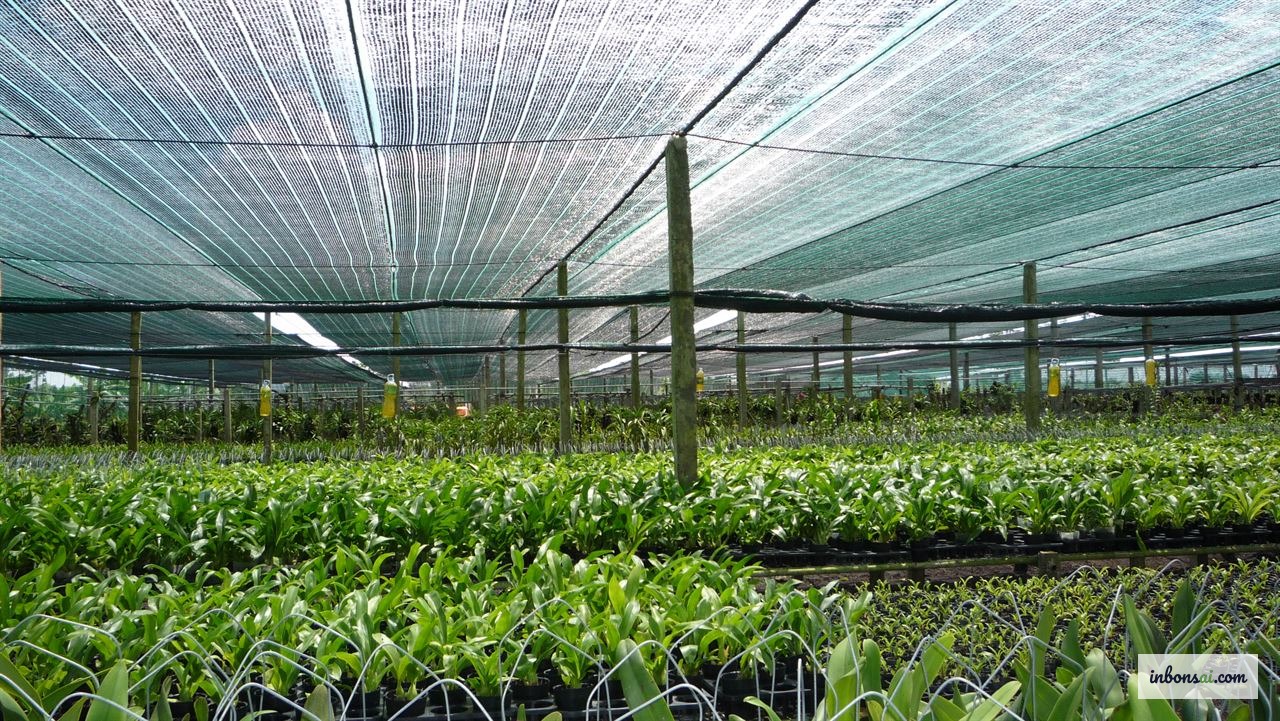
Shading in May–June is not optional — it is mandatory for most bonsai species. However, incorrect shading (too dense coverage, wrong net type) can cause light deficiency and poor air circulation.
Choosing shade net density by species:
- 30–40% shade cloth: For sun-loving species like yellow apricot, Fukien tea, ficus, and ficus retusa — these need ample light but benefit from reduced peak radiation
- 50–60% shade cloth: Suitable for most tropical bonsai species including juniper, Chinese elm, Serissa, and Loropetalum
- 70–80% shade cloth: Only for weak trees, recently repotted trees, or trees recovering from stress
Correct installation: The shade cloth must be stretched at least 40–50cm above the canopy to allow air circulation. Never press netting directly against leaves — the net absorbs heat and transfers it back to the tree. Prioritize shading the western (harshest afternoon sun) and southern exposures.
If shade cloth is unavailable, you can move trees under a roof overhang or large tree canopy between 10 AM and 4 PM, then return them to morning and late afternoon sun.
Fertilizing Adjustments During Extreme Heat
A common mistake is maintaining the standard fertilizing schedule through May–June. When trees are under heat stress, the root system functions poorly — fertilizer isn't absorbed and accumulates in the soil, creating high salt concentrations that burn roots.
Fertilizing principles for May–June:
- Reduce dosage by 50% compared to March–April
- Switch to diluted liquid fertilizer (dilute twice as much as the label recommends) for better concentration control
- Prioritize high-potassium (K) fertilizers to improve cellular heat resistance in leaves
- Suspend fertilizing entirely when temperatures continuously exceed 40°C for 3+ consecutive days
Best timing for fertilizing is right after the morning watering, when soil is moist and temperatures haven't risen yet. Never apply fertilizer to dry soil — it will crystallize and create localized high-concentration zones.
As late June approaches and weather begins to include rain (North) or more regular rainfall (South), gradually restore normal fertilizing volumes. See the general summer bonsai care guide for a full-season fertilizing schedule.
Identifying and Treating Heat Stress Emergencies
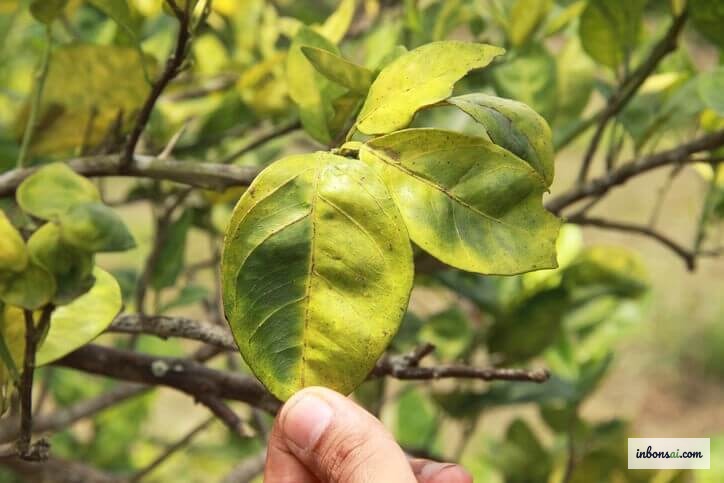
Early identification of heat stress symptoms allows timely intervention before damage spreads. A bonsai experiencing heat stress will show different symptoms depending on severity level.
Mild stress (recoverable):
- Leaves curl inward or droop on hot afternoons but recover by the next morning
- New growth appears soft and wilted
- Rate of new bud emergence slows noticeably
Severe stress (requires immediate action):
- Leaves do not recover overnight — still wilted at sunrise
- Leaf margins or tips turn dry brown (leaf scorch)
- New shoots begin wilting from tips downward
- All new growth shrivels and dries
Emergency treatment protocol when severe stress is detected:
- Immediately move the tree to complete shade
- Water deeply (but do not let the pot sit in standing water)
- Mist the canopy and trunk 2–3 times per day to reduce surface temperatures
- Apply no fertilizer, do no pruning for at least 2–3 weeks
- Monitor for 48–72 hours; if the tree does not recover, examine root condition
Managing Pests Specific to May–June
High temperatures and low humidity in May–June create ideal conditions for spider mite (Tetranychus urticae) outbreaks. Spider mites are the most damaging pest during hot season — they reproduce extremely fast (one generation in just 7–10 days at 35°C) and suck leaf sap, causing discoloration, yellowing, and defoliation.
Identifying spider mites: Tiny yellow speckles on the undersides of leaves; fine webbing between leaves when populations are high. Trees with spider mites typically look dull silver-gray rather than vibrant green.
Prevention and treatment:
- Inspect undersides of leaves weekly throughout May–June
- Use a gentle pressurized water spray on leaf undersides 2–3 times per week to dislodge eggs and nymphs
- For heavy infestations, apply diluted neem oil (5–10ml per liter) in cool evening hours
- Avoid high-concentration chemical pesticides in hot weather — these will cause leaf burn
Mealybugs also commonly appear during hot, dry periods, hiding in branch crevices and at the base of the trunk. For comprehensive pest control planning, see pest management for bonsai in hot weather.
Repotting and Heavy Pruning: Absolutely Avoid in May–June
One of the most common mistakes is repotting or heavy pruning in May–June with the misguided belief that "the tree is thriving." The opposite is true — this is the period when trees are expending all their energy to cope with heat stress, with no reserves left for recovering from wounds.
Do NOT do in May–June:
- Repotting or pot changes (damages roots when the tree is already stressed)
- Pruning more than 20% of the canopy (the tree needs leaves for photosynthesis to maintain energy)
- Wiring branches under stress (wire bites into bark much faster than normal when the tree is weakened)
- Air layering (success rate is very low under hot conditions)
These activities should be scheduled for September–October (after summer ends) or February–March (before summer begins next year). If diseased or dead branches must be removed, do so in the early morning and immediately seal the cut with wound putty.
Weekly May–June Bonsai Care Schedule
For easy implementation, here is a summary of tasks organized by frequency throughout May–June:
Daily:
- Water twice (5:30–7:00 AM and 5:30–7:00 PM)
- Observe leaves and shoot tips for any stress signs
- Check that shade cloth installation is intact
Weekly:
- Inspect undersides of leaves for spider mites and mealybugs
- Apply gentle pressurized water mist to leaves (early morning) to clean dust and parasites
- Verify soil surface isn't crusted over (which prevents water penetration)
- Apply diluted fertilizer once (half normal dose)
Monthly:
- Conduct a comprehensive health assessment of each tree
- Check wiring (if present) for any bark bite-in
- Clean up around pots, remove dead leaves and excess moss
As July approaches and weather begins to include cooling rains or lower temperatures, gradually restore normal care routines. At this point, trees will recover quickly and show strong regrowth after pushing through the difficult stretch.
Caring for bonsai through May and June demands special attention and flexible adjustments for each heat wave. There is no rigid formula that works for every species and every climate zone — what matters most is daily observation, early recognition of abnormal signs, and timely intervention. With the right knowledge of watering schedules, shade setup, and pest prevention, your bonsai can pass through the year's two hottest months in healthy condition and be ready to surge forward into autumn.
Tags
#may-june-bonsai#extreme-heat-bonsai#heat-stress#summer-watering#seasonal-careGet bonsai guidance every week.
Fresh care guides, styling notes, and bonsai inspiration delivered to your inbox.