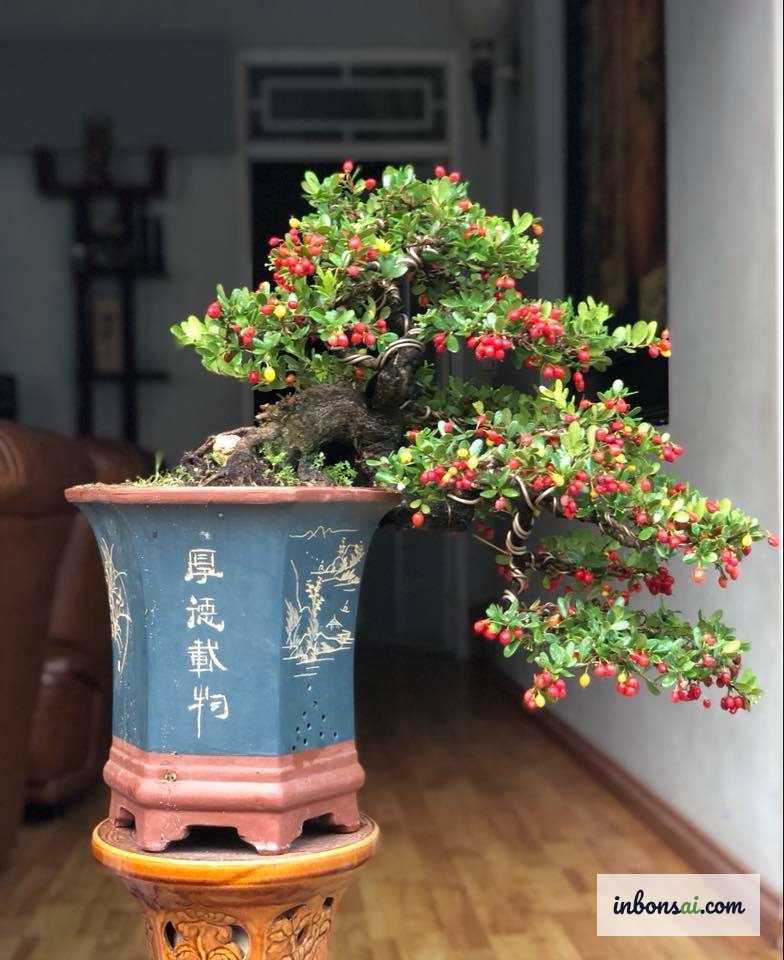
September–October: The Golden Window to Boost Bonsai Growth
As autumn arrives and temperatures begin to cool, September and October are the most critical months for bonsai autumn care. After the heat stress of summer — when many trees enter a semi-dormant state — the cooler weather signals trees to resume active growth, absorb nutrients, and store energy before winter.
In Vietnam's diverse climate zones, autumn looks different by region: the south finishes its rainy season in late September–October, while the north experiences cool, gradually cooling weather from September onward. Adapting your care schedule to local conditions is essential.
Adjusting Watering As Weather Changes
One of the most important adjustments in autumn bonsai care is changing your watering frequency and volume. As temperatures drop and transpiration slows, your tree's water needs shift noticeably.
The key principle: observe the soil rather than following a rigid schedule. When the top 1–2 cm of the growing medium feels dry, it's time to water. In southern Vietnam where October rains continue, reduce supplemental watering and water only on dry days. In the north, once-daily watering typically replaces the twice-daily summer routine.
Always water thoroughly until water drains from the drainage holes — this is the only way to ensure the entire root zone receives adequate moisture. Avoid shallow surface watering that never reaches deep roots.
Autumn Fertilizing: Formulas and Timing for September–October
This is arguably the most important fertilizing window of the year. Bonsai are actively growing after summer dormancy, with hungry roots ready to absorb nutrients and build reserves for winter.
Recommended fertilizer schedule:
- Weeks 1–2 of September: Balanced NPK 10-10-10 or organic pellets (biogold, kanemata) for complete nutrition.
- Weeks 3–4 of September: Shift to potassium (K) and phosphorus (P) heavy formulas — NPK 0-10-10 or 5-10-10 — to encourage root development and harden wood.
- October: Continue K–P focused feeding; reduce nitrogen (N) to prevent tender new growth vulnerable to cold damage.
Frequency: every 2 weeks with organic pellets; weekly with liquid fertilizer diluted to 50% of recommended strength. Never fertilize when soil is bone dry or waterlogged — fertilize when the medium is evenly moist. See also seasonal bonsai fertilizing guide for a complete annual calendar.
Autumn Pruning: Shaping Before Dormancy
September–October offers a brief window for light pruning before the tree enters winter dormancy. This is not the time for heavy structural cuts — the goal is to remove unnecessary growth and refine the overall silhouette.
What to prune in September–October:
- Horizontal, crossing, or awkward-angled branches
- Aging, yellowing leaves beginning to drop
- Overly long summer growth not yet addressed
- Inward-growing branches that block light from interior foliage
What NOT to prune in autumn:
- Major structural branches — save for spring
- Roots or repotting — disrupting the tree while it's storing energy causes unnecessary stress
- The only branch carrying healthy leaves on a small tree
After pruning, apply wound sealant (cut paste) to protect cuts from insects and moisture loss.
Pest and Disease Control in Late Summer–Early Autumn
The transition from summer to autumn triggers pest flare-ups, especially spider mites, mealybugs, and powdery mildew. Inspect the undersides of leaves and branch crotches at least once per week.
Spider mites (peak during late summer heat): spray clean water at moderate pressure on leaf undersides for 3 consecutive days; follow with Abamectin or Milbemite spray if population persists.
Mealybugs: dab with a cotton swab soaked in 70% isopropyl alcohol, or spray diluted neem oil (5 ml/liter water). Repeat after 7–10 days.
Powdery mildew (common in cool, humid conditions): remove affected leaves, spray copper-based fungicide or Tebuconazole, and improve air circulation around the tree.
See also bonsai autumn care guide for a full breakdown of seasonal diseases.
Light and Placement in September–October
In autumn, the sun tracks lower across the sky, delivering more angled light and fewer daily hours of sun. This matters for bonsai placement more than most growers realize.
Most bonsai need 6–8 hours of direct light per day. As days shorten, move trees to more open positions — east or southeast-facing spots capture gentle morning sun without the harsh western afternoon rays.
Shade-tolerant species (magnolia, cycad) can remain in their usual spots. Flowering and fruiting bonsai — yellow apricot, figs, star fruit, kumquat — need full sun to store energy for the upcoming blooming or fruiting season.
Preparing for Winter: What to Do in October
October is the transition month — you're completing autumn growth stimulation while beginning to prepare for dormancy (especially in northern Vietnam). Early preparation helps the tree enter winter in peak condition, avoiding cold shock from sudden drops in temperature.
End-of-October checklist:
- Inspect pots: check for cracks or blocked drainage holes; replace pots if needed — do this in early October, not late.
- Check soil: if heavily compacted or if roots are exiting drainage holes — note to repot in spring.
- Stop high-nitrogen feeding: switch entirely to K–P fertilizer, or stop fertilizing mid-October in the north.
- Prepare windbreaks and frost covers: especially for cold-sensitive species like cedar, arhat pine.
- Keep a care journal: record tree condition, changes made, and spring plans.
For detailed winter protection techniques, read protecting bonsai through northern Vietnam winters.
September–October Action Calendar
| Week | Tasks |
|---|---|
| Week 1 Sep | Inspect for pests; apply balanced NPK; adjust watering to weather |
| Week 2 Sep | Light pruning of excess branches; seal cuts; continue fertilizing |
| Week 3 Sep | Switch to K–P fertilizer; reposition for more light; preventive pest spray |
| Week 4 Sep | Full tree check; record notes |
| Weeks 1–2 Oct | Inspect pot/soil; continue K–P; gradually reduce watering |
| Weeks 3–4 Oct | Stop nitrogen; prepare winter covers; plan spring work |
This schedule is a framework, not a rigid rule. Always prioritize direct observation — each species, climate zone, and individual tree has its own growth rhythm.
Tags
#bonsai care#autumn#seasonal growth#fertilizing#watering#september#octoberGet bonsai guidance every week.
Fresh care guides, styling notes, and bonsai inspiration delivered to your inbox.