Why a Seasonal Fertilizing Schedule Determines Your Bonsai's Health
Fertilizing bonsai by season is more than just providing nutrients — it is the art of synchronizing the tree's physiological needs with the annual weather cycle. Each season, bonsai pass through different growth phases: vigorous growth in spring and summer, energy storage in autumn, and dormancy in winter. Understanding this rhythm lets you apply the right fertilizer, at the right dose, at the right time.
Many beginners make the mistake of fertilizing year-round with the same formula. The result is either nitrogen excess in winter (leading to root rot) or nutrient deficiency in spring when the tree needs it most. A season-based fertilizing schedule solves exactly this problem.
See also our basic guide to bonsai soil selection to understand the relationship between soil and nutrient uptake.
Spring: The Most Critical Fertilizing Season (February–April)
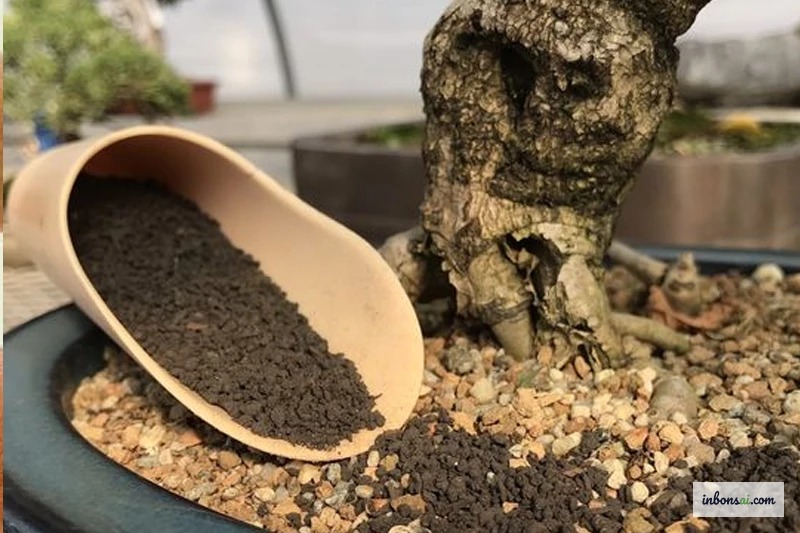
Spring is the golden window for bonsai fertilizing. When temperatures rise above 15°C, roots become active again and the tree demands abundant nutrients to drive new shoots and fresh leaf growth. This is when you focus on nitrogen-rich (N) fertilizer to stimulate vegetative growth.
Recommended spring fertilizers:
- Solid organic pellets (NPK 6-4-4 or 7-3-3): slow-release base fertilizer, safe for tender roots
- Liquid fish/seaweed fertilizer: adds trace elements, stimulates root growth
- Soluble NPK 20-10-10: fast-acting boost when rapid growth is needed
Frequency and dosage:
- February–March: every 2 weeks at 50% of label strength
- April: every 7–10 days at full strength
Important: Do not fertilize immediately after repotting. Wait at least 4–6 weeks for roots to recover before restarting. Damaged young roots are very susceptible to fertilizer burn.
Signs of good spring uptake: deep green new leaves, steady bud development, fresh and bright stem appearance. If leaves are pale yellow or buds grow slower than usual, increase fertilizing frequency.
Summer: Maintain and Adjust for Heat (May–August)
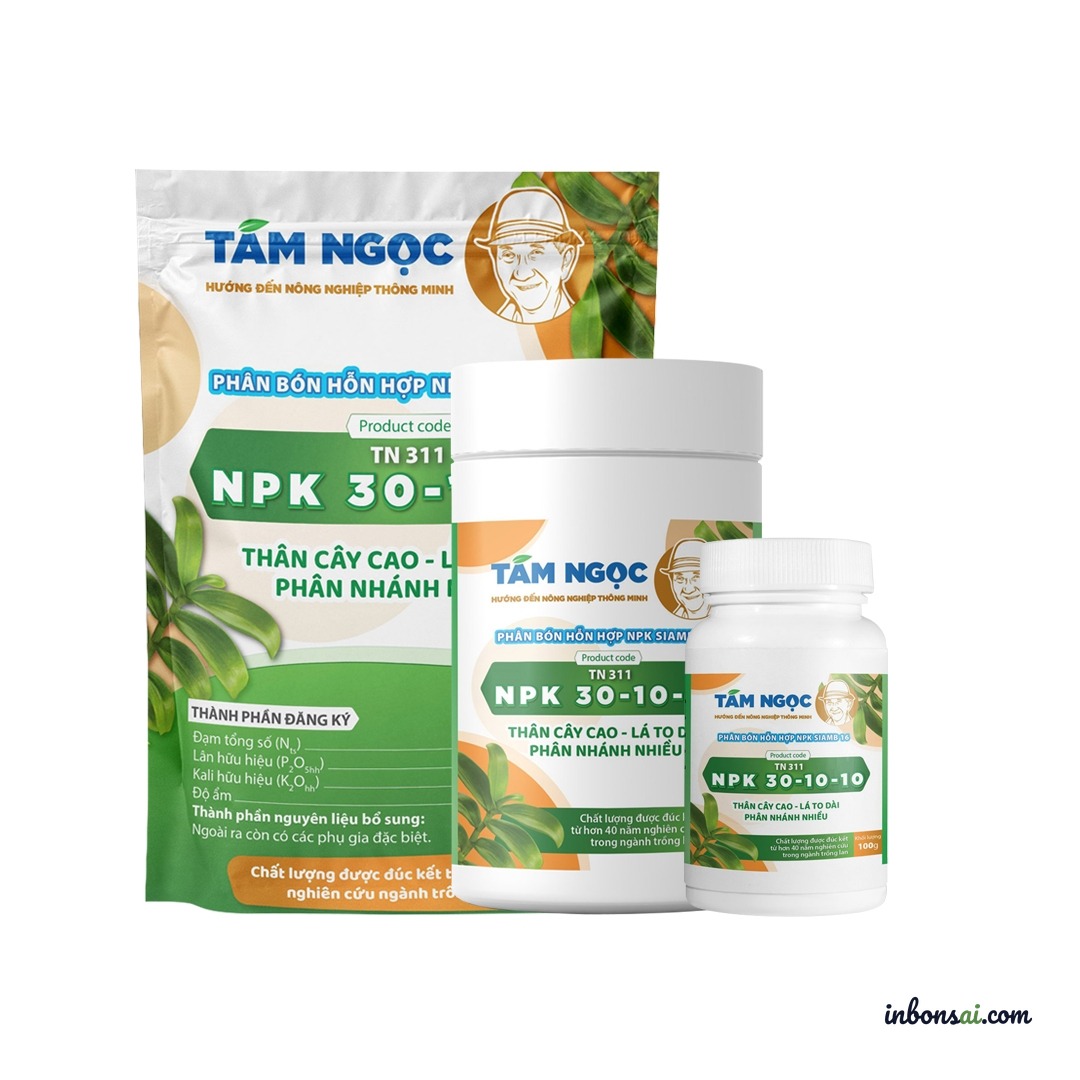
In summer, bonsai remain actively growing but face heat stress. When temperatures exceed 35°C, root nutrient absorption becomes less efficient and the risk of fertilizer burn rises sharply. The summer strategy is to switch to balanced NPK and reduce concentration.
Adjusting the summer fertilizer formula:
- Shift from high-nitrogen NPK (20-10-10) to balanced NPK (10-10-10 or 12-12-12)
- Increase potassium (K) ratio to help trees withstand heat and resist disease
- Supplement magnesium (Mg) via foliar spray to prevent chlorophyll deficiency
Summer frequency:
- May–June: every 10–14 days at 75% strength
- July–August (peak heat): every 2–3 weeks at 50% strength
Summer fertilizing rule: Always water before fertilizing (moist soil prevents root burn), apply in early morning or evening when temperatures are lower. Never fertilize during midday heat.
The article proper bonsai watering technique will help you coordinate watering and fertilizing effectively during the hot season.
Autumn: Preparing for Dormancy (September–November)
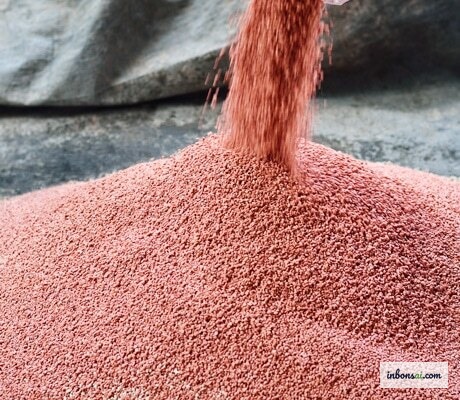
Autumn is a critical transition — bonsai need to accumulate energy reserves for winter rather than continue vigorous growth. The most common mistake at this stage is continuing high-nitrogen fertilizer, which causes the tree to push tender new growth that is vulnerable to cold damage.
Autumn fertilizing strategy:
From September, switch entirely to low-nitrogen, high phosphorus-potassium fertilizer (NPK) such as 0-10-10 or 3-10-10. Phosphorus (P) promotes root development and starch storage. Potassium (K) strengthens cell walls and improves cold hardiness.
Specific autumn schedule:
- September: NPK 5-10-10, every 2 weeks
- October: NPK 3-10-10 or low-nitrogen organic pellets, every 3 weeks
- November: gradually reduce and stop before temperatures drop below 10°C
Natural organic fertilizers for autumn: Decomposed organic cakes (tamahi, autumn/winter biogold) are ideal choices — slow decomposition, gentle nutrition, and no thermal shock to roots as the air grows colder.
For tropical bonsai such as ficus, banyan, or casuarina — species that do not truly go dormant — you can fertilize slightly more but still need to significantly reduce nitrogen from October onward.
Winter: Stop Fertilizing or Continue? (December–January)
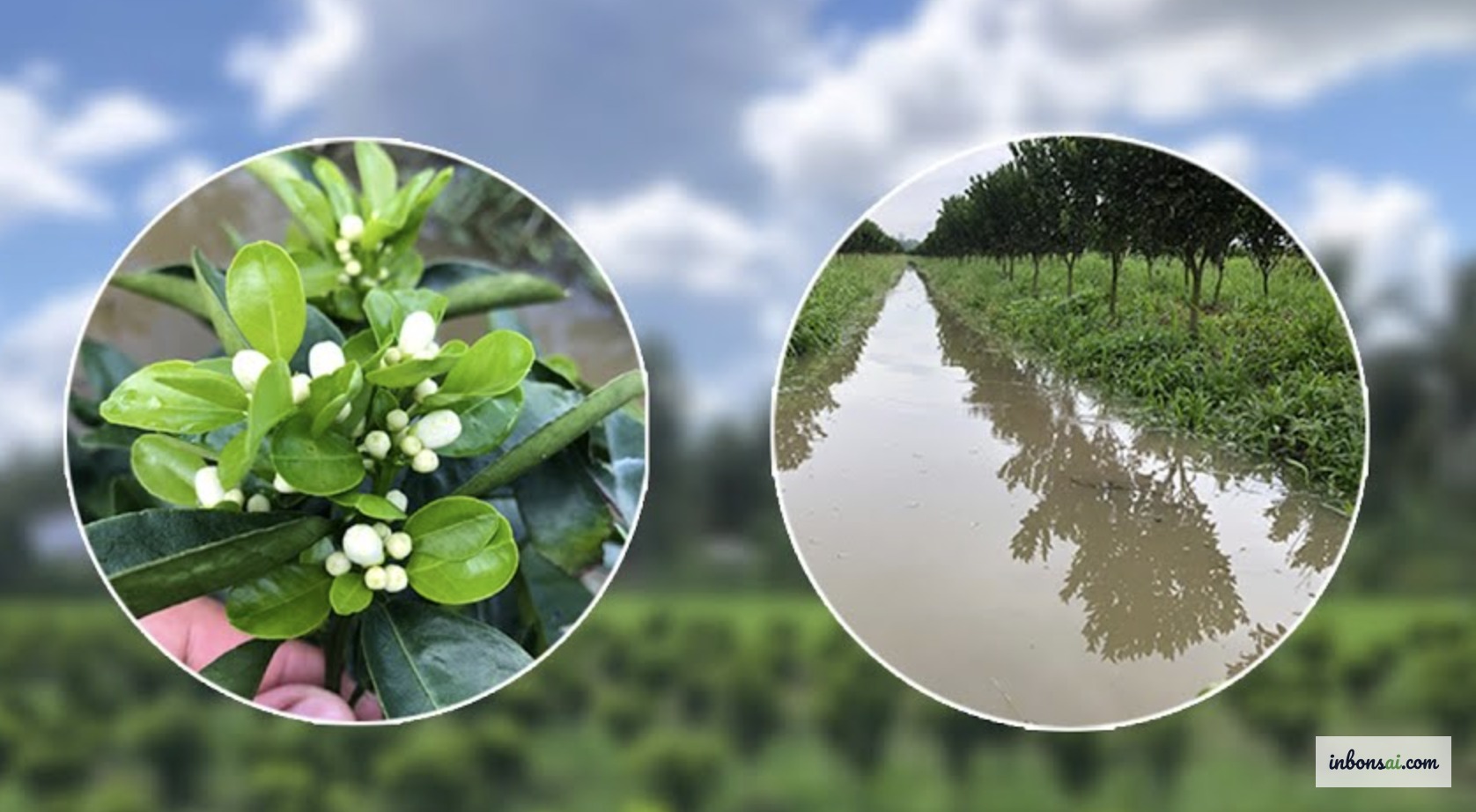
The answer depends on the species and your location. Temperate bonsai (maple, oak, pine, spruce) undergo true dormancy — stop fertilizing completely from December through February. Roots are nearly inactive and cannot absorb fertilizer; residual fertilizer in the soil harms roots instead of nourishing them.
Tropical and subtropical bonsai (ficus, banyan, bodhi, bamboo, hackberry) in southern Vietnam: no true dormancy, but growth slows significantly. Very light fertilizing (1/4 dose) every 4–6 weeks is sufficient.
In northern Vietnam (below 15°C): stop completely from December to February, especially for trees kept outdoors.
Signs you should not fertilize:
- Soil remains wet for extended periods (roots not absorbing water or nutrients)
- No new leaf growth (true dormancy phase)
- Soil temperature consistently below 10°C
The organic "bridge" fertilizer: If your winter is not too cold (15–20°C at night), you can place a few hard organic fertilizer pellets (tamahi) on the soil surface. They decompose very slowly and will begin supplying nutrients when spring arrives — a common technique used by Japanese bonsai enthusiasts.
Choosing the Right Fertilizer for Each Season
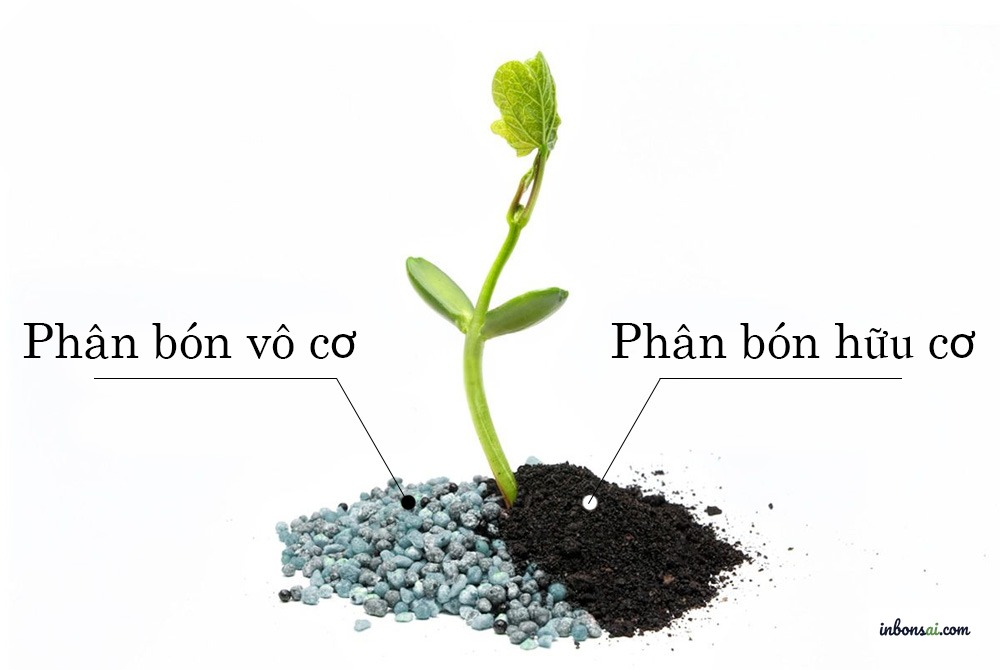
The bonsai fertilizer market is vast and can be confusing for beginners. Here is a practical classification by seasonal use:
Solid organic pellets:
- Biogold Original, Tamahi, Hanagokoro (Japanese brands)
- Slow-release, safe, low shock risk
- Ideal for spring, autumn, and winter "pre-loading"
- Place directly on the soil surface; replace every 4–8 weeks
Soluble NPK fertilizer (liquid):
- Peters Professional, Dyna-Gro, Osmocote Liquid
- Fast absorption, immediate effect
- Best for spring and summer when rapid growth is needed
- Dilute to 50–75% of label strength; apply to moist soil
Foliar spray:
- Trace element solution (Fe, Mn, Zn, Mg) for mineral deficiency
- Spray in early morning, avoid direct sun
- Supplements but does not replace root fertilizing
Golden rule: Prioritize organic fertilizers as a base; combine with soluble fertilizers for quick growth boosts. Avoid relying entirely on chemical fertilizers — they work fast but can compact soil and damage the microbial ecosystem in bonsai soil.
Reading Your Tree — Signs of Over- and Under-Fertilizing
Bonsai will "speak" to you if you know how to listen. Recognizing symptoms early allows you to adjust your fertilizing schedule before serious damage occurs.
Signs of NUTRIENT DEFICIENCY:
- Nitrogen (N) deficiency: yellowing starting from old leaves, slow growth, smaller-than-normal leaves
- Iron (Fe) deficiency: young leaves yellow but leaf veins remain green (chlorosis)
- Potassium (K) deficiency: brown-scorched leaf edges, weak young branches prone to breaking
- Magnesium (Mg) deficiency: leaf veins stay green while surrounding tissue turns yellow
Signs of OVER-FERTILIZATION:
- Leaf scorch, sudden wilting despite moist soil
- White salt crust on soil surface or pot walls
- Black, mushy roots when inspected
- Excessively fast and unruly growth — ruining bonsai aesthetics
How to treat over-fertilization: Flush the soil with 3–4 thorough waterings to wash out excess salts. Stop fertilizing for at least 4 weeks. If roots are badly damaged, consider repotting with fresh soil.
See also how to identify and treat bonsai diseases to combine nutritional diagnosis with comprehensive health checks.
Full-Year Bonsai Fertilizing Calendar — Practical Summary
For easy reference, here is a month-by-month fertilizing calendar for Vietnam's climate (adjust for your region):
| Month | Phase | Fertilizer Type | Frequency | Notes |
|---|---|---|---|---|
| Jan–Feb | Winter → Spring | Light organic pellets | Once/month | Start when temp > 15°C |
| Mar–Apr | Spring | High-N NPK (7-3-3) + liquid | Every 7–10 days | Most critical period |
| May–Jun | Early summer | Balanced NPK (10-10-10) | Every 10–14 days | Reduce to 75% strength |
| Jul–Aug | Peak heat | Balanced NPK, low dose | Every 2–3 weeks | Apply morning/evening |
| Sep–Oct | Autumn | Low-N NPK (3-10-10) | Every 2–3 weeks | Increase K, reduce N |
| Nov | Late autumn | Organic pellets | Once/month | Prepare for dormancy |
| Dec | Winter | Stop or very light | – | Tropical species in South VN only |
This calendar is a foundation — you will need to adjust for your specific species, pot size (smaller pots need more frequent fertilizing), and each year's weather conditions. Observing your tree is the most important skill that no fertilizing schedule can replace.
Tags
#bonsai fertilizing#seasonal bonsai care#fertilizer schedule#organic bonsai fertilizer#bonsai basicsGet bonsai guidance every week.
Fresh care guides, styling notes, and bonsai inspiration delivered to your inbox.