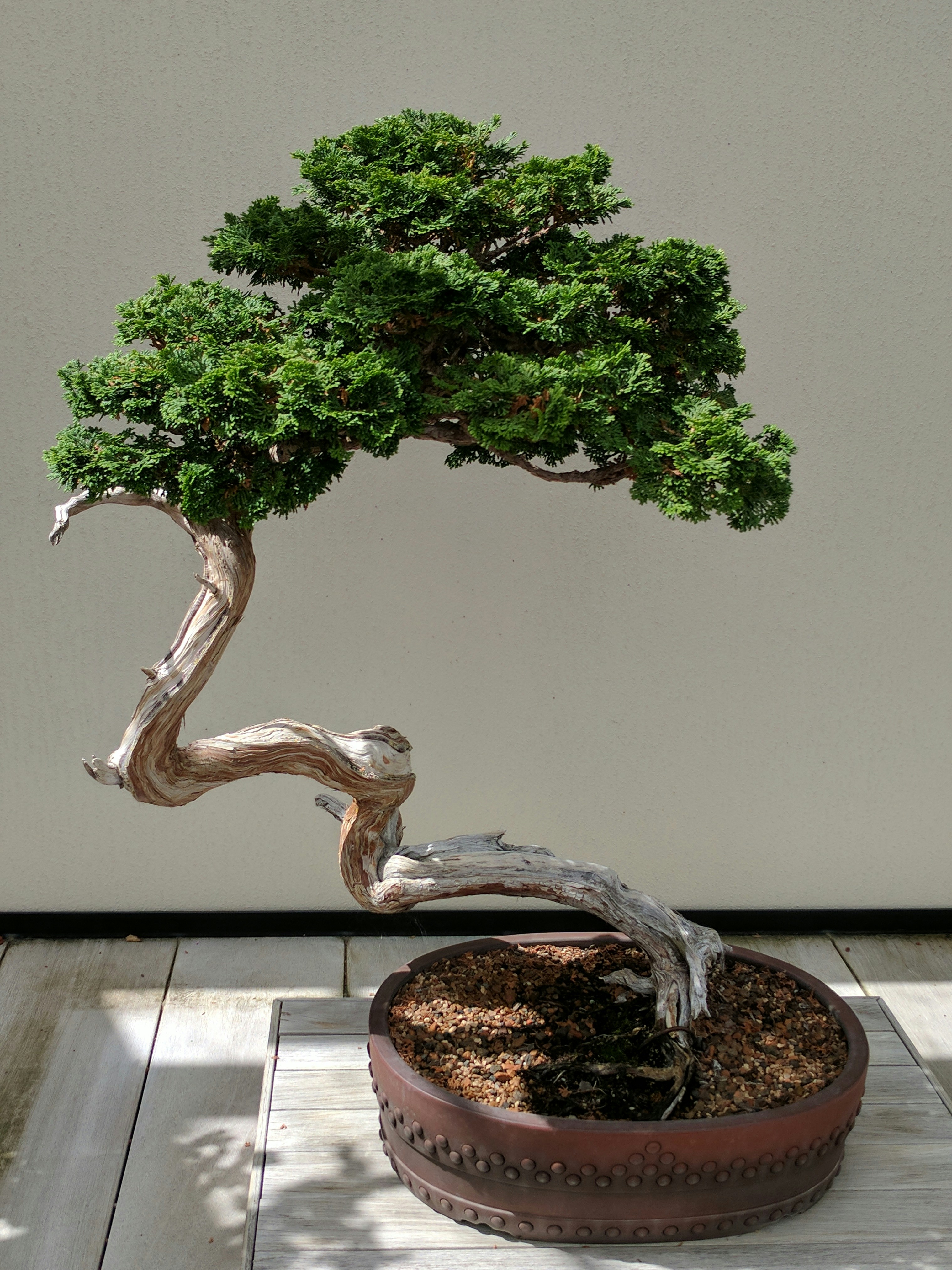
Five Elements and Bonsai: Why Choosing the Right Element Matters
Knowing how to choose a bonsai tree by your Five Elements (Wu Xing) sign is one of the first questions beginners ask when entering the world of bonsai. According to ancient feng shui philosophy, the universe is composed of five forces — Metal, Wood, Water, Fire, and Earth — and every person is born under a specific element determined by their lunar birth year. Placing a bonsai in your home or office does more than decorate a space; it introduces a particular energy current.
When the owner's element and the bonsai species are in harmony, the tree is believed to bring good luck, prosperity, and good health. A mismatched choice, on the other hand, can create conflicting energy that affects the home's overall fortune. This guide will help you identify your Wu Xing element, understand the meaning of each species, and make the best possible choice.
How to Determine Your Five Elements Sign
Before you can choose a bonsai suited to your element, you need to know which element you belong to. The simplest method uses the Heavenly Stems of your lunar birth year.
Each year in the sexagenary cycle carries a specific element:
- Metal: Birth years ending in 0 or 1 (Geng, Xin). Examples: 1980, 1981, 1990, 1991, 2000, 2001.
- Wood: Birth years ending in 4 or 5 (Jia, Yi). Examples: 1984, 1985, 1994, 1995, 2004, 2005.
- Water: Birth years ending in 2 or 3 (Ren, Gui). Examples: 1982, 1983, 1992, 1993, 2002, 2003.
- Fire: Birth years ending in 6 or 7 (Bing, Ding). Examples: 1986, 1987, 1996, 1997, 2006, 2007.
- Earth: Birth years ending in 8 or 9 (Wu, Ji). Examples: 1988, 1989, 1998, 1999, 2008, 2009.
Important note: the lunar calendar typically starts in late January or February (Lunar New Year). If you were born before New Year's Day in your birth year, calculate using the previous lunar year. For example, someone born on January 15, 1985 actually belongs to the lunar year Jia Zi 1984 — the Wood element.
Metal Element: Best Bonsai Choices
People born under Metal are associated with resolve, willpower, and leadership. In the Five Elements cycle of mutual generation, Earth generates Metal — so Metal-element people benefit from trees connected to both Earth and Metal energies.
Best bonsai species:
- Plumeria (Frangipani): White and pale-yellow blooms match Metal's color palette. The tree carries pure, wealth-attracting energy.
- Kumquat (Fortunella margarita): Golden fruit symbolizes Metal directly, bringing outstanding luck and prosperity.
- Columnar Cactus: Upright form and deep green color suit the decisive nature of the Metal personality.
- Chinese Banyan (Ficus microcarpa): Its silver-white trunk markings correspond to Metal's characteristic white and silver hues.
Avoid: Trees with deep red leaves or purely red flowers (Fire element — Metal's conflict). Avoid heavily weeping bonsai styles (too much yin energy).
Place a Metal bonsai in the West or Northwest of your home to amplify positive energy.
Wood Element: Species and Placement
Wood-element people are flexible, creative, and eager to learn — like a tree reaching toward the light. In the generation cycle, Water generates Wood, so Wood-element people do best with moisture-loving species and green and blue-green tones.
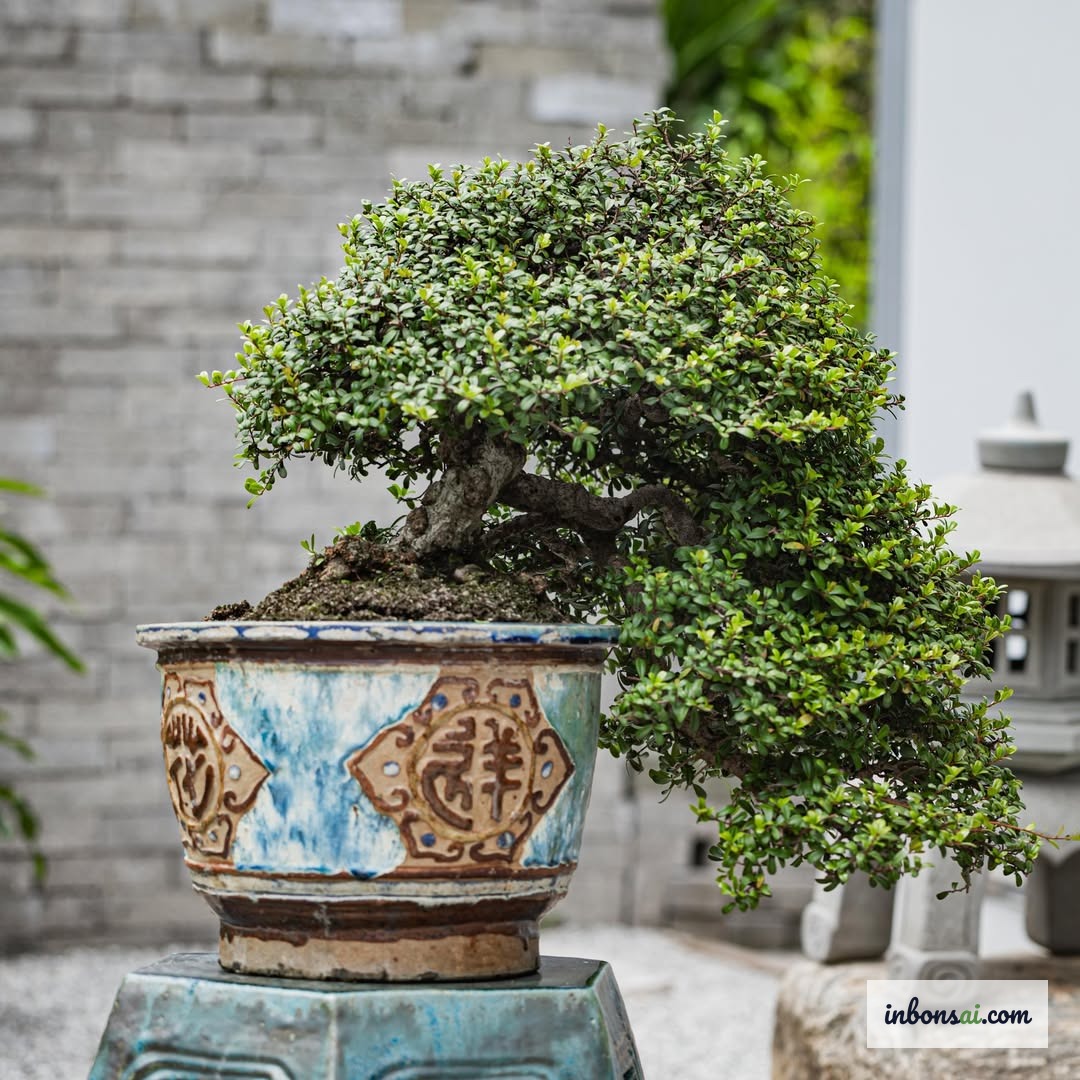
Best bonsai species:
- Bamboo bonsai (Bambusoideae): The classic Wood-element symbol — flexible, long-lived, deep green. Ideal for Wood-element owners.
- Pine (Pinus): Evergreen, straight trunk symbolizing steadfastness. Ancient pine bonsai are highly prized in feng shui.
- Orchid Tree bonsai: Elegant blue-violet blossoms suit the artistic temperament of Wood personalities.
- Weeping Fig (Ficus benjamina): Abundant aerial roots and lush green foliage symbolize vigorous growth.
Pot color: Blue, green, or unglazed brown earth tones. Natural, unfinished ceramic pots work especially well.
Ideal placement: East or Southeast — both directions belong to the Wood element in the bagua. These are also sunrise directions, bringing growth and new-beginning energy.
See our mini bonsai care guide to keep your chosen bonsai healthy after matching it to your element.
Water Element: Pure Water Energy Bonsai
Water-element people are sharp-minded, adaptable, and highly intuitive. Water symbolizes wisdom and flow — Water types do best with moisture-dependent species and deep, dark, or blue-black tones.
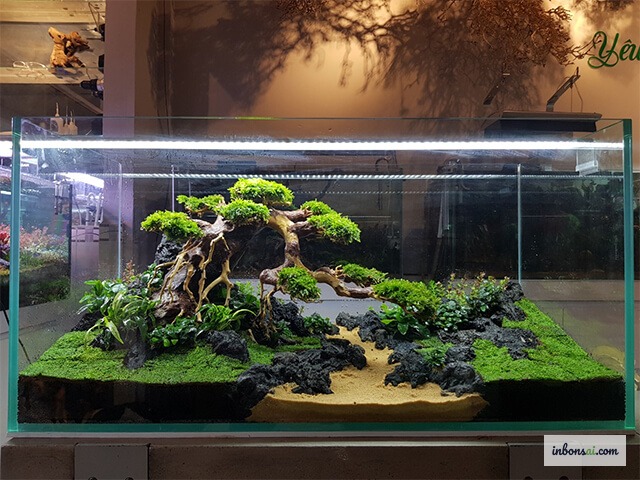
Best bonsai species:
- Sedum/Echeveria shaped bonsai: Succulent, moisture-retaining leaves connect naturally to the Water essence.
- Cluster Fig (Ficus racemosa): A moisture-loving species that grows wild along riverbanks. Deep-red fruit carries an abundance symbolism.
- Streblus asper (Duoi bonsai): Small dark-green leaves, gnarled antiqued trunk. Thrives in humidity, well-suited to Water types.
- Willow bonsai (Salix): Cascading branches mimic flowing water — Willow is a perfect embodiment of the Water element.
Placement tip: Add a water tray or small fish tank near the tree to amplify Water energy. Avoid placing the bonsai near heaters or high-heat areas (Fire conflicts with Water).
Ideal placement: North of the home — the direction belonging to the Water element in the bagua.
Fire Element: Vibrant and Dynamic Bonsai
Fire-element people carry enthusiasm, passion, and the ability to inspire others. Red and orange are Fire's colors — species with brilliant blooms or red foliage are especially well-suited.
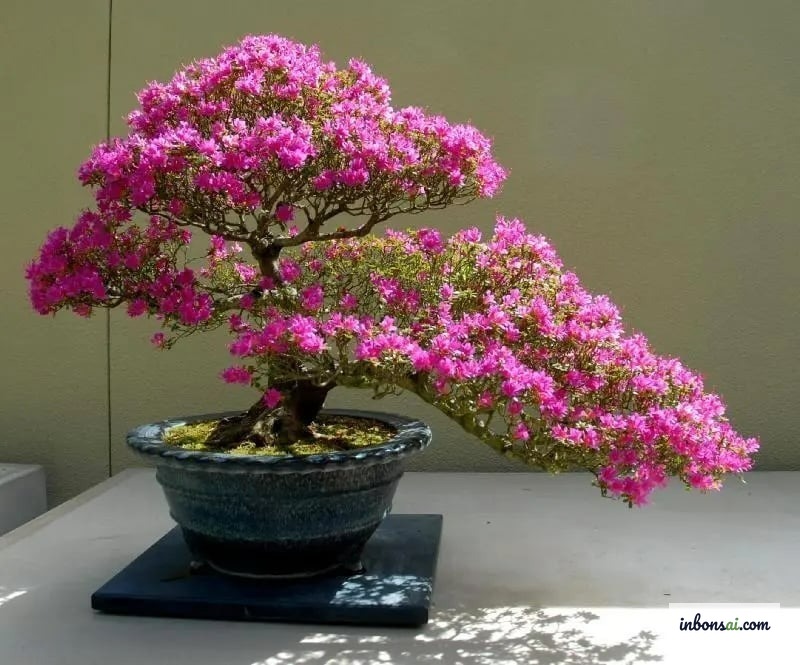
Best bonsai species:
- Miniature plum / rose bonsai (Prunus/Rosa): Deep-red blooms symbolize love and good fortune. Perfect for the passionate Fire personality.
- Pomegranate bonsai (Punica granatum): Vivid orange-red flowers and fruit symbolize a large, prosperous family. Very strong Fire energy.
- Miniature rose bonsai (Rosa): Red or orange blooms match the Fire element perfectly.
- Japanese Maple (Acer palmatum — red leaf): Brilliant red autumn foliage, rare and precious. Extremely powerful Fire energy for those who need to boost vitality.
Pot color: Red, orange, or purple — avoid black and dark blue (Water conflicts with Fire).
Ideal placement: South of the home — the Fire direction, where sunlight is strongest. This simultaneously supports feng shui and the plant's growth needs.
See our bonsai watering technique guide to keep your Fire-element bonsai healthy and vibrant.
Earth Element: Stable and Long-Lived Bonsai
Earth-element people are stable, trustworthy, and skilled at building solid foundations. Earth is associated with land, permanence, and harvest — old-growth woody species with strong root development are especially well-suited.
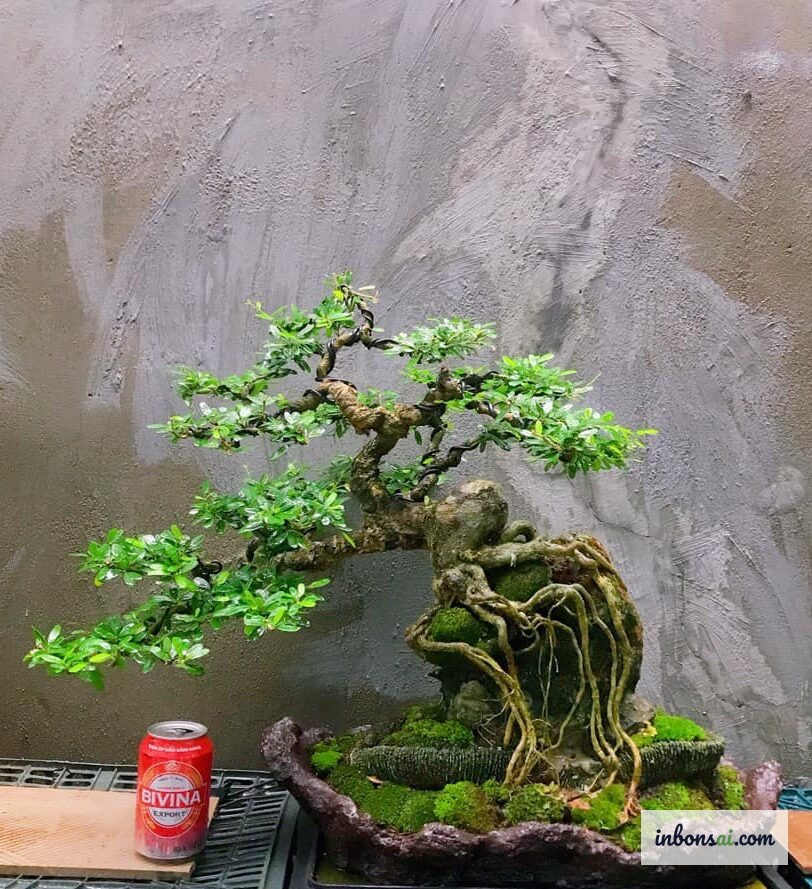
Best bonsai species:
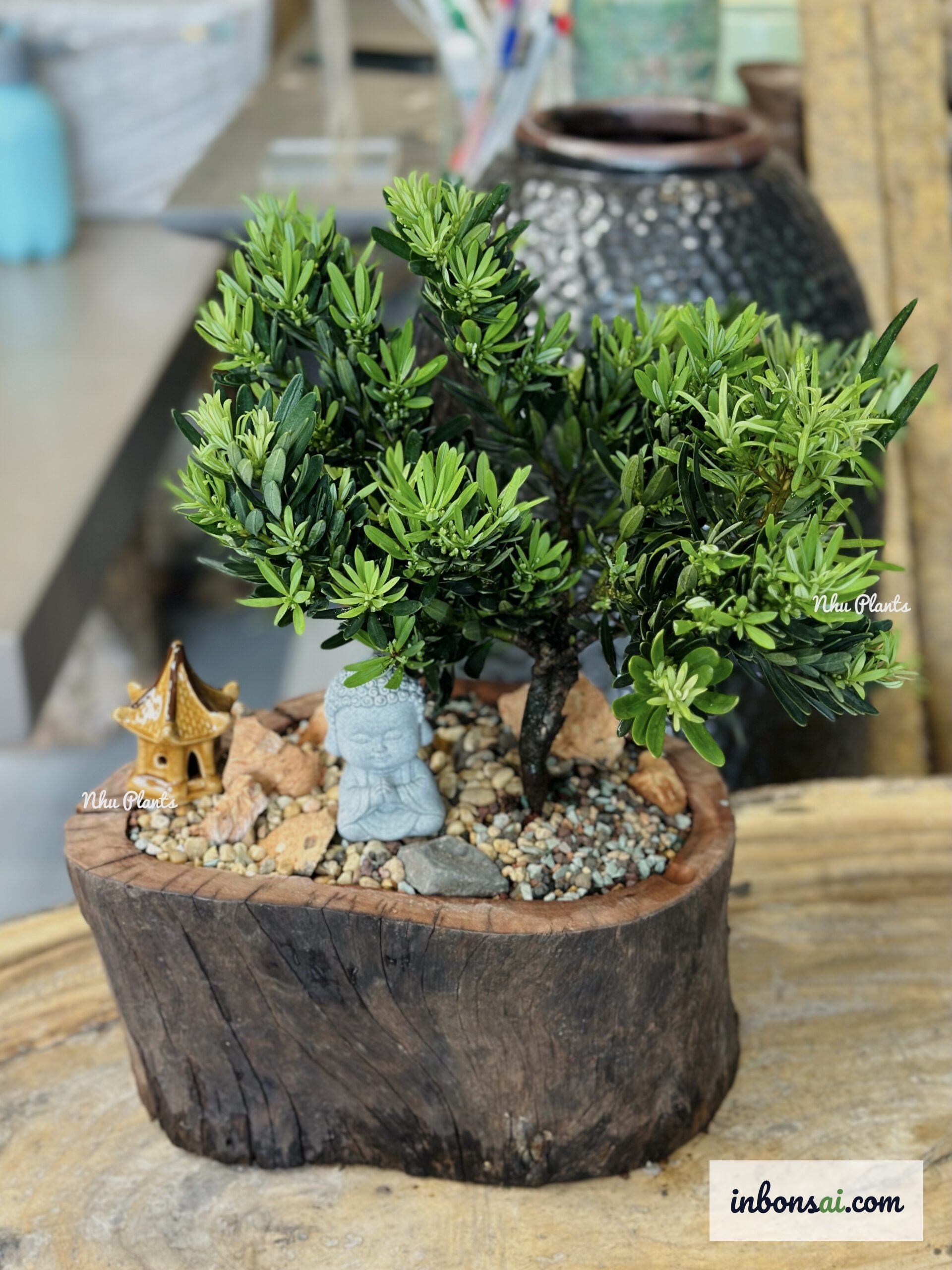
- Buddhist Pine (Podocarpus): Long-lived, solid woody trunk — a perfect symbol of Earth-element durability.
- Banyan (Ficus benghalensis): Strong aerial roots, wide canopy — symbolizes prosperity and family protection.
- Rosewood bonsai (Dalbergia): Rare precious timber with beautiful grain — highly prized in aged bonsai. Very strong Earth energy.
- Wrightia religiosa (Phuong Thuy): Small dark-green leaves, delicately fragrant white blooms — a moisture-loving clay-and-alluvium species.
Pot color: Earth brown, fired-clay yellow, stone gray — natural earth tones.
Ideal placement: Center of the home or Northeast/Southwest corners — bagua directions associated with Earth. Placing bonsai at the living-room center symbolizes a stable family foundation.
Generation and Conflict: The Core Principle for Choosing Bonsai
Understanding the Five Elements' generation and conflict cycles lets you choose bonsai with greater precision and avoid common mistakes.
Generation cycle (mutual support):
- Wood generates Fire → Fire types benefit from green (Wood) trees
- Fire generates Earth → Earth types benefit from red-flowering (Fire) trees
- Earth generates Metal → Metal types benefit from ancient, sturdy (Earth) trees
- Metal generates Water → Water types benefit from silver-leaf, metallic (Metal) trees
- Water generates Wood → Wood types benefit from moisture-loving (Water) trees
Conflict cycle (avoid):
- Metal conflicts Wood → Wood types avoid polished metal pots
- Wood conflicts Earth → Earth types avoid aggressively spreading-root trees
- Earth conflicts Water → Water types avoid desert-dry cacti
- Water conflicts Fire → Fire types avoid shade-preferring trees
- Fire conflicts Metal → Metal types avoid intensely red-flowering trees
A practical tip: if you love a species that conflicts with your element, use a pot in the color of a generating element to neutralize the tension. For example, a Metal-type who loves red-flowering trees (Fire) should use a yellow-earth pot (Earth) as a bridge, because Earth generates Metal and Fire generates Earth.
Also see our feng shui bonsai by birth year guide to combine zodiac factors with your Five Elements choice.
Practical Tips When Buying a Feng Shui Bonsai
Choosing a bonsai suited to your Five Elements sign is only the beginning — the tree's condition at the time of purchase and how you display it matter just as much.
What to look for when buying:
- Healthy, pest-free tree: A wilting, yellowed tree — even one matching your element — carries negative yin energy. Choose a tree with vibrant green leaves and a firm trunk.
- Balanced proportions: The canopy shouldn't be excessively dense on one side. An unbalanced bonsai symbolizes imbalance in the household.
- Stable roots: Roots shouldn't be excessively exposed or unusually protruding. Firm roots symbolize a stable financial foundation.
- Matching pot: As discussed, pot color should support or be neutral to the owner's element.
- Harmonious size: A tree too small for its space looks energetically weak. Too large feels oppressive. An ideal ratio is a tree height about two-thirds the height of its display space.
Best time to buy and place bonsai: Lunar months 1–3 (spring) are considered the period of strongest heaven-and-earth energy — purchasing bonsai then helps the tree adapt quickly and thrive.
For beginners, the most practical advice is this: choose a species that matches your element AND one you can actually care for in your home's conditions. A healthy, well-tended bonsai always generates better energy than a perfectly matched species that's slowly dying.
Tags
#five elements#feng shui#choose bonsai#wu xing#metal bonsai#wood bonsai#water bonsai#fire bonsai#earth bonsai#beginnersGet bonsai guidance every week.
Fresh care guides, styling notes, and bonsai inspiration delivered to your inbox.