When you're starting out in bonsai, one of the most common questions isn't "which tree should I pick?" — it's: which bonsai pruning scissors are good enough without costing a fortune? Using the wrong type of scissors, or a poor-quality pair, can crush branches, leave ragged wounds, and even expose the tree to disease. On the other hand, buying the right affordable scissors means every cut is clean and precise. This guide walks you through each type, what to look for, and how to care for your shears so they last.
How Bonsai Pruning Scissors Differ from Regular Scissors
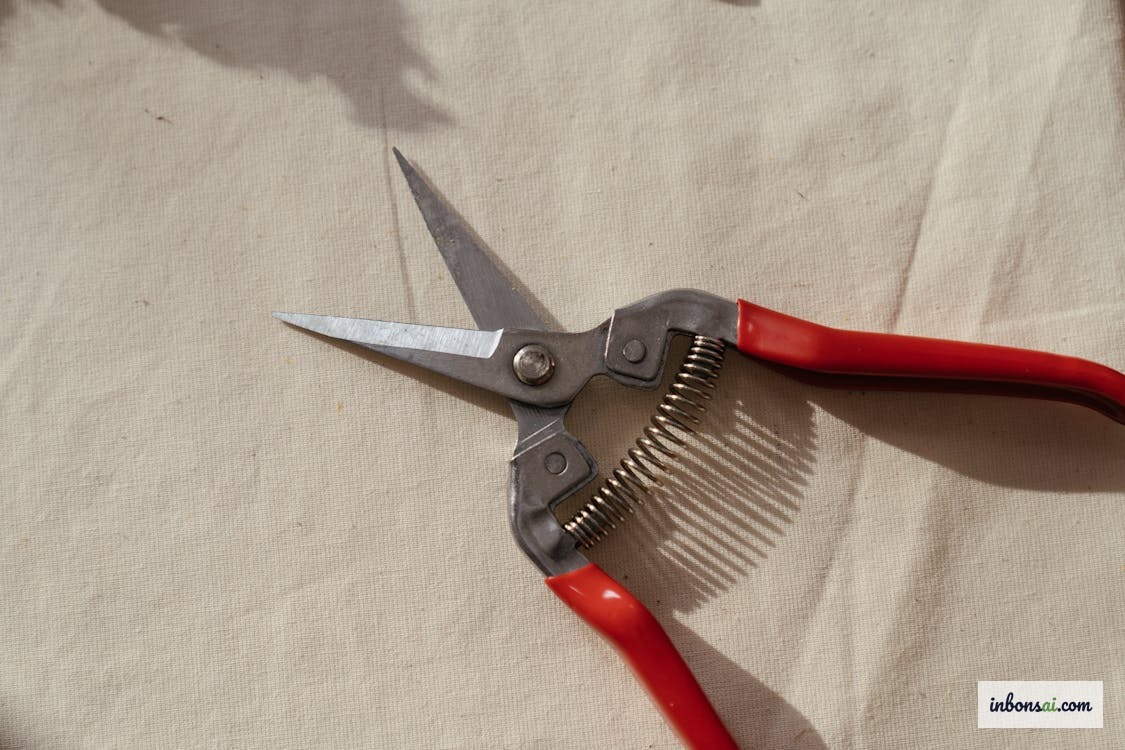
Bonsai scissors are engineered specifically for the precision demands of trimming small ornamental trees. Their blades — typically made from high-carbon steel or stainless steel — are ground to a finer angle than household scissors, enabling a single clean cut rather than a crushing motion. This matters because clean cuts heal faster, reducing the risk of fungal infection at the wound site.
The handle geometry is also purpose-built: large finger rings (sized for the ring finger and thumb) allow extended work sessions without fatigue. Regular scissors — sewing shears, kitchen scissors — have thicker blades and a different grind angle that tends to crush branch tissue rather than sever it cleanly. If you've ever tried trimming a bonsai with kitchen scissors and noticed the ends of branches looking brown or split, that's why.
Most bonsai scissors also feature an adjustable pivot screw so you can dial in the tension to match the thickness of the branch you're cutting — lighter tension for fine foliage, firmer tension for woody stems.
Types of Bonsai Pruning Scissors
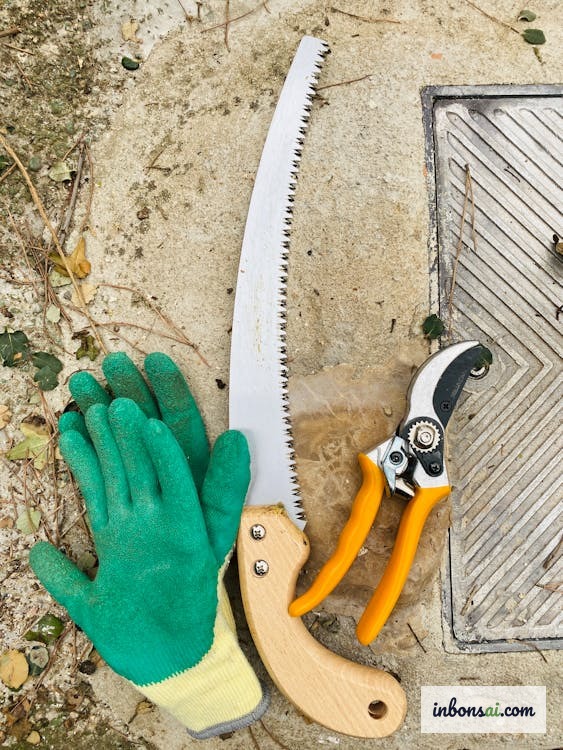
There are five main types of bonsai scissors, each designed for a different job:
1. Leaf Trimming Scissors (Hasami): Slim, straight-bladed, and lightweight — used for cutting leaves, buds, and branches under 3mm. This is the most commonly used bonsai scissors type and typically the most affordable entry point.
2. Branch Scissors (Bud Scissors): Thicker blades than leaf scissors, designed for branches 3–8mm in diameter. This is the workhorse of a bonsai tool kit for general pruning.
3. Concave Cutters (Knob Cutters): Shaped with a curved, concave blade profile that removes flush or slightly recessed cuts. When a branch is removed close to the trunk, the wound heals flat — no unsightly lump. These are essential for clean trunk work and cannot be replaced by regular scissors.
4. Root Scissors: Short, sturdy blades built for cutting roots during repotting. You can substitute branch scissors, but root scissors hold up better to soil grit that dulls regular blades faster.
5. Wire Cutters / Jin Pliers: Not scissors in the traditional sense, but often sold in beginner sets. Used to cut aluminum training wire cleanly without damaging bark.
For more detail on how each type is used in practice, check out the guide on basic bonsai branch pruning technique to understand which scissors fit which task.
What to Look for When Buying Budget Bonsai Scissors
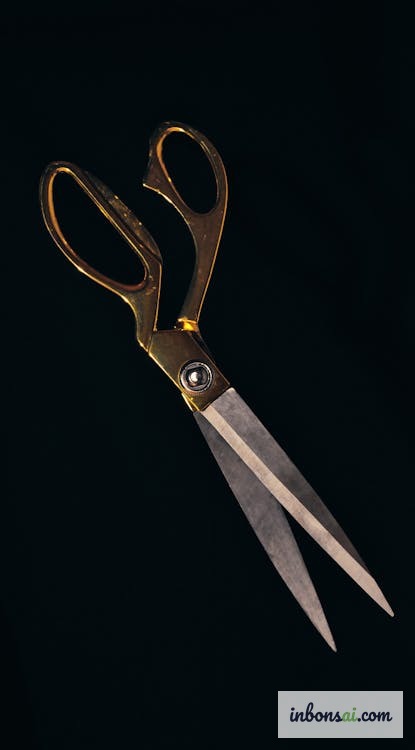
Expensive doesn't always mean better — many affordable bonsai scissors perform well for years when you know what to check:
Blade material: Prioritize high-carbon steel or genuine stainless steel. Carbon steel holds a sharper edge but needs more maintenance. Stainless is lower-maintenance, making it practical in humid climates. Avoid chrome-plated or "stainless" scissors priced suspiciously low — these are often plated mild steel, not true stainless.
Blade thickness: Hold the scissors open and look along the blade edge. A good blade will have an even, consistent taper. A thick or uneven blade will crush rather than cut cleanly.
Pivot and adjustment screw: Open and close the scissors several times — the pivot should move smoothly without wobbling or binding. The tension screw should be easy to adjust with a small flathead screwdriver.
Handle fit: If buying in person, always hold the scissors first. The rings should fit your fingers without being too snug or too loose. Many budget scissors use ABS plastic handles — perfectly fine for beginners; professional-grade scissors often use forged steel handles.
Reputable budget brands: Japanese brands like Kaneshin, Yoshiaki, and Ryuga are excellent but expensive. In the budget tier, Chinese-made sets sold on Amazon or bonsai specialty stores under brands like KINBON or unnamed "Japanese-style" sets can be adequate if you verify the steel grade in the product description.
Budget Bonsai Scissors Under $15: What to Buy
At this price point, don't expect 10-year Japanese longevity — but you'll get 1–3 years of solid practice use:
2-piece set (leaf scissors + branch scissors): The most practical starter purchase. Look for sets that specify "carbon steel" or "stainless" in the product listing, not just "high quality metal." At this price, aim for a set with adjustable pivot screws — they'll stay usable far longer than fixed-pivot designs.
Single leaf trimming scissors: If budget is very tight, start with just a single pair of leaf trimming scissors ($5–8). This is the tool you'll use most often, so it's worth spending a little more here than on the branch scissors.
Tip for online shopping: Always check customer-uploaded photos — particularly close-up shots of the blade. User photos are much more honest about actual blade quality than seller images. Look for reviews that mention longevity (still sharp after 6+ months).
Mid-Range Bonsai Scissors ($20–$50): Worth the Upgrade?
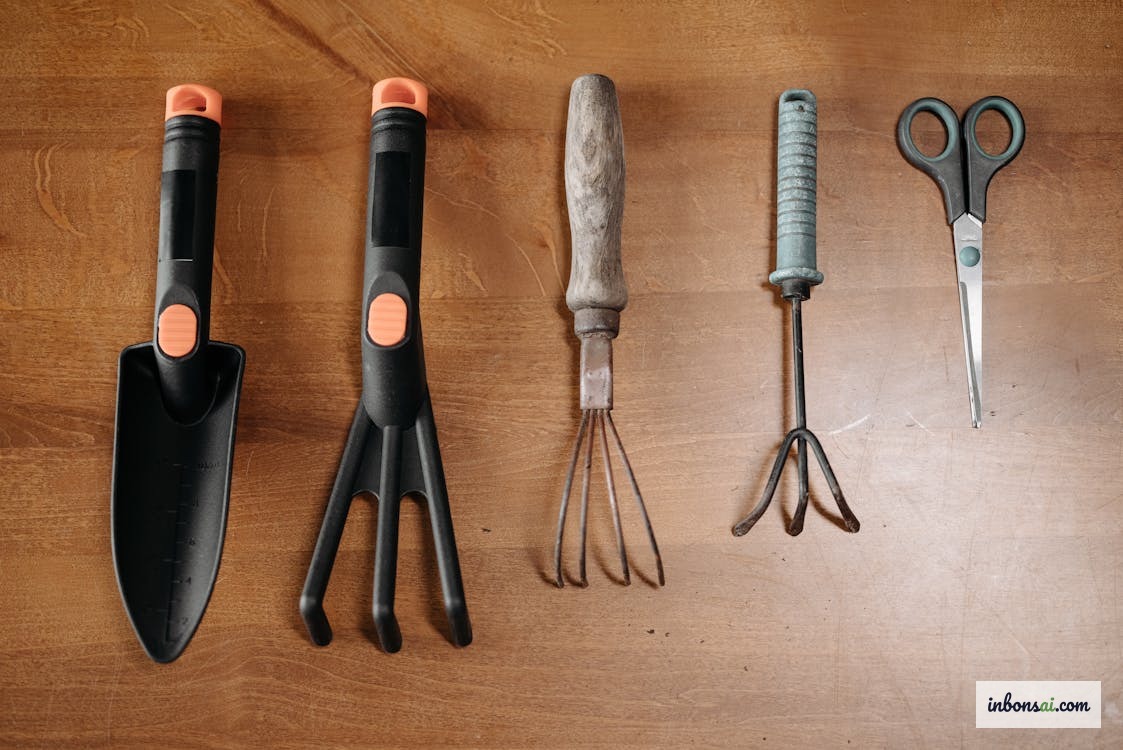
Once you've been working with bonsai for 6 months or more, this price range delivers a noticeable improvement:
Japanese-style carbon steel leaf scissors (mid-tier, no major brand): $20–35. The edge retention is 3–4x better than budget scissors, making them particularly valuable for fine-foliage species like juniper, cedar, or ficus.
Small concave cutter: $18–40. This is the most worthwhile upgrade in this price range because no other tool replicates its function. Concave cutters create the recessed wound profile that heals flush with the trunk surface. Unlike leaf scissors, concave cutters don't need to be razor-sharp to work well — so mid-range quality holds up fine.
5-piece set with concave cutter: If you're serious about bonsai, a $35–60 set (leaf scissors, branch scissors, concave cutter, root scissors, wire cutter) is often the most economical way to get a complete kit. Buying individual pieces of the same quality usually costs more.
You can cross-reference this with the 10 essential bonsai tools guide to help prioritize which tools to invest in first given your budget.
How to Maintain Bonsai Scissors for Long Life
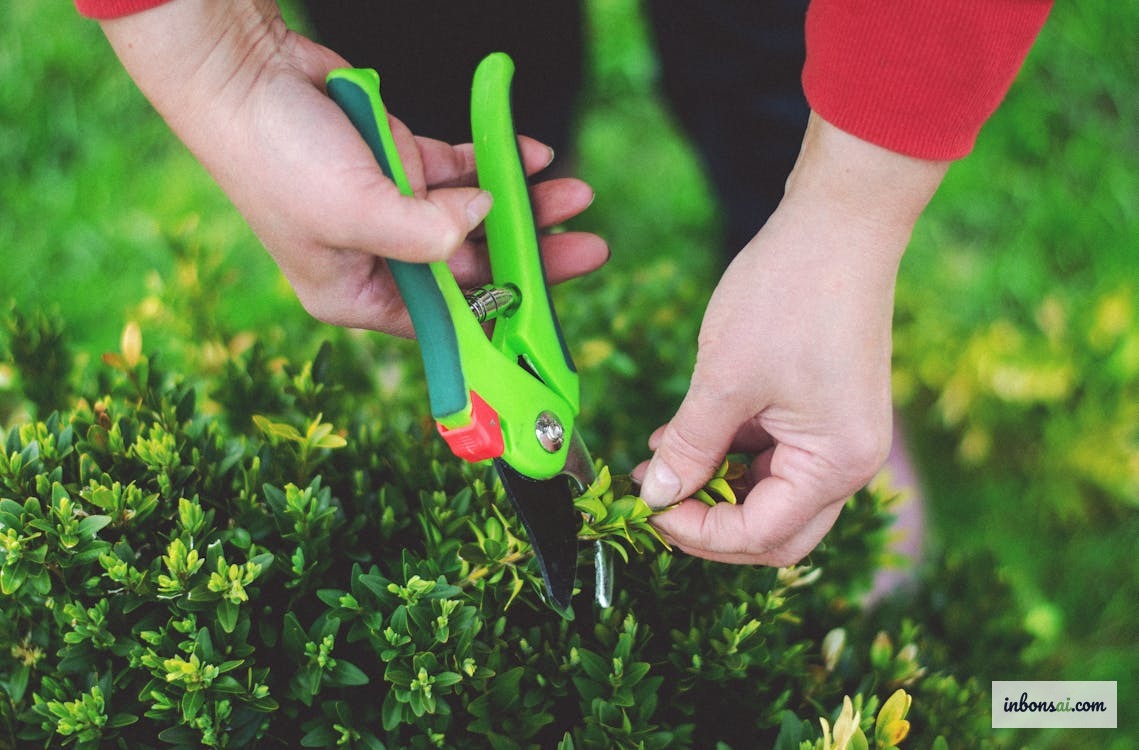
Proper care dramatically extends the life of any scissors, regardless of price:
Wipe clean immediately after use: This is the single most important habit. After each session, use a soft cloth to remove sap and moisture from the blades. Tree sap is mildly acidic — left to accumulate, it corrodes and dulls the blade.
Oil regularly: Apply a thin coat of mineral oil or camellia oil (specifically designed for bonsai tools) to the blade faces and a drop at the pivot. If you don't have camellia oil, sewing machine oil or light WD-40 works as a short-term substitute. Frequency: once or twice a month with regular use.
Sharpen when dull: Dull scissors don't just make cutting harder — they crush branch tissue. Sharpen with a 1000–2000 grit whetstone, following the original blade bevel angle. Alternatively, most local knife sharpeners can sharpen bonsai scissors inexpensively.
Store properly: Never leave scissors in a damp bag or buried in soil. Store in a wooden box or cloth pouch in a dry place. Consider a silica gel packet in the storage box if you're in a humid climate.
Adjust the pivot when the scissors feel off: If cutting quality deteriorates but the blade seems sharp, try tightening the pivot screw slightly. Loose pivots cause the blades to misalign under load, producing torn cuts rather than clean ones.
If you use aluminum training wire alongside your scissors, the guide to aluminum bonsai training wire covers which scissors are best suited for cutting wire cleanly.
Common Mistakes When Using Bonsai Scissors
Beginners often run into these problems:
Using one pair for every job: Leaf scissors aren't built for branches over 3mm — forcing them will bend or chip the blade. Use the right scissor for the right task.
Not disinfecting between trees: If you cut a diseased tree, wipe the blades with 70% isopropyl alcohol before moving to the next tree. Scissors are one of the most common disease vectors in a bonsai collection.
Buying undersized scissors: Nail scissors, embroidery scissors, or miniature craft scissors are tempting for their low price, but they lack the leverage needed for clean cuts and cause hand fatigue quickly.
Leaving scissors outdoors: Heat, rain, and UV exposure degrade both the steel and any plastic handles rapidly. Bring your scissors inside after every session.
Ignoring a misaligned pivot: A wobbly pivot causes the blades to rub instead of shear — this wears the edge fast and produces ragged cuts. A quick adjustment with a screwdriver takes 30 seconds and restores cutting quality.
Final Verdict: Choosing the Right Bonsai Scissors
The best affordable bonsai scissors are simply the right type for the job, kept clean and sharp. For beginners, a two-piece set (leaf scissors + branch scissors) in the $10–15 range is a perfectly capable starting point. Once you're committed to bonsai, adding a concave cutter in the $20–40 range will noticeably improve the quality of branch removal near the trunk.
More than price, the habit is what matters: wipe dry after each use, oil monthly, sharpen when needed. A $12 pair of scissors cared for properly can serve you well for 2–3 years, while a $40 pair neglected in a damp shed will rust in months.
Tags
#bonsai-scissors#bonsai-tools#pruning-shears#beginner#budget-toolsGet bonsai guidance every week.
Fresh care guides, styling notes, and bonsai inspiration delivered to your inbox.