Fertilizing is one of the most important — and most misunderstood — aspects of bonsai care. Because bonsai live in small containers with limited soil, nutrients are washed out quickly with every watering. Learning how to fertilize bonsai correctly will keep your trees healthy, produce beautiful foliage, encourage blooming in season, and extend the life of your trees for years to come.
Why Is Fertilizing So Important for Bonsai?
Unlike trees planted in the ground, bonsai are completely confined to a small pot. Every time you water, a significant amount of minerals and nutrients is flushed out through the drainage holes. Without regular replenishment, your tree will become deficient in three essential nutrient groups:
- Nitrogen (N): Promotes leaf and branch growth, maintains deep green color
- Phosphorus (P): Stimulates new root growth, encourages flowering and fruiting
- Potassium (K): Strengthens disease resistance, hardens wood, protects against pests
Beyond these three macronutrients, bonsai also need trace elements such as iron (Fe), magnesium (Mg), calcium (Ca), and zinc (Zn) to maintain normal physiological functions.
Types of Fertilizer Suitable for Bonsai
There are two main categories of fertilizer used for bonsai:
Organic Fertilizer
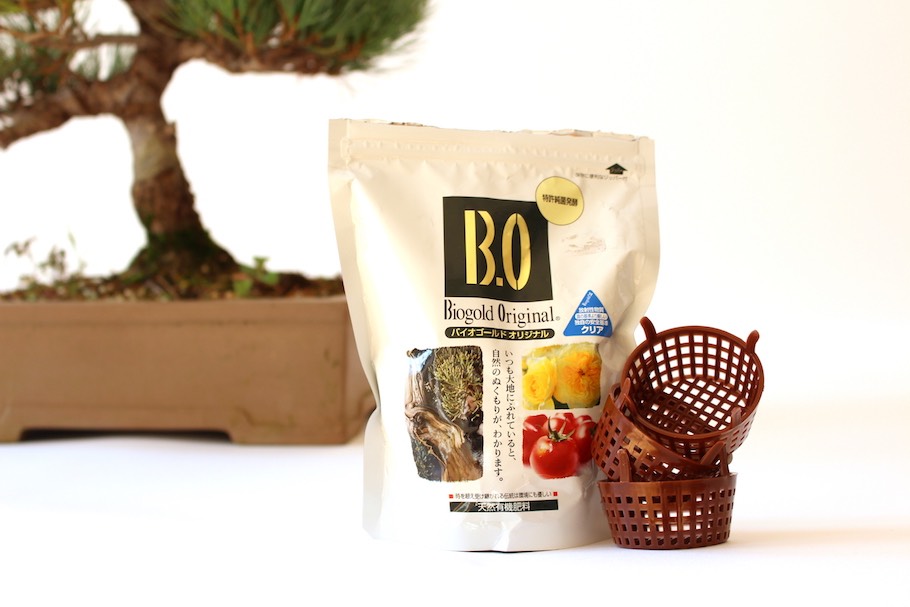
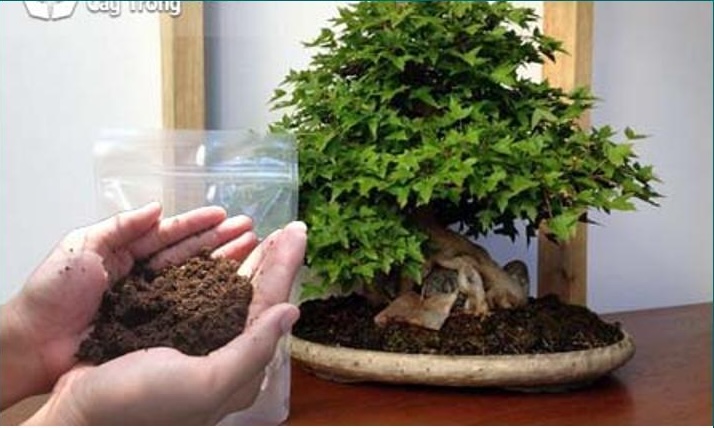
Organic fertilizer is the preferred choice among most bonsai practitioners, especially slow-release pellets like Biogold, Hanagokoro, or locally available oil cake fertilizers. The advantages are: gradual nutrient release that won't shock roots, and improvement of beneficial microbial activity in the soil. Simply place a few pellets on the soil surface and water normally — microorganisms break them down and slowly release nutrients to the tree over 4–6 weeks.
Inorganic (Liquid/Soluble) Fertilizer
Soluble fertilizers like Growmore, Osmocote, or NPK powder act faster, as the tree absorbs nutrients directly through its roots. However, using the wrong dosage can easily cause root burn, so you must dilute to 1/4 to 1/2 of the recommended strength for regular plants. Liquid fertilizer is ideal for rescuing trees showing acute nutrient deficiency or during periods when rapid growth is desired.
Foliar Spray
Foliar feeding is a supplement, not a complete replacement for root fertilizing. Spray dilute foliar fertilizer in the early morning or late afternoon, avoiding hot midday sun to prevent leaf burn. Use foliar spray every 2–3 weeks during the growing season to boost micronutrient uptake.
Seasonal Fertilizing Schedule
Fertilizing must be adjusted to match the tree's natural growth cycle through the seasons:
Spring (February – April): This is the most vigorous growth period after winter. Use high-Nitrogen fertilizer (e.g., NPK 10-6-6 or 12-6-6) to stimulate new buds and fresh leaves. Fertilize every 2 weeks.
Summer (May – August): High temperatures accelerate the tree's metabolism. Switch to a balanced fertilizer (NPK 6-6-6 or 10-10-10), reducing frequency to every 3–4 weeks during heat waves. Do not fertilize when the tree is stressed from heat or lack of water.
Autumn (September – November): The tree prepares to store energy for winter. Switch to Phosphorus- and Potassium-rich fertilizer (NPK 3-10-10 or 0-10-10) to strengthen roots and help wood harden and mature. This is also the best time to apply superphosphate to stimulate new root growth.
Winter (December – January): Most deciduous bonsai in northern regions go dormant. Reduce or stop fertilizing entirely — the tree cannot absorb nutrients when its metabolism slows, and accumulation will damage roots. For evergreen trees in warmer southern climates that continue growing, a half-dose once a month is acceptable.
Correct Fertilizing Technique Step by Step
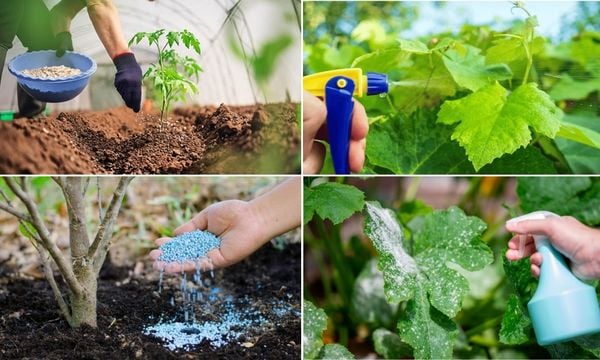
Regardless of which fertilizer you choose, follow these core principles:
Step 1 — Water before fertilizing: Always thoroughly water the soil at least 30 minutes before applying fertilizer. Fertilizing dry soil causes roots to absorb nutrients too quickly, easily leading to fertilizer burn.
Step 2 — Apply fertilizer in the right location: For organic pellets, place them at least 2–3 cm away from the trunk, distributed evenly across the soil surface. Do not press pellets deep into the soil as this can damage shallow roots. For liquid fertilizer, water evenly across the entire pot surface, avoiding excessive runoff.
Step 3 — Correct dosage: The principle of "less and more frequent" is always safer than large single doses. For small trees under 20 cm, use 2–3 Biogold pellets or equivalent. Trees 30–50 cm use 5–8 pellets. Liquid fertilizer should be diluted to 1/4 the recommended strength.
Step 4 — Monitor after application: Watch your tree for 3–5 days after using a new fertilizer for the first time. If leaves start yellowing or leaf tips turn brown, you may be over-fertilizing — flush the pot thoroughly with clean water and stop fertilizing for 2 weeks.
The key is not to change fertilizer types abruptly, especially during periods when new buds are emerging. You can also read about bonsai watering techniques to coordinate watering and fertilizing effectively.
NPK Ratios for Different Growth Goals
Choosing the right NPK ratio is critical for guiding your bonsai's development in your desired direction:
| Goal | Recommended NPK | Timing |
|---|---|---|
| Leaf and branch growth | 10-6-6 or 12-6-6 | Spring, early summer |
| Balanced development | 6-6-6 or 10-10-10 | Midsummer |
| Root stimulation, wood hardening | 3-10-10 or 0-10-10 | Autumn |
| After heavy pruning | 0-10-10 (no N) | First 2–4 weeks after pruning |
| Newly repotted tree | Stop fertilizing for 4–6 weeks | Immediately after repotting |
Important note: Do not fertilize for 4–6 weeks after repotting. Roots are damaged during repotting and are very sensitive to fertilizer, especially chemical fertilizers. Read more about bonsai soil mix ratios for akadama, pumice, and perlite to understand why well-draining soil affects nutrient absorption.
Signs of Nutrient Deficiency and Excess
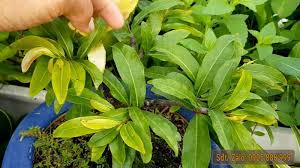
Recognizing symptoms early allows you to adjust your fertilizing routine in time:
Signs of Nutrient Deficiency
- Nitrogen (N) deficiency: Leaves turn uniformly pale yellow, starting with older leaves; slow growth, smaller-than-normal leaves
- Iron (Fe) deficiency: Leaf veins remain green but the tissue between veins turns yellow (chlorosis); common in trees grown in alkaline soil
- Phosphorus (P) deficiency: Leaves turn abnormally purple or reddish, poor new root production, slow flowering
Signs of Nutrient Excess (Fertilizer Toxicity)
- Leaf tips and edges turn brown and dry
- White or yellow crust on the soil surface (salt accumulation)
- Wilting despite adequate soil moisture (burned roots cannot absorb water)
- New leaves appear small, deformed, or curled
If fertilizer toxicity is detected, the quickest remedy is to flush clean water through the pot multiple times to wash away excess mineral salts, then stop fertilizing for at least 3–4 weeks to allow roots to recover.
Special Considerations for Common Bonsai Species
Each species has different nutritional needs, so adjust your approach accordingly:
Conifers (Juniper, Pine, Cypress): Sensitive to high Nitrogen — use balanced or Phosphorus/Potassium-heavy fertilizer year-round. Organic slow-release fertilizer is the safest choice.
Flowering trees (Yellow apricot, Peach, Cherry): Need balanced NPK during summer, then switch to Phosphorus-rich fertilizer (P) in September–October to stimulate flower buds for the following spring.
Tropical species (Ficus, Banyan, Ginseng ficus): Higher fertilizer requirements, especially during the rainy season when trees are growing strongly. Fertilizing every 2 weeks year-round is appropriate in tropical climates.
Newly purchased or recently grafted trees: Wait at least 4–6 weeks before the first fertilizing application, to let the tree settle into its new environment. See the beginner's guide to bonsai if you are new to the hobby.
Conclusion
Fertilizing correctly is a combination of understanding your tree's needs, the time of year, and the right type of fertilizer. There is no rigid formula that applies to every species and every condition — you need to observe and adjust based on each tree's actual response.
Start with organic slow-release fertilizer if you don't have much experience, as it is the safest option with the least risk. As you gain a better understanding of your individual trees, you can incorporate liquid fertilizer for quick nutrient boosts when needed. Remember: fertilizing less and at the right time is always better than fertilizing too much at the wrong time.
Tags
#bonsai-fertilizing#bonsai-care#plant-nutrition#bonsai-techniquesGet bonsai guidance every week.
Fresh care guides, styling notes, and bonsai inspiration delivered to your inbox.