For serious bonsai practitioners, the pot is far more than a container — it's an integral part of the composition. Among all pot types available, Japanese ceramic bonsai pots consistently set the standard for quality, aesthetics, and durability. But Japanese ceramics aren't a single category — each regional kiln produces distinct characteristics suited to different bonsai styles. This guide explains the leading types of Japanese ceramic pots, how to identify authentic pieces, and how to choose the right one for your tree.
Why Are Japanese Ceramic Pots So Prized in Bonsai?
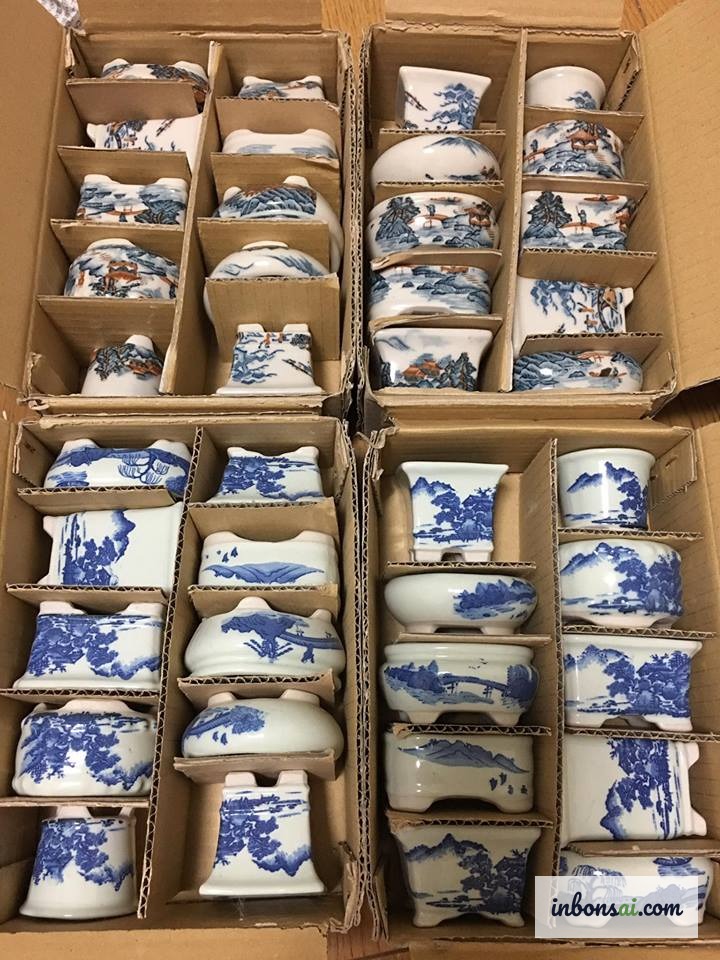
Japanese ceramics have a thousand-year history intertwined with tea ceremony and garden aesthetics. As bonsai developed into its own art form, Japanese craftsmen transferred refined pottery techniques to dedicated bonsai containers. The result is a product that excels across multiple criteria.
First, breathability of the pot wall. Ceramics fired at low to medium temperatures (1,000–1,200°C) have a natural microporous structure that allows roots to exchange gases with the surrounding environment. This is something plastic pots and high-gloss porcelain simply cannot offer. Japanese ceramics also absorb and release moisture evenly, preventing waterlogging or excessive drying.
Second, refined aesthetics that complement the tree. Japanese craftsmen understand that the pot must elevate the tree's beauty — not compete with it. Muted tones, simple yet deep forms, and subtle textures are hallmarks of Japanese bonsai ceramics, entirely distinct from decorative pottery.
Third, lasting durability. A quality Japanese ceramic pot can serve for decades without cracking, fading, or losing its form — a worthwhile long-term investment compared to cheaper pots that need frequent replacement.
The Most Popular Types of Japanese Ceramic Bonsai Pots
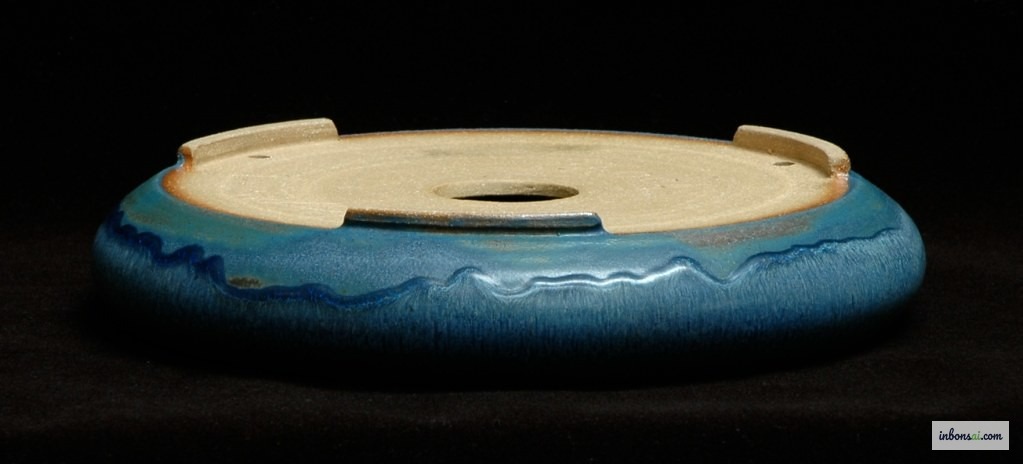
Japan has many traditional pottery centers, but three regions stand out most prominently in bonsai: Tokoname, Iga, and Bizen — each with its own distinctive style.
Tokoname Ware (常滑焼)
Tokoname in Aichi Prefecture is Japan's largest bonsai pot producing region. Tokoname ceramics are characterized by a reddish-brown earthen color (from iron-rich clay), a smooth yet matte surface, and relatively thin walls. This is the most widely available type on the international market.
Tokoname pots suit: formal upright (chokkan, moyogi) styles, fine-leafed trees like Chinese elm, juniper, and pine. Prices range from entry-level to several hundred dollars depending on size and the maker's reputation.
Iga Ware (伊賀焼)
Iga in Mie Prefecture has a pottery tradition dating to the 8th century, famous for wood-firing techniques that create natural ash glaze (shizen-yu). The surface of Iga ceramics typically shows uneven streaks of green, yellow, or brown — making each pot truly unique.
Iga suits: wabi-sabi style bonsai, aged trees with naturalistic character, and literati (bunjin) styling. Prices are generally higher than Tokoname due to the unique character and complex firing process.
Bizen Ware (備前焼)
Bizen in Okayama Prefecture fires ceramics at very high temperatures (1,300°C) for many days continuously. Products have no glaze, ranging from dark brown to black, with natural patterns created by ash and sand during firing. Bizen ceramics are extremely durable and appear to "live" over time — the surface subtly changes with water and soil contact.
Bizen suits: powerful, dramatic bonsai styles, cascade forms, and rock plantings. Due to the lengthy firing process and low yield of acceptable pieces, Bizen tends to command premium prices.
Shigaraki Ware (信楽焼)
Shigaraki in Shiga Prefecture is one of Japan's "Six Ancient Kilns" (Rokkoyo). Shigaraki ceramics have an ivory-to-blush color with a naturally coarse surface containing quartz particles, and are typically unglazed or lightly glazed. This type drains moisture very effectively, making it particularly suitable for drought-tolerant trees.
How to Spot Authentic Japanese Ceramic Pots vs. Fakes
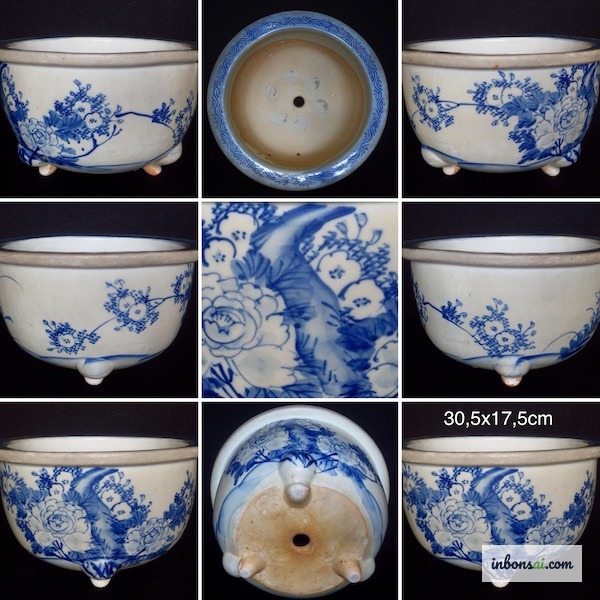
The market is flooded with "Japanese-style" pots from China, Taiwan, or elsewhere sold at authentic Japanese prices. Here's how to tell the difference:
Artist's seal (hanko): Genuine Japanese pots — especially from established makers — always bear a distinctive mark on the base. This is typically in kanji or kana, sometimes combined with a logo. Pots with no mark at all, or only an adhesive paper label, deserve scrutiny.
Weight and feel: Properly fired Japanese ceramics have appropriate heft — not excessively heavy. Tapping the pot wall lightly should produce a clear, resonant ring. Dense porcelain or coarse earthenware produces a dull thud instead.
Drainage holes: Japanese bonsai pots typically have 2–4 drainage holes of adequate size, hand-punched or formed with specialized tools. Very small or very few holes indicate a decorative piece rather than a functional bonsai container.
Color and surface: Authentic Japanese ceramics have muted, layered color with natural variation. Imitations often show overly uniform, glossy color or a plastic-like quality even when made from clay.
Price: A mid-sized genuine Japanese ceramic pot (25–30 cm) rarely sells for the equivalent of USD 10–15, even in Japan. Extremely low prices should raise immediate skepticism.
Choosing the Right Size and Shape
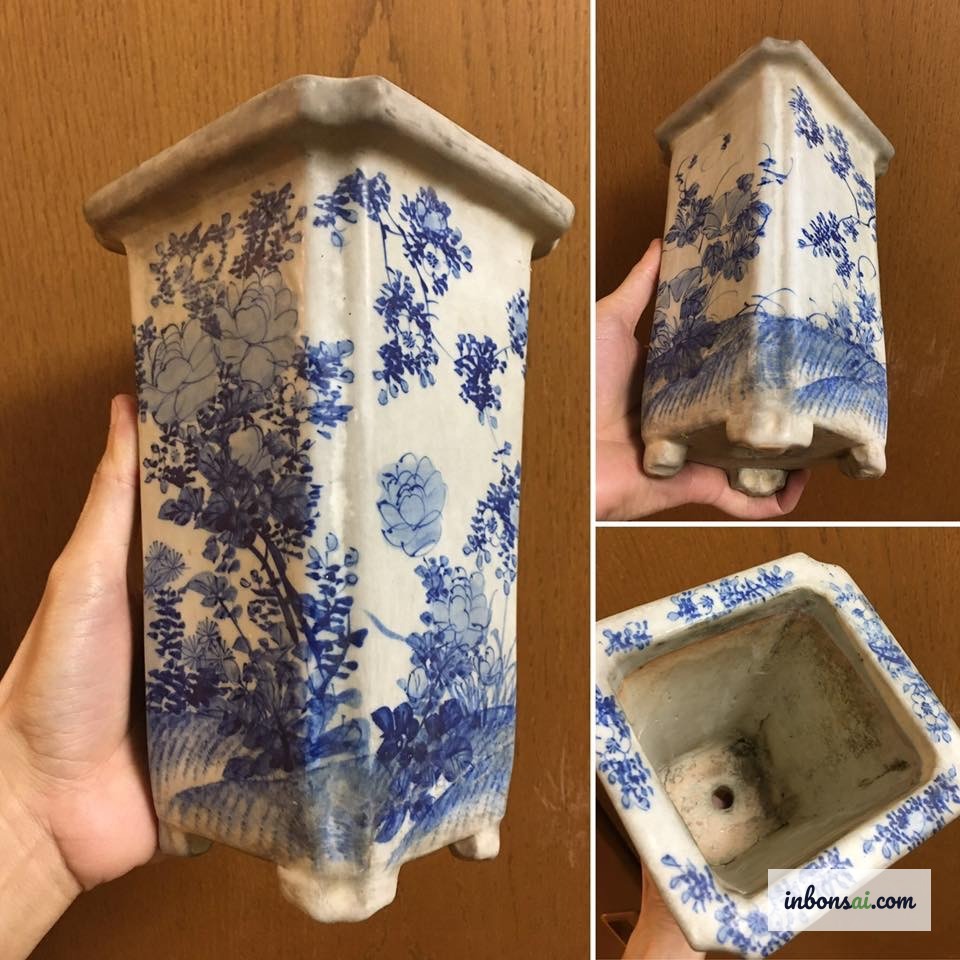
Even the most beautiful pot fails if it doesn't harmonize with the tree. When selecting a Japanese ceramic bonsai pot, consider two key factors:
Sizing
A widely followed rule: pot length should equal about 2/3 of the tree's height (for upright styles) or 2/3 of the canopy width (for spreading styles). Pot depth typically equals the trunk base diameter. An oversized pot wastes soil; an undersized one restricts root development.
For a thorough breakdown of sizing principles, see How to Choose the Right Bonsai Pot for Every Tree as a companion reference.
Shape and Color
- Rectangular or oval: Best for formal or informal upright trees, wide-canopied species
- Round: Works well for upright trees with balanced canopies, literati style, visually harmonious compositions
- Tall drum or hexagonal: Reserved for cascade (kengai, han-kengai) styles
- Unglazed brown/red earth tones: Pair naturally with dark-leafed conifers like pine, juniper, cypress
- Ivory or pale-blue glaze: Highlights the beauty of flowering trees like plum and cherry
Traditional bonsai aesthetics hold that "masculine" trees (thick trunk, heavy branches, strong bearing) belong in unglazed or opaque-glazed pots; "feminine" trees (fine foliage, delicate flowers, graceful lines) suit glazed pots with subtler color.
Price Reference and Where to Buy
Japanese ceramic bonsai pot prices vary enormously by origin, maker, and size:
| Pot Type | Small (< 20 cm) | Medium (20–35 cm) | Large (> 35 cm) |
|---|---|---|---|
| Tokoname production ware | $20–$50 | $50–$120 | $120–$300 |
| Tokoname signed artist | $80–$200 | $200–$800 | $800+ |
| Iga / Bizen | $100–$300 | $300–$1,300 | $1,300+ |
Reliable sources:
- Direct import from Japan: Platforms like Rakuten or Yahoo Japan Auctions (via proxy buying services) offer wide selection, often better prices than through resellers
- Specialist bonsai retailers: Some shops carry authentic Japanese imports — ask clearly about origin and request to see the maker's seal
- Bonsai clubs: Members often trade second-hand pots at fair prices, a trustworthy source given the community's expertise and reputation
How to Care for Japanese Ceramic Bonsai Pots
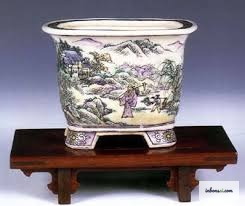
Investing in a quality Japanese ceramic pot deserves matching care:
Regular cleaning: Use a soft brush and clean water to remove moss, algae, and mineral deposits from the pot surface. Avoid strong chemical cleaners — they damage the clay's microstructure. In fact, the natural patina that develops over time is considered a mark of a well-seasoned pot and is highly valued in Japanese bonsai culture.
Avoid thermal shock: Unglazed ceramics are fairly sensitive to sudden temperature changes. Don't pour hot water into a cold pot or vice versa. In frost-prone climates, move pots indoors — water freezing inside the clay's pores can cause cracking.
Storage when not in use: Keep pots in a dry, ventilated location. If storing long-term, invert the pot to prevent dust and insects from nesting inside the drainage holes.
Conditioning new pots: Soak new pots in clean water for 24–48 hours before first use. This allows the clay to fully absorb water, preventing it from pulling too aggressively from the potting medium and stressing newly repotted roots.
For the full repotting workflow, see Step-by-Step Bonsai Repotting Guide for safe technique at each stage.
Conclusion: Which Type Should You Choose?
There is no single "best" answer — it depends entirely on your bonsai style and current budget:
- Beginners: Production Tokoname ware — adequate quality, accessible pricing, easy to source
- Intermediate growers: Signed Tokoname or Shigaraki — a worthwhile upgrade once you understand your tree's style
- Advanced practitioners: Iga or Bizen — reserved for exhibition-quality compositions where every detail matters
The most important principle when choosing a Japanese ceramic bonsai pot is harmony between pot and tree. A simple Tokoname pot that perfectly complements the tree will always outshine an expensive Bizen pot that clashes with it. Study your tree, understand what it needs, and choose the pot that knows how to step back and let the tree speak.
To build out your complete bonsai toolkit, see 10 Essential Bonsai Tools for everything else you'll need.
Tags
#bonsai-pots#japanese-ceramics#bonsai-tools#tokoname#pot-selectionGet bonsai guidance every week.
Fresh care guides, styling notes, and bonsai inspiration delivered to your inbox.