Office Desk Bonsai for Wealth & Good Luck: 7 Easy Species

InBonsai Team
March 18, 2026 · 11 min read
Looking for a small tree to place on your work desk that looks beautiful, brings good fortune, and doesn’t demand much care? A mini office desk bonsai that attracts wealth and luck is exactly what you need. Beyond creating a stunning focal point between your monitor and paperwork, these compact bonsai trees bring positive energy, attract prosperity, and help you stay focused throughout the workday. In this guide, we’ll introduce the 7 best bonsai species for your desk, how to position them correctly using feng shui principles, and a simple care schedule designed for busy professionals.
7 Best Office Desk Bonsai Species for Attracting Wealth
Not every tree species thrives in an office environment with limited sunlight and constant air conditioning. The following species are consistently recommended by feng shui experts and experienced bonsai growers for workplace settings:
Ficus (Ficus microcarpa) tops the list for its outstanding adaptability. It tolerates low light, doesn’t need daily watering, and its distinctive surface roots symbolize prosperity and abundance. In Vietnamese folk culture, the word “sung” (Ficus) is linked to “sung túc” (abundance) — a meaning perfectly suited for a workspace.
Jade Plant (Crassula ovata) is a succulent bonsai that withstands drought remarkably well — ideal for those who frequently forget to water or travel for work. Its round, glossy leaves resemble stacked gold coins, symbolizing wealth and prosperity in East Asian feng shui traditions.
Fukien Tea (Carmona retusa) blooms with tiny white fragrant flowers, creating a sense of calm amid a stressful work environment. This species thrives in indirect light — precisely the condition found in offices with windows. In feng shui, Fukien Tea represents clarity, mental sharpness, and wise decision-making.
Buddhist Pine (Podocarpus macrophyllus) symbolizes longevity, resilience, and authority — particularly suitable for managers and business owners. It requires at least 3–4 hours of light daily but grows very slowly, maintaining its elegant shape for years with minimal pruning.
Bamboo Bonsai channels strong Wood element energy — especially beneficial for those with Water and Wood element birth years. Upright bamboo represents perseverance, integrity, and career advancement. The plant thrives in humid conditions and indirect light.
Rubber Plant Bonsai (Ficus elastica) with its deep burgundy leaves creates a striking color accent on any desk. Red symbolizes good fortune and vibrant energy in feng shui. This species tolerates air conditioning well, is disease-resistant, and is easy to maintain even for beginners.
Serissa (Serissa foetida) — celebrated as the “Queen of Southern Vietnamese Bonsai” — features delicate white downward-facing flowers symbolizing humility and perseverance. This native Vietnamese species is widely available, affordable, and especially well-adapted to tropical climates.
You can also read our guide to caring for mini bonsai at home to build a strong foundation before you begin.
Feng Shui Placement for Your Office Bonsai
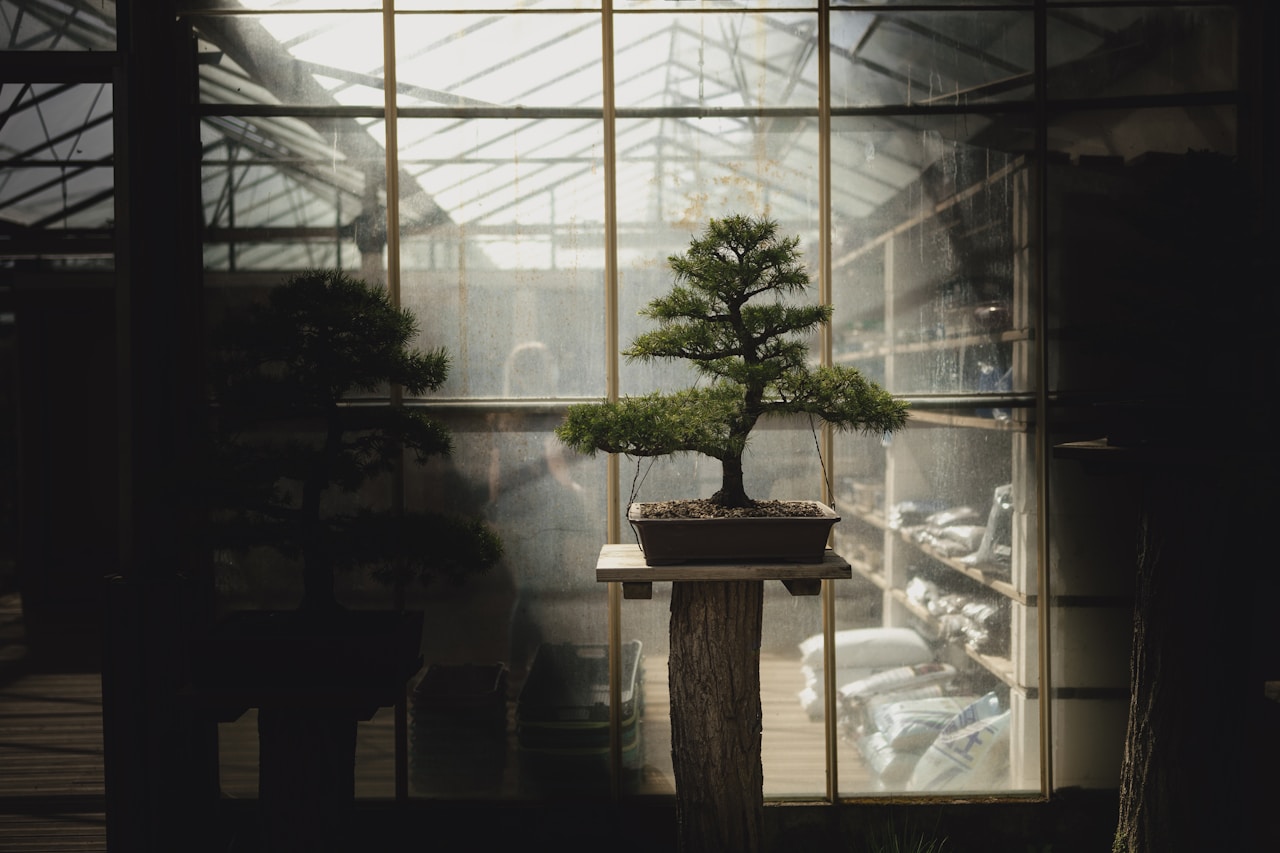
One of the most overlooked aspects of office plants is feng shui placement. Position your bonsai correctly and it not only grows healthier — it amplifies the wealth-attracting energy of your workspace.
The wealth corner (southeast) is the ideal location. In Ba Zi feng shui, the southeast corner of a room governs wealth and prosperity. Placing a jade plant or Ficus bonsai in this corner activates positive financial energy effectively.
On your desk, position the plant at the front-left corner (as you sit at your desk). This is the “Green Dragon” position — in feng shui, the left side represents growth, opportunity, and incoming wealth. Avoid placing the bonsai directly in your line of sight or between you and your work screen.
Near an east- or south-facing window provides the tree with natural light while aligning it with feng shui directions that welcome Yang energy and positive prosperity energy.
Conversely, avoid placing bonsai in these locations:
- Directly on top of refrigerators or warm electronic devices (high temperatures weaken the plant)
- Under air conditioning vents that blow directly on the tree (cold drafts cause leaf drop and desiccation)
- Rooms with no windows or natural light
- Bathrooms or storage rooms — spaces with negative Yin energy
Most importantly, the tree must be healthy and vibrant. A wilting bonsai with yellowing, falling leaves carries negative energy — the opposite of good feng shui. If your tree shows signs of decline, treat it promptly or move it to a better-lit location temporarily.
Office Bonsai Care Schedule for Busy Professionals
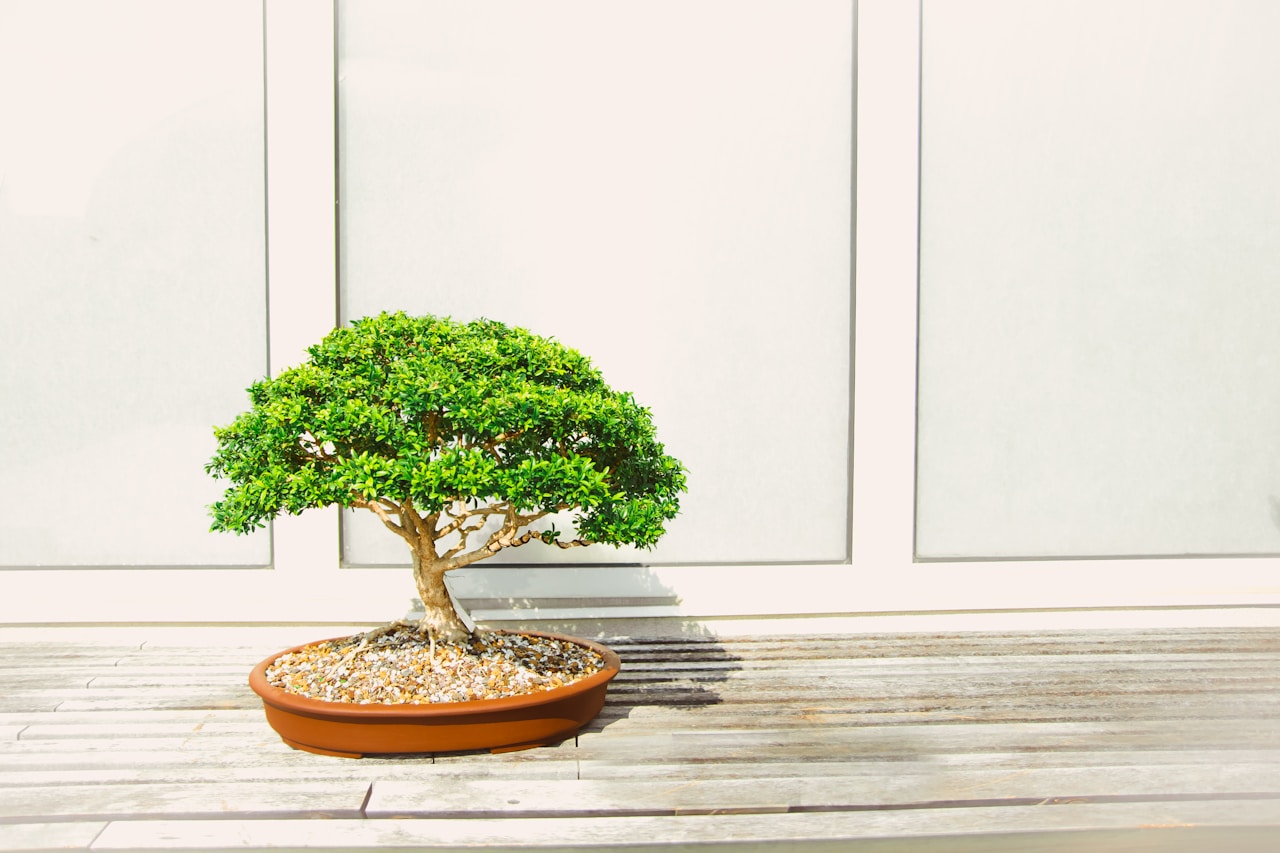
The biggest concern people have about bringing bonsai to the office is: “I’m too busy to care for a plant.” In reality, a well-chosen office desk bonsai requires only 5–10 minutes per week — far less than you might expect.
Daily (1 minute): Glance at the tree when you start your workday. Simply observe whether the leaves look fresh and whether the soil feels dry. This small habit helps you catch any problems early before they become serious.
Every 2–3 days (3 minutes): Check soil moisture by pressing your finger about 2 cm into the soil. If dry — water gently until water runs out of the drainage hole at the bottom. If still moist — wait. Never water on a fixed schedule; water according to the tree’s actual needs.
Weekly (5 minutes): Rotate the pot 90 degrees so all sides of the tree receive equal light. Trim any yellowing leaves or wayward branches with clean scissors. Mist the leaves lightly with water to increase humidity — especially important in offices with continuous air conditioning.
Every 2 weeks (5 minutes, during growing season): Apply organic slow-release fertilizer pellets on the soil surface, or water with liquid fertilizer diluted to half the recommended concentration. Do not fertilize in winter or when the tree is unwell.
Monthly: If possible, move the tree near a window or outdoor space over a weekend — a few hours of natural sunlight will rejuvenate the plant far more than a full week under office fluorescent lights.
Additionally, keep a small misting bottle on your desk. A gentle morning mist on the leaves — instead of a “good morning” greeting to the tree — maintains humidity around the plant and turns bonsai care into a brief meditative ritual in the middle of a busy workday.
Choosing the Right Pot and Soil for Your Desk Bonsai
Pot and soil choices directly impact the long-term health of your office bonsai. Many people make the mistake of choosing beautiful pots without drainage holes, or using ordinary garden soil — both decisions reliably lead to root rot and early plant death.
Regarding pots: Prioritize ceramic or traditional terracotta pots because these materials allow moisture to evaporate through the walls, preventing waterlogged soil. The ideal pot size is roughly 2/3 of the tree’s height — small enough to restrict growth (keeping the tree compact) but not so tight that roots suffocate. The essential requirement: the pot must have at least one drainage hole at the bottom, placed on a saucer with small pebbles.
For pot color and feng shui: Brown or gold-glazed ceramic pots suit those with Earth and Fire element birth years. White or gray pots complement Metal element personalities. Blue or black pots align with Water element individuals. See our feng shui bonsai guide by birth year for more details.
Regarding soil: Never use garden soil or alluvial earth — these retain water too long, lack aeration, and cause root rot. The ideal mix for tropical office bonsai consists of: 40% akadama fired clay, 30% pumice, and 30% coarse sand or perlite. If akadama is unavailable, commercially prepared bonsai soil from plant nurseries is an acceptable substitute.
Additionally, placing a thin layer of pebbles or sphagnum moss on the soil surface helps retain moisture longer, reducing watering frequency — very convenient during weeks when you travel or take extended holidays.
Common Mistakes When Growing Office Bonsai
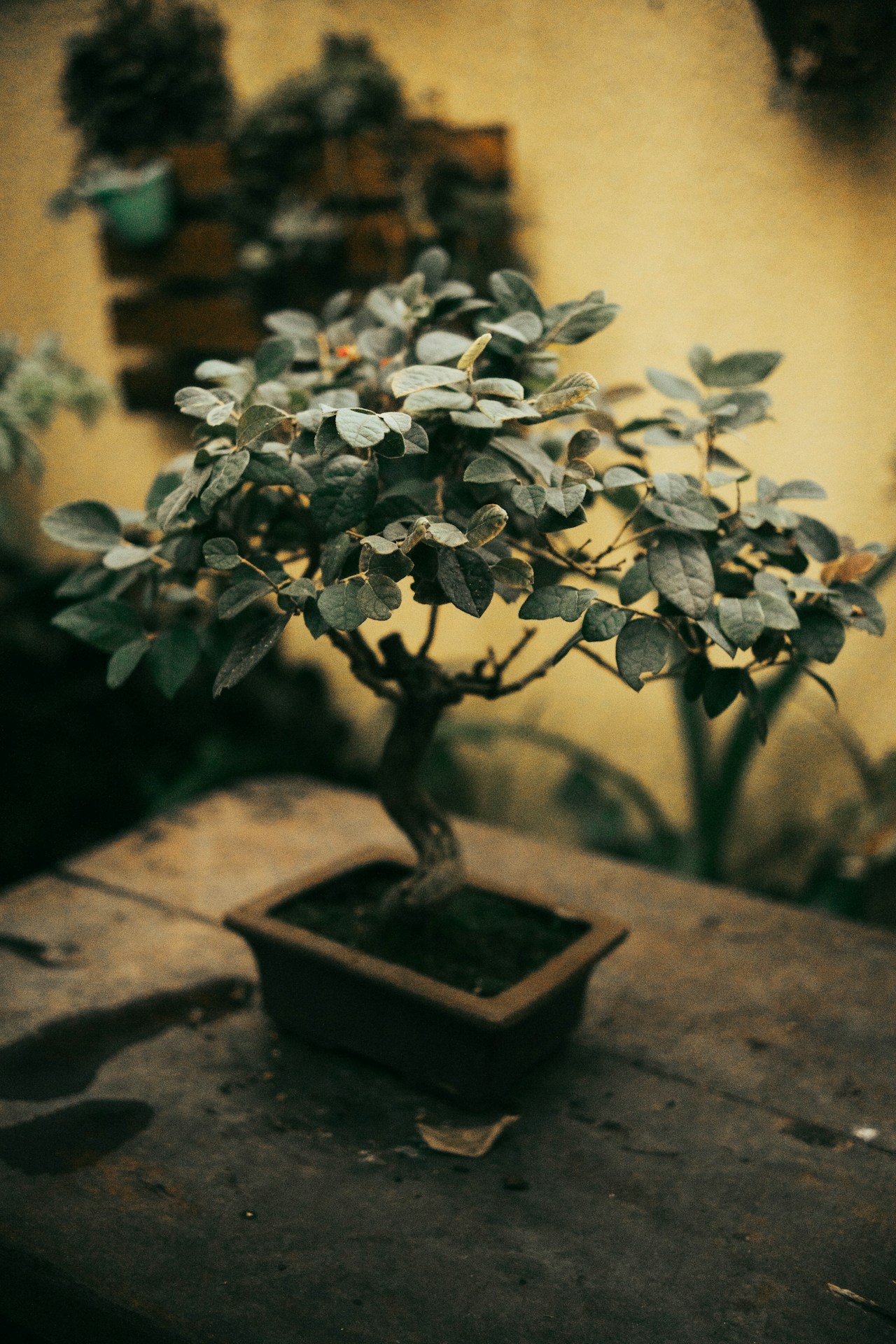
Even with easy-to-care-for species, beginners often make fundamental mistakes that cause rapid decline or death. Recognizing these pitfalls early saves significant frustration.
Mistake 1 — Overwatering: This is the most common cause of bonsai death. Many people water as soon as the soil surface looks slightly dry — but the deeper layers may still be adequately moist. Overwatering causes root rot, yellowing leaves, and crown dieback. Always check moisture 2 cm deep before watering.
Mistake 2 — Placing the tree in complete darkness: No plant survives long-term without light. If your office lacks windows, invest in a small LED grow light — affordable but highly effective at keeping the tree alive.
Mistake 3 — Choosing pots without drainage: In the desire for aesthetic pots that won’t dirty the desk, many people choose sealed-bottom containers. This almost certainly kills the tree. Solution: use ceramic pots with drainage holes placed over a saucer with small pebbles to catch excess water.
Mistake 4 — Fertilizing when the tree is sick or during winter: Applying fertilizer at the wrong time “burns” roots and further weakens the tree. Only fertilize when the tree is actively growing well (spring and summer); never fertilize when diseased, recently repotted, or during cold months.
Mistake 5 — Never rotating the pot: Trees always lean toward the light source. Without regular rotation, one side of the tree grows dense while the opposite side thins out, losing shape and balance within a few months.
Mistake 6 — Buying species incompatible with indoor conditions: Some beautiful bonsai species — like pine, juniper, or fully sun-loving varieties — quickly deteriorate indoors. Stick to the 7 species highlighted earlier in this article.
Also watch for sudden leaf drop — commonly triggered by moving the tree from bright to dim conditions, sudden temperature changes, or watering with cold water during hot summers. Trees need time to adapt to new environments.
Combining Office Bonsai with Other Feng Shui Elements
To maximize wealth-attracting energy in your workspace, an office desk bonsai can be harmoniously paired with a few popular feng shui accessories — as long as they don’t clutter your workspace or impair focus.
Place the bonsai beside a small three-legged money frog or fortune deity figurine in the southeast corner of your desk to amplify financial energy. The green color of living plants interacts synergistically with these objects according to the Five Elements principle of Earth — Wood — Water.
Gold or earth-toned ceramic pots paired with jade plant or Ficus bonsai create a perfect feng shui duo for those with Earth element birth years seeking to boost wealth fortune.
Adding a pebble tray beneath the bonsai pot — beyond its drainage function — symbolizes Metal element energy through white or polished river stones, supporting financial luck according to feng shui.
However, avoid overcrowding with too many objects simultaneously. Modern feng shui principles emphasize cleanliness and spaciousness — one healthy, thriving bonsai is more effective than a desk cluttered with decorative objects.
The most important principle remains: the tree must live and thrive. The living energy of the plant itself is the best possible feng shui. A properly cared-for bonsai with glossy green leaves and a firm, sturdy trunk is the finest wealth-attracting object you can place on your desk.
For essential care tools, see our beginner’s guide to necessary bonsai tools to get started correctly.
In Summary
A mini office desk bonsai is far more than a decorative accessory — it’s an active, positive companion in your workplace, bringing calm, focus, and wealth-attracting energy according to time-honored Vietnamese feng shui traditions.
Start with one of the 7 species introduced here — prioritize Ficus, Jade Plant, or Serissa if you’re a beginner. Position the tree in the southeast corner or at the front-left of your desk. Water correctly and don’t over-worry — a well-chosen office bonsai is more resilient than you think.
And most importantly: take a few seconds each morning to simply look at the small tree on your desk. That brief meditative moment, amid the rush of a busy workday, may be the greatest gift a bonsai can give you.
Related Posts
Office Desk Bonsai for Wealth & Good Luck: 7 Easy Species
Bonsai Terrarium Mini: Easy DIY Guide for Beginners
How to Care for Mini Bonsai at Home for Beginners
Worm Castings for Bonsai: How to Fertilize Correctly
How to Grow Bonsai from Seeds at Home for Beginners
Aquatic Bonsai: How to Grow and Care for It at Home
Bonsai Pruning Guide for Beginners: Step-by-Step