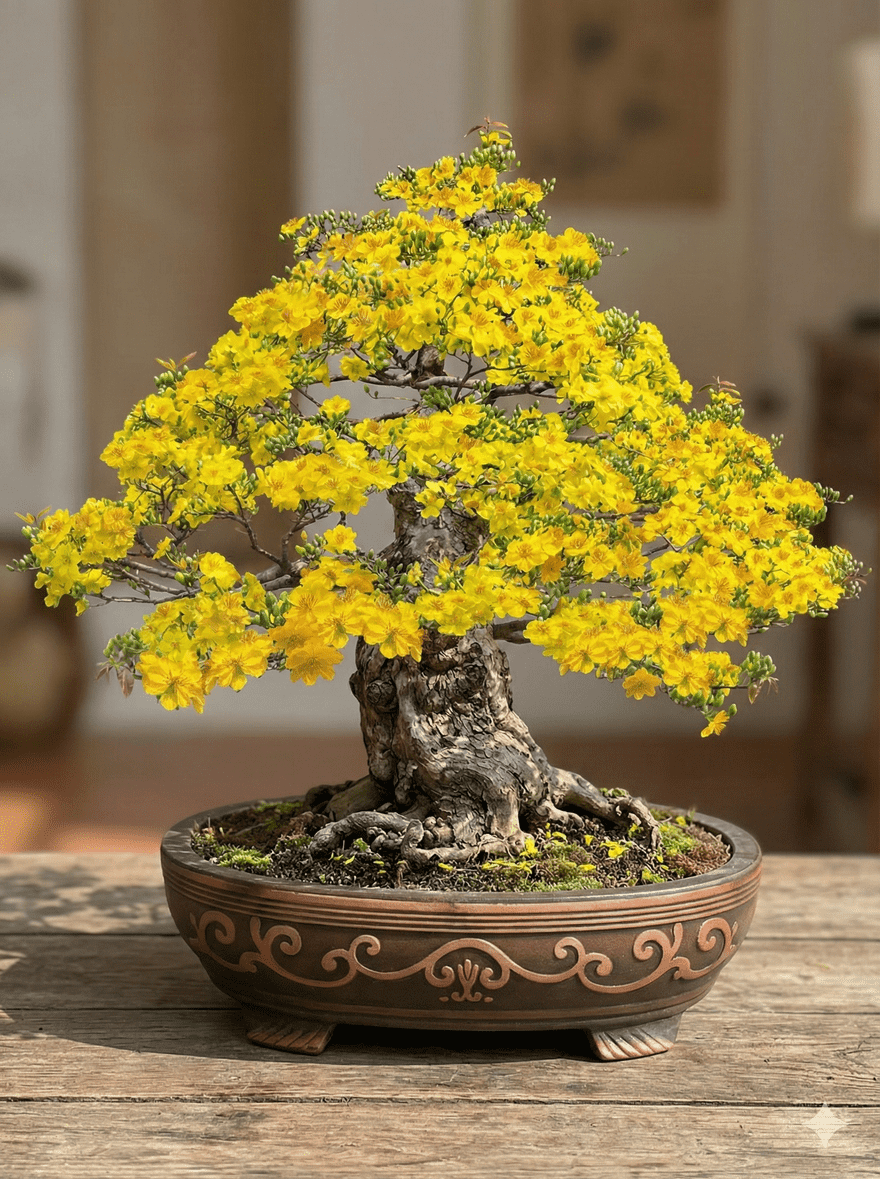
Is your apricot bonsai (mai vàng) developing yellow leaves and you cannot figure out why? This is one of the most frequently encountered problems among bonsai enthusiasts — from beginners to seasoned practitioners. Yellow leaves are not merely cosmetic; they signal that the tree is under stress and requires attention. In this article, we will analyse the 6 main causes of yellowing leaves on apricot bonsai and provide step-by-step solutions for each scenario.
How to Identify Different Types of Yellow Leaves
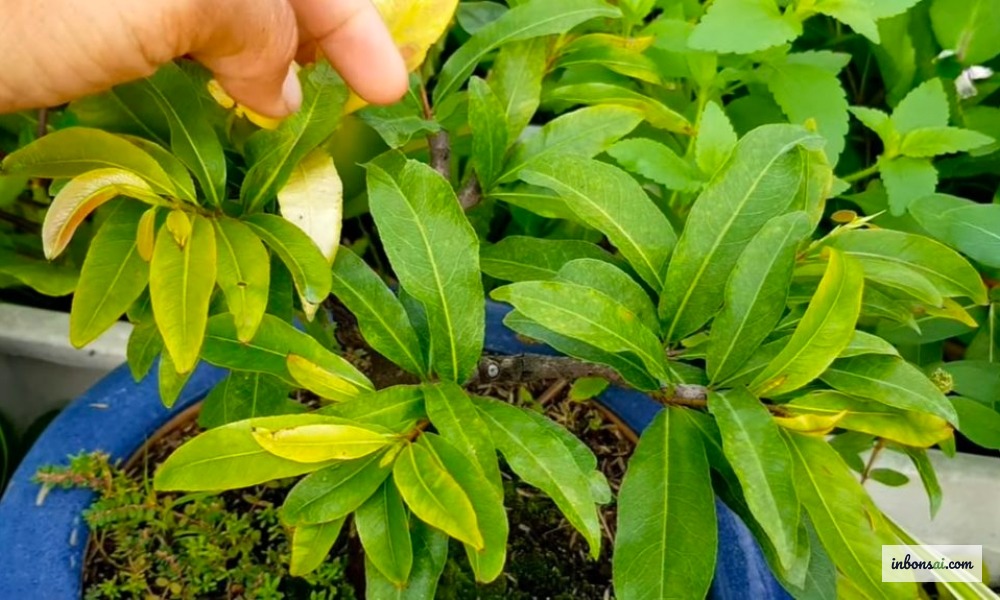
Before treating the problem, correctly identifying the type of yellowing is essential. Not all yellow leaves are alike — each underlying cause leaves its own distinctive signature.
Uniform yellowing (the entire leaf turns yellow from stem to tip) is typically caused by nitrogen deficiency or insufficient light. Interveinal chlorosis (veins remain green while the tissue between them yellows) is the classic sign of iron or magnesium deficiency. Yellowing that progresses from tip to base usually points to fungal disease or chemical toxicity. Rapid mass leaf drop with yellowing may indicate heat stress, waterlogging, or overwatering.
Observe carefully whether old leaves or young leaves yellow first, and whether the yellowing is uniform or patchy. Checking the roots and soil whenever possible will narrow down the cause significantly, as many problems originate below the soil surface.
Nutrient Deficiency — The Most Common Cause
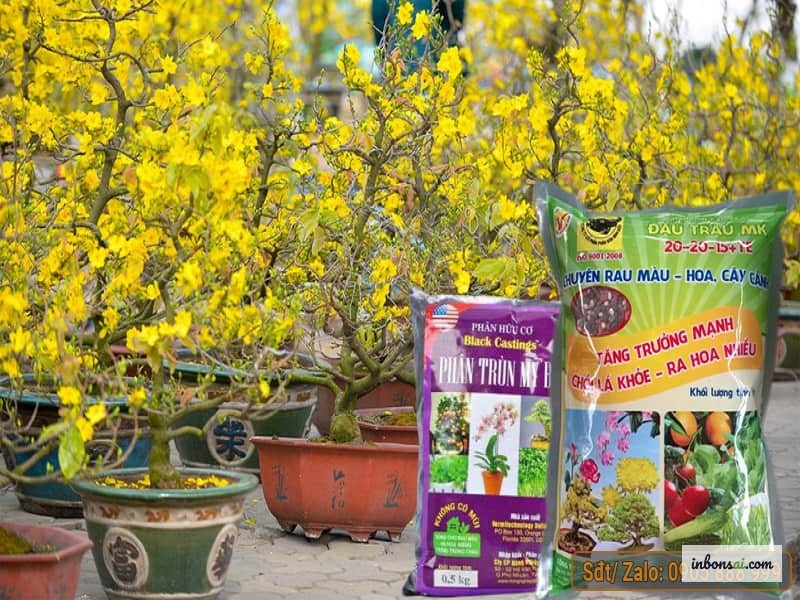
Nutrient deficiency is the leading cause of yellowing leaves on apricot bonsai, particularly in container-grown trees that have not been repotted or fertilised regularly. Apricot bonsai requires a balance of three primary macronutrients: nitrogen (N), phosphorus (P), and potassium (K) — collectively known as NPK.
Nitrogen (N) deficiency is the most common, causing uniform yellowing that begins with older leaves and progresses upward. The tree grows slowly, and leaves become small and pale. Solution: apply a high-nitrogen fertiliser such as urea (46-0-0) or well-composted organic matter. Dilute to 1-2 g/litre of water and apply every two weeks during the growing season.
Magnesium (Mg) deficiency causes interveinal chlorosis starting in older leaves, since magnesium is a core component of chlorophyll. Correct it by foliar-spraying a 0.5% MgSO₄ (magnesium sulphate) solution or incorporating it into the soil. Sulphur (S) deficiency also causes yellowing but starts in young leaves — an important distinction from magnesium deficiency.
Do not overlook micronutrients such as zinc (Zn), manganese (Mn), and boron (B). Applying a comprehensive foliar micronutrient spray once a month will help maintain adequate nutrition. If you do not yet have a structured care schedule, see our guide on caring for apricot bonsai after Tết for a practical monthly routine.
Incorrect Watering Causing Yellow Leaves
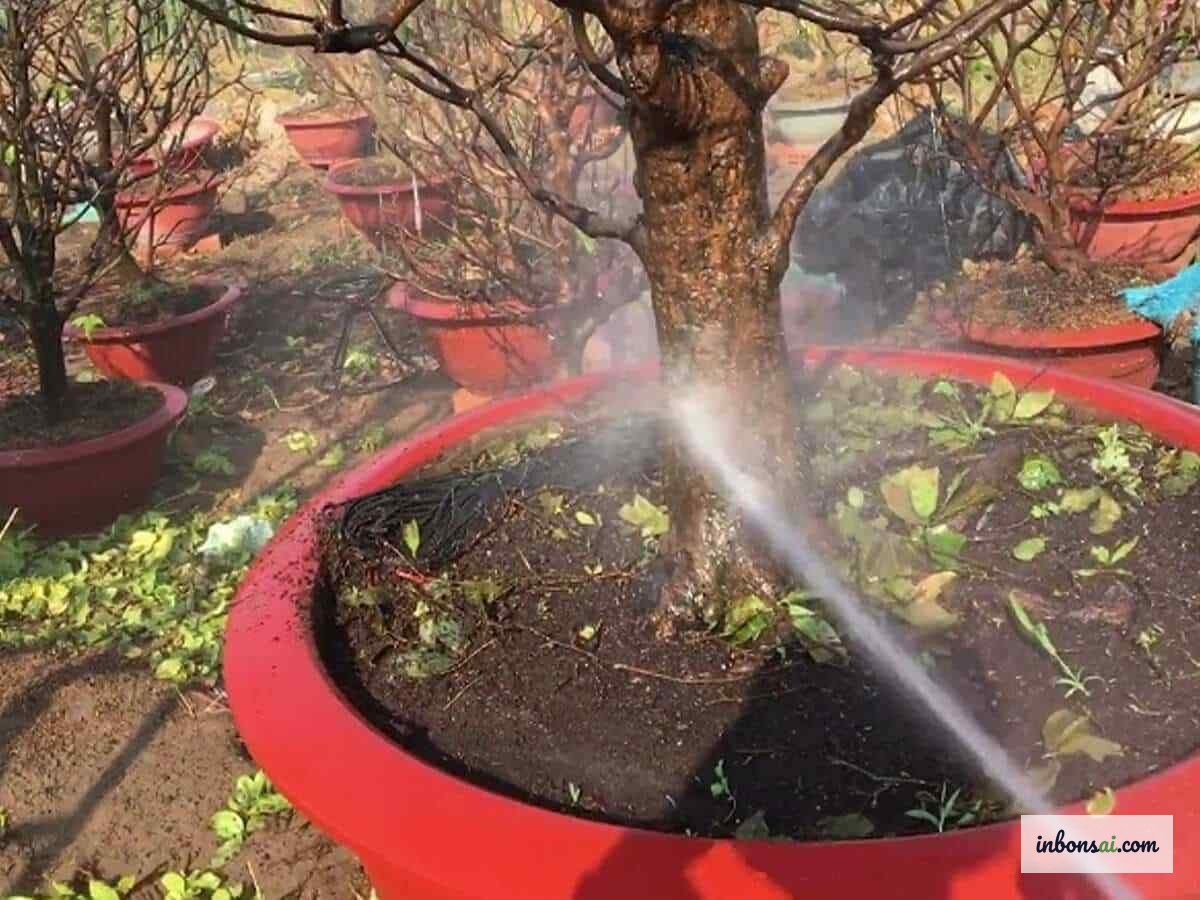
Incorrect watering — whether too much or too little — causes yellowing and can lead to rapid leaf drop. This is the most common mistake among new growers.
Overwatering causes roots to sit in waterlogged soil without access to oxygen. Roots rot progressively and lose their ability to absorb water and nutrients. Signs include patchy or generalised yellowing, fast leaf drop, and a faint smell near the base. Test by pressing the soil: if it remains soggy 2-3 days after watering, you are watering too frequently.
Underwatering prevents the tree from transporting nutrients to leaves. Yellowing typically starts at leaf tips and margins, progresses to crispy brown edges, and the soil visibly shrinks away from the pot walls.
The correct watering principle: water when the top 2-3 cm of soil has dried, water thoroughly until it drains freely from the drainage holes, then allow complete drainage before the next watering. In hot summers this may mean daily watering; in cool winters, every 2-3 days. There is no fixed schedule — observe the soil and the tree.
Fungal Disease and Pests Causing Yellow Leaves
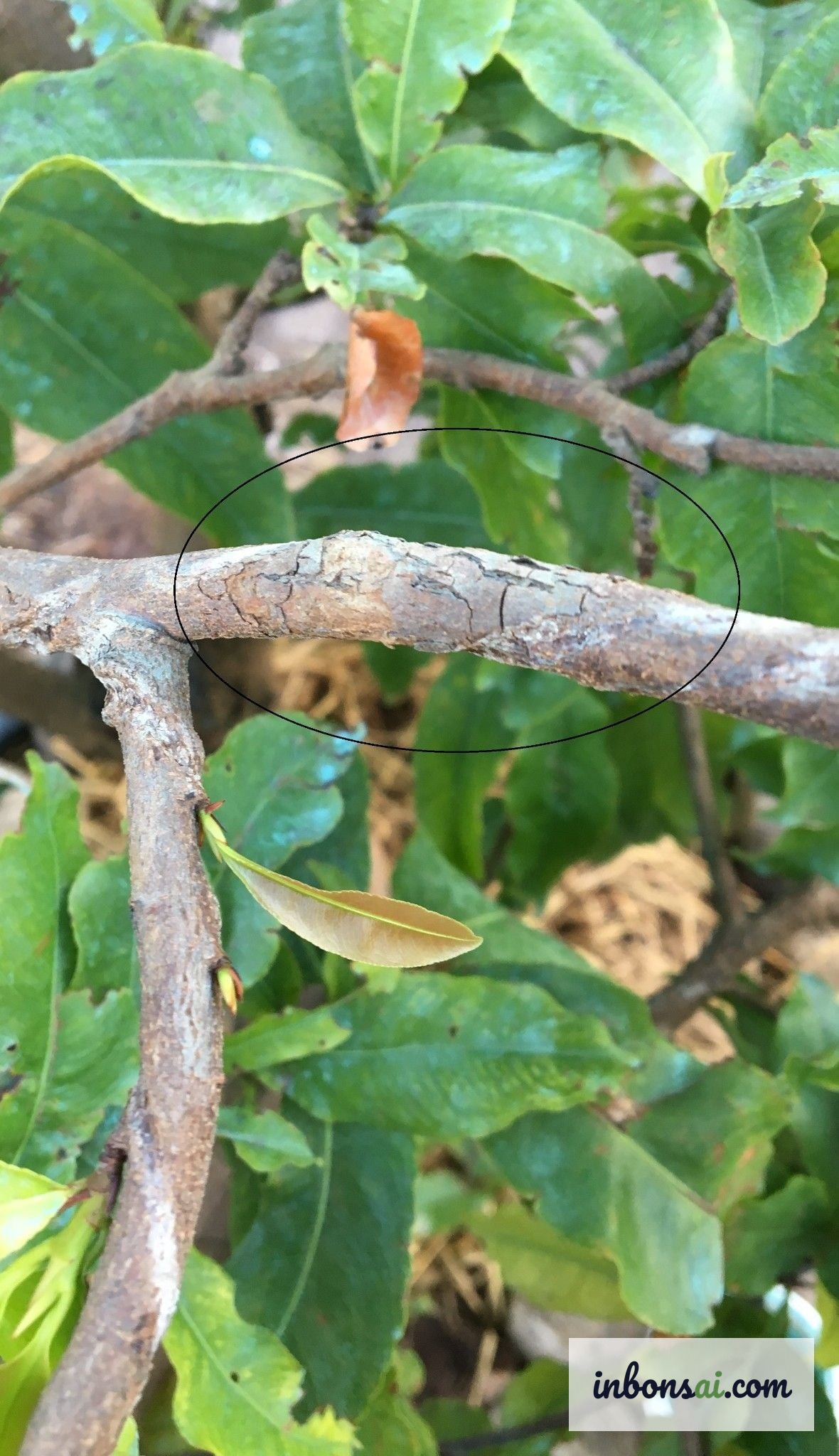
Fungal disease is an often-overlooked cause that can spread rapidly if not caught early. Common fungal diseases on apricot bonsai include:
Leaf spot disease (Cercospora or Alternaria): Irregular brown or yellow spots that enlarge over time. Treat with copper-based fungicides (Copper Oxychloride) or Mancozeb applied every two weeks.
Anthracnose (Colletotrichum gloeosporioides): Dark-brown spots with yellow halos, common during humid rainy seasons. Remove infected leaves, apply Carbendazim or Thiophanate-methyl, and improve air circulation around the tree.
Powdery mildew: A white powdery coating on leaf surfaces that causes yellowing and leaf drop. Use wettable sulphur or Myclobutanil-based fungicides.
Beyond fungi, spider mites (Tetranychus urticae) and mealybugs cause yellow stippling by piercing and sucking plant sap. Inspect the undersides of leaves with a magnifying glass — fine webbing or tiny moving specks indicate spider mites. Treat with Abamectin or organic neem oil, applied thoroughly to both leaf surfaces.
Fertiliser and Chemical Toxicity
An underestimated but very common cause: excessive fertiliser application or herbicide/pesticide drift near the planting area. When soil salt concentration is too high, roots cannot absorb water even if the soil is moist — a condition known as fertiliser burn or soil salinisation.
Signs: yellow leaves with scorched brown margins appearing shortly after fertilising or spraying. A white salt crust may form on the soil surface after it dries.
Solution: flush the soil thoroughly with large volumes of clean water to leach out the excess salts — repeat 3-4 times over several days. In severe cases, full soil replacement and removal of damaged roots may be necessary. Going forward, always dilute fertilisers to the recommended rate and apply small doses frequently rather than heavy doses infrequently.
Acid Soil Affecting Apricot Bonsai
In many regions of southern Vietnam and the Mekong Delta, acidic soil (pH below 5.5) is a persistent challenge. Acid soil blocks the uptake of iron, phosphorus, and calcium by the roots — even when these elements are present in the soil.
Signs: stunted growth, pale and gradually yellowing leaves despite correct care. Test soil pH with a meter or pH paper — readings below 5.5 indicate potential acidity issues.
Remediation: apply agricultural lime (CaCO₃) or dolomite to raise pH towards the ideal range of 6.0-6.5 for apricot bonsai. Use approximately 100-200 g/m² of soil, mix thoroughly and water well. Combine with organic biofertiliser to improve soil structure and beneficial microbial activity.
Do not apply lime at the same time as nitrogen fertiliser, as they react and cause nitrogen loss. Allow 2-3 weeks between applications. For guidance on choosing the right growing medium from the outset, read our article on growing apricot bonsai suited to climate and ecology.
Interveinal Chlorosis (Iron Deficiency)
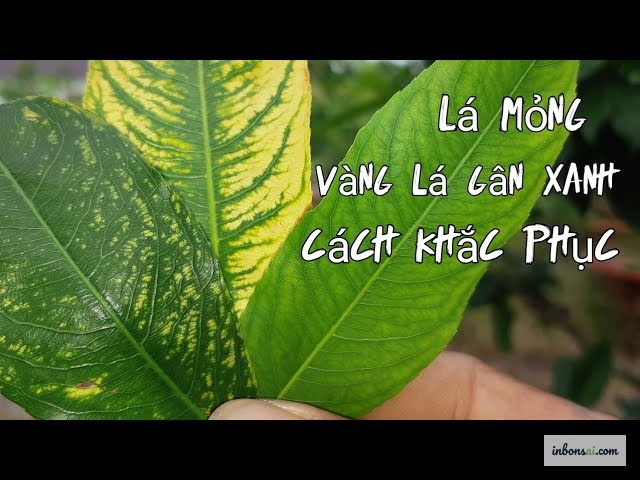
Interveinal chlorosis is a distinctive form of yellowing: the leaf veins remain green while the tissue between them turns yellow. The primary cause is iron (Fe) deficiency, though manganese (Mn) or magnesium (Mg) deficiency can produce similar patterns.
Iron deficiency most often occurs when soil pH is too high (above 7.0), locking iron into insoluble forms that roots cannot absorb — even when iron is physically present in the soil. Checking and adjusting soil pH is therefore the critical first step before supplementing iron.
Quick fix: foliar-spray chelated iron (Fe-EDTA or Fe-DTPA) at 0.2-0.5% concentration on both leaf surfaces every 1-2 weeks. Chelated iron is absorbed through leaves independently of soil pH. Combine with soil application of FeSO₄ (ferrous sulphate) for long-term improvement.
Note: if interveinal chlorosis appears in older leaves first (rather than young leaves), magnesium deficiency is more likely than iron deficiency. Correctly distinguishing between the two ensures you apply the right remedy.
How to Prevent Yellow Leaves on Apricot Bonsai
Treating yellow leaves is necessary, but prevention is far more efficient. A systematic care routine keeps your apricot bonsai healthy and dramatically reduces disease incidence.
Sensible fertilisation schedule: apply balanced NPK fertiliser once a month during the growing season (March–September). Use higher-nitrogen formulations (e.g., 30-10-10) when the tree is producing new foliage, switching to higher P-K formulations (e.g., 10-30-20) when preparing for bud set. Apply micronutrient foliar spray once a month.
Watering discipline: invest in a simple soil moisture meter — this eliminates guesswork. Ensure pots have adequate drainage holes and the growing medium is well-aerated.
Regular inspection: spend 5-10 minutes each week observing leaves, trunk, and soil. Detecting pests and diseases early makes treatment straightforward compared to dealing with a full-blown infestation.
Repotting on schedule: container-grown apricot bonsai should be repotted with fresh growing medium every 2-3 years. Old medium becomes nutrient-depleted and accumulates excessive salt — creating ideal conditions for nutritional and fungal problems.
For a comprehensive monthly care calendar, see our guide on caring for mai bonsai after Tết.
Yellow leaves on apricot bonsai are a solvable problem — provided you observe carefully and correctly identify the cause. There is no single fix that works for every situation: each tree, growing condition, and climate has its own nuances. Be patient, work through each possibility methodically, and record what proves effective. We wish you and your apricot bonsai many seasons of lush green foliage and brilliant golden blooms.
Tags
#apricot-bonsai#yellow-leaves#bonsai-care#plant-disease#troubleshootingGet bonsai guidance every week.
Fresh care guides, styling notes, and bonsai inspiration delivered to your inbox.