
Spice Vegetable
FISH MINT
(HEARTLEAF)
Fish mint (also known as Houttuynia cordata) is a versatile herb used as a fresh vegetable. It has cooling properties and a unique taste.
Spice Vegetable
Care Notes
Water Needs
FISH MINT
HEARTLEAF
1. Bio Characteristics
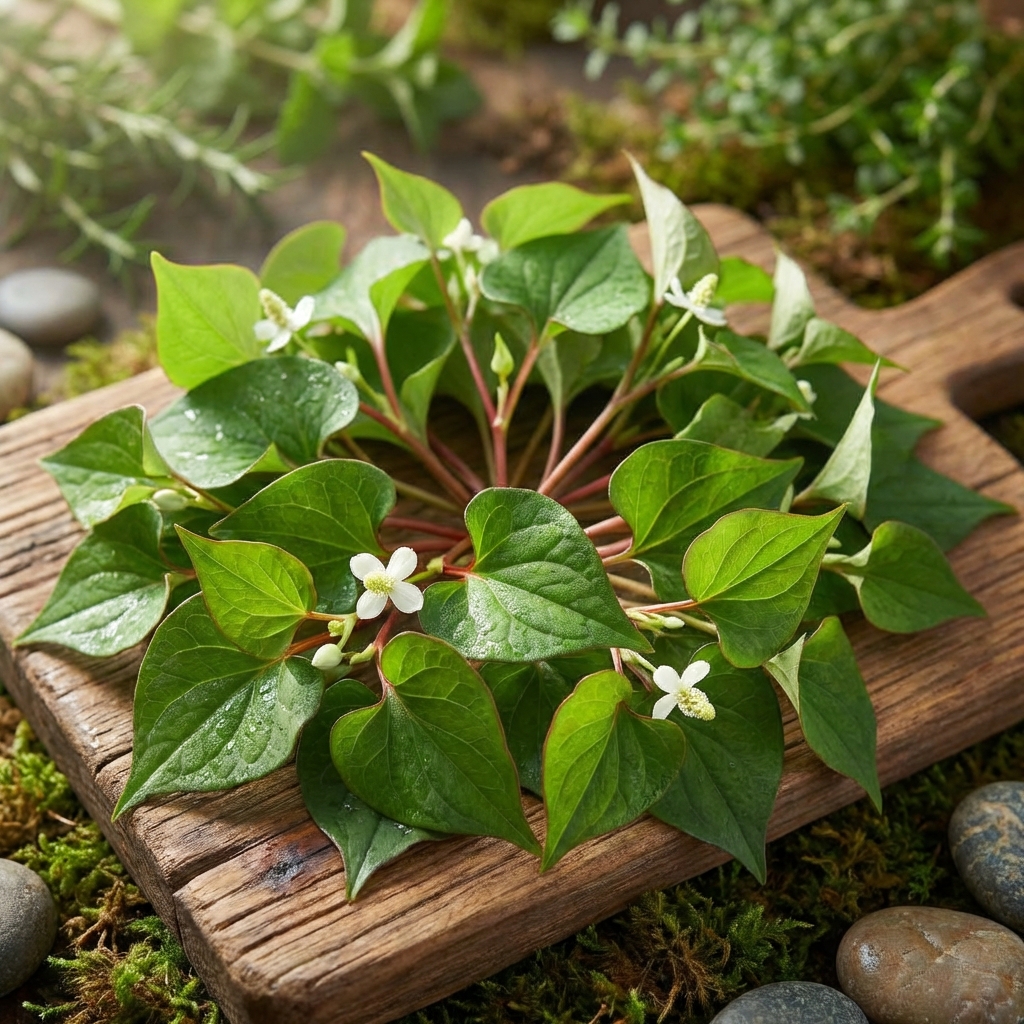
Fascicled roots, adventurous roots at nodes. Heart-shaped leaves, smooth, alternate. Light yellow small flowers.
2. Uses
Culinary (fresh vegetable) and Medicinal (treats dysentery, measles, inflammation).
3. Cultivation
Best in Spring. Row spacing 20cm. Use stem cuttings.
I. Uses & Value
Fish mint can be used as a fresh vegetable, eaten alone or with other raw vegetables. Although cooling, it has a fishy taste so some people may not be used to consuming it.
Medicinal Value: Treats dysentery, measles, and blocked milk ducts in postpartum women.
II. Biological Characteristics
- Roots & Stem: Fascicled roots; adventitious roots can grow from stem nodes. Herbaceous stem, soft, light green or purple.
- Leaves: Heart-shaped leaves, light green, smooth, alternate. Flowers are small, light yellow.
- Climate: Prefers mild climate, scattered light, grows well under large trees. Loves moisture but cannot tolerate waterlogging.
- Soil: Grows well on loose soil, neutral pH. Avoid soil that is too rich or muddy.
III. Cultivation Techniques
1. Seasons
- Spring Season: Best time for planting.
- Dry Season: In the South.
2. Soil and Fertilizers
Bed Preparation: Bed width 1.1-1.2m, 0.15-0.25m, furrow 25-30cm.
- Organic fertilizer: 1.5 - 2 tons
- Superphosphate: 15 - 20kg
- Potassium sulphate: 10kg
- NPK: 40 - 45kg (Total/season)
* Basal application: all organic fertilizer, phosphate and 2/3 potassium at a depth of 10-12cm.
3. Spacing & Care
- Spacing: Row spacing 20cm, plant spacing 15cm. 20,000 plants/1000m².
- Planting: Plant using stem cuttings, bury the root and base, press lightly around it.
- Care: - Watering: Twice/day before greening, then once/day. Use clean water. - Weeding: 10-15 days after planting, hoe lightly and hill up roots. - Top Dressing: After first 2 harvests: 3kg potassium + 4-5kg NPK. Total/season: 40-45kg NPK in 4-5 applications.
- Pests: Few pests, use biological pesticides if necessary.
IV. Harvest & Preservation
- Timing: First harvest 35-40 days after planting. Then every 15-20 days.
- Method: Cut across the stem, taking 5-6 leaves with each top. Leave 5-6cm of stem near the root.
- Yield: 22-25 tons/ha. Highest yield in spring.
Living Conditions
Fertilizer per 1,000m²: Organic fertilizer: 1.5 - 2 tons Superphosphate: 15 - 20kg Potassium sulphate: 10kg NPK: 40 - 45kg (Total/season) * Basal application: all organic fertilizer, phosphate and 2/3 potassium at a depth of 10-12cm. 3. Spacing & Care Spacing: Row spacing 20cm, plant spacing 15cm. 20,000 plants/1000m². Planting: Plant using stem cuttings, bury the root and base, press lightly around it. Care: - Watering: Twice/day before greening, then once/day. Use clean water. - Weeding: 10-15 days after planting, hoe lightly and hill up roots. - Top Dressing: After first 2 harvests: 3kg potassium + 4-5kg NPK. Total/season: 40-45kg NPK in 4-5 applications. Pests: Few pests, use biological pesticides if necessary. IV. Harvest & Preservation Timing: First harvest 35-40 days after planting. Then every 15-20 days. Method: Cut across the stem, taking 5-6 leaves with each top. Leave 5-6cm of stem near the root. Yield: 22-25 tons/ha. Highest yield in spring. Fertilizers (for 1,000m²) 1.5-2 Ton Organic 40-45 kg NPK (Total) 15-20 kg Superphosphate 10 kg Potassium Growth Process (Multi-Harvest) Planting
Spring - Stem cuttings.
Care
Water daily, weed after 2 weeks.
First Harvest
Day 35-40.
Next Harvests
Every 15-20 days.