
Spice Herbs
Hung Lang Mint
(MENTHA AQUATICA)
Hung Lang mint is a specialty herb of Lang Ha ward, Hanoi. It has a gentle, attractive aroma, indispensable in dishes like bun cha and spring rolls.
Spice Herbs
Care Notes
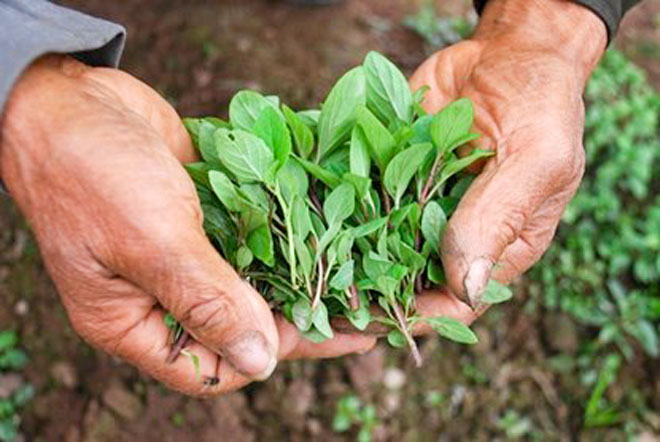
Hung Lang Mint
MENTHA AQUATICA
1. Bio Characteristics
Creeping herbaceous plant. Dark purple stems. Egg-shaped leaves. Flowers in whorls.
2. Uses
Special spice for bun cha, spring rolls. High economic value.
3. Cultivation
Best planted in Aug-Sept. Loose soil, neutral pH.
I. Uses & Value
Hung Lang mint is a specialty herb of Lang Ha ward, Dong Da district, Hanoi. It possesses a gentle, attractive aroma and is an essential ingredient in traditional dishes such as bun cha, fried spring rolls (nem), and mixed fresh herbs.
Note: While grown elsewhere, the mint grown in Lang area remains the most famous due to its distinct fragrance. Currently, cultivation area is shrinking due to urbanization.
II. Biological Characteristics
- Stems & Leaves: Herbaceous plant that creeps and grows in clumps. Stems and petioles are dark purple. Leaves are egg-shaped, small at both ends, with shallow serrated edges.
- Flowers & Seeds: Flowers grow in whorls at leaf axils (5-6 flowers/whorl), white or purple. Seeds are black, containing essential oil.
- Climate: Prefers mild, warm climates (20-25°C). Loves sunlight.
- Water & Soil: Moisture-loving but cannot withstand waterlogging. Prefers loose soil, free of weeds, neutral pH, sandy loam or light loam.
III. Cultivation Techniques
1. Season & Variety
- Season: Can be grown year-round, but best in August-September.
- Propagation: Vegetative propagation (stem cuttings). Use healthy 4-5cm cuttings free from pests.
2. Soil & Fertilizers
Soil Prep: Plough carefully, ensure loose soil, weed-free. Sun-dry soil if possible. Raise beds 0.15-0.20m high, 1.1-1.2m wide.
- Manure: 1.0 - 1.5 tons
- Superphosphate: 25 - 30kg
- Potassium Chloride: 12 - 15kg
- NPK: 30 - 40kg
* Note: Do not use fresh manure or untreated wastewater. Limit inorganic nitrogen to preserve the fragrance.
* Base dressing: All manure + Phosphate + 1/3 NPK + 1/2 Potassium. Mix into topsoil.
3. Planting & Care
- Planting: Rows 15-20cm apart, plants 8-10cm apart. 2-3 stems per hole. Bury at least one node for root development.
- Care: - Watering: Twice a day (morning, afternoon) initially. Every 2 days once established. Use clean water, do not flood irrigation. - Weeding: Hand weeding. Lightly loosen soil if compacted. - Top dressing: After harvesting, apply NPK (1.0 - 1.5%) or scatter between rows and water.
- Pests: Root rot is common. Use integrated pest management and herbal pesticides if needed.
IV. Harvest & Preservation
- Harvest: Harvestable year-round. Average every 20 days. Harvest late at night or early morning. Bundle into small bunches.
- Conservation: In late winter, remove old/diseased leaves, apply ash, mound soil around roots to overwinter for next year.
Conditions
Fertilizer for 1,000m²: Manure: 1.0 - 1.5 tons Superphosphate: 25 - 30kg Potassium Chloride: 12 - 15kg NPK: 30 - 40kg * Note: Do not use fresh manure or untreated wastewater. Limit inorganic nitrogen to preserve the fragrance. * Base dressing: All manure + Phosphate + 1/3 NPK + 1/2 Potassium. Mix into topsoil. 3. Planting & Care Planting: Rows 15-20cm apart, plants 8-10cm apart. 2-3 stems per hole. Bury at least one node for root development. Care: - Watering: Twice a day (morning, afternoon) initially. Every 2 days once established. Use clean water, do not flood irrigation. - Weeding: Hand weeding. Lightly loosen soil if compacted. - Top dressing: After harvesting, apply NPK (1.0 - 1.5%) or scatter between rows and water. Pests: Root rot is common. Use integrated pest management and herbal pesticides if needed. IV. Harvest & Preservation Harvest: Harvestable year-round. Average every 20 days. Harvest late at night or early morning. Bundle into small bunches. Conservation: In late winter, remove old/diseased leaves, apply ash, mound soil around roots to overwinter for next year. Fertilizer (per 1,000m²) 1-1.5 Tons Manure 30-40 kg NPK 25-30 kg Superphosphate 12-15 kg Potassium Growth Process Planting
Best in Aug-Sept. 4-5cm cuttings.
Care
Water daily, hand weed, NPK top up.
Harvest
Every 20 days.
Overwintering
Protect roots for next season.