
HERB & SPICE
CORIANDER
(CILANTRO)
Coriander is usually eaten raw with other greens or used in Pho and soups... It has a gentle, appealing fragrance.
HERB & SPICE
Care Notes
Water Needs
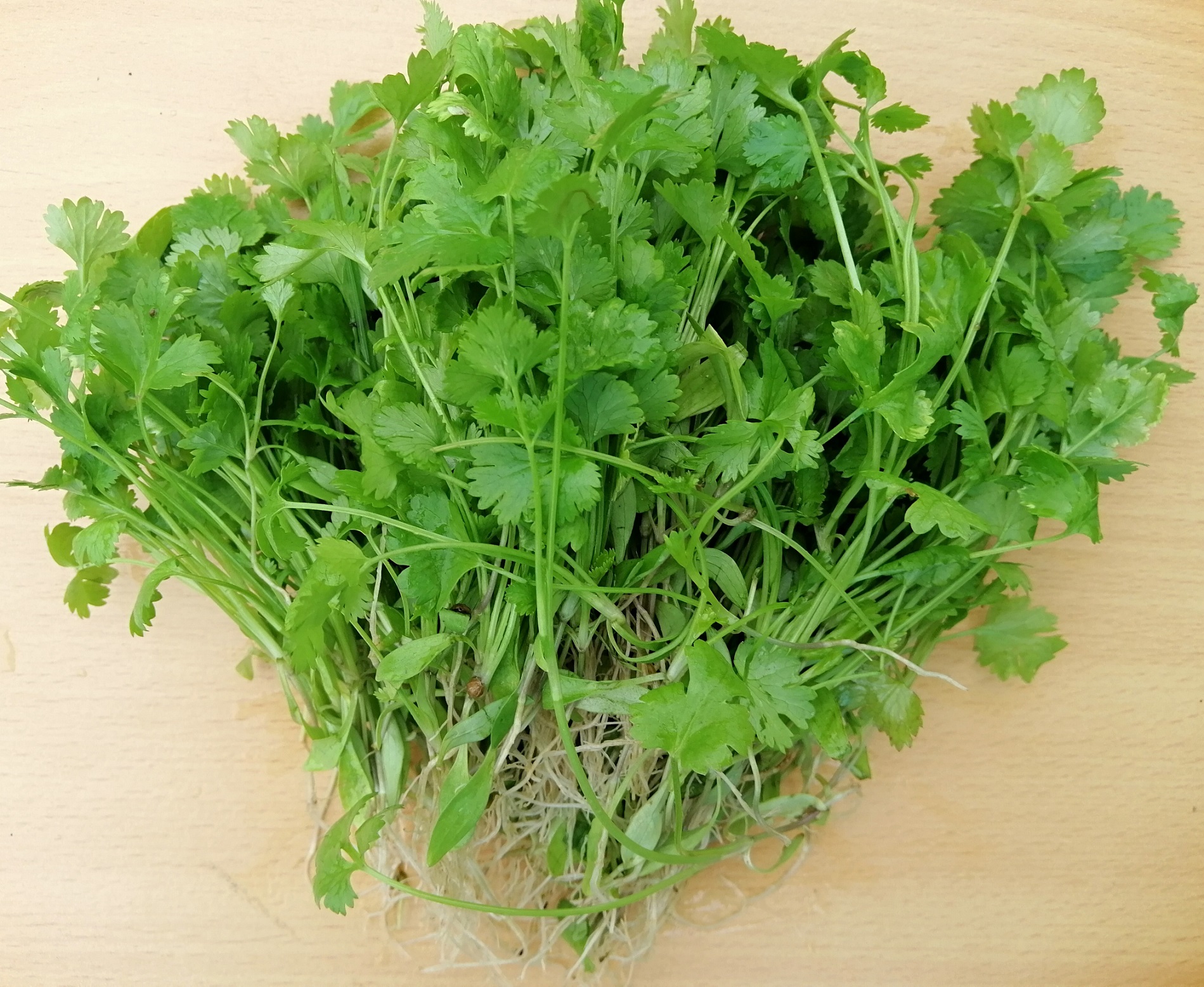
CORIANDER
CILANTRO
1. Bio Characteristics
Fibrous roots. Herbaceous stem, 15-50cm high. Leaves pale green, 3-lobed. Flowers white/pink. Fruit globular, bright yellow.
2. Uses
Eaten raw, Pho spice, soup. Treats common ailments, digestion. Cosmetic industry, food.
3. Cultivation
Best in Winter-Spring season (Sep-Mar). Broadcast sowing, cover with fine soil and straw.
I. Uses
Coriander is an important spice vegetable in the winter-spring season. It uses to be eaten raw with other greens or used with Pho and some soup dishes... It has a gentle, appealing fragrance.
Other uses: Seeds treat measles. Seeds are also used in cosmetic industry and food (tea scenting)...
II. Biological Characteristics
- Roots & Stem: Fibrous root system, distributed mainly in topsoil. Herbaceous plant, 15-50cm depending on growth stage, capable of branching.
- Leaves & Flowers: Leaves pale green, petioles near base usually long, each leaf has 2-3 pairs of leaflets. Leaflets near petiole grow symmetrically, leaflets at tip grow separately. Each leaflet is 3-lobed, round, serrated. Leaves near tip have small, fibrous lobes. White or pink flowers. Globular fruit, bright yellow.
- Climate: Prefers temperate climate, cold tolerant; growth is difficult and stunted when temperature rises high.
- Soil: Sun-loving plant, can grow on many soil types but best on sandy loam, light loam, neutral pH. Can grow on slightly alkaline soil.
III. Cultivation Techniques
1. Season
- Main Season: September to March (Winter-Spring).
- Early Season: July, August. Requires shading for seedlings due to high heat and rain.
- Late Season: Warm areas can sow in Jan-Feb next year.
2. Soil & Fertilizers
Soil Preparation: Plow well, loose, clean weeds. Beds 1.1-1.2m wide and 0.15-0.20m high.
- Organic (Decomposed): 1.0 - 1.5 tons
- Superphosphate: 20 - 30 kg
- NPK: 25 - 35 kg
- Potassium chloride: 15 - 18 kg
* Basal dressing: All organic fertilizer, superphosphate, 1/3 NPK, 1/3 Potassium. Mix well into bed surface. Do not use fresh manure. Potassium or ash is important for flavor.
3. Sowing & Care
- Seeds: 1.5 - 2.0kg/1,000m². Soak in warm 35-40°C for 10-12 hours. Wash, drain, then sow.
- Sowing: Broadcast evenly. Can mix with fine soil. Cover with fine soil, then old straw or mulch.
- Care: - Watering: Use rose can to keep moist. Water daily or every other day. Use clean water. - Top dressing 1: At 2-3 true leaves. 5-6kg NPK + 3-4kg Potassium, 1% concentration. Rinse leaves with clean after. - Top dressing 2: At 4-5 leaves. Same as first time.
- Pests: Use biological pesticides for raw eating greens. Weed regularly by hand.
IV. Harvest & Seed Saving
- Commercial Greens: Harvest after 30-35 days. Dig up plants, wash, bunch (30-40 bunches/kg).
- Seed Production: Thin to 10-12cm/plant. 40-45 days from flowering to fruit set. Cut plants in March, dry, thresh, clean, dry seeds again and store.
- Seed Yield: 35-40kg/1,000m².
Conditions
Fertilizer per 1,000m²: Organic (Decomposed): 1.0 - 1.5 tons Superphosphate: 20 - 30 kg NPK: 25 - 35 kg Potassium chloride: 15 - 18 kg * Basal dressing: All organic fertilizer, superphosphate, 1/3 NPK, 1/3 Potassium. Mix well into bed surface. Do not use fresh manure. Potassium or ash is important for flavor. 3. Sowing & Care Seeds: 1.5 - 2.0kg/1,000m². Soak in warm 35-40°C for 10-12 hours. Wash, drain, then sow. Sowing: Broadcast evenly. Can mix with fine soil. Cover with fine soil, then old straw or mulch. Care: - Watering: Use rose can to keep moist. Water daily or every other day. Use clean water. - Top dressing 1: At 2-3 true leaves. 5-6kg NPK + 3-4kg Potassium, 1% concentration. Rinse leaves with clean after. - Top dressing 2: At 4-5 leaves. Same as first time. Pests: Use biological pesticides for raw eating greens. Weed regularly by hand. IV. Harvest & Seed Saving Commercial Greens: Harvest after 30-35 days. Dig up plants, wash, bunch (30-40 bunches/kg). Seed Production: Thin to 10-12cm/plant. 40-45 days from flowering to fruit set. Cut plants in March, dry, thresh, clean, dry seeds again and store. Seed Yield: 35-40kg/1,000m². Fertilizer (per 1,000m²) 1-1.5 Tons Organic (Decomposed) 25-35 kg NPK 20-30 kg Superphosphate 15-18 kg Potassium chloride Growth Process Sowing
Soak seeds 35-40°C, 10-12h. Broadcast.
Care
Water daily. Fertilize at 2-3 and 4-5 leaves.
Harvest Greens
After 30-35 days.
Harvest Seeds (Optional)
Around March (when fruits are yellow).