
Culinary Herbs
VIETNAMESE CORIANDER
(Polygonum odoratum)
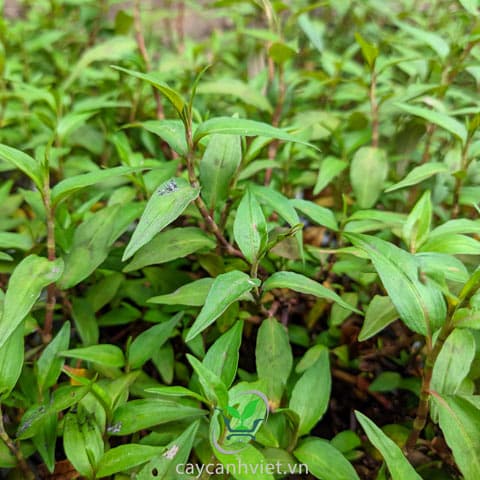
Vietnamese coriander (Rau Ram) is a very common spice in daily life. Its leaves have a pleasant aroma, essential in dishes like shredded chicken salad, clam porridge, and balut.
Culinary Herbs
Care Notes
Water Needs
VIETNAMESE CORIANDER
Polygonum odoratum
1. Characteristics
Herbaceous, reddish-purple stems, creeping. Fascicled roots. Leaves green above, purplish below.
2. Uses
Spice/Herb (soups, salads...) and Medicinal (indigestion, sunstroke).
3. Technique
Year-round (best in Spring-Summer). Wet/Mud soil. Healthy stem cuttings.
I. Uses & Benefits
Vietnamese coriander is a common spice. Stems and leaves have a pleasant aroma, used in shredded chicken salad, clam porridge, balut, and bun thang...
Medicinal Value: Used to treat indigestion, sunstroke, scabies, and impetigo.
II. Biological Characteristics
- Stems & Roots: Herbaceous, reddish-purple creeping stems, 25-30cm high. Fascicled roots grow from nodes.
- Leaves: Green on top, reddish-purple underneath, alternate arrangement, very short petioles.
- Climate: Prefers warm, temperate climate. Intolerant to extreme heat or cold.
- Environment: Loves moist environments; grows well in light loam and medium loam soils.
III. Cultivation Techniques
1. Season & Soil
- Season: Year-round in temperate climates. Best in Spring-Summer (Jan-Feb) or late Feb to mid-Mar. Late planting reduces yield.
- Soil: Well-ploughed, weed-free. Can be grown in wet soil (like rice paddies) or mud. Beds 1.1-1.5m wide.
2. Fertilizers
- Organic: 1.0 - 1.5 tons (Decomposed)
- NPK: 30 - 40 kg
- Superphosphate: 25 - 30 kg
- Potash: 15 - 20 kg (or 100-150kg wood ash)
* Basal application: All organic, superphosphate, and 1/3 potash mixed into soil before planting.
3. Planting & Care
- Planting: Propagated by stem. Choose healthy cuttings, 14-15cm long. - Spacing: 10-12cm x 7-10cm. 2-3 shoots per hole. - Bury 1/3 of the cutting (2-3 nodes) in soil.
- Care: - Watering: Keep moist. Can use flood irrigation. - Top dressing: Apply NPK (7-10kg) when new leaves appear. Rinse leaves after applying fertilizer. - Add Potash mid-season during strong growth.
- Pests: Few pests. Use biological or herbal measures if necessary.
IV. Harvest & Propagation
- Harvest: 35-40 days after planting or when canopy closes. - Method: Select plants or cut across the field leaving 5-6cm base.
- Propagation: Crop rotation recommended. Collect poor-growing plants and replant in a fixed area for seedlings (Summer-Autumn).
Conditions
Fertilizer per 1,000m²: Organic: 1.0 - 1.5 tons (Decomposed) NPK: 30 - 40 kg Superphosphate: 25 - 30 kg Potash: 15 - 20 kg (or 100-150kg wood ash) * Basal application: All organic, superphosphate, and 1/3 potash mixed into soil before planting. 3. Planting & Care Planting: Propagated by stem. Choose healthy cuttings, 14-15cm long. - Spacing: 10-12cm x 7-10cm. 2-3 shoots per hole. - Bury 1/3 of the cutting (2-3 nodes) in soil. Care: - Watering: Keep moist. Can use flood irrigation. - Top dressing: Apply NPK (7-10kg) when new leaves appear. Rinse leaves after applying fertilizer. - Add Potash mid-season during strong growth. Pests: Few pests. Use biological or herbal measures if necessary. IV. Harvest & Propagation Harvest: 35-40 days after planting or when canopy closes. - Method: Select plants or cut across the field leaving 5-6cm base. Propagation: Crop rotation recommended. Collect poor-growing plants and replant in a fixed area for seedlings (Summer-Autumn). Fertilizers (per 1,000m²) 1-1.5 Tons Organic 30-40 kg NPK 25-30 kg Superphosphate 15-20 kg Potash Growth Process Planting
Spring-Summer - Stem cuttings.
Care
Keep wet, fertilize.
First Harvest
35-40 days.
Subsequent Harvests
Cut leaving 5-6cm.