Looking for a unique green corner that needs no soil, no daily watering, yet stays vibrant year-round? Aquatic bonsai — growing bonsai in water — at home is a rising trend embraced by plant lovers across Vietnam, especially in apartment settings with limited outdoor space. The clean white roots suspended in clear glass create a living work of art unlike any other plant. This guide walks you through every step — from choosing the right tree and preparing your container to planting and long-term care for aquatic bonsai at home.
What Is Aquatic Bonsai? The Trend of Growing Trees in Water
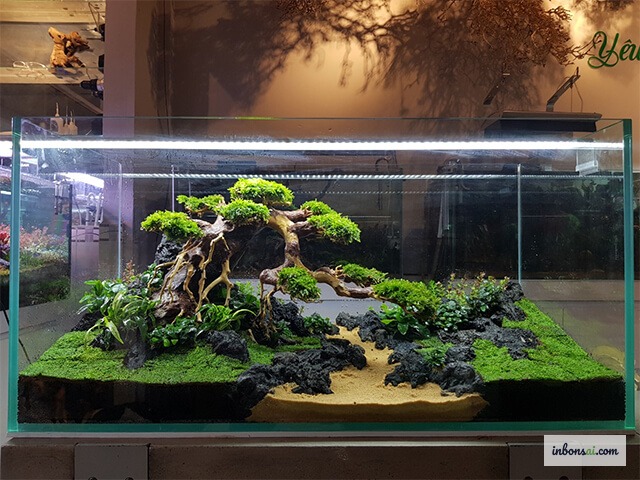
Aquatic bonsai (also called water bonsai) is a method of growing bonsai without soil — the roots are submerged directly in water or anchored in an inert growing medium such as gravel, pebbles, or quartz sand. It is a fusion of traditional bonsai artistry and modern hydroponic techniques.
This trend took off in Vietnam around 2022–2023, as urban dwellers sought a cleaner, mess-free way to bring plants indoors — no soil, no ants, no mold. Aquatic bonsai lets you see the entire root structure of the tree, a completely different aesthetic experience compared to conventional bonsai.
One important distinction: not all bonsai species are suitable for aquatic growing. Only species that can adapt to waterlogged or highly humid environments will thrive. Additionally, the transition from soil to water must be done carefully to avoid transplant shock.
You can check out the beginner's guide to bonsai to build a solid foundation before diving into aquatic bonsai.
Best Tree Species for Aquatic Bonsai at Home
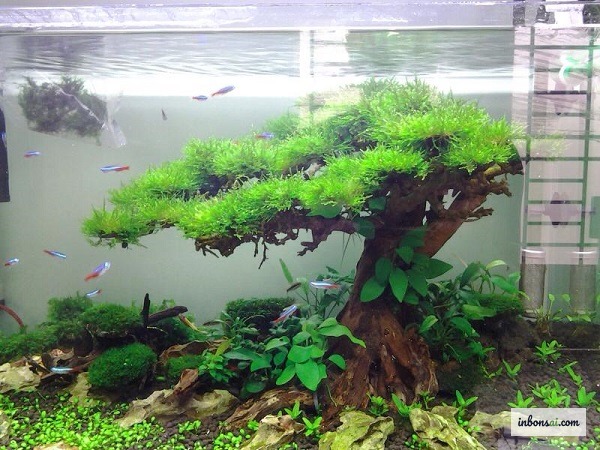
Choosing the right species is the single most important factor determining success with aquatic bonsai. Here are the most popular and community-tested options:
Ficus (Ficus microcarpa and Ficus retusa) is the top choice for beginners. Ficus root systems adapt extremely well to water environments, producing dense white roots that look stunning in glass containers. They tolerate indoor conditions and indirect light and are very resilient if watered correctly.
Carmona retusa (Fukien Tea) is another excellent candidate. Its small glossy leaves and tiny white flowers make it particularly elegant. Carmona adapts well to aquatic growing if the transition is made gradually.
Ficus pumila (creeping fig) and Barringtonia acutangula (sea putat) suit growers with a little more experience. Dracaena sanderiana (lucky bamboo) is uniquely suited because it already thrives natively in water, requiring zero adaptation time.
Species to avoid: Dry-rooted bonsai such as pine, juniper, and yellow apricot (mai vàng) are not compatible with aquatic methods — their roots will rot when permanently submerged. If you prefer traditional soil-grown bonsai, see the mini bonsai care guide for detailed advice.
Tools and Materials You'll Need
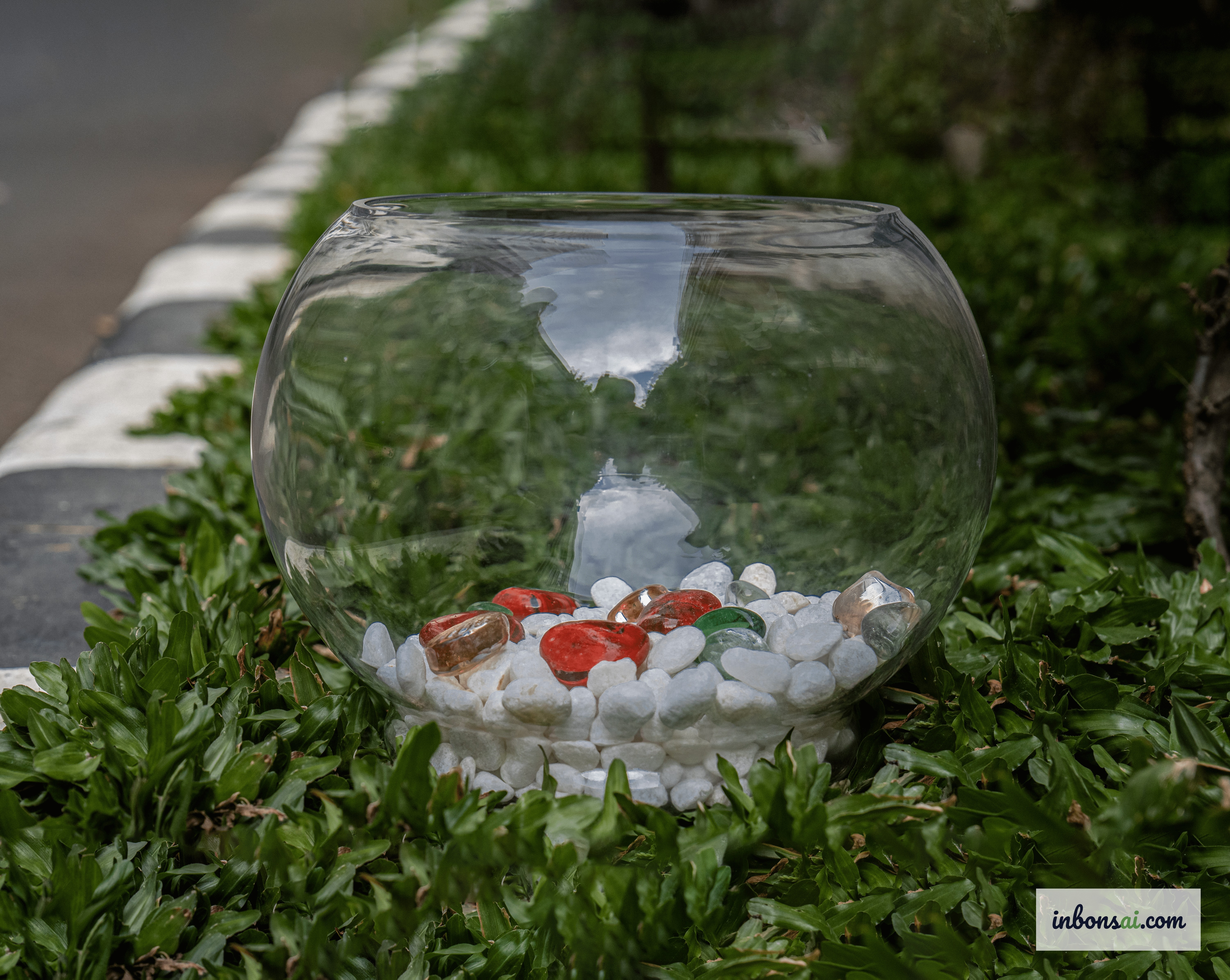
Before you begin, gather your materials. One of the great advantages of aquatic bonsai is that the setup list is short and affordable compared to traditional bonsai.
Container: Use a clear glass or acrylic container so you can monitor the roots and water level easily. A container 20–30 cm tall with a 15–20 cm diameter is ideal for a medium-sized bonsai. Fish tanks, tall flower vases, and geometric terrariums all work well.
Growing medium (in place of soil):
- Aquatic gravel or white quartz pebbles (3–5 mm size) as a base layer to anchor roots
- Expanded clay pebbles (hydroton/LECA) for good aeration
- Coarse sand or small river stones as a decorative top layer
Aquatic fertilizer: Use a liquid hydroponic fertilizer (such as Tropica Aqua Care or fish emulsion fertilizer available at plant shops). Apply only a tiny amount — 1–2 drops per water change.
Other tools: Small root scissors, a soft brush for cleaning the container, and unchlorinated water (let tap water sit overnight, or use filtered water).
Step-by-Step Guide to Planting Aquatic Bonsai
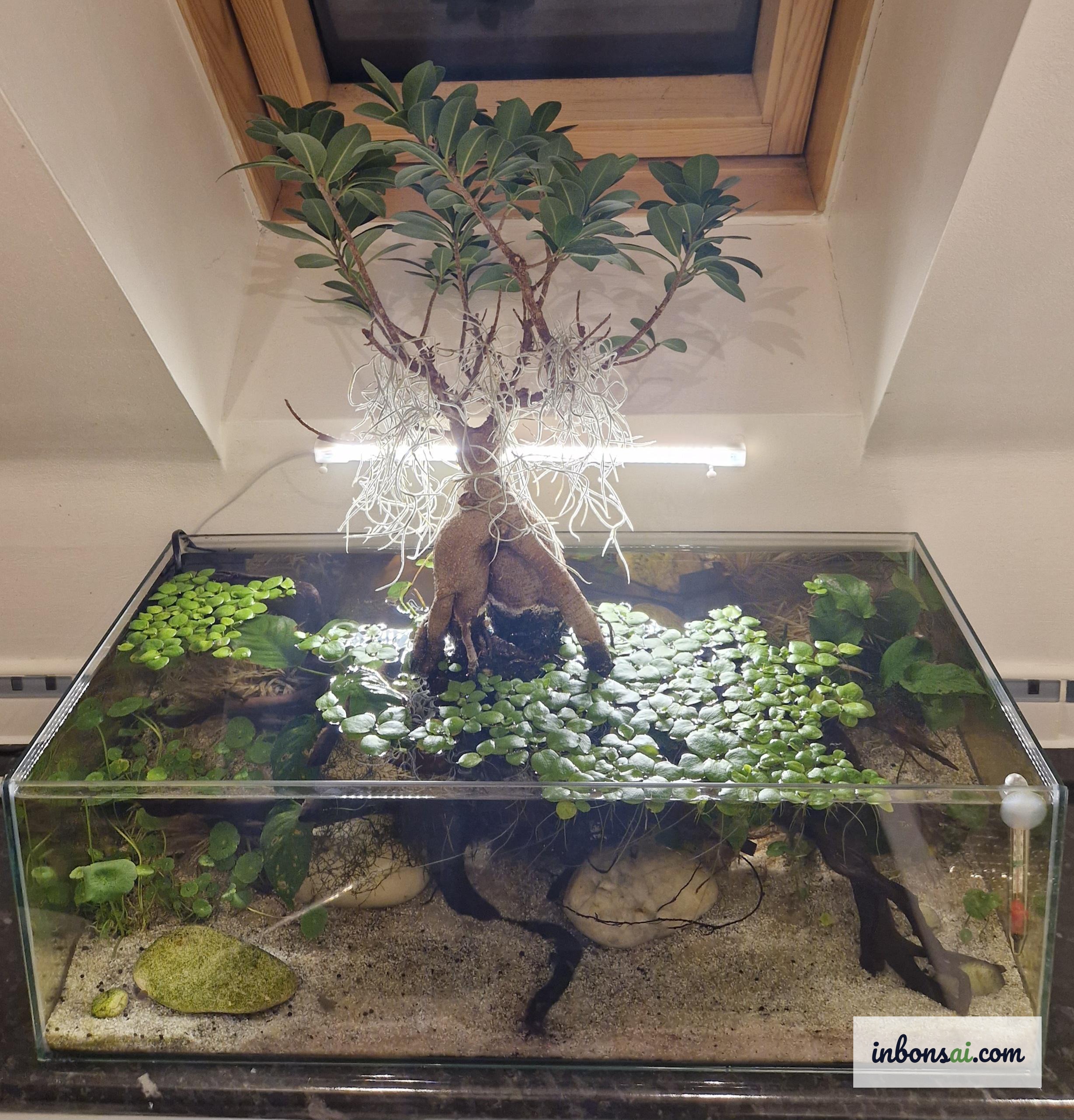
This is the most technically demanding step. The soil-to-water transition cannot be rushed — the tree needs time to adapt without going into shock.
Step 1 — Remove the tree from its pot: Gently lift the tree, preserving the root system. Avoid breaking the main roots.
Step 2 — Wash away all soil: Submerge the roots in a bucket of warm water and gently shake off old soil. Use a low-pressure faucet to rinse each root strand. This is the most critical step — any organic matter left behind will trigger bacterial growth, cloudying the water and rotting the roots.
Step 3 — Prune the roots: Cut away any brown, soft, or rotting roots. Keep the white, firm, healthy roots. If the root ball is very dense, trim 20–30% to reduce energy expenditure.
Step 4 — Soak in clean water for 2–3 hours: Before placing in the final container, soak the roots in clean water for a couple of hours so the tree begins to acclimate.
Step 5 — Place in the container: Add a 5–7 cm layer of aquatic gravel to the bottom. Position the tree in the center, adjusting for the desired bonsai style. Fill in gravel around the roots to secure the tree. Add water until it covers 1/3 to 1/2 of the root length — never submerge the entire root system; the upper portion needs air contact.
Step 6 — Place in gentle light for the first 1–2 weeks to allow adaptation. Avoid strong direct sunlight.
Caring for Aquatic Bonsai: Light, Water, and Nutrients
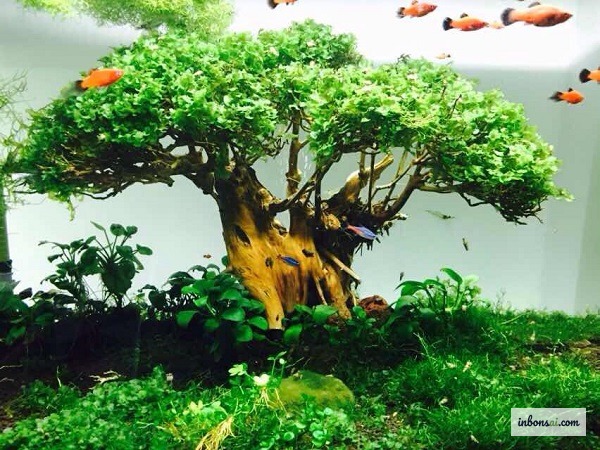
Once the tree has settled in its container (usually after 2–3 weeks), daily maintenance becomes remarkably simple — far easier than caring for soil-grown bonsai.
Light: Aquatic bonsai need 4–6 hours of indirect light per day. A spot near an east- or north-facing window is ideal. Avoid direct sunlight hitting the container — rising water temperatures encourage algae growth and damage roots. If natural light is insufficient, supplement with LED grow lights for 10–12 hours daily.
Water level: Keep the water covering 1/3 to 1/2 of the root length — never above the trunk base. The upper roots need oxygen to breathe. Check the water level every 3–5 days and top up as needed.
Water changes: Replace 30–50% of the water every 1–2 weeks. Use overnight-rested tap water (to off-gas chlorine) or filtered water. When changing water, gently wipe the inside of the container to remove sediment and algae.
Nutrition: Add 1–2 drops of diluted aquatic fertilizer each time you change the water. This is a very small dose — over-fertilizing causes algae blooms. For more guidance on watering principles, see the bonsai watering technique guide.
Troubleshooting Common Aquatic Bonsai Problems
Proper care still leaves room for occasional problems. Recognizing them early makes treatment straightforward.
Cloudy or foul-smelling water: A sign of bacterial growth, usually from residual organic soil or excessive fertilizer. Fix: replace 70–80% of the water, scrub the container and gravel clean, reduce fertilizer to 1 drop or pause entirely.
Green algae on the container walls: Caused by too much direct sunlight. Move the container to a softer-lit spot, and wipe the glass with a soft brush each water change. You can also wrap one side of the container to reduce light penetration.
Root rot (brown, mushy, foul-smelling roots): Typically from water level too high or infrequent water changes. Trim all rotted sections immediately, rinse the entire root system, replace the water, and lower the water level.
Yellowing and falling leaves: May indicate an adaptation phase, insufficient light, or low temperatures. Be patient for 2–4 weeks — if new shoots emerge, the tree is recovering. If all leaves drop with no new growth, the tree may need to return to soil temporarily.
No new root growth after 3–4 weeks: Try adding a small amount of hydroponic rooting hormone to the water, or increase light exposure — insufficient light is often the main culprit for slow root development.
Displaying Aquatic Bonsai as Home Décor
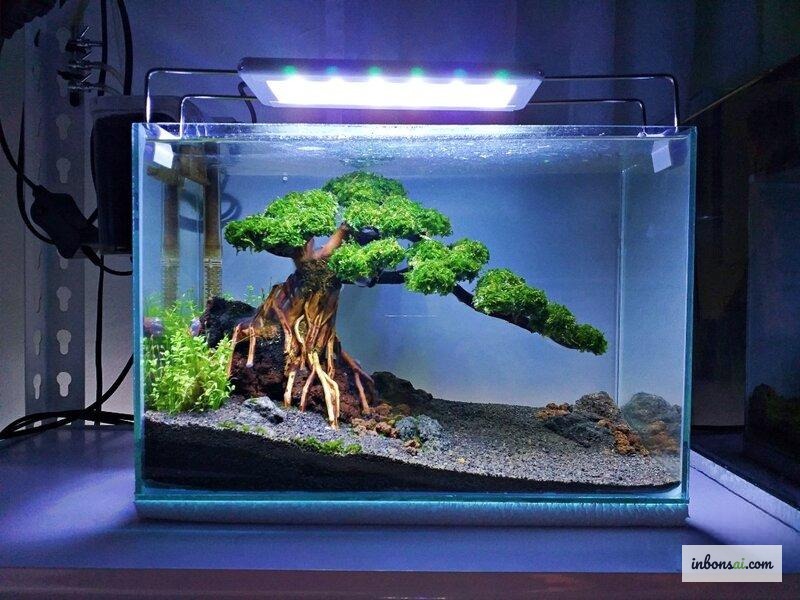
Aquatic bonsai is not just a houseplant — it's a living decorative object. Thoughtful presentation elevates its beauty significantly.
Choose your container to match your aesthetic: A tall cylindrical vase suits minimalist Japanese-style spaces; geometric angular containers work well in modern interiors; wide-mouthed bowls evoke a more traditional feel. Avoid opaque or dark containers — the root display is the primary visual attraction of water bonsai.
Layer your growing medium decoratively: White gravel or clear quartz gives the cleanest, most refined look. A few contrasting black or red pebbles add depth and visual interest. Small aquatic moss patches can also enhance the layered aesthetic.
Placement: Desks, bookshelves, coffee tables, and windowsills are all ideal locations. Aquatic bonsai are particularly popular in offices — they're clean (no soil, no insects), lightweight, and offer a calming focal point.
If you're interested in combining multiple plant elements in one display, see the mini bonsai terrarium guide — another style that combines bonsai with a miniature enclosed ecosystem.
Why Aquatic Bonsai Is Worth Trying
Aquatic bonsai doesn't replace traditional bonsai — it offers distinct practical advantages, especially for busy urbanites or apartment dwellers.
Cleaner and tidier: No soil, no mess, no ants or soil insects. The clean aesthetic makes it ideal for indoor spaces. Less frequent watering: Instead of checking soil moisture daily, you only need to top up water every 3–5 days. Easy root health monitoring: The transparent container lets you see root condition at a glance — white firm roots mean a healthy tree; brown soft roots signal a problem. Lower maintenance costs: No need to purchase fresh bonsai soil periodically, and repotting is far less frequent.
That said, aquatic bonsai also has limitations: not all species adapt; the 2–4 week transition period requires patience; and algae can be a recurring challenge if placement is incorrect.
For anyone curious about bonsai — beginner or experienced — growing aquatic bonsai at home is an exciting and rewarding experiment. Start with a small ficus in a simple glass vase. Within a few weeks, you'll have a unique living creation right on your desk.
Tags
#aquatic-bonsai#water-growing#desk-bonsai#beginner#home-decorGet bonsai guidance every week.
Fresh care guides, styling notes, and bonsai inspiration delivered to your inbox.