Bonsai is more than just miniature tree art — it's a powerful feng shui symbol that brings positive energy to your living space when displayed correctly. Many people place bonsai intuitively without considering the important principles of direction, position, and composition. This guide will walk you through how to display bonsai indoors with proper feng shui, helping your tree fulfill its full potential in both meaning and beauty.
The Feng Shui Significance of Indoor Bonsai
In Eastern feng shui, living plants — especially bonsai — are seen as bridges between people and nature. Bonsai carries the energy of the Wood element, one of the five fundamental forces, which activates growth, abundance, and prosperity in a living space. When positioned correctly, bonsai also purifies air, balances energy, and creates a calm, harmonious atmosphere for the entire household.
Not every bonsai species carries the same positive meaning. Trees with round, broad leaves like ficus or fig species symbolize protection and wealth. In contrast, trees with pointed leaves or thorns — like cactus bonsai — need to be placed very carefully to avoid generating unwanted "sha qi" (negative energy). Understanding the symbolism of each species is the first step toward choosing the right tree for your display purpose.
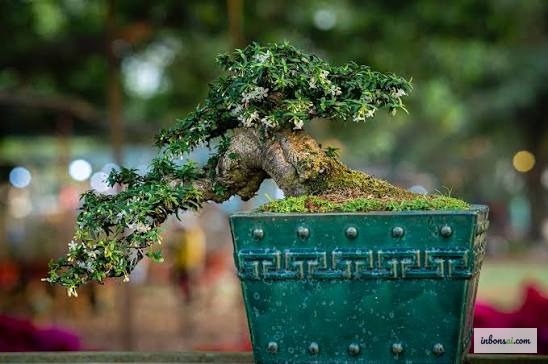
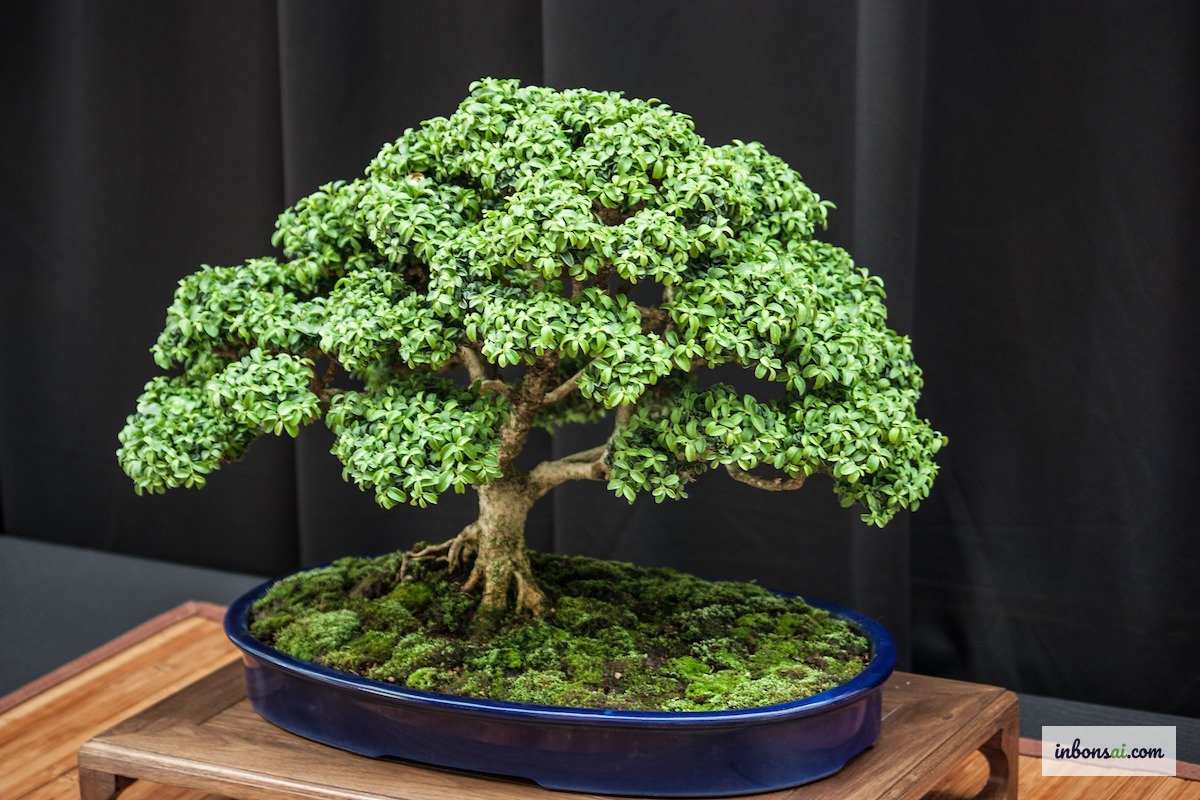
The shape of the bonsai also influences its feng shui properties. The formal upright style (chokkan) symbolizes stability and dignity — perfect for living rooms or reception areas. The informal upright style (moyogi) expresses flexibility combined with strength. The cascade style (kengai), with branches drooping downward, requires more careful consideration, as it can sometimes carry connotations of "bowing to difficulty" — avoid placing it in the center or facing the main entrance.
Principles for Choosing the Right Feng Shui Bonsai Placement
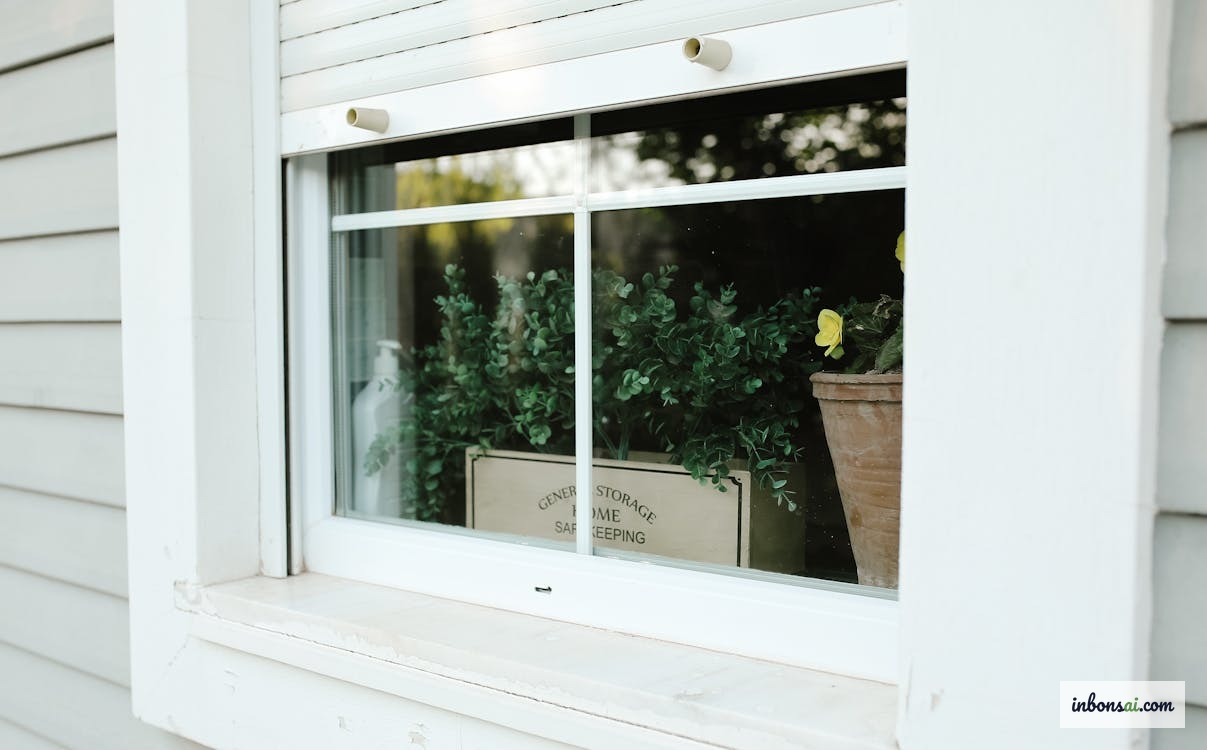
The placement of your bonsai is the most critical factor in feng shui. The general rule is that the tree should be in a spot with adequate natural light, good air circulation, and visible when entering the room. Avoid placing bonsai in dark corners, damp areas, or enclosed spots with poor ventilation — these locations tend to accumulate stagnant energy (known as "sha chi"), reducing the feng shui benefits of the tree.
In feng shui, the East and Southeast directions are considered ideal for plants because they correspond to the Wood element and growth energy. Placing bonsai facing East activates health and vitality for the whole family. The Southeast relates to wealth and prosperity — which is why many homeowners prefer to place bonsai in the Southeast corner of the living room or home office.
Importantly, avoid placing bonsai directly beside the main entrance, especially thorny or drooping varieties. This position can create energy that "blocks the path," impeding the flow of positive qi into the home. Instead, place the tree to the side or at a comfortable distance from the door, allowing positive energy (sheng chi) to enter the space freely before reaching the plant.
Aligning Bonsai Placement with Your Birth Element
Each person belongs to a different elemental profile in the five-element system, which influences the optimal placement for their bonsai. People with a Wood birth element (born in Jiǎ or Yǐ years) already have strong Wood energy, so choose a spot with good light to let the tree thrive — prioritize the East or Northeast corner of the home.
People with an Earth birth element (Wù or Jǐ years) should pay attention to balance — Wood energy can overpower Earth, so avoid having too many large trees indoors. Instead, choose a small mini bonsai and place it away from the central position to avoid elemental conflict. People with Metal (Gēng, Xīn) or Water (Rén, Guǐ) birth elements are supported by Wood energy and can display bonsai more freely — especially in the Southeast corner to attract wealth and fortune.
The color of the bonsai pot should also align with the owner's element. Terracotta or rust-red pots suit Earth and Metal elements. White or jade-green ceramic pots suit Metal and Water. Natural wood or deep green ceramic pots suit Wood and Fire elements. You can learn more about matching bonsai to your birth element in our guide to feng shui bonsai by birth year.
Displaying Bonsai in the Living Room
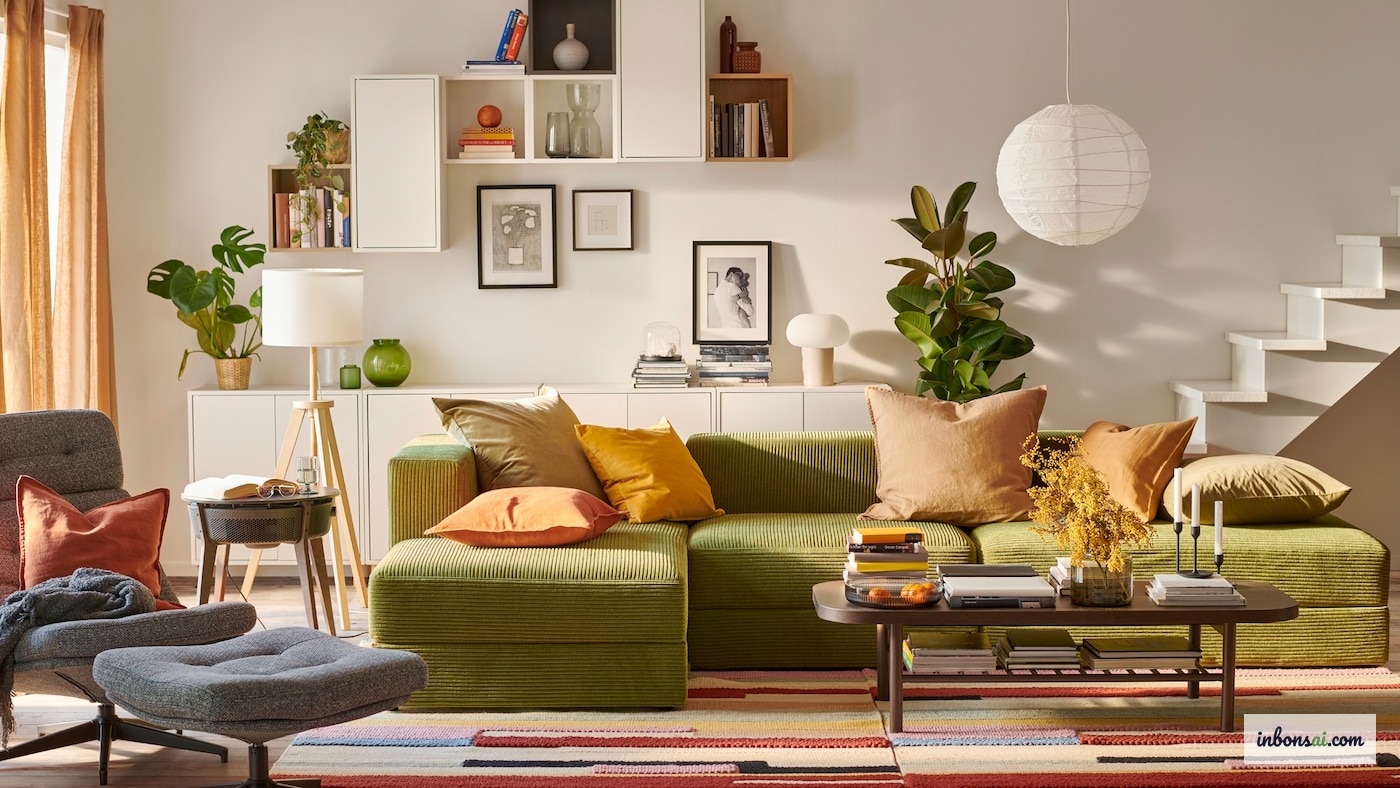
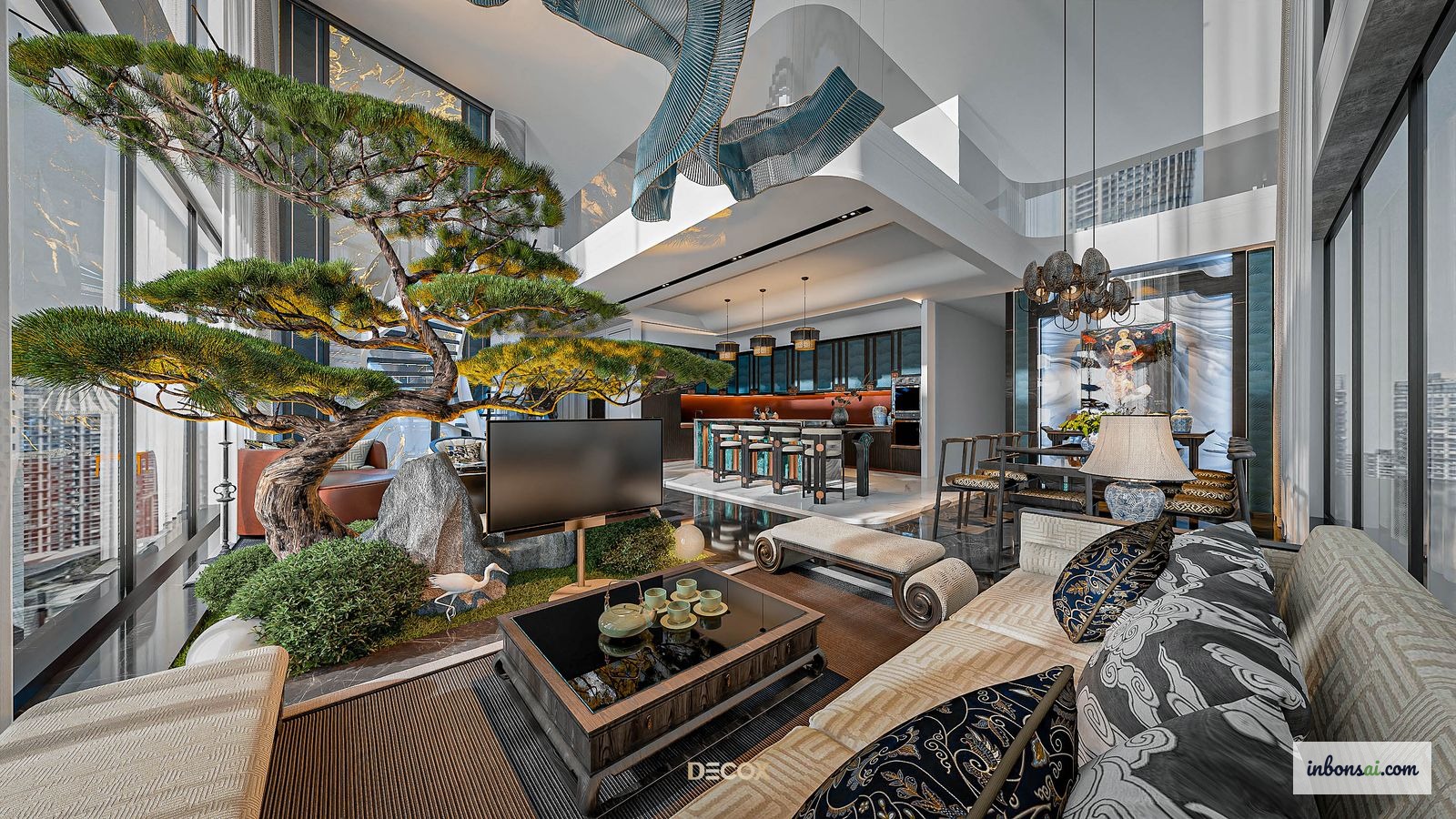
The living room is the space for socializing and receiving guests, so bonsai displayed here should project dignity, warmth, and prosperity. The Southeast corner of the living room is usually the most favorable position — this corresponds to the Wealth and Abundance sector according to the bagua map, and placing greenery here activates financial energy.
When arranging bonsai in the living room, choose a tree size proportional to the space. A large living room calls for a bonsai with an ample canopy, 40–80cm in height, to create a meaningful focal point. Smaller rooms work better with mini bonsai or a grouping of 2–3 small trees arranged in a harmonious composition. Avoid placing an oversized bonsai in a small room — it will feel oppressive and constrain the living energy of the space.
A small styling tip: place the bonsai on a low wooden platform or stand, paired with a small suiseki stone beside it. The contrast between the soft, living tree and the solid stone creates a yin-yang balance that is highly regarded in traditional feng shui aesthetics. For more information about how light and ventilation affect your tree's wellbeing, see our guide on choosing where to place bonsai indoors or outdoors.
Bonsai in the Home Office and Workspace
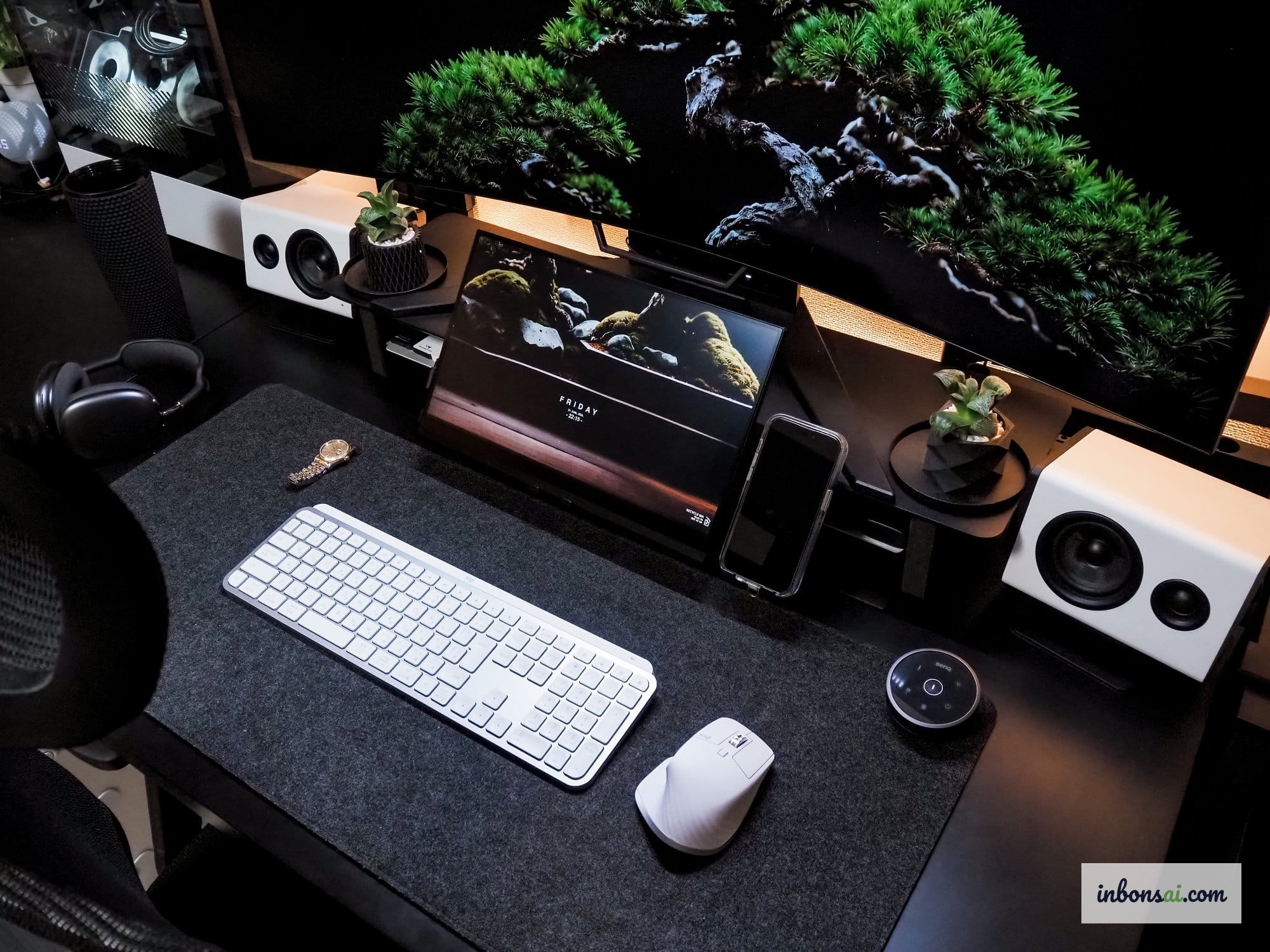
Home offices and workspaces are areas where Fire energy (work pressure, stress) tends to run very high. Placing a green bonsai in this environment will help balance the elemental energy, reduce stress, and stimulate creativity. The most suitable bonsai species for office settings are ficus, Chinese banyan, or Podocarpus — all low-light tolerant and easy to maintain.
The ideal position in a home office is the left side of the desk (from the seated perspective) — this corresponds to the Power and Wealth sector according to the bagua. Placing bonsai here strengthens focus and attracts opportunities. Avoid placing the tree directly behind you while working, as this creates restless energy and a subconscious feeling of being watched.
The size of office bonsai should be compact — between 15–30cm is ideal. A charming desk bonsai is visually appealing without consuming valuable workspace. Choose a clean, neat pot to maintain a professional appearance. Browse our office bonsai that attracts wealth and is easy to care for for specific species recommendations suited to work environments.
Choosing the Right Bonsai Display Shelf
A quality display stand (bonsai stand or shelf) is indispensable for elevating the beauty of indoor bonsai. Natural wood stands are the most traditional and popular choice — wood carries the Wood element, naturally complementing the tree while adding warmth and a sense of connection to nature. Common materials include teak, rosewood, and walnut, often lightly finished to highlight the natural grain.
There are three main types of shelving used for indoor bonsai display. Single stands (individual platforms) are small pedestals that elevate one tree, ideal for highlighting a particularly special or recently styled tree. Multi-tiered display shelves showcase several trees at different heights, creating visual depth and variety. Wall-mounted shelves save floor space and suit modern, minimalist interiors and compact apartments.
When selecting a stand, pay attention to the proportional relationship between stand and tree. A stand that is too tall will make the tree appear small and insignificant. A stand that is too low forces viewers to look down, preventing them from appreciating the tree's beauty at its best. The guiding principle: the apex of the tree should be roughly at eye level or slightly above, whether the viewer is standing or seated — creating the impression that the tree is reaching upward, full of vitality.
Companion Plants and Suiseki Stone Arrangements
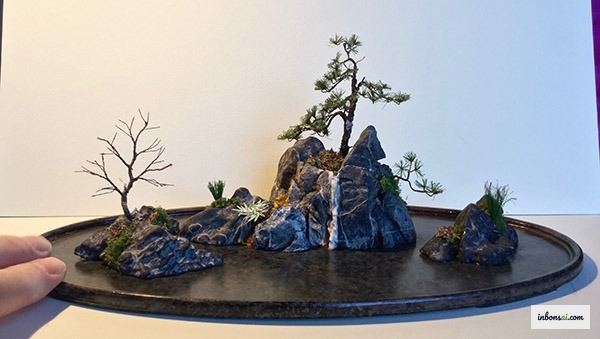
In traditional bonsai display art, a primary bonsai tree is often paired with supporting elements to create a complete, cohesive composition. Companion plants (shitakusa) are small accent plants — typically grass, moss, or flowering herbs — placed alongside the main tree to evoke a sense of season and the natural landscape in miniature.
Suiseki (viewing stones) are the second key element in traditional display compositions. Carefully selected stones — chosen for their shape, color, and texture — placed beside the bonsai evoke imagery of mountains, rivers, or shorelines in miniature form. This embodies the Japanese philosophy of "wabi-sabi" — finding beauty in simplicity and imperfection.
When composing a display, follow the "scalene triangle rule" — three focal points form an unequal triangle: the main bonsai at the highest point, the companion plant slightly lower on one side, and the suiseki at the lowest and opposite position. This layout creates dynamic balance, draws the eye naturally through the composition, and conveys a sense of spatial depth. Avoid perfectly symmetrical arrangements, which tend to feel rigid and lack the spontaneous quality of living nature.
Important Considerations for Indoor Bonsai Care
No matter how beautifully displayed, bonsai will quickly lose its vitality and appearance if not properly cared for in an indoor setting. Light is the most critical factor — most bonsai species require at least 4–6 hours of natural light daily. If your room lacks sufficient windows, specialized grow lights (wavelength 400–700nm) can supplement natural light effectively.
Indoor humidity also needs attention, particularly in winter when air conditioning dries out the air. Place a small tray of pebbles filled with water beneath the pot (without letting the pot base sit in the water) to maintain ambient humidity around the foliage. A light misting of the leaves in the morning is another simple, effective way to keep the tree from drying out in climate-controlled environments.
Finally, regularly clean the display area — dust the leaves, remove yellowed foliage, clean the pot and shelf periodically. In feng shui, cleanliness and orderliness are fundamental conditions for maintaining good qi (sheng chi) flow within the home. A carefully tended bonsai, placed in the right location, becomes a powerful feng shui "guardian" that brings vitality and prosperity to your living space.
Tags
#bonsai-display#feng-shui-bonsai#indoor-bonsai#bonsai-decorationGet bonsai guidance every week.
Fresh care guides, styling notes, and bonsai inspiration delivered to your inbox.