If you're looking for a Buddha hand bonsai that is both visually stunning, naturally fragrant, and deeply symbolic, this is the guide you need. The Buddha's hand citrus — with its extraordinary finger-like fruit resembling a Buddhist deity's open palm — has taken Vietnam's plant enthusiast community by storm, especially heading into the Lunar New Year 2026. More than just an ornament, Buddha hand bonsai is believed to attract wealth, good fortune, and peace to the household. This guide covers everything you need to know about growing and caring for Buddha hand bonsai at home — from selecting the right plant and soil to watering, fertilizing, shaping, and optimal feng shui placement.
What Is Buddha Hand Bonsai?
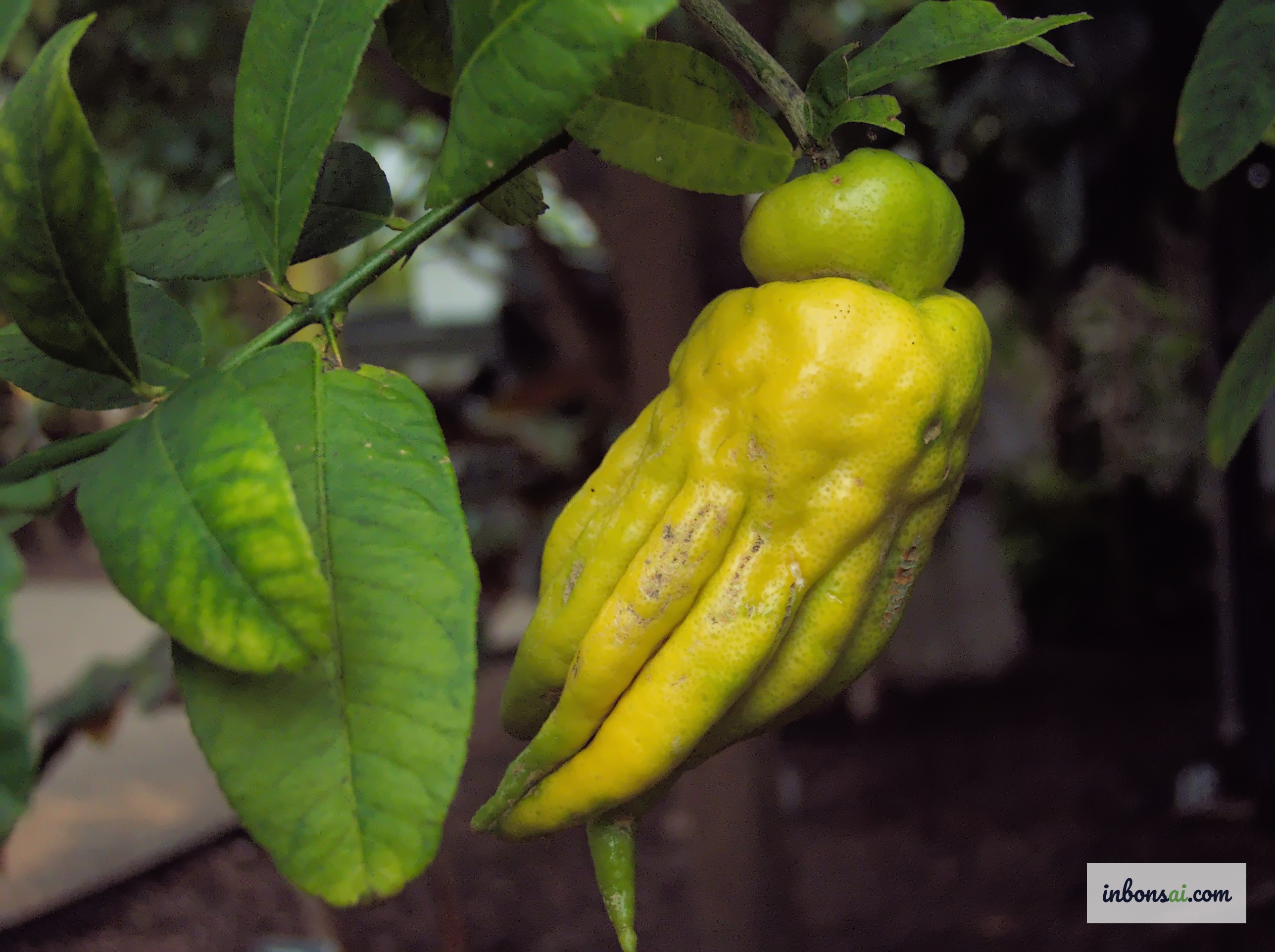
Buddha's hand (Citrus medica var. sarcodactylis) belongs to the Rutaceae (citrus) family. The fruit is extraordinarily distinctive — the lower portion splits into multiple elongated "fingers," resembling the open hand of the Buddha in a gesture of blessing, creating a deeply sacred and elegant appearance.
Unlike common citrus fruits, Buddha's hand contains virtually no pulp or juice — the fruit consists almost entirely of thick, fragrant white pith. The natural scent of ripening Buddha's hand fruit is gentle and fresh, filling rooms with a soft citrus aroma. The fruit retains its bright golden color for many weeks indoors, making it a long-lasting living decoration.
When cultivated as a bonsai in a small pot, Buddha's hand combines artistic form with the functional ability to flower and fruit — making it unique among bonsai species where fruiting is rarely the main event.
Feng Shui Meaning of Buddha Hand Bonsai
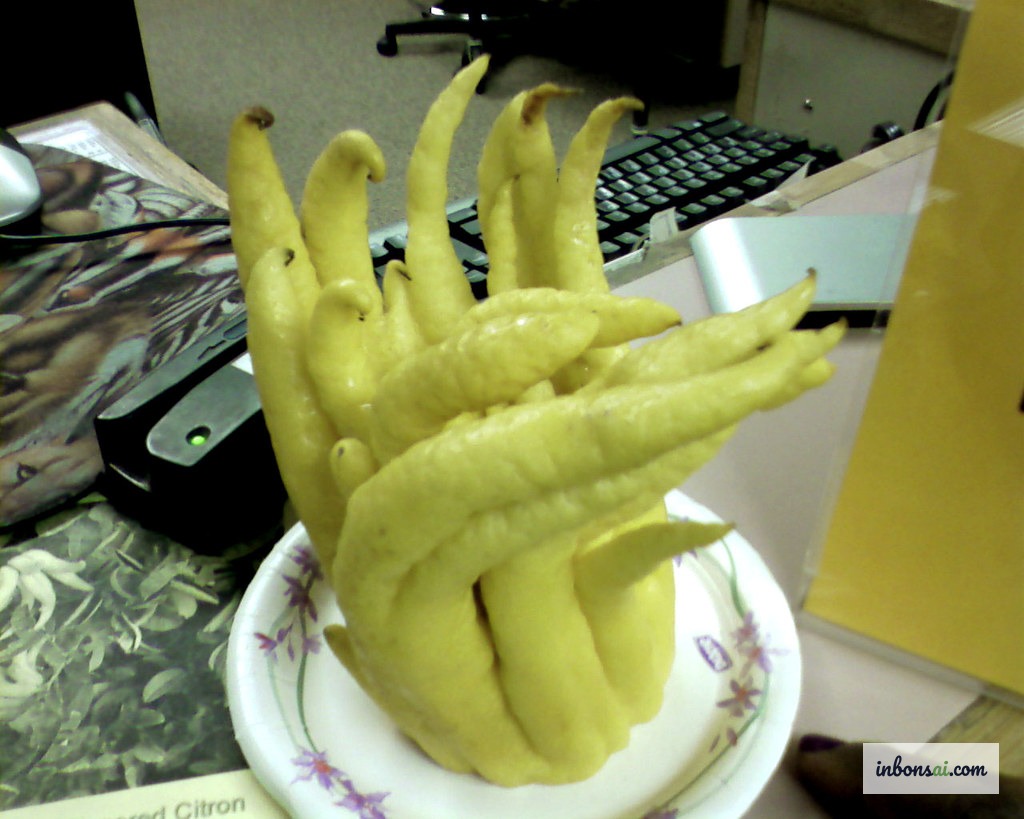
In East Asian culture, the Buddha's hand is one of the "Three Abundances" — symbolic fruits representing Fortune (Buddha's hand), Prosperity (peach), and Longevity (peach of immortality). The image of the Buddha's open hand symbolizes blessing and divine guidance, drawing luck and wealth to the household — and the more "fingers" the fruit has, the more auspicious it is considered.
According to feng shui principles, Buddha hand bonsai is especially suited for those seeking to improve business luck, attract opportunities, and generate positive energy in living spaces. The golden-yellow color of the ripe fruit corresponds to the Earth element — the central balancing element in feng shui that harmonizes with most other elemental signs.
Beyond symbolism, the delicate, purifying fragrance of ripe Buddha's hand has recognized calming and stress-relieving properties in both traditional medicine and modern aromatherapy. You can also explore feng shui bonsai selection by zodiac sign to pair your Buddha hand bonsai with your personal elemental energy.
Choosing the Right Buddha Hand Bonsai
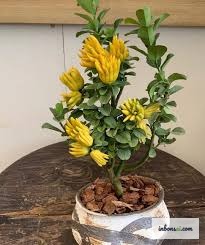
Before planting, selecting the right variety is the single most important decision — accounting for up to 60% of your eventual success. The market currently offers two main propagation types: air-layered cuttings and grafted trees.
Air-layered cuttings preserve the parent tree's genetic traits, bear fruit faster (usually within 1–2 years), and produce well-formed finger-shaped fruits. This is the preferred option for growers focused on display and feng shui purposes. Grafted trees are generally more vigorous and disease-resistant thanks to their rootstock, but may take an additional 1–2 years to produce characteristic fruits.
When selecting a plant, look for these indicators: deep green, glossy leaves with no yellowing or spots; firm, unwrinkled branches; a slender trunk with balanced proportions; and no signs of aphids, caterpillars, or fungal disease. If buying a tree already bearing fruit, prioritize specimens with firm, well-defined fingers and even golden coloration.
How to Plant Buddha Hand Bonsai
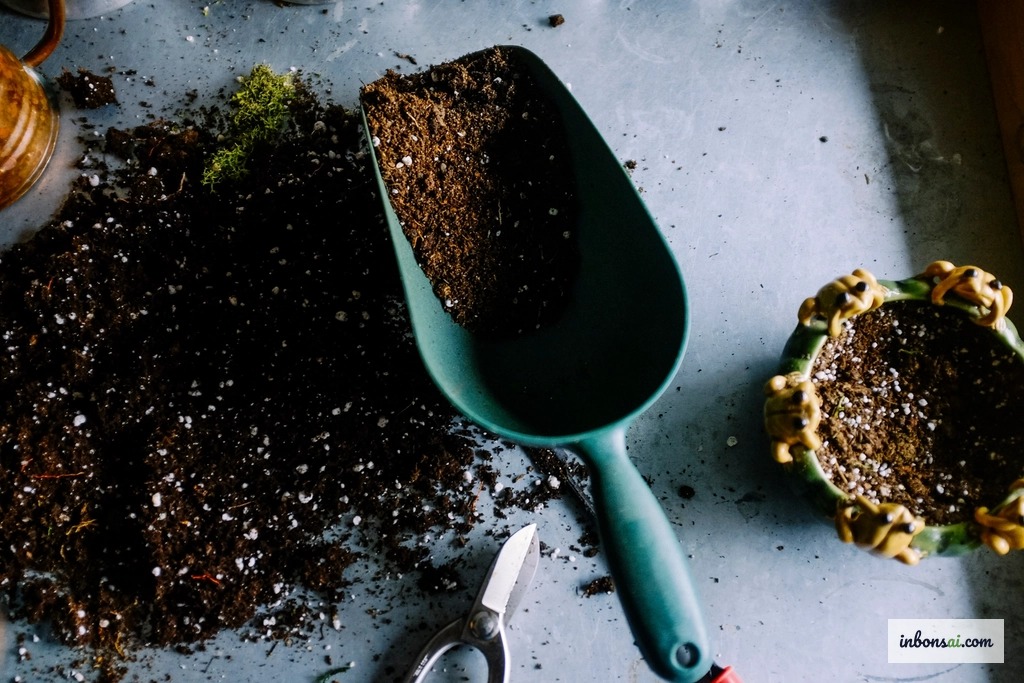
Buddha hand bonsai thrives in loose, well-draining, nutrient-rich soil. The ideal mix consists of: 40% humus (loose garden soil or organic potting mix), 30% coarse river sand (or crushed akadama), 20% coco peat, and 10% decomposed organic fertilizer. This ratio ensures excellent drainage — critical for all citrus species — while retaining adequate moisture between waterings.
Pot selection: Buddha hand bonsai prefers unglazed terracotta or ceramic pots over plastic, as the porous clay walls allow better airflow around roots. Choose pots with large drainage holes, and consider placing a layer of small gravel at the bottom to prevent clogging.
Planting technique: Remove the tree from its old container, gently loosen excess soil from the roots, and prune away any rotted or excessively long roots. Add a layer of the soil mix to the pot bottom, position the tree centrally, fill in the sides, and press gently to stabilize the base. Water thoroughly after planting and place in a sheltered, indirect-light location for 1–2 weeks to allow the tree to acclimatize.
Watering and Fertilizing
Buddha hand bonsai needs consistent moisture without waterlogging. The core watering principle: water when the top 2–3 cm of soil feel dry, not on a rigid schedule since water needs vary by season and weather. During the hot dry season (April–August), watering once daily or every other day may be necessary; in winter (December–February), water every 3–4 days is usually sufficient.
Additionally, Buddha hand bonsai responds very well to foliar misting on leaves and fruit in the morning — this raises surrounding humidity, which benefits fruit quality and fragrance. Never allow water to pool at the pot bottom for more than 30 minutes after watering.
For fertilization, Buddha hand bonsai requires specific nutrients at different growth stages:
- Vegetative growth phase (spring): Use nitrogen-rich fertilizer (e.g., N-P-K 20-10-10), applied every two weeks.
- Flowering and fruit set (summer): Switch to phosphorus and potassium-rich fertilizer (N-P-K 10-20-20) to encourage flowering and firm, well-formed fruits.
- Fruit ripening (autumn): Reduce fertilization; use only diluted organic fertilizer monthly to preserve fruit color and fragrance.
Alongside chemical fertilizers, organic compost (worm castings or aged cattle manure) makes an ideal and safe nutrient source for Buddha hand bonsai kept in living spaces.
Light and Temperature Requirements
Buddha's hand is a full-sun plant — requiring at least 6 hours of direct sunlight daily to thrive and bloom on schedule. The ideal location is an east- or south-facing balcony where the tree receives direct morning sun and filtered afternoon light.
Importantly, do not keep Buddha hand bonsai indoors continuously for more than 2–3 weeks without natural light. If displaying indoors, alternate the tree between indoor display and outdoor sun exposure for 2–3 days per week to "recharge." When necessary, LED grow lights operating 10–12 hours per day can supplement natural light.
For temperature, Buddha's hand grows best between 18–30°C (64–86°F). The tree cannot tolerate frost below 5°C, so in northern regions with cold winters, bring pots inside or protect them from chilling winds.
Buddha Hand Bonsai Shaping Techniques
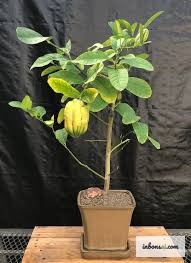
Shaping determines the aesthetic value of your Buddha hand bonsai. Unlike many bonsai species, shaping Buddha's hand requires special attention to preserving fruit-bearing branches — since much of the tree's value lies in its fruit, not just its form.
Pruning: Perform after the harvest season (typically October–November). Remove dead wood, inward-growing branches, and dense growth blocking light. Retain healthy, well-positioned branches with good fruiting potential for the coming season. Never prune during flowering or when the tree is carrying developing fruit.
Wiring: Use soft aluminum wire (1–2 mm diameter) to adjust branch direction. Wrap wire at a 45° angle along the branch, gently bending to the desired position. Leave wire in place for 3–4 months, then remove before it cuts into the bark. Do not wire branches carrying flowers or young fruit.
Repotting: Buddha hand bonsai should be repotted every 2–3 years in early spring (February–March). When repotting, prune approximately one-third of the root system and replace all soil to prevent nutrient depletion and root disease. If you want a more compact tree, choose a pot one size smaller.
Common Pests and Diseases
Like most citrus species, Buddha hand bonsai can encounter several common pests and diseases if not properly maintained. Early identification and timely treatment is the most effective protection.
Aphids: Cluster on tender shoot tips and flower stalks, draining sap and causing leaf curling. Treat by spraying a diluted dish soap solution (1:50 ratio) or neem oil-based organic insecticide.
Spider mites: Appear during dry seasons, creating tiny yellow stippling on leaf surfaces. Regular misting is the most effective preventive measure; for heavy infestations, use a dedicated miticide.
Citrus canker: Creates hardened brown spots on leaves, branches, and fruit, caused by Xanthomonas citri bacteria. Remove and destroy infected plant material; apply copper-based fungicide to prevent spread. This disease is difficult to cure — prevent it by avoiding overhead watering at night and ensuring good air circulation.
Nutrient deficiency yellowing: If leaves turn yellow while veins remain green, this typically indicates iron or magnesium deficiency. Apply chelated iron foliar spray or fertilizer containing magnesium sulfate to resolve the issue within 2–3 weeks.
Feng Shui Placement for Buddha Hand Bonsai
To maximize the feng shui energy of Buddha hand bonsai, placement within the home plays a crucial role. According to feng shui principles, the following locations are most auspicious:
Living room: Place on a coffee table or TV shelf facing the main entrance — the point where chi (energy) enters the home — so the tree can "receive" incoming prosperity. If the living room has an east-facing balcony, that is the ideal position.
Work desk or Wealth God altar: A compact Buddha hand bonsai placed beside a Wealth God figurine or on a business owner's work desk is believed to amplify wealth energy. You can also explore office desk bonsai for attracting prosperity for ideas on pairing Buddha hand with other feng shui plants.
Ancestral altar: Fresh Buddha's hand fruit or a Buddha hand bonsai placed on an ancestral altar represents deep reverence, offering ancestors a symbol of longevity, good fortune, and spiritual abundance.
Positions to avoid: bathrooms, wet or poorly lit areas — these locations will weaken the tree and, according to feng shui principles, dissipate its positive energy. Placing the tree in a small, poorly ventilated bedroom is also best avoided.
Buddha hand bonsai represents a perfect convergence of artistic form, feng shui symbolism, and the natural beauty of miniaturized nature. With this complete guide to growing and caring for Buddha hand bonsai, you now have everything needed to cultivate a thriving, fruit-bearing specimen at home — not just for its auspicious energy, but for the daily joy of living with something truly extraordinary.
If you're new to bonsai, consider starting with our beginner's guide to bonsai to build foundational knowledge before taking on specialty species like Buddha's hand. And if you'd like to explore other feng shui plants, money tree bonsai feng shui pairs beautifully with Buddha hand bonsai in creating a harmonious, wealth-attracting display.
Tags
#buddha-hand-bonsai#citrus-bonsai#feng-shui-plants#bonsai-care#fruit-bonsaiGet bonsai guidance every week.
Fresh care guides, styling notes, and bonsai inspiration delivered to your inbox.