Ficus ginseng bonsai is one of the most popular indoor bonsai trees today, prized for its unique bulbous root base and its ability to thrive in low-light conditions. Still, many beginners struggle with ficus ginseng bonsai indoor care, especially when it comes to watering and light placement. This guide walks you through every step to keep your tree lush and healthy all year round.
What is a ficus ginseng bonsai and why it stands out
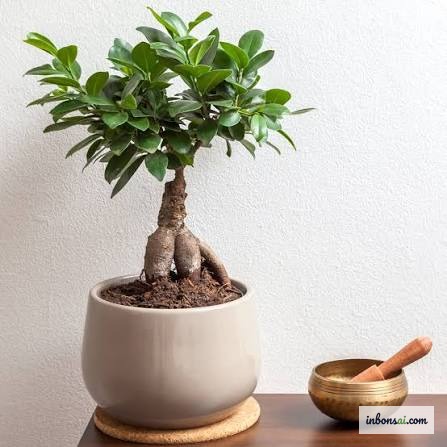
Ficus ginseng (botanical name Ficus microcarpa) belongs to the mulberry family and is shaped with a swollen root base that resembles a ginseng root — hence the name "ginseng." That bulbous base does not appear naturally on mature trees; it is grown from seed or nursed under special conditions, then gradually raised above the soil line during repotting.
This species has small, thick, glossy dark-green leaves and a dense canopy that gives a full, leafy look. The trunk is pale gray with smooth bark, and older specimens may develop hanging aerial roots that look striking. These traits make ficus ginseng bonsai a top choice for a desk, living room, or reception counter.
Its greatest strength is resilience. The tree tolerates a wide margin of care, is undemanding about soil, recovers quickly after pruning, and adapts especially well indoors — where many other bonsai species struggle. If you are still weighing an indoor versus outdoor tree, see our guide on choosing an indoor or outdoor bonsai to decide what suits you.
How to water a ficus ginseng bonsai indoors correctly
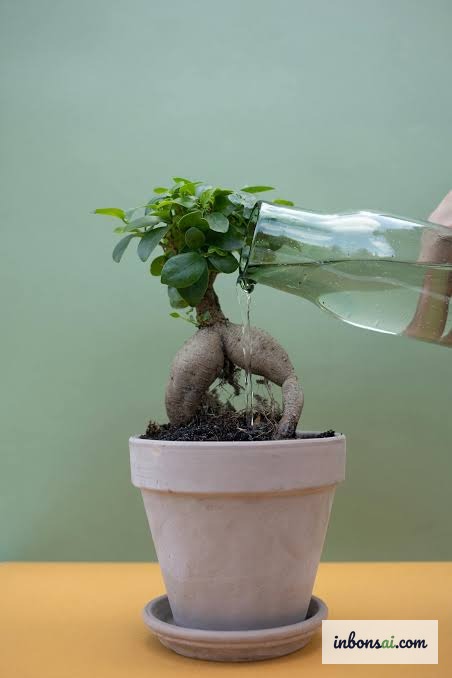
Watering is the make-or-break factor in ficus ginseng bonsai indoor care. The golden rule is to water when the soil surface begins to dry — never on a fixed "once a day" schedule. The tree likes moderate moisture but hates waterlogging; roots that sit in water rot and kill the tree faster than letting it dry out.
The simplest check is to press a finger about 2–3 cm into the topsoil. If it still feels moist, wait; if it feels dry, it is time to water. When you do, water thoroughly until water drains out of the pot's bottom holes, then empty any water collected in the saucer to avoid waterlogging.
Watering frequency typically ranges from every 3–5 days in summer to every 7–10 days in winter, but the number shifts with temperature, humidity, and pot type. Glazed ceramic pots hold moisture longer than terracotta, so stretch the intervals. A tree near a sunny window or in a dry air-conditioned room drinks faster than one in a cool corner. Let tap water sit overnight so chlorine dissipates, since chlorine and fluoride buildup can scorch leaf edges over time.
A sign of underwatering is wilting leaves that drop en masse; conversely, yellow, mushy leaves usually signal overwatering. Once you learn the tree's rhythm, you can "read" its water needs by pot weight — a light pot means dry soil, a heavy pot means enough moisture. This is how many seasoned bonsai growers gauge water instead of guessing by calendar.
Light requirements for ficus ginseng bonsai indoors
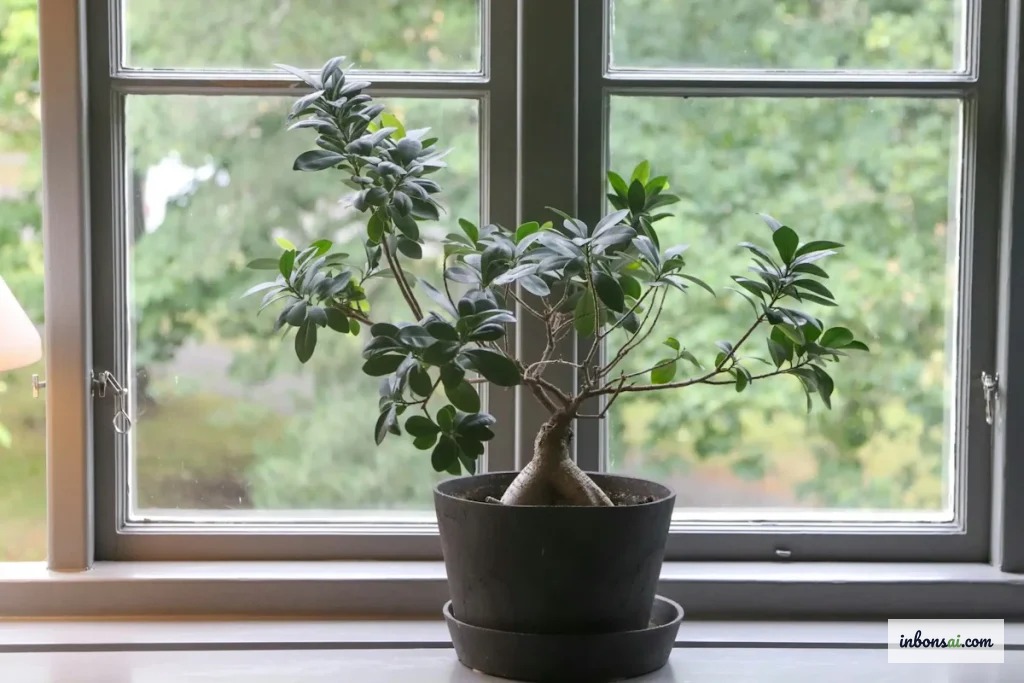
Although marketed as "shade-tolerant," ficus ginseng bonsai still needs light to photosynthesize and keep a healthy green canopy. The ideal spot is near an east- or south-facing window, where the tree receives bright, plentiful indirect light without harsh midday sun hitting the leaves directly.
Place it somewhere too dark — a deep room corner or a windowless room — and the tree reacts by dropping leaves, stretching out weak and leggy (etiolation), and spacing its leaves unattractively. This is the most common mistake when growing the tree indoors. Ficus ginseng needs at least 6 hours of diffused light a day to keep a nice form.
When natural light is short, you can supplement with a dedicated LED grow light. See how to choose an LED grow light for bonsai for effective fill light. If your space is genuinely very dark, consider bonsai species that survive in low-light indoor rooms. Remember to rotate the pot 90 degrees each week so the canopy grows evenly in all directions.
Temperature, humidity, and the ideal placement
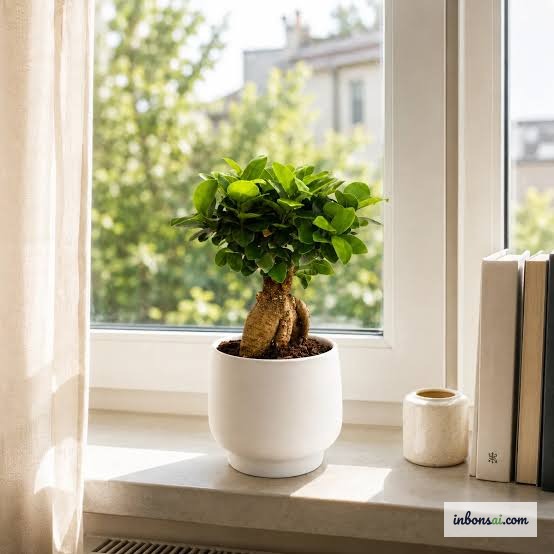
Ficus ginseng is a tropical plant, so it likes warmth and grows best in the 18–28°C range. It is very sensitive to sudden temperature swings, so avoid placing it directly in an air-conditioner draft, near a cooling vent, or beside an entrance where cold air rushes in. Prolonged temperatures below 12°C can cause mass leaf drop.
As for humidity, being tropical it prefers air more humid than the dry air of an air-conditioned room. You can raise humidity by setting the pot on a pebble tray with water (the pot base not touching the water), misting the leaves a few times a week, or grouping several plants together to create a humid microclimate.
The tree's position should be stable; avoid moving it repeatedly between different environments because ficus ginseng needs time to adapt. When newly bought or just relocated, the tree may shed a few leaves to "settle in" — a normal response, so do not panic and overwater or over-fertilize.
Fertilizing and repotting your ficus ginseng
During the growing season (spring and summer), ficus ginseng bonsai should be fed every 2–4 weeks to keep the canopy lush. Use a balanced, diluted NPK fertilizer, or alternate organic pellets with an inorganic feed. In winter when growth slows, cut feeding back to once every 6–8 weeks or stop entirely.
An important rule is never to fertilize a weak tree, one freshly repotted, or one with dry soil. Feeding dry soil can burn the roots. Always moisten the soil first, then apply diluted fertilizer so the roots absorb it safely.
Ficus ginseng should be repotted every 2–3 years, ideally in early spring as the tree enters strong growth. When repotting, trim about 1/3 of the root mass, remove old rotten roots, and replace with fresh, well-draining soil. This is also the chance to raise the bulbous base gradually above the soil line, creating the signature exposed-root look. Signs a repot is due include roots poking through the drainage holes or water draining unusually slowly.
Pruning for shape and handling common pests
Ficus ginseng responds very well to pruning, making it easy to keep a tidy shape. When a shoot grows 6–8 new leaves, cut it back to 2–4 leaves to encourage denser branching. Prune regularly during the growing season. Note that ficus sap is milky white and can irritate skin, so wear gloves while working.
For pests, indoor ficus ginseng commonly faces mealybugs (white cottony spots in leaf axils), spider mites (appearing when the air is too dry), and scale insects. Most of these stem from low humidity and poor air circulation. Treat by wiping leaves with diluted alcohol, spraying neem oil or insecticidal soap, and improving the humidity around the tree. Inspect the undersides of leaves regularly, since pests often hide there before spreading across the canopy.
Sudden leaf drop is what worries beginners most, but the cause is usually an environment change, lack of light, or incorrect watering — not a dying tree. Simply readjust the light, stabilize the position, and water correctly as outlined above, and the tree will quickly push out new foliage. With its inherent resilience, a ficus ginseng bonsai will be a green companion for many years.
Tags
#ficus-ginseng-bonsai#indoor-bonsai#bonsai-care#bonsai-watering#houseplant-careGet bonsai guidance every week.
Fresh care guides, styling notes, and bonsai inspiration delivered to your inbox.