Which indoor bonsai trees can survive in a low-light air-conditioned office is a question many plant lovers ask when they want to bring a touch of nature into their workspace. Modern offices — with fluorescent lighting, continuously running air conditioning and few windows — create unique challenges that not every bonsai species can handle. This article explains how office conditions affect your trees and introduces the bonsai species that truly thrive in a workplace setting.
Why Bonsai Struggle in Low-Light Air-Conditioned Offices
Before choosing an office bonsai, it helps to understand why so many species fail in this environment. Air conditioning continuously removes moisture from the air, pushing indoor humidity down to 30–40%, while most tropical trees need 50–70% to stay healthy. The result: soil dries out quickly, leaves wilt, and drop even when you water regularly.
Light intensity in a typical office reaches only 200–500 lux — well below the 1,000–2,000 lux most tropical bonsai need for basic photosynthesis. Standard LED office lights also lack the red and blue wavelengths plants need to grow, causing leaves to yellow and vitality to decline slowly.
Air conditioning also locks temperature at a steady 22–24°C year-round. While not directly harmful, this eliminates the day-night temperature variation that triggers bud break and flower initiation in many species.
The solution is to choose bonsai with traits of shade tolerance, drought resistance, and adaptability to low humidity — the three keys to keeping an office bonsai alive and thriving long-term.
Best Bonsai Species for Low-Light Office Environments
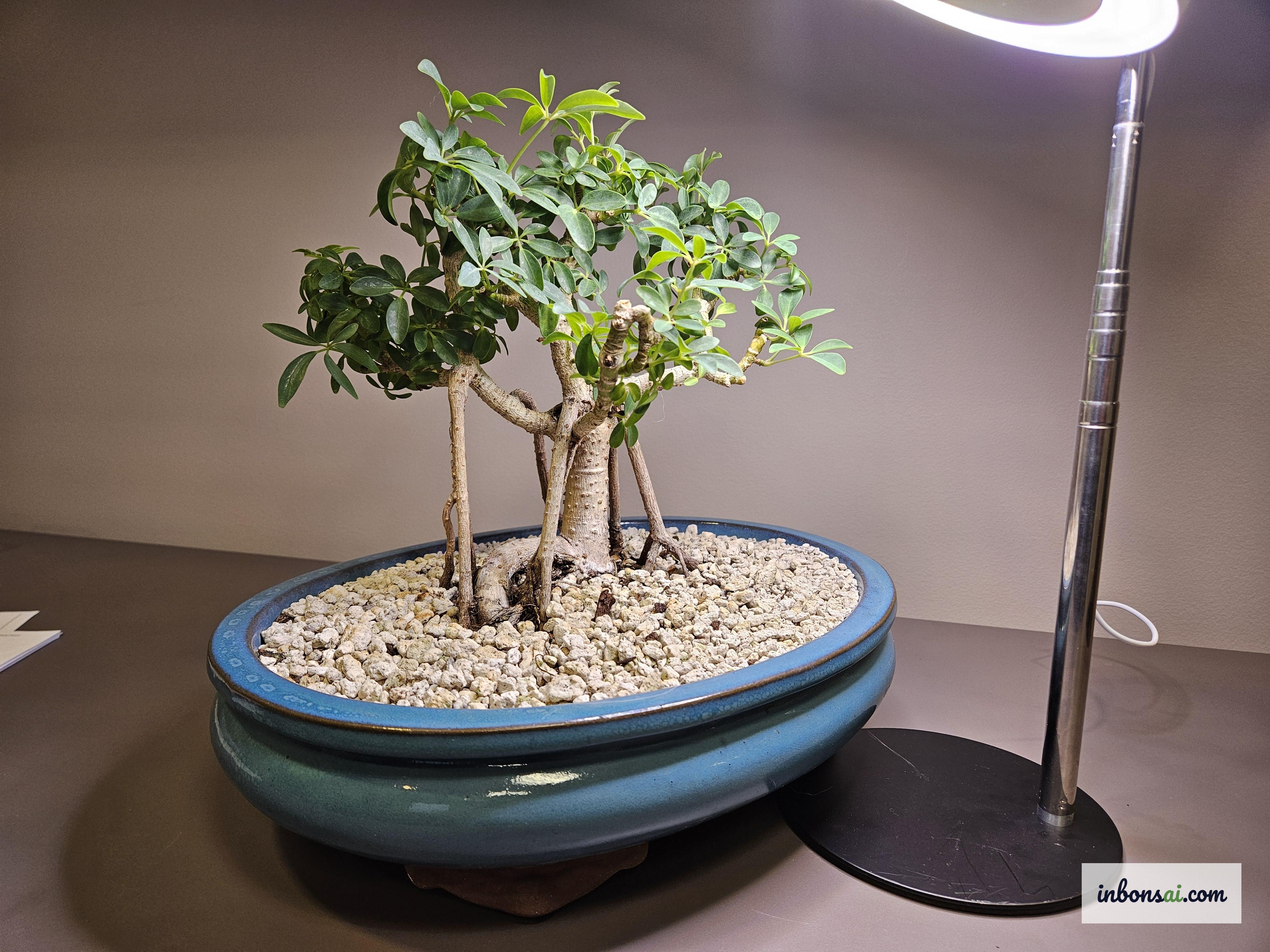
Not every bonsai suits a low-light office, but these species have proven they can grow stably in these conditions:
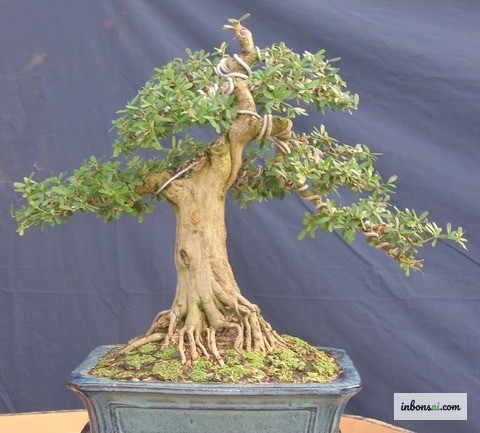
1. Fukien Tea (Carmona retusa) — excellent shade tolerance, blooms indoors, ideal for tropical offices.
2. Aglaia (Aglaia duperreana) — dense dark foliage, handles low light well, pleasant gentle fragrance.
3. Chinese Banyan (Ficus benjamina / Ficus microcarpa) — the Ficus family is the global classic for indoor spaces, tolerates low light and air conditioning.
4. Taiwan Ficus (Ficus retusa) — beautiful aerial roots, shade-tolerant, does not need frequent watering.
5. Snow Rose (Serissa foetida) — compact, produces delicate white flowers, perfect for a small desk.
6. Sacred Fig dwarf (Ficus religiosa dwarf) — high feng shui significance, adapts well to indoor conditions.
All of these are tropical or subtropical trees that can adapt to diffuse light and lower-than-ideal humidity.
Fukien Tea Bonsai — The Top Choice for Office Environments
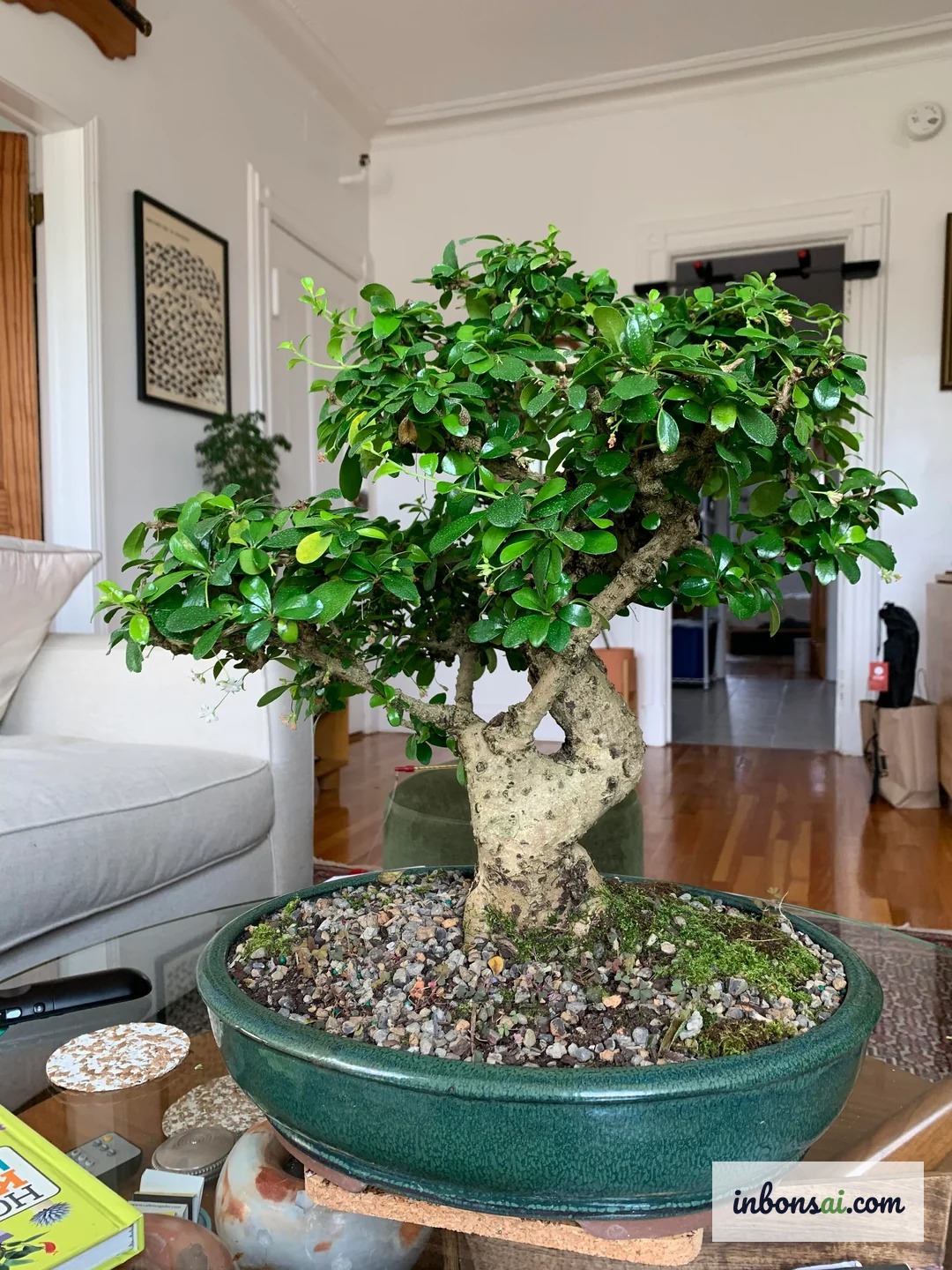
The Fukien Tea (Carmona retusa) is often called the "king of office bonsai" for its remarkable ability to adapt to indoor environments. This species originates from the humid tropical forests of Southeast Asia and southern China, where it naturally grows under the canopy of larger trees — meaning it is already accustomed to diffuse light and shade.
Fukien Tea leaves are small, thick, and slightly glossy, which reduces water transpiration efficiently under air conditioning. This physiological trait helps the tree tolerate low humidity without wilting. Indoors, it can still produce tiny, attractive ivory-white flower clusters — something very few other bonsai species manage in an office setting.
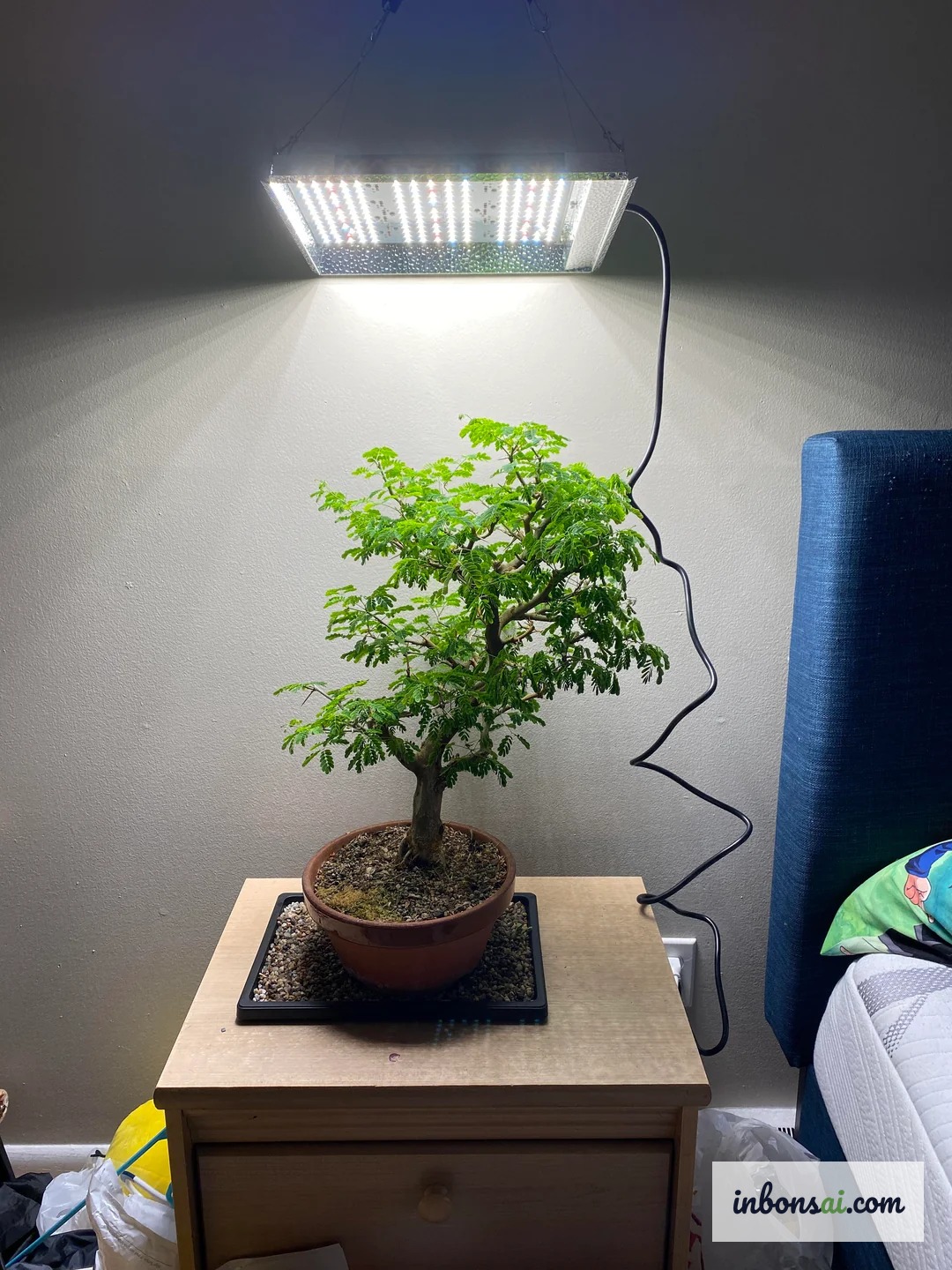
For care, Fukien Tea needs moderate watering — never let the soil dry out completely, but avoid waterlogging. In an air-conditioned office, water 2–3 times per week in summer and 1–2 times per week in winter. Positioning the tree near a window that receives a few hours of natural light daily is ideal. If the office has no natural windows, supplement with an LED grow light running 8–10 hours per day.
Read more about Fukien Tea bonsai care for expert techniques.
Aglaia Bonsai and the Ficus Family — Durable Office Choices
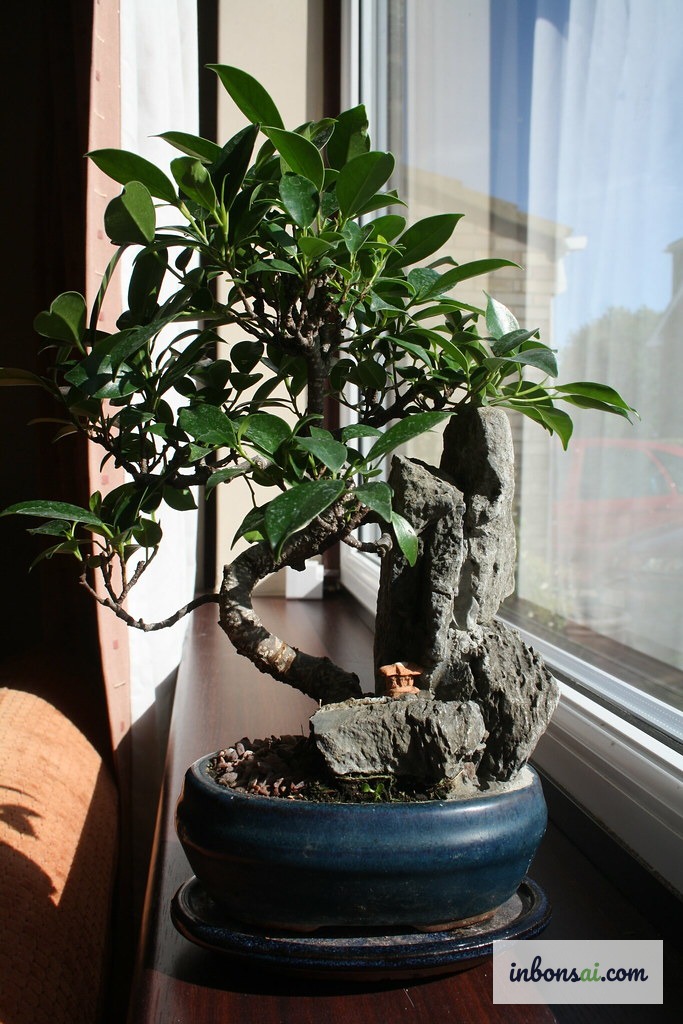
Aglaia bonsai (Aglaia duperreana) is popular for its distinctive, pleasant fragrance from tiny yellow flower clusters. In bonsai form, Aglaia stands out with thick, deep-green glossy foliage and its ability to handle low-light conditions better than many other species. It rarely suffers from pests or disease, requiring little complex care — ideal for busy office workers.
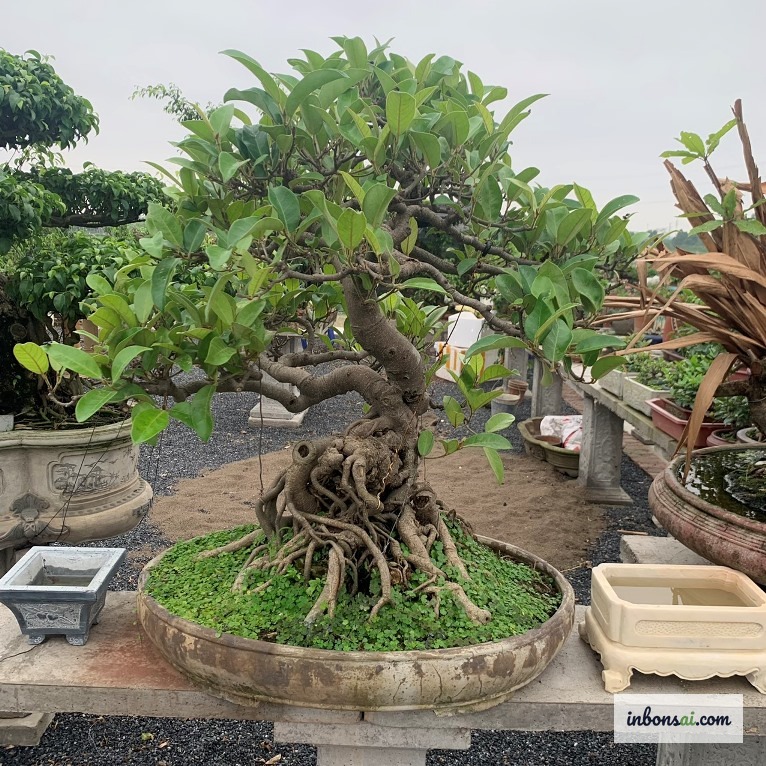
The Ficus family (Chinese Banyan, Taiwan Ficus, dwarf Sacred Fig) is the world's classic indoor bonsai group. Ficus microcarpa (Chinese Banyan) develops spectacular aerial roots that form dramatic trunk bases. It tolerates low light better than any other Ficus species due to its high chlorophyll content. However, Ficus dislikes frequent relocation — once placed in a spot in the office, keep it there for stability.
Serissa foetida (Snow Rose) suits small desks perfectly. Compact in size, it produces beautiful tiny white flowers and handles indoor conditions reasonably well. Snow Rose is more sensitive to sudden temperature changes, so avoid placing it directly under air conditioning vents.
See also 7 best feng shui mini bonsai for office desks for more office-friendly options.
How to Care for Office Bonsai: Watering, Light, and Humidity
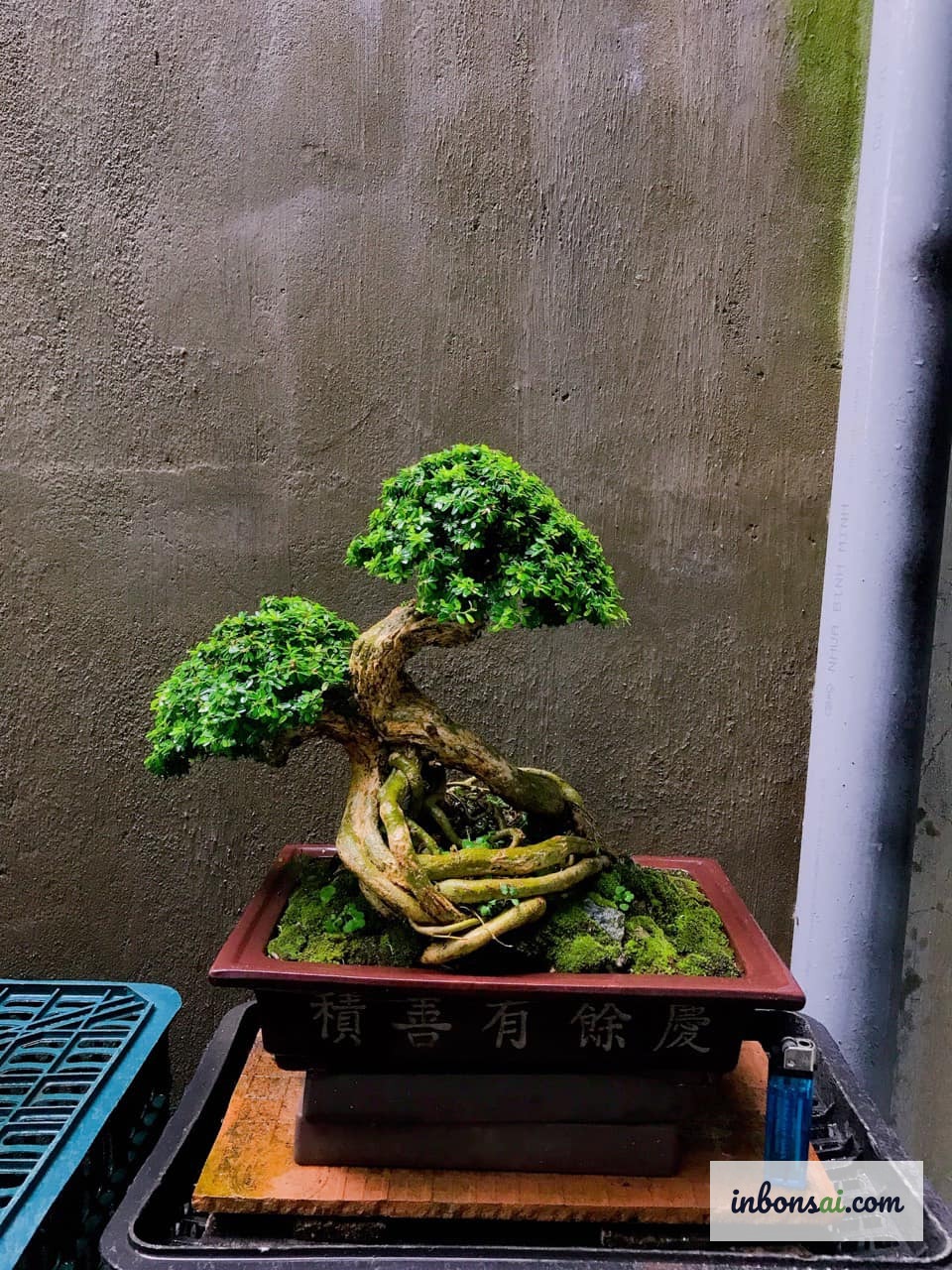
Caring for bonsai in an office environment requires adjustments compared to outdoor care. Here are the core principles:
Watering: Air conditioning dries out soil faster than normal, but don't water on a fixed schedule — check soil moisture with your finger before each watering. Insert a finger 1–2 cm into the soil: if it still feels moist, wait; if dry, water thoroughly until it drains from the drainage holes. Avoid letting water sit in the drip tray for more than 30 minutes, as this can cause root rot.
Air humidity: This is the biggest challenge in an air-conditioned office. A simple solution is to place the tree on a pebble tray with water — as water evaporates, it creates a humid microclimate around the tree. A small humidifier near the plant area is highly effective, especially in winter. Misting the leaves 1–2 times per day with a hand spray bottle provides additional support.
Light: Prioritize placing the tree near a window that receives natural light. If natural light is insufficient (less than 4 hours per day), supplement with a 6,500K LED grow light providing 2,000–5,000 lux for 8–10 hours daily. See LED grow light selection guide for low-light bonsai to choose the right light.
Fertilizing: In an office, trees grow more slowly, so only apply diluted fertilizer (1/2 the recommended dose) every 4–6 weeks during the growing season (spring–summer). Stop completely in winter.
Positioning and Maintaining Bonsai in Air-Conditioned Offices
Where you place your bonsai in the office directly affects its longevity and health. Here are practical placement principles:
Avoid direct airflow: Never place the tree directly under an air conditioning vent — the dry, cold airflow will wilt leaves very quickly. Maintain a minimum distance of 1.5–2 meters between the tree and any air conditioning outlet.
Prioritize window proximity: Even a little natural light is better than artificial lighting alone. An east-facing window offering gentle morning light is the ideal location for an office bonsai. A west-facing window may cause harsh afternoon sun — use a sheer curtain to filter it if needed.
Rotate trees periodically: If you have several bonsai pots, rotate them to a balcony or outdoor window for 1–2 days per week to allow recovery. This technique is widely used by experienced office plant keepers to maintain bonsai long-term in indoor spaces.
Pots and stands: Choose pots with good drainage holes — never use sealed ceramic pots without drainage. Elevate pots on a stand so air can circulate beneath and roots do not suffocate.
Tips for Buying Office Bonsai
When purchasing a bonsai for a low-light air-conditioned office, many buyers make basic mistakes that lead to failure:
Ask about the tree's history: Find out whether the tree was grown outdoors or indoors. An outdoor-grown tree moved directly into an air-conditioned office will suffer environmental shock and rapidly shed its leaves. Acclimate the tree gradually over 2–3 weeks by placing it in a medium-light location first.
Choose small, thick leaves: Small, thick leaves are usually a sign the tree can better tolerate drought and low light compared to species with large, thin leaves. Fukien Tea, Aglaia, and Ficus all meet this criterion.
Avoid flowering or fruiting trees: A tree in its reproductive phase consumes large amounts of energy; moving it into an office environment at this time can exhaust it quickly. Wait until flowers have fallen and fruit has dropped before buying and moving the tree indoors.
Right size for your desk: Mini bonsai 15–25 cm tall are ideal for a personal desk. Trees over 40 cm typically need more light and are harder to care for in a small office. See how to choose bonsai based on feng shui elements for aesthetic and feng shui guidance.
In summary, the indoor bonsai that can survive in a low-light air-conditioned office include: Fukien Tea, Aglaia, Chinese Banyan (Ficus microcarpa), Taiwan Ficus (Ficus retusa), and Snow Rose. Among these, Fukien Tea and Chinese Banyan are the most reliable choices for beginners. With proper care — appropriate watering, added humidity, and window placement — an office bonsai becomes a genuine green highlight and a calming presence in your work environment.
Tags
#office-bonsai#indoor-bonsai#low-light-bonsai#air-conditioner-bonsai#fukien-tea-bonsai#ficus-bonsaiGet bonsai guidance every week.
Fresh care guides, styling notes, and bonsai inspiration delivered to your inbox.