Mai Vang Care Calendar: Complete 12-Month Guide

InBonsai Team
March 22, 2026 · 11 min read
Many mai vang growers only pay attention to their trees in the weeks leading up to Tet, then neglect them for the rest of the year. This is one of the most common reasons trees produce few buds, bloom unevenly, or slowly decline after a few seasons. A detailed monthly mai vang care calendar is the real key to keeping your tree healthy, beautiful, and bursting into bloom right on time. Experienced growers often say: “A beautiful Tet starts with January care.” This guide walks through every stage from January recovery to December bud-holding, giving you a clear and effective full-year plan.
Overview: The 4 Seasonal Phases of Mai Vang
The mai vang tree (Ochna integerrima) follows a clear seasonal growth cycle with 4 main phases:
- Recovery – January to February: The tree restores energy after flowering and needs nutrients to regenerate leaves and new shoots.
- Growth – March to June: The most vigorous growth period, requiring proper pruning and fertilization.
- Bud differentiation – July to October: Flower buds form internally; careful care, minimal stress, and no heavy pruning are essential.
- Bud nurturing – November to December: The critical window for controlling exactly when flowers open for Tet.
Following a monthly schedule helps you never miss the golden window in each phase (fertilizing, repotting, leaf stripping), stay ahead of pests and diseases, and save effort since timely intervention is always easier than fixing damage after the fact.
January–February: Recovery After the Tet Flowering Season
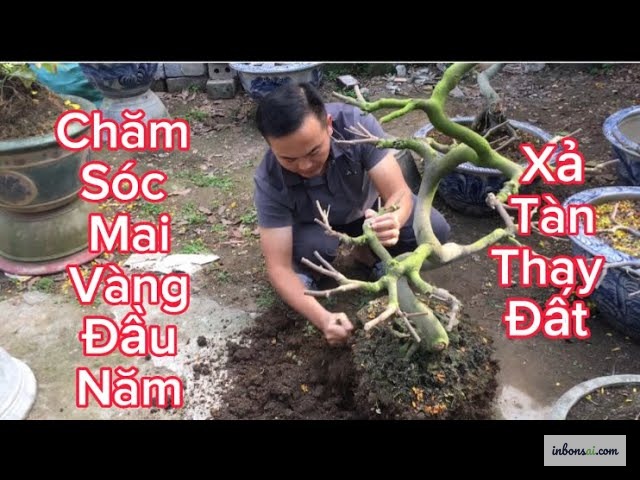
After the flowers fade, the mai vang tree has expended enormous energy. This is the recovery and growth-direction phase — what you do now determines the branch structure for the entire year.
Tasks to complete immediately after flowering:
- Prune branches: Remove weak branches, inward-growing branches, and branches blocking light. Cut back branches that just flowered to stimulate strong new shoots. Use sharp, sterilized pruning shears and apply lime paste or antifungal treatment to large cuts.
- Apply early-season fertilizer: Wait until you see new shoots emerging before fertilizing. Use balanced NPK (10-10-10) or well-composted organic fertilizer for comprehensive nutrition. Apply moderately, watering into the root zone once a week for 3–4 weeks.
- Check the root system: If the tree has not been repotted for 2–3 years, this is a good time to inspect. Tightly bound roots or compacted soil that doesn’t drain well are signs you need to repot in March.
- Water consistently: Water once daily in the morning; avoid letting the soil dry out completely or become waterlogged. Young roots are very sensitive to drought stress.
For a more detailed walkthrough of this phase, see How to care for mai vang after Tet.
March–April: Repotting, Growth Fertilizing, and Shape Pruning
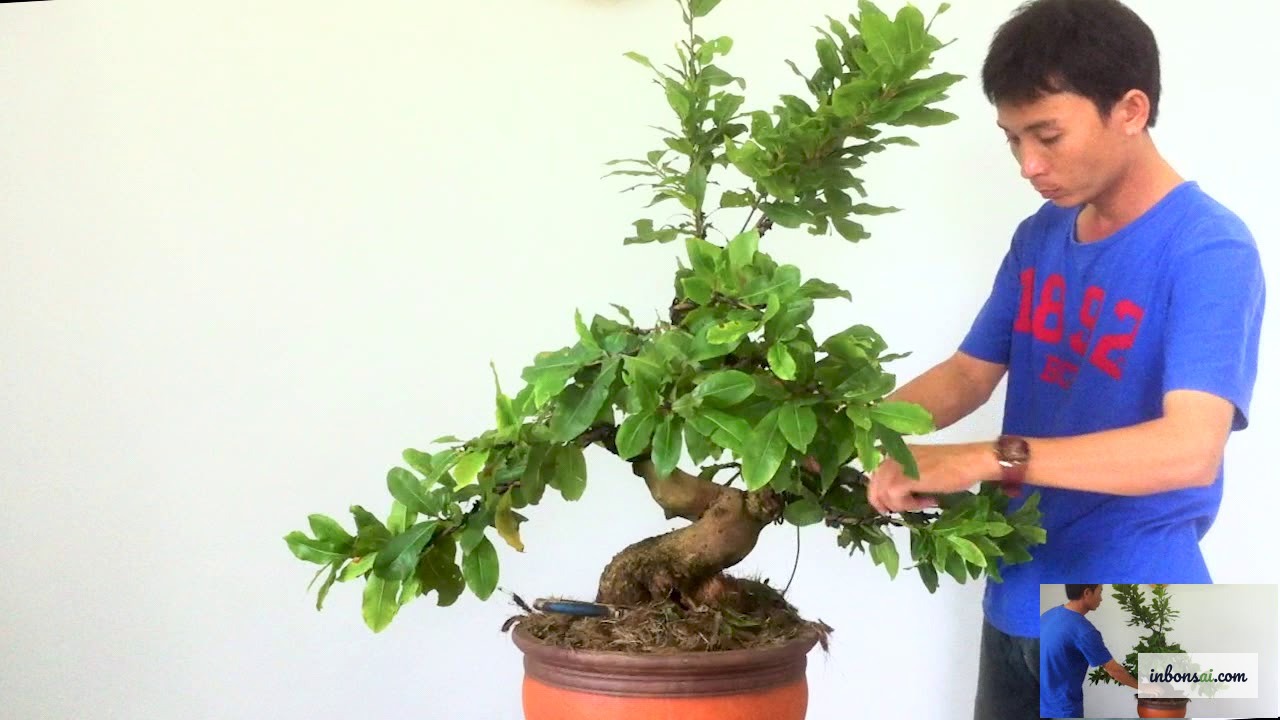
March–April is the most vigorous growth period of the year for mai vang — new leaves burst out rapidly, branches extend quickly, and the tree can grow noticeably taller within just a few weeks. This is also the golden window for repotting and shape pruning, since wounds heal fast and there is no impact on bud formation later in the year.
Repotting (if needed): When roots have filled the old pot or the soil is compacted and no longer drains well, carefully remove the tree, trim away about one-third of old woody roots, and replant in a new pot. The ideal soil mix: garden soil + rice husk ash + composted organic matter in a 2:1:1 ratio. After repotting, keep the tree in a shaded, well-ventilated spot for 1–2 weeks.
Shape pruning: Remove weak branches, inward-growing branches, crowded branches, and any branches disrupting the tree’s form. After May, avoid heavy pruning since flower buds will be forming — this is the final window for major shaping.
Growth fertilizing: From March, switch to high-nitrogen fertilizer such as NPK 30-10-10 to stimulate leaf and branch growth. Apply every 2 weeks combined with foliar spray for faster uptake. Also incorporate well-composted organic fertilizer to improve soil structure and provide micronutrients.
Additionally, April is when spring pests like mealybugs and spider mites commonly appear on new growth. Apply preventive pest control spray every 2 weeks.
May–June: Heat Management and Summer Nutrition
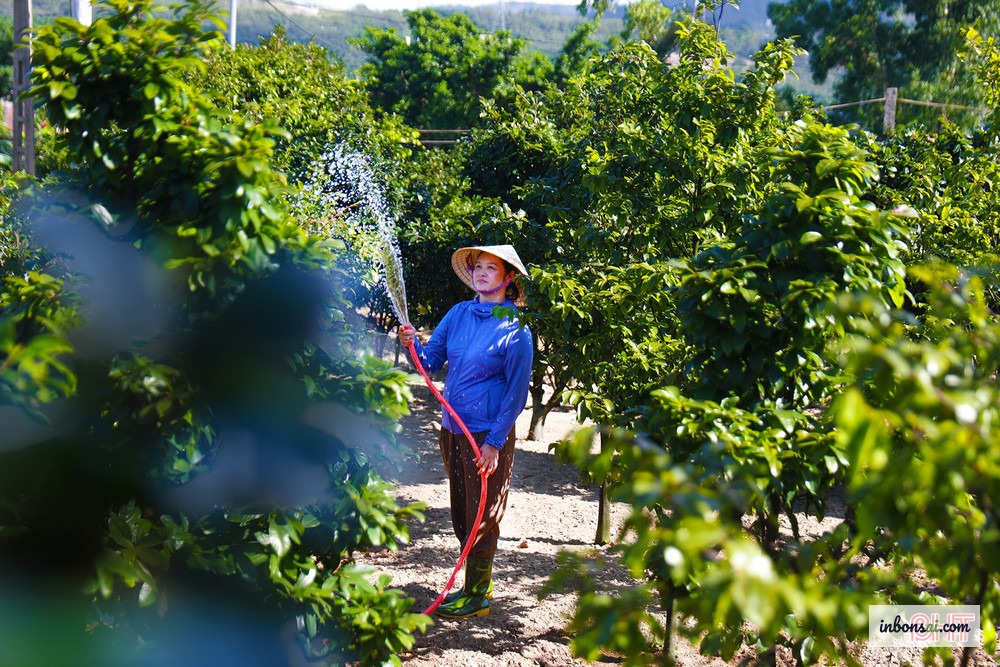
Southern and Central Vietnamese summers regularly exceed 38–40°C. This is when mai vang is most vulnerable to heat stress, dehydration, and general decline if care is neglected.
Summer watering management: Increase watering to twice daily (early morning and evening) — never water at midday when the soil is hot. Small pots or balcony plants exposed to full sun may need watering 3 times a day on peak-heat days. Check soil moisture by pressing a finger 3–4 cm into the soil — if dry, water immediately.
Shade and relocation: If the pot is in full outdoor sun, move it to a position with 30–50% shade netting between 10am and 3pm. Early morning and late afternoon sun is beneficial; harsh midday summer sun should be limited to prevent heat shock.
Maintenance fertilizing: Reduce nitrogen and switch to balanced fertilizer (NPK 20-20-20 or 15-15-15) every 2–3 weeks. Supplement with calcium, magnesium, and zinc micronutrients to keep the tree strong and leaves uniformly green. Increasing potassium (K) also helps improve heat tolerance.
This is also the time to monitor for spider mites, mealybugs, and leaf spot disease, which thrive in summer heat. Treat early with biological pesticides or dilute soapy water. See common mai vang diseases and yellow leaves for early identification guidance.
July–August: Rainy Season — Disease Prevention and Mid-Season Pruning
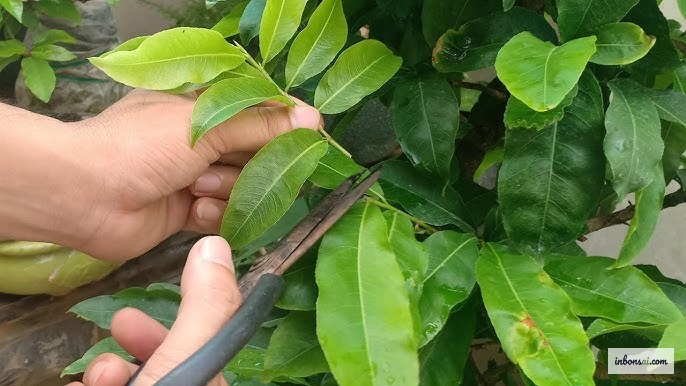
The July–August rainy season brings abundant water but is also the leading cause of root rot and fungal disease in mai vang. Check the pot’s drainage system — drainage holes must be clear and unobstructed. Avoid letting water pool in saucers for more than 30 minutes after rain. During extended rainy spells, move potted trees under an eave or covered area to prevent waterlogging.
High humidity creates ideal conditions for fungal growth. Apply preventive fungicide spray (copper-based or mancozeb) every 3–4 weeks, especially after heavy rain. At the same time, trim old and diseased leaves to improve canopy airflow and reduce moisture retention.
Mid-season pruning (late July): This is the last opportunity for a second round of shape pruning — the goal is a balanced branch structure with good light penetration throughout the canopy. After August, avoid heavy pruning entirely since flower buds are beginning to form internally.
Starting from August, gradually reduce nitrogen fertilizer and transition to higher phosphorus and potassium formulas to prepare the tree for the bud differentiation phase ahead.
September–October: Stimulating Bud Differentiation — The Decisive Phase
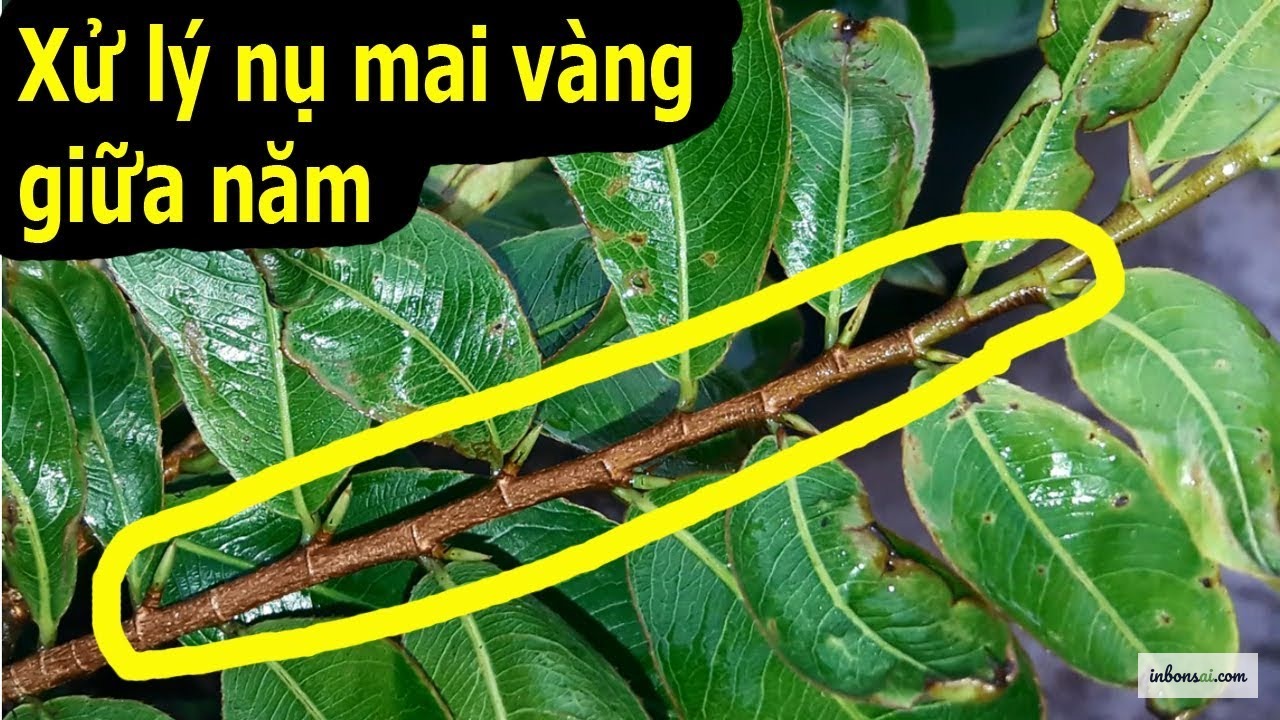
This is the decisive phase in the monthly mai vang care calendar — many growers call September–October the “golden months.” A nutritional mistake here can cause premature bud drop or uneven flowering at Tet.
Fertilizer: Switch entirely to high-potassium and high-phosphorus formulas (NPK 6-30-30 or 0-52-34). High K and P ratios encourage the tree to accumulate carbohydrates, producing larger and firmer buds. Apply every 10–14 days at slightly less than the recommended dose to avoid leaf burn. Do not apply high-nitrogen fertilizer (N > 15%) from this point on.
Watering: Reduce watering by about 10–15% compared to summer, down to once daily. Mild water stress encourages the tree to shift into reproductive mode and stimulate bud differentiation. However, keep the soil adequately moist — never allow it to dry out completely, as this will cause bud drop.
Preparation before leaf stripping: Treat all remaining pests on the leaves, remove weeds from the pot, and lightly loosen the soil surface to improve root aeration. The healthier the tree entering this phase, the more evenly distributed and abundant the buds will be.
November–December: Leaf Stripping and Bud Control for Tet
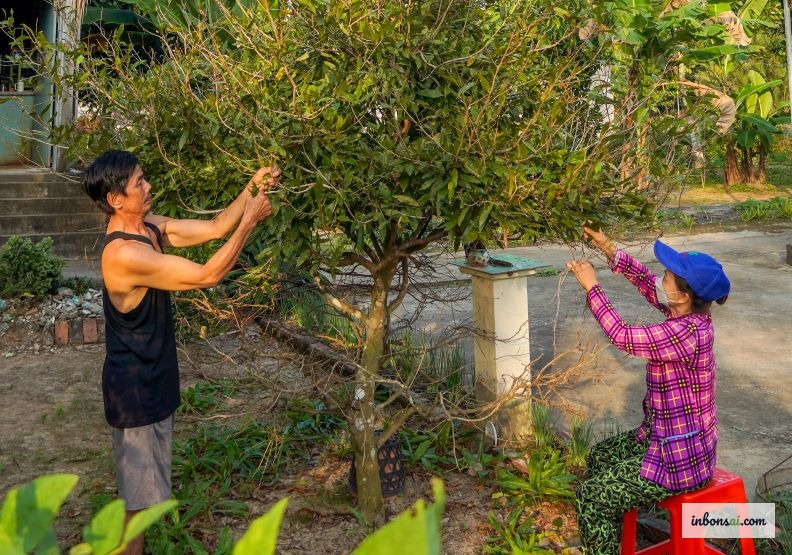
November–December is the most stressful period for mai vang growers — all the year’s work comes down to this. The goal is to ensure buds develop evenly, do not open early, and burst into flower on Tet’s first day.
Leaf stripping timing by region:
- South Vietnam (Ho Chi Minh City, Mekong Delta): Strip leaves around the 15th–20th of the 11th lunar month (late December to early January). From stripping to full bloom typically takes 22–25 days.
- Central Vietnam: Strip leaves 5–7 days earlier than the South due to cooler temperatures; allow 25–28 days to bloom.
- North Vietnam: Usually no leaf stripping needed, as cold weather naturally triggers flowering. If intervention is required, strip earlier and allow 28–35 days.
To calculate backward: if Tet falls on January 29 and your tree needs 25 days, strip leaves around January 4–5.
Leaf stripping technique: Gently pull each leaf from its stem by hand — don’t yank hard enough to break young shoots. After stripping, apply a light dose of potassium sulfate (K₂SO₄) and water moderately. Do not apply nitrogen fertilizer at this stage, as it will push the tree to produce leaves instead of developing buds.
Monitoring and adjusting buds: Check buds daily — round, firm, green buds are healthy; shriveled or black buds signal disease. If buds are developing too fast (risk of blooming before Tet), reduce watering and move the tree to a cooler spot. If buds are slow to develop, water with slightly warm water, move the tree to a sunnier location, and apply foliar fertilizer to stimulate activity.
Also read caring for mai bonsai after Tet to prepare for the next care cycle as soon as the holiday ends.
Monthly Fertilizer Summary Table
For quick reference, here is the full-year mai vang fertilizer schedule by month:
| Month | Fertilizer Type | Goal |
|---|---|---|
| January–February | Balanced NPK 10-10-10 or organic | Post-Tet recovery |
| March–April | High-nitrogen NPK 30-10-10 | Stimulate leaves and new branches |
| May–June | Balanced NPK 20-20-20 + micronutrients | Maintain health through summer |
| July–August | Reduce N, increase P and K | Prepare for bud differentiation |
| September–October | NPK 6-30-30 or single potassium | Stimulate flower bud differentiation |
| November | Light potassium after leaf stripping | Support bud development |
| December | No fertilizer (or minimal) | Hold buds, await bloom |
Common Mistakes and Year-Round Care Principles
Mistakes to avoid:
Pruning too late — Pruning after the 7th lunar month risks cutting branches with forming buds, resulting in sparse Tet flowers. Complete major shape pruning before the end of May (solar calendar).
High-nitrogen fertilizer in September–October — A frequent mistake that causes excessive new leaf production instead of bud accumulation. After August, do not apply fertilizer with more than 15% nitrogen content.
Not adjusting leaf-stripping date for weather — Each year’s weather differs. An unusually cold or warm December changes the bloom rate. Monitor forecasts throughout December and adjust your timing by 2–5 days as needed.
Inconsistent watering — Alternating between overwatering and underwatering is a leading cause of yellow leaves and bud drop. Maintaining stable soil moisture is far more effective than flooding then letting the soil dry completely.
Year-round principles to remember:
Light — Mai vang needs at least 6 hours of direct sun per day to grow well and produce abundant flowers. Trees in low-light conditions become leggy, develop pale leaves, and form few buds.
Drainage — Soil and pots must drain freely. Waterlogging for more than 30 minutes causes root rot, which is one of the most common reasons mai vang trees die suddenly.
Keep a care journal — Record fertilizer dates, pruning dates, leaf-stripping dates, and outcomes each year. Real data from your own tree is the most reliable guide for future seasons.
With this monthly mai vang care calendar, you now have a clear plan to accompany your tree from one Tet to the next. What matters most is not doing everything perfectly, but maintaining a consistent care habit and observing your tree regularly. Here’s to many seasons of brilliant yellow blooms!
Related Posts
Mai Vang Care Calendar: Complete 12-Month Guide
Mai Vang Monthly Care Calendar: Full Year Guide
How to Force Mai Vang to Bloom on Tet: Complete Guide
Yellow Leaves on Apricot Bonsai: Causes & Fixes
The Elegant Beauty of the Ochna Tree