Choosing the right bonsai pot is not just an aesthetic decision — the pot directly determines root health and the overall presence of your tree. Many beginners pour all their effort into styling, pruning, and wiring while forgetting that a wrong-sized pot can stunt growth, cause root rot, or throw the whole silhouette out of balance within months. This guide walks you through choosing a bonsai pot with the right size, shape, and color, combining traditional aesthetic rules with the tree's real growth needs.
Whether you're shopping for a pot for a freshly bought nursery tree or preparing for a routine repot, mastering the fundamentals below will help you avoid common mistakes and pick a pot that elevates the tree's natural beauty.
Why choosing the right bonsai pot matters
A bonsai pot isn't just a container for soil — it's part of the artwork, acting as a frame for the living picture that is your tree. A pot that's too large makes the tree look "swallowed up" and out of proportion; a pot that's too small chokes the root ball, quickly starving the tree of nutrients and water.
Biologically, pot volume directly affects how fast the soil dries out. A shallow, small pot dries faster, encouraging the tree to grow a dense mat of fine feeder roots — which is why mature bonsai are typically kept in much shallower pots than young trees still developing their root systems. Conversely, a tree still building trunk girth and canopy needs a deeper pot, or a simple grow pot (unglazed training container), to develop a healthy root system before moving into a display pot.
When choosing a bonsai pot, you need to weigh three factors at once: size (for root health), shape (to harmonize with the tree's style), and color (to highlight leaf, flower, and bark color). Neglecting any one of these throws off the whole composition.
Choosing pot size based on tree height and trunk diameter
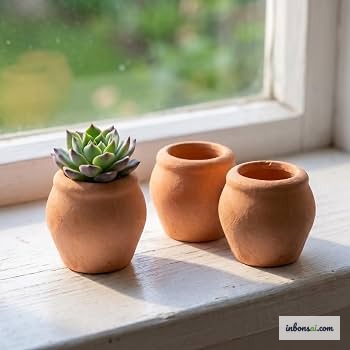
The classic rule among bonsai growers is that pot length should be roughly two-thirds of the tree's height (measured from soil level to the apex), for rectangular or oval pots. For round or square pots, the rim diameter is typically about one-third to one-half of the tree's height, depending on how full the canopy is.
Pot width should roughly match the widest spread of the canopy, or be slightly narrower to create the sense that the tree is "reaching out" beyond its container. If the pot is too wide, the eye gets distracted, and the tree ends up looking small and lost in empty space.
Trunk diameter (measured right at soil level) is the second key reference point. For deeper pots, the ideal depth is roughly equal to the trunk's diameter — a tree with a 5cm-thick trunk should sit in a pot about 5cm deep. This is only a starting point; you'll need to adjust it based on the tree's specific style, covered in the next section.
For mini or shohin-sized trees (under 15cm), this ratio is usually relaxed, since an overly small pot struggles to hold moisture steadily. Choose a pot slightly wider than the formula suggests to avoid having to water multiple times a day, especially during hot weather.
Choosing pot depth based on tree style
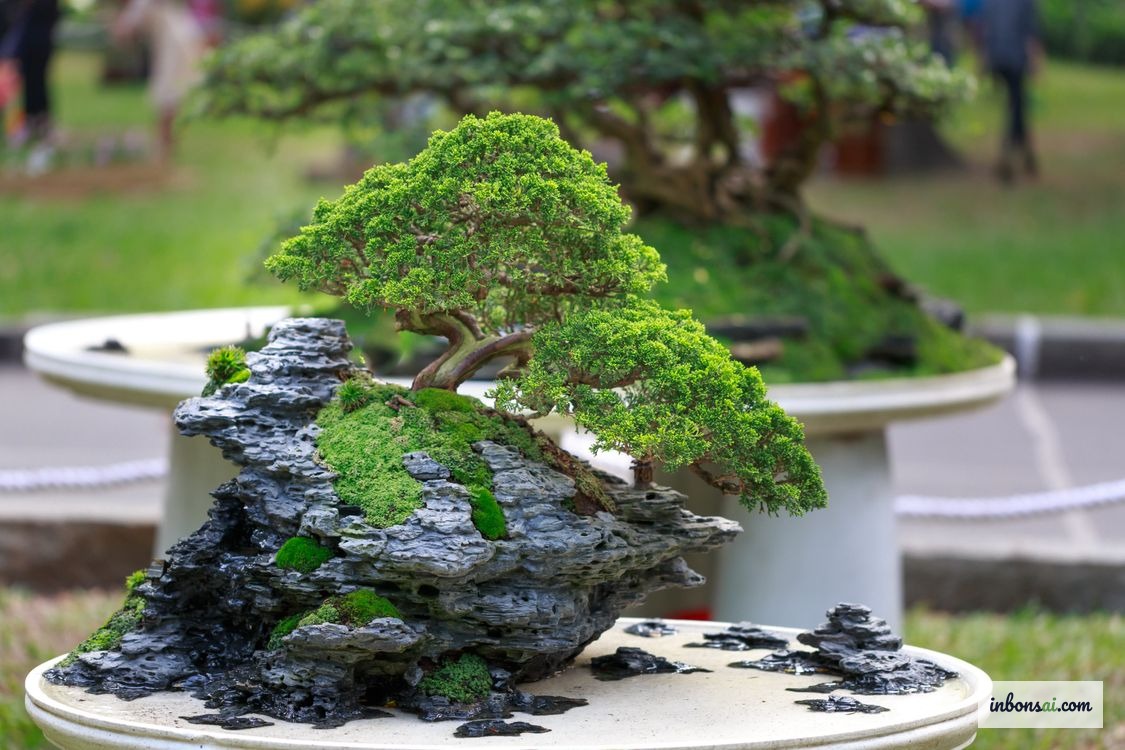
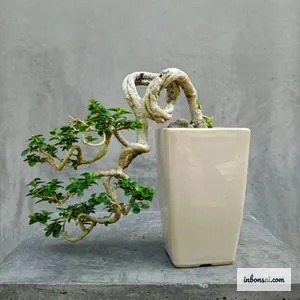
Pot depth should reflect the tree's style, not just be based on trunk size alone. Formal upright trees (straight, powerful trunks) suit a moderately deep pot with straight walls, conveying stability. Cascade-style trees (falling below the rim) need a deep, narrow pot — often a tall square or hexagonal shape — to visually balance the long, trailing canopy.
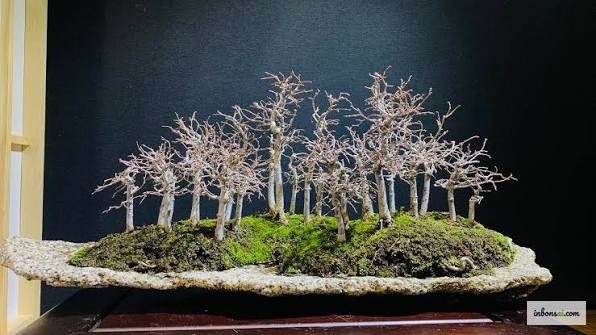
Slanting or informal-horizontal trees (leaning trunks) usually pair well with shallow, elongated pots that emphasize the trunk's horizontal movement. Forest plantings (multiple trunks) or rock plantings need a very shallow, almost flat pot to highlight the group composition or the rock formation itself.
One additional rule: trees with large, coarse foliage (like junipers or mature banyans) suit deeper, heavier pots to create visual weight balance. Trees with delicate, small foliage (like Ligustrum or elm) suit thinner, lighter pots so the pot doesn't overpower the tree's graceful character.
Masculine and feminine pot shapes — matching the tree's lines
In traditional bonsai aesthetics, pots are divided into two shape families: masculine and feminine. Masculine pots have sharp corners, straight lines, and thick walls — think square-cornered rectangles or hexagons. This style suits trees with powerful trunks and rugged bark, especially formal upright or dramatic cascade styles.
Feminine pots have soft curves, rounded corners, and thinner walls — think ovals, circles, or egg-shaped pots. This style suits trees with a graceful character and delicate flowers or foliage, such as flowering species in general.
You can look at the tree's own trunk line to decide: if the trunk has sharp, angular movement, choose a masculine pot; if the trunk flows in soft curves, choose a feminine one. See also signs it's time to repot your bonsai to know when to move into a new pot that better matches an established style.
Choosing glaze color and pot material for your species
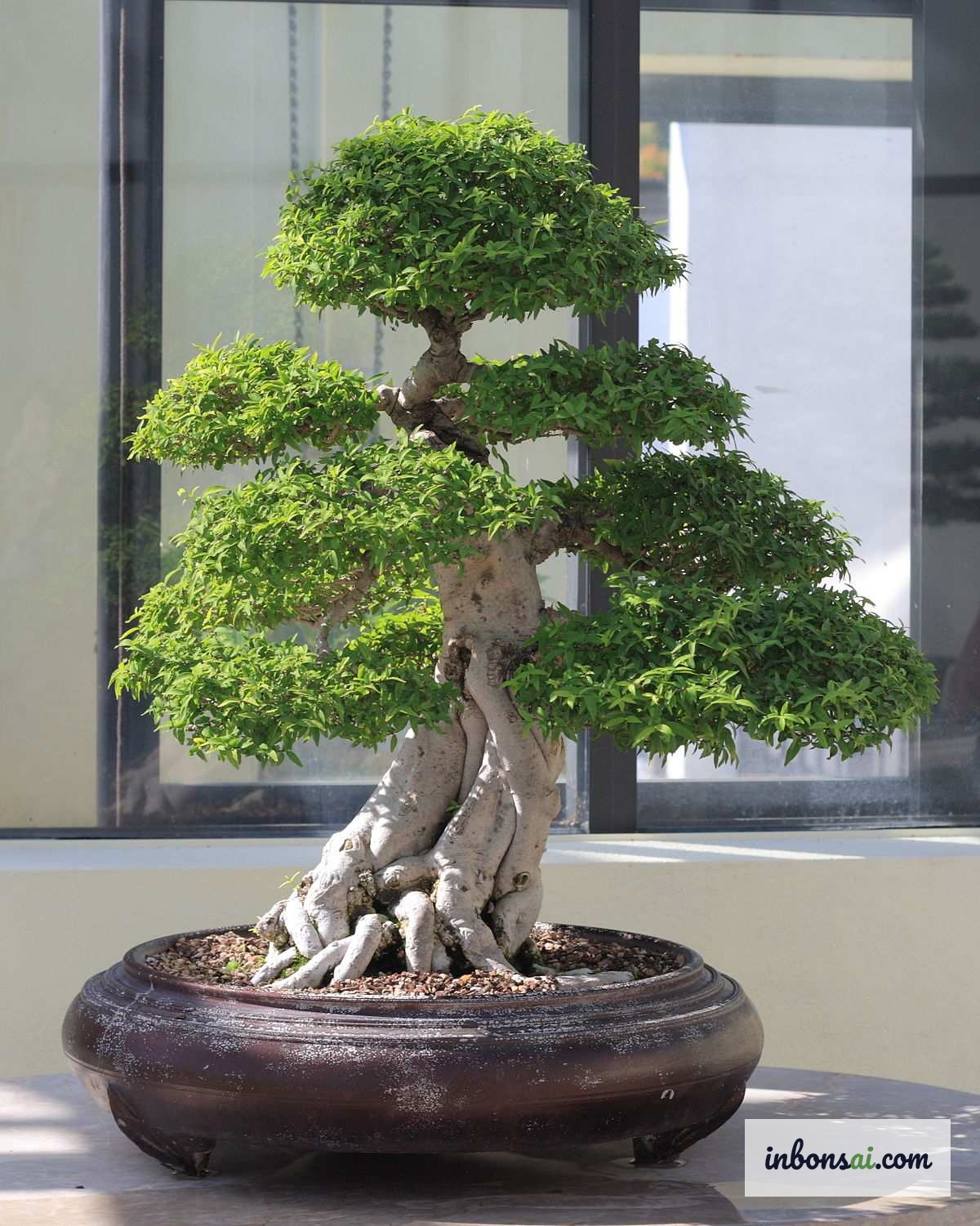
Pot color should be chosen to complement, not compete with, the tree's leaf, flower, or bark color. The basic rule: neutral-colored pots (earthy brown, gray, beige, reddish-brown) suit most evergreen, foliage-focused species like juniper, elm, or ficus. This is the safe default for beginners since it almost never clashes.
For flowering trees or species with distinctive foliage color (apricot blossom, azalea, bougainvillea), you can use a glazed pot with a gentle contrasting color to make the flowers pop — for example, a jade-green glaze for yellow apricot blossoms, or an ivory glaze for roses or white flowers. Avoid matching the pot color too closely to the flower color, or the flowers will get visually "lost" against the pot.
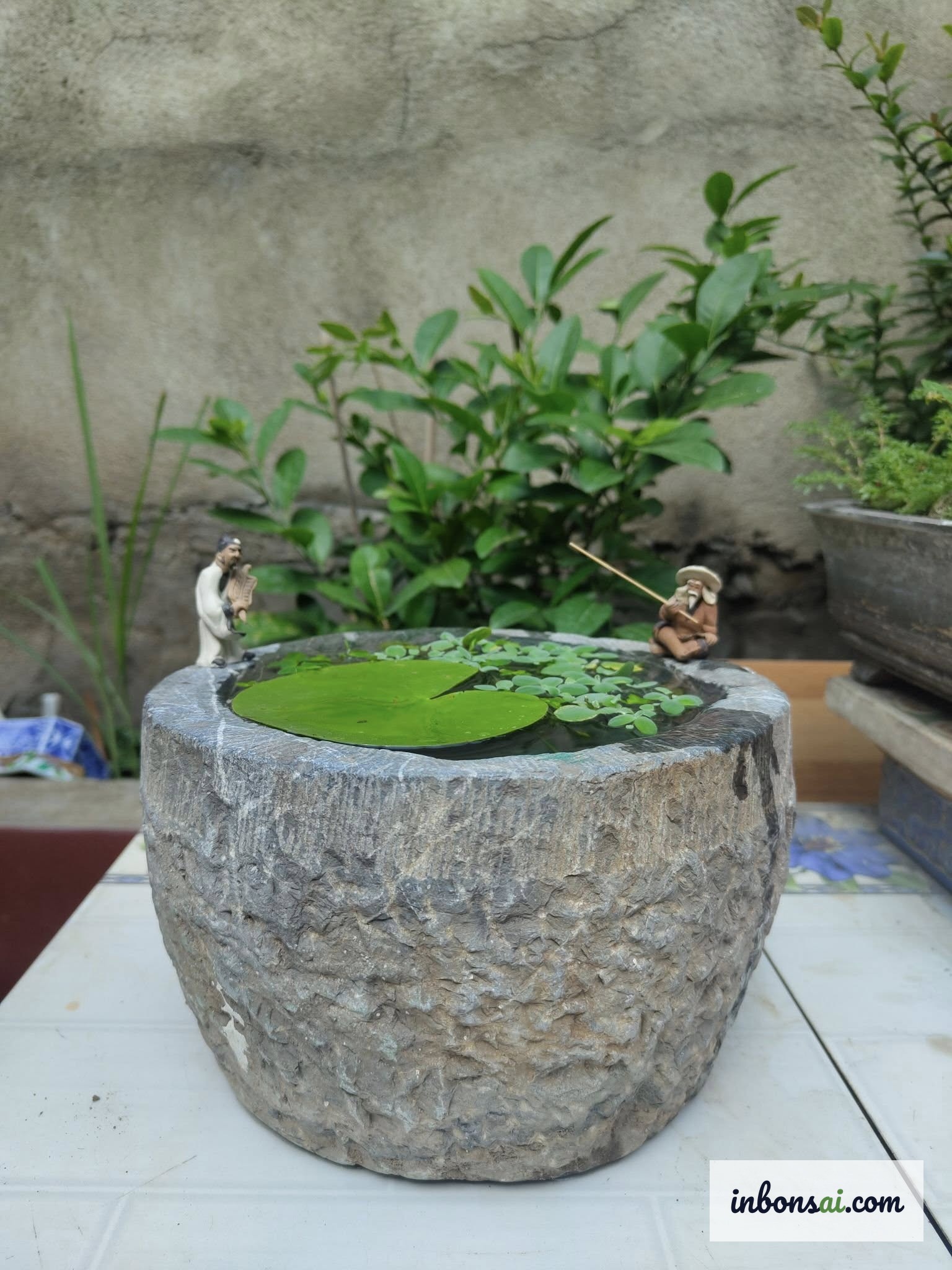
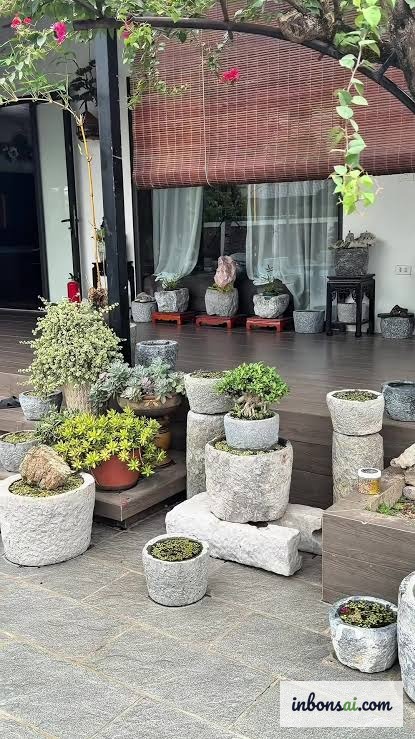
Pot material also affects drainage and heat retention. High-fired stoneware pots are durable, drain well, and suit hot, humid climates. Natural stone pots have a unique aesthetic and a rustic, aged feel, but they're heavy and need careful drilling for drainage holes. You can also explore repurposed stone pots for a classic bonsai garden look if you want a one-of-a-kind, vintage-styled container.
Unglazed vs. glazed pots — when to use each
This is the single most important classification rule in bonsai pot selection, rooted in Japanese tradition and still widely followed today. Coniferous trees (pine, juniper, spruce) are almost always kept in unglazed pots — natural earthy brown or ash-gray tones. The reasoning is that conifers carry a quiet, aged beauty, and a glossy glazed pot would clash with that overall style.
Broadleaf evergreens and deciduous trees (elm, ficus, maple) can go either way depending on the look you want — unglazed for a natural feel, or a lightly glazed pot for a more refined presentation.
Flowering and fruiting trees (apricot blossom, azalea, kumquat, calamondin) are the one group actively encouraged to use colorful glazed pots, since flowers and fruit need a contrasting "stage" to stand out. This is also why growers traditionally reach for jade-green or eel-skin glazed pots for flowering apricot trees during festival season.
Common mistakes when choosing a bonsai pot and how to fix them
The most common mistake is choosing an oversized pot "to give the tree room to grow." That logic works for ordinary houseplants but backfires with bonsai — too much soil holds moisture too long, causing root rot and slowing the very process of refining foliage and branch structure. Always prioritize a correctly proportioned pot over a spacious one.
The second mistake is ignoring drainage holes. No matter how beautiful the pot, a single small hole in the center leaves roots at the pot's edges prone to waterlogging during rainy season. Choose a pot with at least 2–4 evenly spaced drainage holes, along with mesh screens to keep soil from clogging them.
The third mistake is repotting too often just because you like a new pot. Every repot stresses the tree through root disturbance. Only repot when the tree genuinely needs it — see our guide on recognizing the signs your bonsai needs repotting to avoid unnecessary repots.
Finally, remember that choosing bonsai pots is a skill you build over time. Study well-composed bonsai displays, note which tree-and-pot pairings feel most harmonious to you, and gradually you'll develop your own eye for matching pots to the trees in your collection.
Tags
#bonsai-pot-selection#bonsai-pot-size#pot-shape-bonsai#bonsai-pot-colorGet bonsai guidance every week.
Fresh care guides, styling notes, and bonsai inspiration delivered to your inbox.