The Three Most Common Bonsai Pests
If your bonsai leaves suddenly show pale speckling, fine webbing, or an unusual sticky film, chances are your tree is under attack from one of three familiar culprits: spider mites, scale insects, or aphids on bonsai. These pests show up on nearly every species — juniper, ficus, elm, and flowering bonsai alike — and are commonly mistaken for watering problems or nutrient deficiency.
Each pest damages the tree differently and leaves distinct clues. Spider mites pierce the underside of leaves and spin fine webbing; scale insects attach themselves permanently as brown or white bumps along stems and branches; aphids cluster on tender new growth and excrete sticky honeydew that attracts ants. Identifying the correct pest is the first step toward choosing the right treatment.
This guide walks you through how to tell these three common bonsai pests apart by their specific signs, how to inspect your tree properly, and a safe treatment plan — even for trees kept indoors. If your tree is struggling for another reason, such as incorrect watering, see our beginner's guide to watering bonsai to rule that out before concluding it's pests.
Spider Mites on Bonsai: How to Identify Them
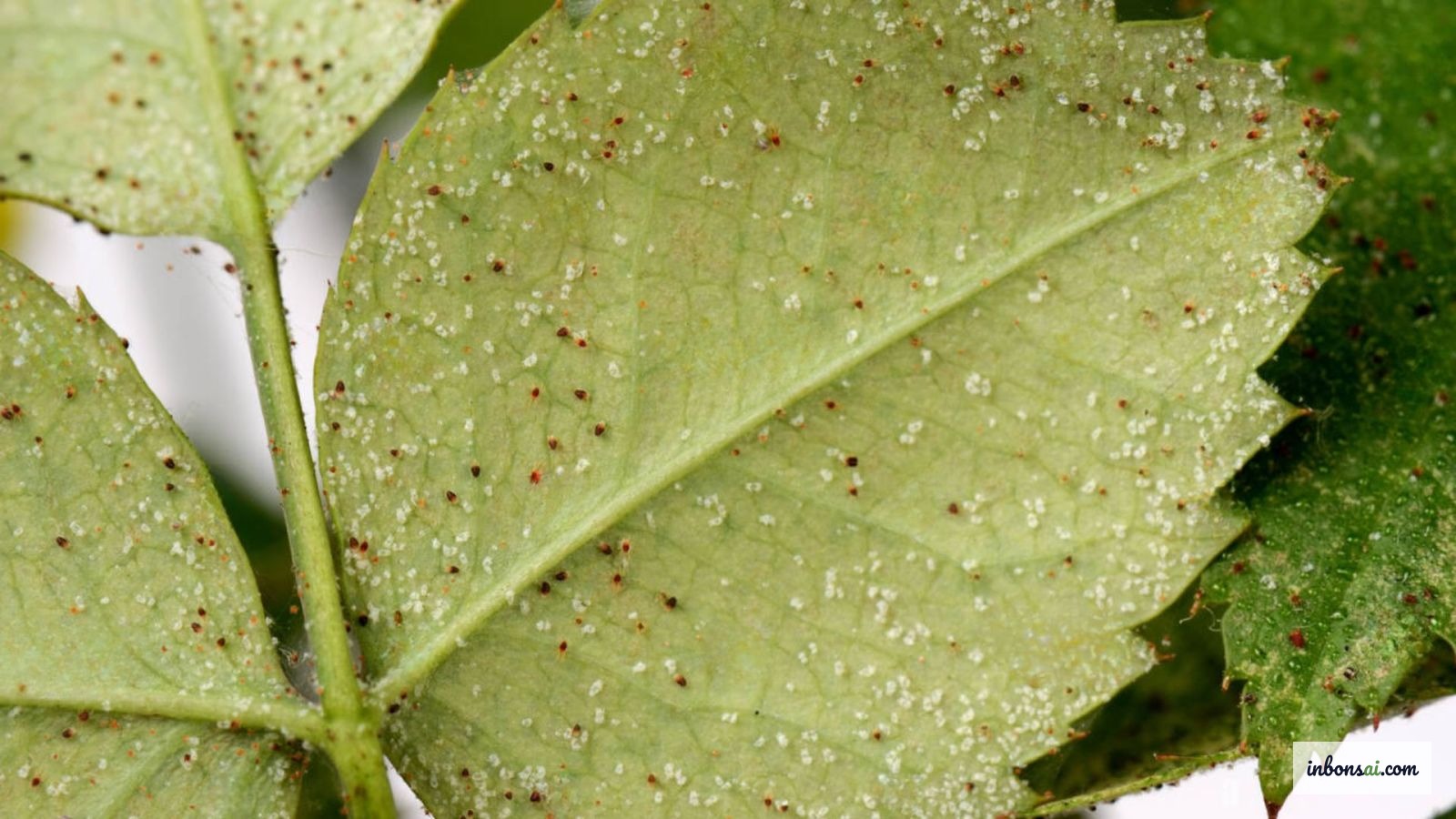
Spider mites are the hardest of the three to spot because of their tiny size — often invisible to the naked eye until populations are already high. The earliest sign is a stippled, pinprick-like pattern of pale yellow or silvery dots scattered across the leaf surface, caused by mites piercing cells and draining chlorophyll from the underside of leaves.
As spider mite populations grow, you'll notice fine webbing strung between leaves, along branch tips, or across the underside of foliage. Heavily infested leaves turn uniformly yellow, dry out, and drop early — especially during hot, dry weather when low humidity creates ideal breeding conditions for spider mites to explode in numbers.
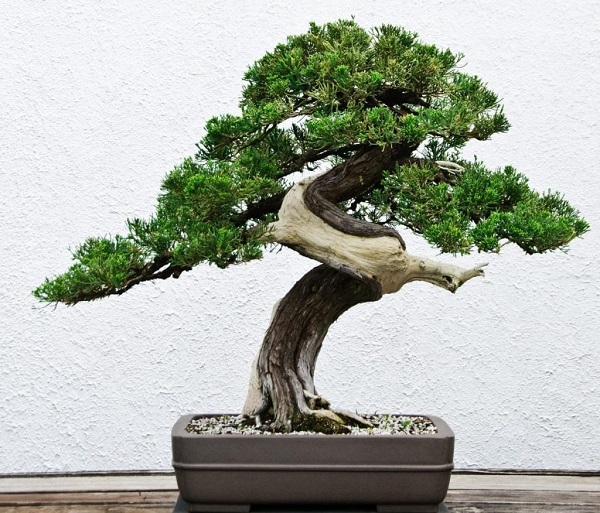
Spider mites especially favor needle-leaved species like juniper and cypress, along with indoor bonsai kept in stagnant air. If you're growing an outdoor juniper bonsai, check the underside of the needles regularly, since dense foliage easily hides an early infestation — see our outdoor juniper bonsai care guide to better understand this species' needs.
Scale Insects on Bonsai: How to Identify Them
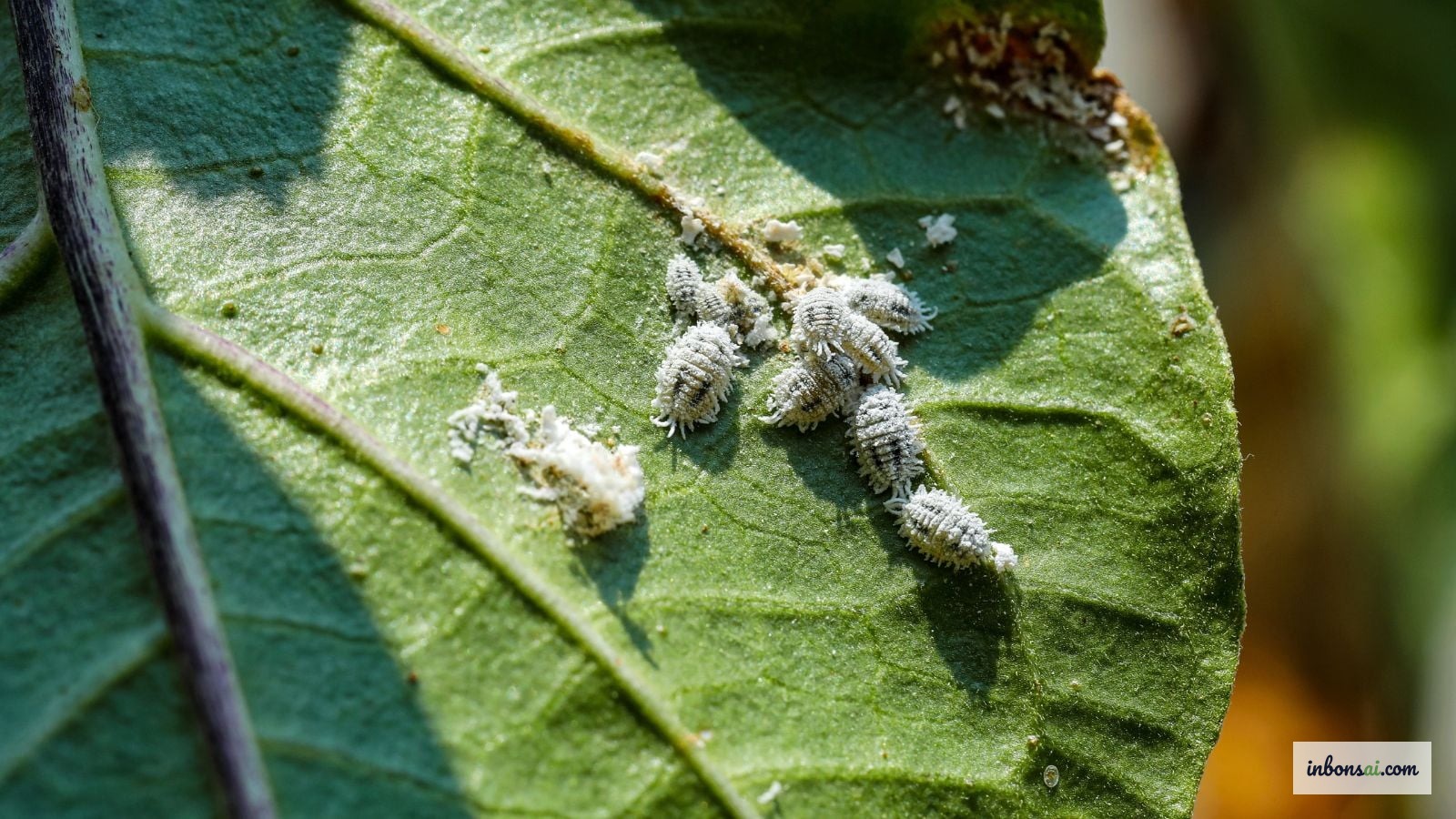
Scale insects are the best camouflaged of the three pests, since they attach themselves permanently in one spot and look like small brown, gray, or waxy-white bumps along stems, branches, and leaf veins. Many beginner bonsai growers mistake scale for natural bark texture or dirt — until they scrape one off and find liquid underneath.
There are two common types: armored scale, protected by a hard shell that's difficult for sprays to penetrate, and soft scale, which secretes a cottony wax or sticky honeydew. A telltale companion sign is black sooty mold growing on the honeydew residue, making branches and leaves look dusted with soot.
Scale insects feed continuously, causing affected branches to become stunted with wrinkled bark, and can kill an entire branch if left untreated. Because of their protective shell, mature scale insects resist ordinary sprays far better than spider mites or aphids do, which is why they call for a dedicated treatment strategy, covered later in this guide.
Aphids on Bonsai: How to Identify Them
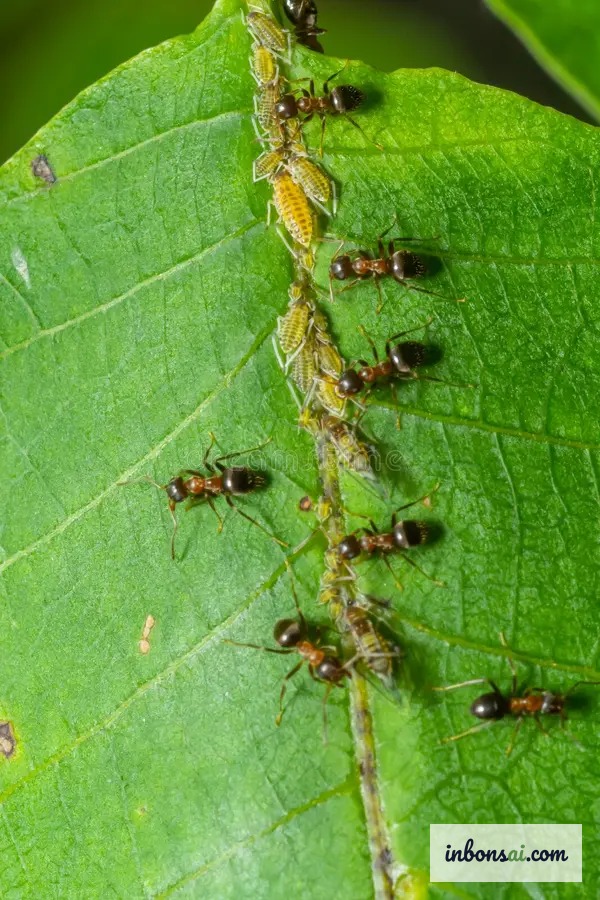
Aphids are the easiest of the three to spot, clustering in dense groups that are clearly visible to the naked eye on new shoots, branch tips, and the underside of young leaves — the spots richest in plant sap. Aphid color varies widely: green, black, reddish-brown, or yellow, depending on species and host plant.
The telltale sign is curled, distorted, or stunted new growth, caused by aphids continuously piercing tender developing tissue. Like scale insects, aphids excrete sticky honeydew that attracts ants, which "farm" the aphids and protect them from natural predators — if you notice unusual ant activity on your bonsai, treat it as an early warning sign worth investigating.
Aphids reproduce extremely fast; a single female can spawn an entire colony within days under favorable conditions (warm, humid, plenty of tender new growth). This is why aphids often surge in spring when bonsai are flushing new shoots, particularly on trees being pushed with frequent fertilizing.
How to Inspect Your Bonsai Correctly

Regular inspection is the only way to catch pests early, before they cause irreversible damage. Golden rule: check outdoor bonsai every two weeks, and indoor bonsai weekly, since indoor environments usually lack the natural predators that keep pest populations in check outdoors.
For spider mites, use the "white paper test": hold a sheet of white paper beneath a branch, tap it gently, and watch for tiny specks falling onto the paper. If a speck smears and moves when you drag your finger across it, that's a live spider mite. A handheld 10x magnifying glass is also worth keeping on hand to check the underside of leaves, where all three pests like to hide.
For scale insects, use a fingernail or cotton swab to scrape at any suspicious bump on stems and branches. Live scale will release a yellowish-orange liquid when crushed. Aphids are simple to confirm — just look directly at new shoots with the naked eye, since their size and clustering habit make them easy to spot.
Log the location and severity of any pests you find at each inspection to track trends. If numbers climb across consecutive checks, treat immediately rather than waiting.
Safe Treatment Plan for Bonsai
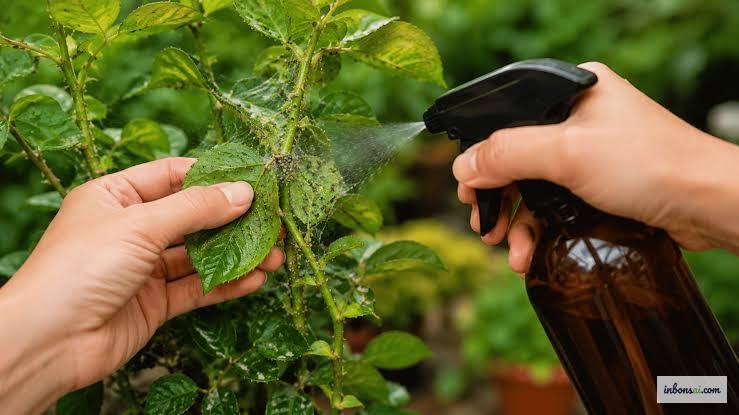
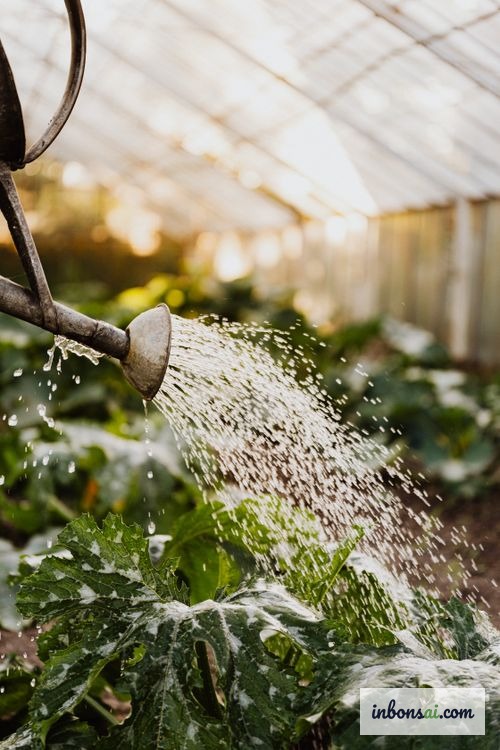
For light infestations, mechanical control is the safest option for a bonsai: a gentle jet of water rinses spider mites and aphids off the underside of leaves, while a cotton swab dipped in 70% isopropyl alcohol dabbed directly onto individual scale insects kills them without harming the tree.
For heavier infestations, neem oil is an effective, relatively low-risk option against all three pests, acting as both a contact killer and a repellent. Spray both leaf surfaces thoroughly in the cool of late afternoon, never under direct hot sun, since neem oil combined with heat can scorch foliage. Repeat every 7–10 days to catch newly hatched pests, since most treatments don't kill eggs.
Insecticidal soap is a good alternative for aphids and spider mites, working on direct contact, so thorough coverage of the entire leaf surface is essential. For mature scale insects with their hard shell, horticultural oil applied as a complete coating works better, since the oil layer smothers the insect through its protective covering.
For severe or recurring infestations, rotate active ingredients to prevent resistance, and isolate the affected tree from your other bonsai during treatment to prevent the infestation from spreading.
Preventing Reinfestation
Once a pest problem is cleared, prevention matters just as much as the initial treatment. Maintaining proper humidity is key — spider mites thrive in dry conditions, so for indoor bonsai, placing a humidity tray filled with pebbles under the pot meaningfully lowers the risk of an outbreak.
Ensure good airflow around the canopy, and avoid crowding your bonsai against walls or other plants — stagnant, cramped spaces are ideal breeding grounds for all three pests. If you're new to growing bonsai indoors, see our beginner's guide to indoor bonsai care for tips on setting up a low-pest environment from the start.
Quarantine any newly purchased tree for at least two weeks before placing it near your existing bonsai — this is the most common source of infestation that growers overlook. Finally, sticking to the regular inspection schedule outlined above remains the most effective, lowest-cost form of prevention, letting you catch and treat pests before they cause serious damage to your tree.
Tags
#bonsai-pests#spider-mites-bonsai#scale-insects-bonsai#aphids-bonsai#bonsai-careGet bonsai guidance every week.
Fresh care guides, styling notes, and bonsai inspiration delivered to your inbox.