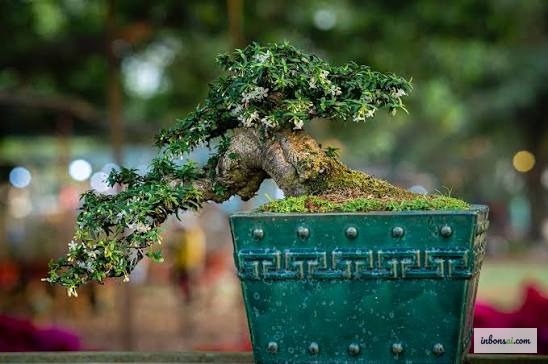
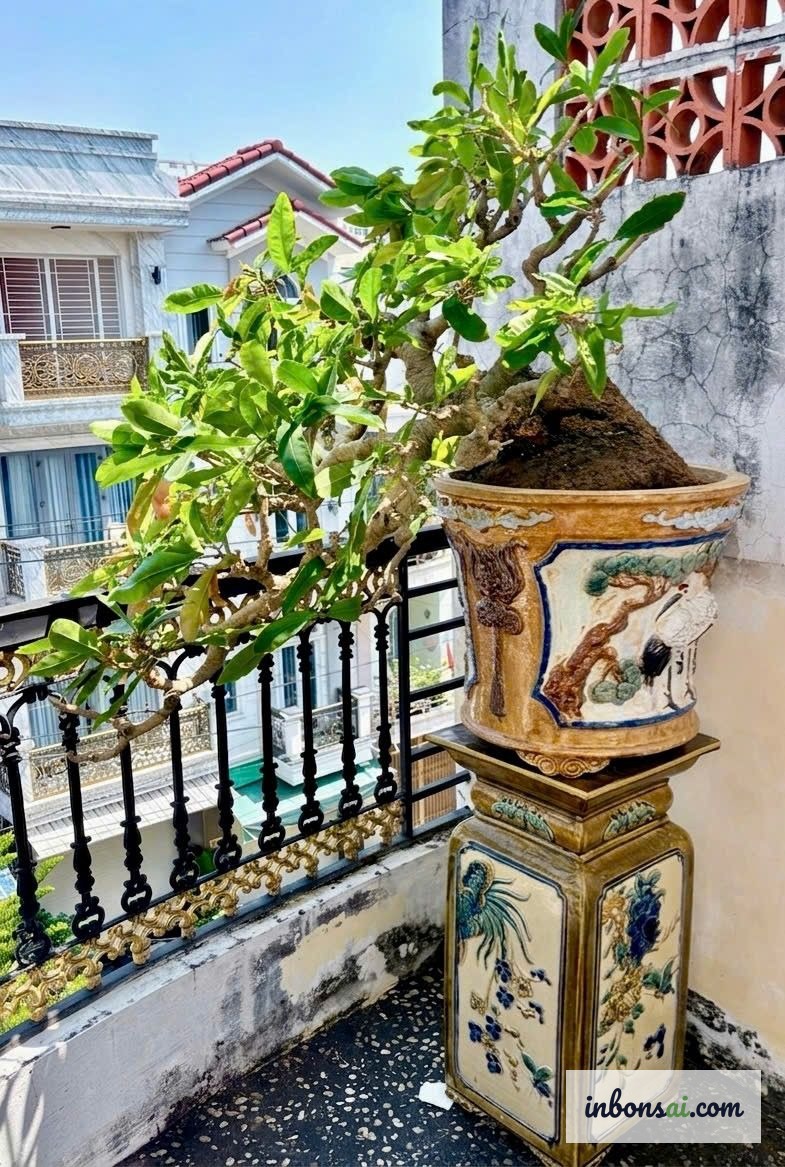
Getting indoor bonsai tree care for beginners right is what separates a tree that thrives year-round from one that slowly drops its leaves and dies within a few months. The problem is that an indoor environment is nothing like the outdoors: light is dozens of times weaker, the air is drier because of air conditioning, and temperature barely shifts with the seasons. A bonsai is fundamentally an outdoor woody tree, so bringing it inside forces it to adapt to a completely unfamiliar world.
The good news is that the three most important factors — light, humidity, and placement — are all within your control. This guide walks through each one with concrete numbers and warning signs, so you know exactly what to do instead of guessing.
Why indoor bonsai are harder to care for than outdoor ones
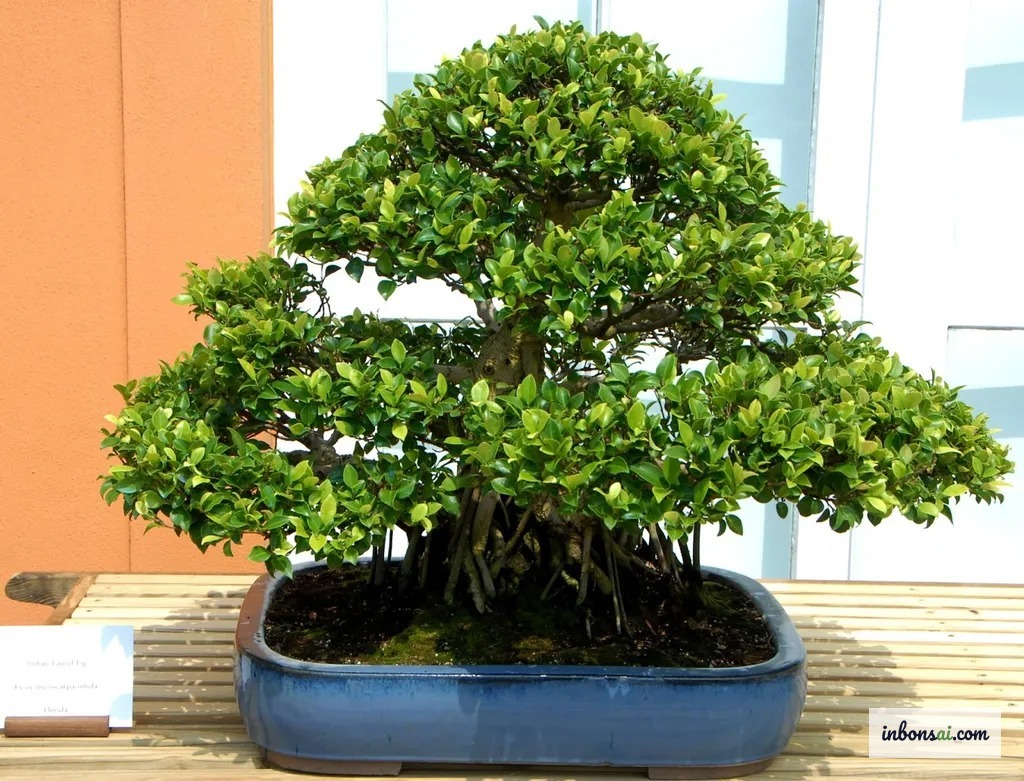
The first thing beginners need to accept: not every bonsai species can survive indoors. Most temperate woody species — pine, Japanese maple, azalea — need a cold dormancy period to recharge their energy. Kept in a warm room year-round, they slowly decline because they never get to rest.
Only tropical and subtropical species are genuinely suited to indoor life. This group includes ficus (banyan, weeping fig, ginseng), Chinese elm, jade plant, and a handful of shade-tolerant, small-leaved species. They evolved under a rainforest canopy, so they're already adapted to diffused light and stable temperatures.
The second major difference is light intensity. A sunny patio at midday can reach 50,000–100,000 lux, while a spot a few meters from an indoor window may only get 500–2,000 lux. That's a difference of dozens of times, and the human eye can't perceive it because our pupils adjust automatically — which is exactly why a room can look "bright enough" while the tree is quietly starving for light.
The third factor is humidity. Outdoor air is typically 70–85% humidity in tropical climates, but a room running air conditioning constantly can drop to 30–40%. For a tree adapted to a humid forest, that gap causes water loss through the leaves faster than the roots can replace it. If you're still deciding between indoor and outdoor, see our guide on choosing an indoor or outdoor bonsai before you buy.
Light — the make-or-break factor for indoor bonsai care
Light is the only energy source for photosynthesis, and it's also the resource most severely lacking indoors. The basic rule: place the tree as close to a window as possible, ideally within 30–60 cm. Light intensity falls off with the square of the distance, so moving from 0.5 meters to 1 meter away can cut the light your tree receives by roughly four times.
Window orientation determines light quality. South-facing windows give the most light throughout the day and suit most tropical bonsai. East-facing windows offer gentler morning sun, safer for thin-leaved species prone to scorch. West-facing windows bring harsh afternoon sun that usually needs a sheer curtain to filter it. North-facing windows rarely provide enough light on their own and typically need supplemental lighting.
Watch for these warning signs of insufficient light. Unusually long internodes — the gaps between leaf nodes stretching out — are the classic symptom, as the tree "reaches" toward the light source. New leaves that are smaller and paler than older ones are another red flag. Leaf drop on the inner canopy while the top stays green shows the tree sacrificing shaded leaves it can no longer afford to feed.
If no window in your home gets enough light, an LED grow light is a practical, inexpensive fix. Choose a full-spectrum fixture rated 20–40W actual draw, position it 20–30 cm above the canopy, and run it 10–12 hours a day on a timer outlet. For exact specs to look for, see our LED grow light guide for light-starved bonsai.
One small but effective habit: rotate the pot 90 degrees every week. This ensures every side of the canopy gets its turn in the light and prevents the tree from growing lopsided and losing its shape.
Humidity and how to build a microclimate around your tree
Ideal humidity for indoor tropical bonsai is 50–70%. Air-conditioned rooms often sit at just 30–40%, well below that safe threshold. When the air is too dry, leaves lose moisture faster than they can replace it, leaf edges turn brown and brittle, and the tree drops leaves even though the soil is still moist — this is the symptom most often mistaken for underwatering.
A humidity tray is the simplest, most durable fix. Take a shallow tray wider than the pot's base, spread a 2–3 cm layer of gravel or perlite, and add water until it's about two-thirds up the gravel. Set the pot on top of the gravel — the base must never touch the water directly, or it will wick upward and waterlog the roots. Continuous evaporation creates a pocket of humid air right around the canopy.
Grouping several trees close together has a similar effect. Every plant releases moisture through its leaves, so clustering three or four pots together builds a noticeably more humid microclimate than scattering them around the room. It costs nothing and makes routine care easier too.
A humidifier is the best option if you spend all day in an air-conditioned room. Place it 1–2 meters from the tree and set the target humidity to 55–60%. Misting the leaves, by contrast, is often overrated — the effect lasts only 15–20 minutes, and misting in the evening when leaves can't dry off in time invites fungal leaf disease.
Pay close attention to airflow. Never place a bonsai directly under an AC vent or in front of a standing fan. A direct blast of cold, dry air dehydrates leaves rapidly and often causes mass leaf drop within days.
Choosing the right spot to place your indoor bonsai
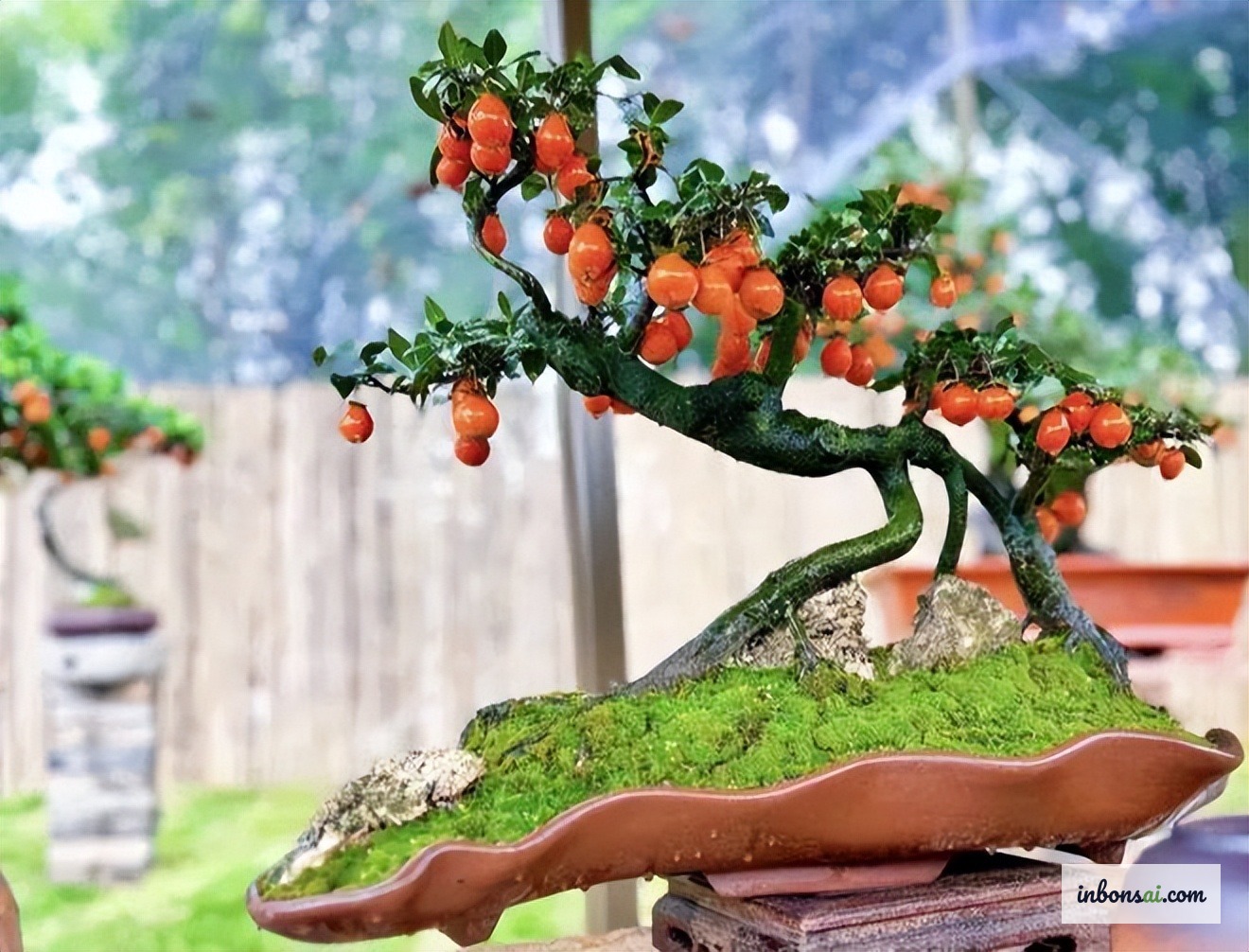
A good spot checks three boxes: close to a bright window, away from AC airflow, and stable temperature. In most homes, an east- or south-facing windowsill in the living room is the sweet spot.
A few common but harmful spots to avoid: on top of a refrigerator or TV, where constant heat dries out the soil unevenly; right by a balcony door, where drafts cause repeated temperature shock every time it opens; the bathroom, which has good humidity but almost no natural light, so the tree still declines; and any corner more than 3 meters from a window, which is almost always too dim even if it looks bright to your eyes.
Room temperature should stay in the 18–28°C range, comfortable for most tropical species. More important than the absolute number is the swing — a day-to-night difference greater than 10°C stresses the tree. This commonly happens when the AC is switched off abruptly overnight.
If you want to give your tree some real outdoor sun, transition it gradually. Start with one hour in full shade outdoors and increase over 7–10 days. Moving a shade-adapted tree straight into direct sun will cause severe leaf scorch in a single afternoon.
Watering indoor bonsai the right way
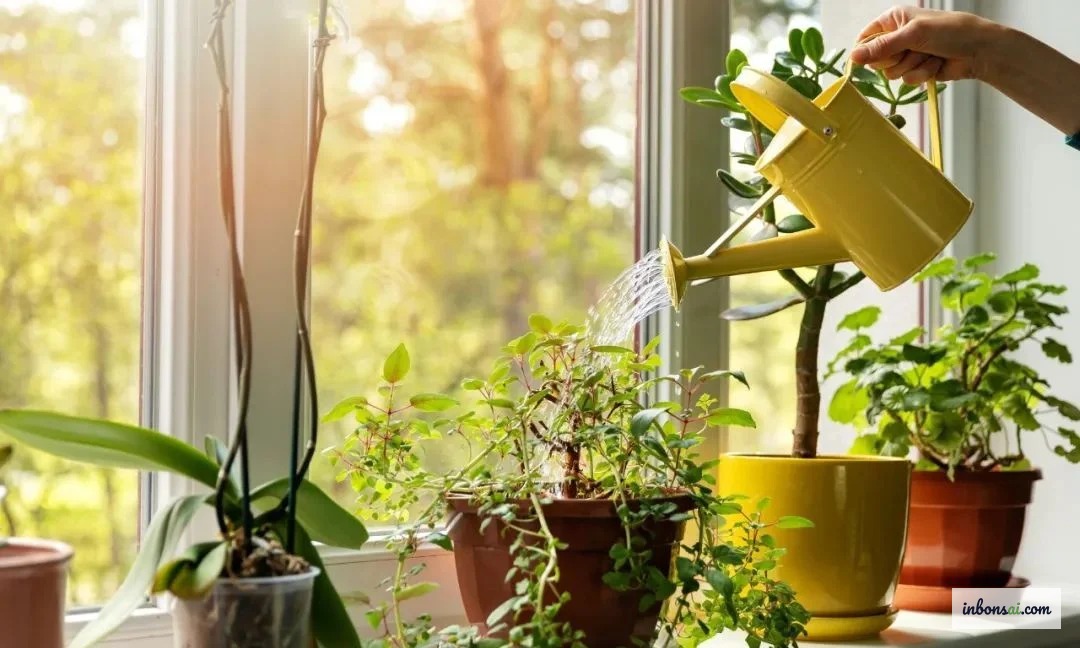
Incorrect watering is the number one killer of indoor bonsai, and overwatering is far more dangerous than underwatering. The reason is that water evaporates more slowly indoors, so a fixed schedule like "every two days" is almost always wrong.
The standard check: press a finger about 2 cm into the soil surface. If it's dry at that depth, water; if it's still damp, wait. An even more reliable method is to lift the pot and feel its weight — a suspiciously light pot means the soil has dried out, while a pot that still feels heavy still holds moisture.
When you do water, soak thoroughly until water runs freely from the drainage holes. Frequent light watering only wets the top layer, pushing roots upward while the deeper root system dries out. After watering, empty any standing water from the saucer after 15 minutes so roots don't sit in water.
Let tap water sit in a bucket overnight so chlorine can dissipate. In hard-water areas, rainwater or filtered water works better, especially for acid-loving species. Seasonally, water less during the rainy season and cooler months when the tree consumes less, and more often during dry spells or in air-conditioned rooms.
Feeding and repotting on schedule
An indoor bonsai has no natural source of nutrients beyond what you feed it, since the pot holds so little soil and nutrients wash out with every watering. That said, indoor trees grow more slowly than outdoor ones, so their feeding needs are lower too.
Use a balanced NPK fertilizer such as 10-10-10 or 20-20-20 diluted to half the label strength. Feed every two to four weeks while the tree is actively pushing new growth, tapering to every six to eight weeks once growth slows. Slow-release fertilizer pellets are also convenient — just sprinkle them on the soil surface every two to three months.
Three safety rules to remember. Never fertilize dry soil — always water first, then feed, or fertilizer salts can burn the roots. Don't feed a tree within four to six weeks of repotting, since the new roots are still too tender. And never feed a stressed or leaf-dropping tree — feeding it now only exhausts it faster.
As for repotting, indoor bonsai typically need it every two to three years, less often than outdoor trees because they grow more slowly. Signs it's time include roots emerging from the drainage hole, water sitting on the surface instead of soaking in, or almost no new growth for a full season. The best time is early spring, just as the tree is about to break dormancy. See our guide on signs your bonsai needs repotting so you don't miss the window.
Troubleshooting common indoor bonsai problems
Yellowing and leaf drop have several distinct causes worth telling apart. Even yellowing that starts from the inner canopy outward, combined with soil that's always wet, points to root rot — stop watering, check the drainage hole, and if roots are blackened and smelly, trim away the rotten parts and repot in fresh soil. By contrast, dry, brittle edges and tips with dry soil point to underwatering or air that's too dry.
Sudden, mass leaf drop usually follows a change in environment, such as bringing the tree home for the first time or moving it to a new spot. This is shock, not disease. The fix is to leave it in its new spot, water moderately, skip fertilizer, and give it two to three weeks to settle and push new leaves.
Spider mites and mealybugs are the two most common indoor pests, since dry indoor air has few natural predators. Spider mites spin fine webbing at the leaf axils and stipple leaves with yellow dots; mealybugs cluster as white, cottony spots at branch joints. Both respond to wiping leaves with a damp cloth followed by diluted insecticidal soap or neem oil, repeated every five to seven days for three weeks.
White mold on the soil surface is usually harmless but signals soil that's too damp with poor airflow. Scrape off the top layer, water less often, and improve air circulation around the tree. Finally, if a tree drops nearly all its leaves but the branches are still green under a light scratch of the bark, it's still alive — cut back watering, move it somewhere brighter, and wait; many trees push new growth again within four to six weeks.
Tags
#indoor-bonsai#bonsai-care#bonsai-for-beginners#bonsai-light#bonsai-humidityGet bonsai guidance every week.
Fresh care guides, styling notes, and bonsai inspiration delivered to your inbox.