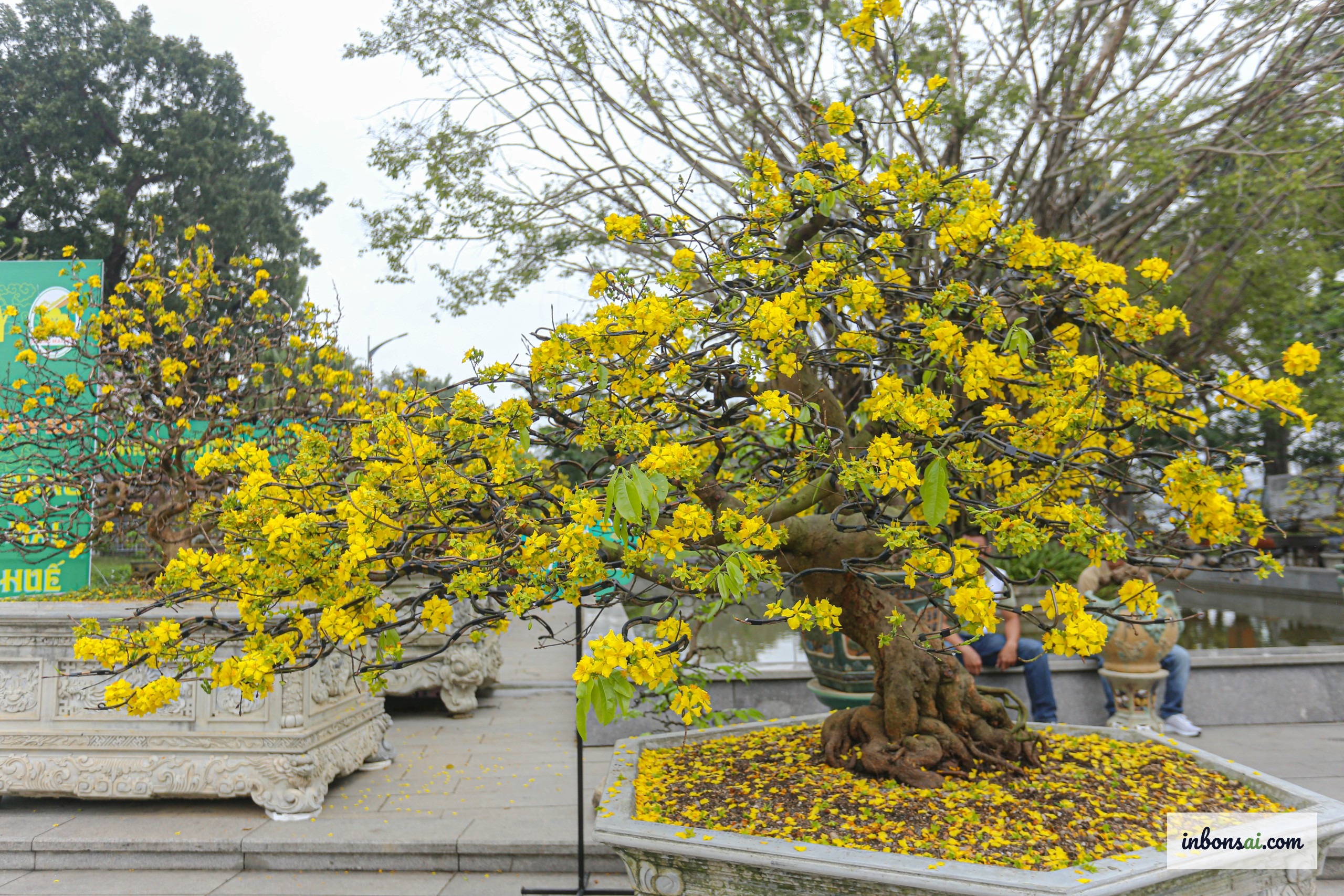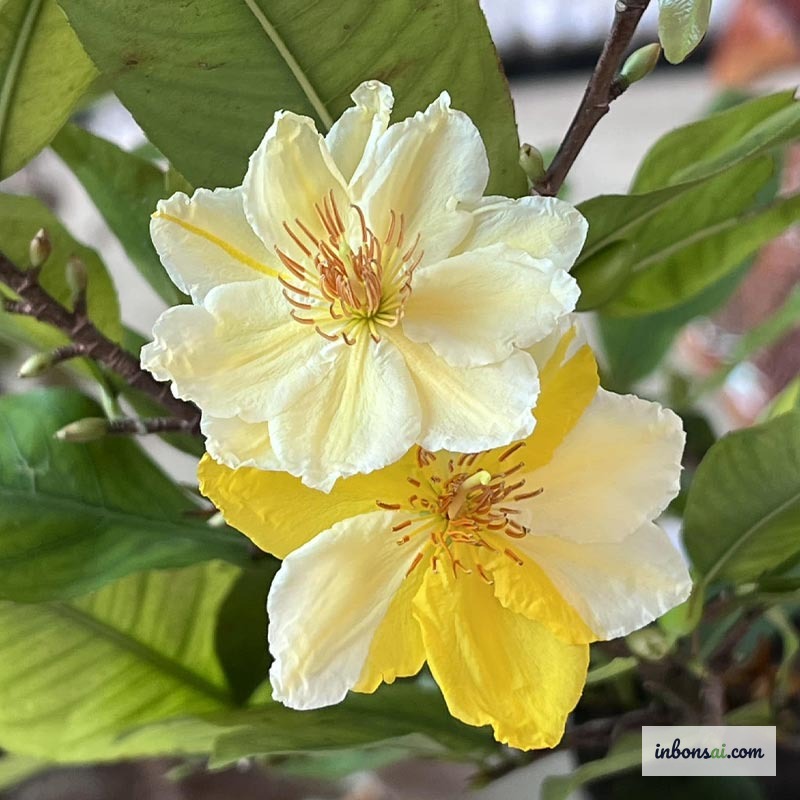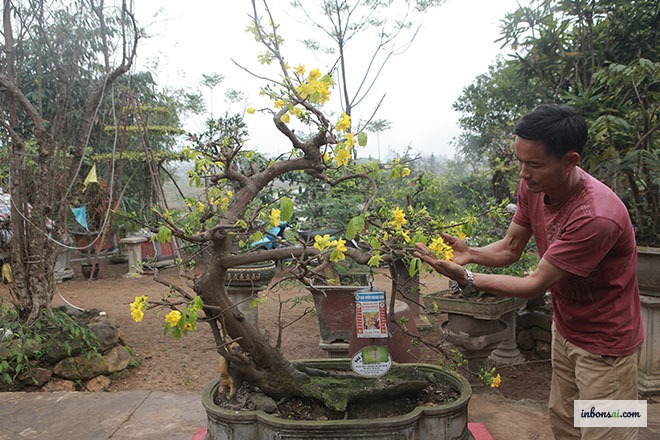
A thick, rugged, and weathered trunk is the foremost aesthetic criterion that any mai vang bonsai enthusiast strives for. The trunk not only reflects the age and vitality of the tree, but also determines the artistic and commercial value of a bonsai work. Yet the techniques for growing a thick, beautiful trunk quickly on mai vang bonsai (Vietnamese yellow apricot) are rarely explained in detail.
This article compiles methods used by experienced artisans, helping you understand the tree's physiology so you can choose the right technique for your growing conditions.
Why Trunk Size Matters in Mai Vang Bonsai Art
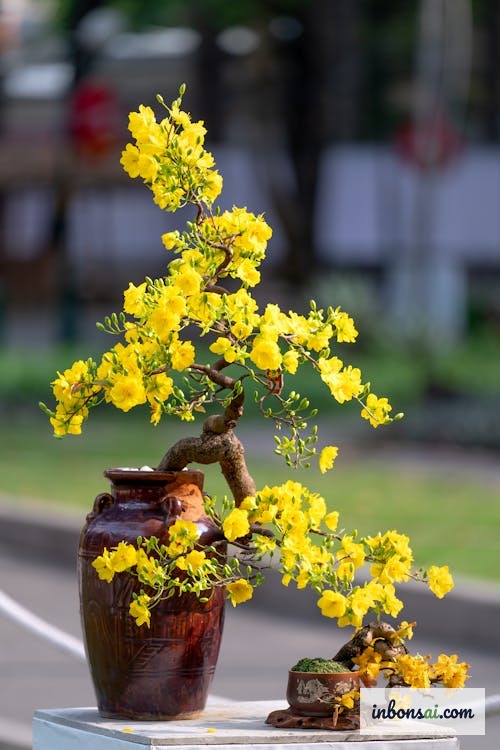
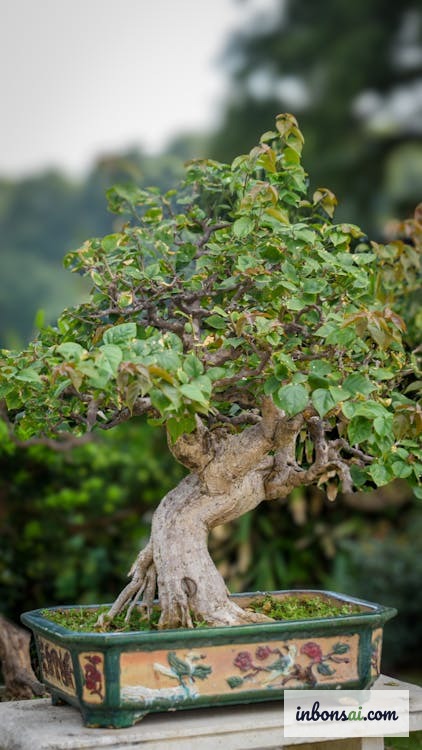
In traditional Vietnamese bonsai art, the trunk base — known as "nebari" in Japanese terminology — is the first element evaluated when looking at a finished work. With mai vang bonsai, a thick trunk creates the impression that the tree has grown for many decades in nature, even if it was only planted a few years ago.
A beautiful trunk is not simply large. It needs a balanced form, surface roots spreading evenly in all directions, and a naturally textured bark surface. A properly aesthetic trunk must convey a sense of stability, as if the tree is gripping the earth to withstand the passage of time.
Beyond artistic value, a thick trunk also means a robust root system, helping the tree absorb nutrients more efficiently, withstand drought better, and recover faster after heavy pruning. This is why skilled artisans never skip the trunk-development phase, even when in a hurry to style or flower the tree.
The Physiology: How Mai Vang Develops Trunk Girth
To apply the right technique, you need a basic understanding of how the mai vang tree accumulates biomass at its base. Trunk diameter increases through cell division in the cambium layer — a thin layer of meristematic tissue just beneath the bark.
The cambium is most active when three conditions are met simultaneously: abundant sunlight for photosynthesis, balanced nutrition (especially nitrogen and potassium), and a strong flow of processed sap moving downward from leaves to roots. This is why techniques for growing a thick trunk on mai vang bonsai are actually a combination of multiple factors acting together on this single process.
A common mistake is focusing only on heavy fertilization while neglecting sunlight and root space. Fertilizer only reaches its full potential when the tree is photosynthesizing strongly and the roots have space to expand.
The "Grow-Out" Technique — Fastest Method for Increasing Trunk Diameter
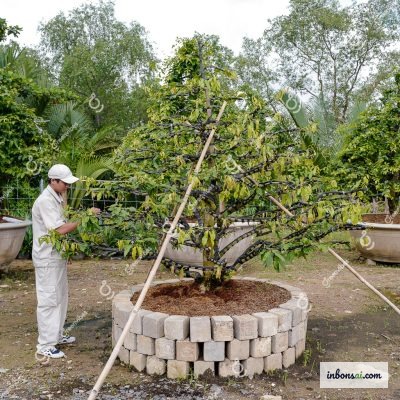
The grow-out method is the most effective approach for rapidly building trunk girth. The principle is simple: allow the tree to develop freely in a spacious environment (garden bed or large container) without styling intervention, directing all growth energy toward increasing trunk mass.
Implementing the grow-out technique:
Plant the tree directly in a garden bed or a large plastic container or styrofoam box (minimum 50–70 cm diameter). The growing medium should be loose and well-draining — a mix of alluvial soil and carbonized rice husk (6:4 ratio) encourages vigorous root growth. Allow the tree to grow naturally, only removing weak inward-growing branches, without styling or tip-pinching for at least the first 2–3 years.
During the grow-out phase, water regularly, keeping the soil consistently moist but never waterlogged. Mulch the base with a thin layer of straw or rice husks to retain moisture and moderate soil temperature. With this method, trunk diameter can increase by 2–3 cm per year depending on the variety and care conditions.
Fertilization for Trunk Development: Balanced NPK by Season
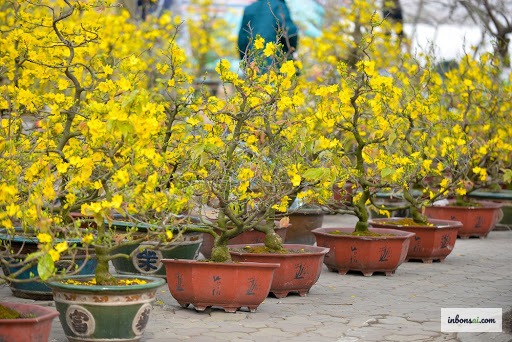
Nutrition is the key factor determining the rate of trunk development. A common mistake is applying excessive nitrogen (N) year-round, causing lush green foliage growth while the trunk barely thickens.
Seasonal fertilization schedule:
From February to August (growing season): prioritize NPK 20-20-15 or 30-10-10, applied every 3 weeks. Supplement with organic bio-fertilizers (oil cake, well-rotted cow manure) around the base monthly to improve soil quality and provide micronutrients. During this phase, the tree focuses on building trunk mass and root structure.
From September to December (pre-flowering): switch to NPK 10-30-20 to stimulate flower formation, reducing nitrogen. After flowering ends (January–February), apply potassium-rich fertilizer to strengthen resistance and restore energy reserves in the trunk.
Important note: always water thoroughly before applying chemical fertilizers to prevent root burn. For trees in small pots, reduce the dosage to half of the package recommendation.
Bark Carving and Scoring Techniques for Natural Trunk Texture
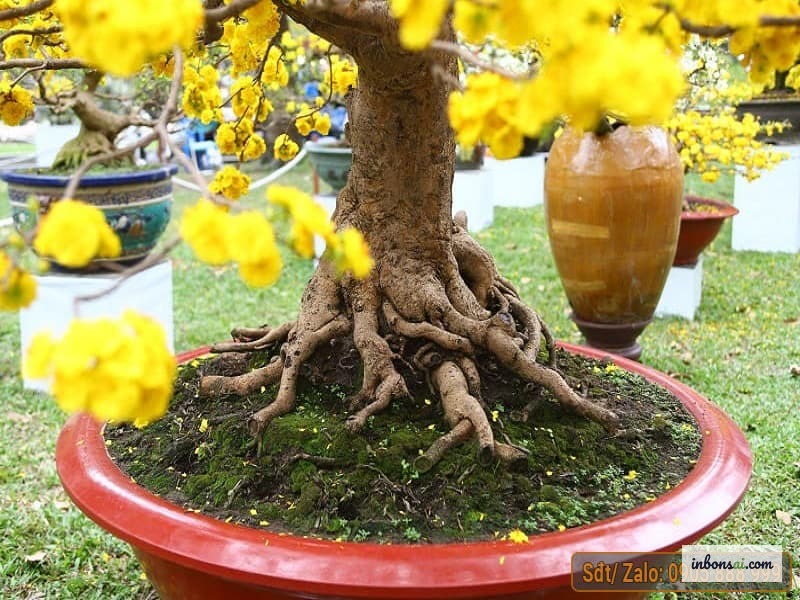
A thick trunk is not enough — it also needs a beautifully textured, rugged surface with visual depth. This is where mechanical techniques applied to the bark come into play.
Bark scoring (ringing): use a sharp knife to make light parallel cuts along the trunk base, deep enough to penetrate the bark but not reach the wood. The cuts will heal and form natural raised ridges, increasing the bark's rough texture. Perform this at the start of the rainy season (May–June) when the tree is growing vigorously so wounds heal faster.
Trunk carving (jin and shari): reserved for experienced practitioners. Use chisels and a Dremel rotary tool to create intentional grooves and areas of exposed deadwood, simulating the appearance of an ancient tree shaped by lightning or weathering. This technique is particularly effective on older mai vang trees with a large but still-smooth trunk.
See also basic bonsai styling techniques to master the fundamentals of shaping before intervening in the trunk.
Managing Surface Roots (Nebari) — The Factor That Defines Trunk Beauty
Surface roots (nebari) are the portion of the root system that emerges above the soil, spreading evenly in all directions from the trunk base. This is an aesthetic element equally as important as trunk thickness.
To develop beautiful surface roots, apply the shallow planting technique — plant the tree shallower than normal, allowing the root flare to protrude about 1–2 cm above the soil surface. When watering, water slowly and evenly so the soil does not erode. Every 6 months, use a stiff brush to gently clean around the base to remove moss and accumulated soil, gradually exposing the roots.
When repotting, spread the roots horizontally rather than allowing them to coil. Remove any downward-growing tap roots to stimulate lateral root development. After 3–4 properly executed repottings, the surface root system will spread evenly and create a strong, stable trunk base.
See also bonsai repotting and root care techniques for more detail on root management.
Year-Round Care Calendar for Effective Mai Vang Trunk Development
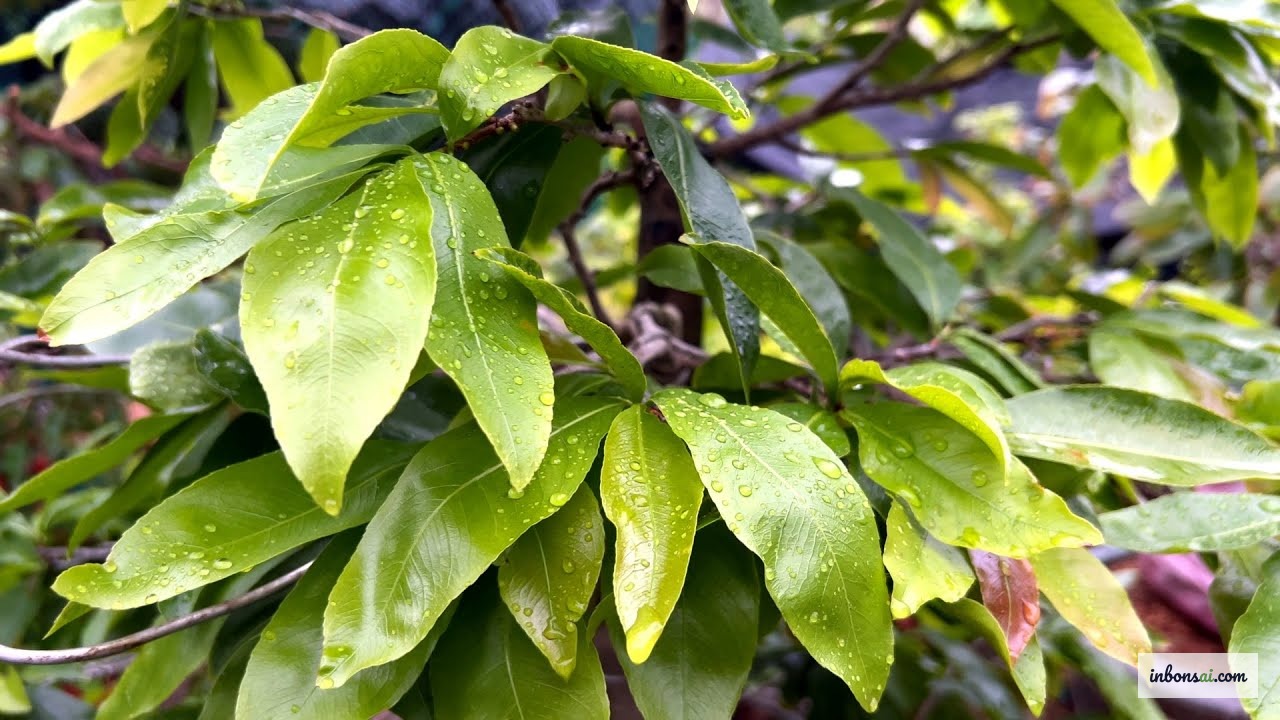
Success in growing a thick, beautiful trunk on mai vang bonsai comes from consistency and understanding the tree's seasonal growth rhythm. Here is a comprehensive care calendar for the year.
Spring (February–April): after flowering ends, the tree enters an energy recovery phase. Apply nutrient-rich organic fertilizer, water regularly, and ensure the tree receives full sun (at least 6 hours/day). This is a good time for repotting if needed, combined with root system adjustment.
Summer (May–August): the strongest growth phase — the trunk develops fastest during this period. Water 1–2 times per day depending on weather, fertilize on schedule. Take care to protect against prolonged heavy rain that can cause root rot. Monitor for pests and treat promptly.
Autumn (September–November): gradually reduce nitrogen fertilizer and switch to potassium and phosphorus to help the tree accumulate reserves. Begin leaf management (defoliation or water restriction) to stimulate flowering in time for Tet.
Winter (December–January): the tree's flowering and rest phase. Reduce watering, withhold nitrogen fertilizer. After Tet, prepare to begin a new trunk-development cycle for the coming year.
See also seasonal mai vang bonsai care guide for a more detailed month-by-month schedule.
Common Mistakes When Building Mai Vang Trunk Girth — And How to Fix Them
Even experienced mai vang growers make several common errors that cause the trunk to develop slowly or lose its natural beauty.
Mistake 1 — Potting in too small a container too soon: many people want the bonsai form immediately and pot into a small container, which restricts trunk development. Solution: use the grow-out method in a large pot or garden bed for at least 3–5 years before moving to a bonsai pot.
Mistake 2 — Pruning branches too early and too heavily: every branch and leaf is a "factory" producing nutrition for the trunk. Removing too many branches means reducing the flow of sap downward. Only cut branches that are truly unnecessary.
Mistake 3 — Incorrect watering: too little water causes roots to contract and stagnate. Too much causes root rot and fungal disease. The principle: water when the soil surface begins to dry, water thoroughly until water drains from the bottom hole.
Mistake 4 — Skipping root work during repotting: repotting is a golden opportunity to shape the surface root system. If you skip spreading roots and removing tap roots, the tree will develop a tangled root system and an unattractive base no matter how thick it grows.
Tags
#mai vang#bonsai#trunk development#bonsai techniques#yellow apricot bonsaiGet bonsai guidance every week.
Fresh care guides, styling notes, and bonsai inspiration delivered to your inbox.