Three Secrets to Caring for Flowers at Home: Balconies, Gardens, and Indoors

InBonsai Team
March 16, 2026 · 7 min read
Dreaming of a green corner in your city apartment, or wanting to transform a bare balcony into a vibrant mini-garden? No matter how much space or experience you have, caring for flowers at home has its own secrets. The three tips below will help you choose the right plants, place them correctly, and care for them properly — so your home garden stays lush all year round.
1. Growing Plants on the Balcony
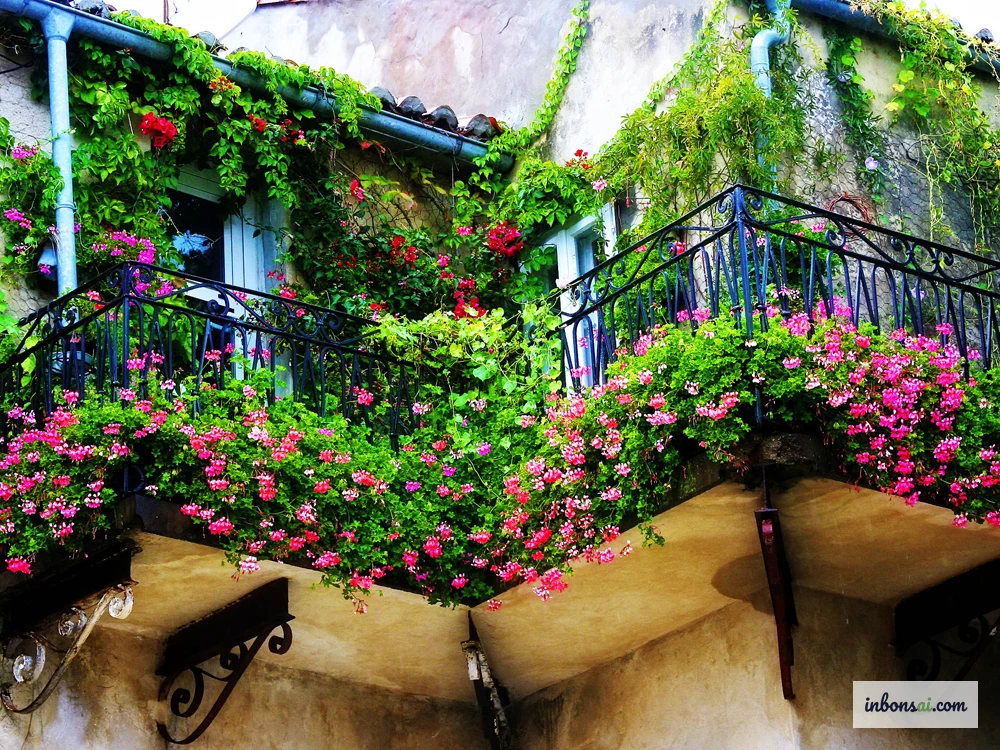
For city dwellers, the balcony is the most common spot for a home garden. However, not every balcony suits every type of flower, as plant selection is heavily influenced by the balcony’s orientation and sun exposure.
Choosing Plants by Balcony Direction
Plants for South-Facing Balconies
South-facing balconies are ideal for growing ornamental plants, as they receive abundant sunlight, good airflow, and comfortable temperatures. The main drawback is that water evaporates quickly, so south-facing balconies are best suited for sun-loving, drought-tolerant plants such as:
- Pomegranate, portulaca, Indian lotus
- Night-blooming jasmine, bougainvillea, zinnia
- Chrysanthemum, ornamental chili, ornamental eggplant
- Marigold, poinsettia, jasmine, osmanthus, white orchid
Notably, orchids, begonias, and petunias are three especially popular choices for south-facing balconies — they thrive even without expert care. For narrow balconies, opt for shade-tolerant plants like asparagus fern or palm grass.
Plants for East- or West-Facing Balconies
East- and west-facing balconies receive direct sunlight during one part of the day and shade during the other, causing temperatures to swing between very hot and quite cool. These balconies are best suited for short-season plants like creeping vine, honeysuckle, oxalis, night-blooming jasmine, and Cherokee rose. Climbing plants that can form a green canopy to block direct sunlight are especially recommended. You can also grow shade-tolerant plants like hibiscus, jasmine, impatiens, cycas, and nandina.
Plants for North-Facing Balconies
North-facing balconies receive very little direct sunlight — whatever light reaches them tends to be diffuse and weak. During winter, open north-facing balconies are almost entirely unsuitable for growing flowers, as cold temperatures, short daylight hours, and chilly air can easily kill plants. Enclosed north-facing balconies are also unsuitable for growing plants when temperatures drop. Only plants that can survive all four seasons and tolerate both shade and cold are suitable here, such as camellia, spider plant, and spiderwort.
Choosing Plants by Floor Level
For apartment residents, the floor level also affects balcony temperature in important ways.
-
High-floor balconies: Receive excellent sunlight with long daylight hours but become much colder at night. Choose plants that tolerate both heat and cold: bougainvillea, osmanthus, jasmine, oxalis, cactus.
-
Low-floor balconies: More shaded by surrounding buildings. Choose shade-tolerant plants: orchid, azalea, palm grass, spider plant, camellia.
Additionally, high-floor balconies need cold protection in winter, secure pot placement to prevent pots from falling, and careful watering to avoid dripping water onto the floors below.
2. Growing Plants in the Garden and on Rooftops
Gardens and rooftops offer much more space than balconies. However, gardens vary greatly in size and are at ground level, while rooftops are open to the elements — so plant selection and care differ considerably.
Growing Plants in the Garden
Small Gardens (under 30m²)
Creating a beautiful green space in a small area requires clever arrangement — avoid selecting tall or large plants. Along garden edges or on rockery features, you can hang azaleas, orchids, or pomegranates. Below the shelving, plant begonias or toad lilies. This way, the small garden stays tidy yet charming.
Large Gardens (over 30m²)
Larger gardens allow for a much richer variety of plants. Choose based on the garden’s shape and your own taste — annual or perennial plants like petunias, cockscomb, pansies, or firecrackers can create beautiful ground-cover carpets. Avoid plants that grow too tall and obstruct sightlines.
The perimeter of the garden is the main planting zone, which can rotate with the seasons:
- Spring: Wisteria, azalea, camellia, lilac, begonia — easy to grow with minimal soil requirements.
- Summer: Climbing rose, pomegranate, rose — planted in fertile soil, they bloom brilliantly and bring cool greenery.
- Autumn: Kumquat, longan — attractive with both flowers and fruit.
- Winter: Plum blossom, bamboo, silverberry — cold-resistant and hardy.
Consider adding a rock garden or large ornamental grasses in the center to give the garden its own distinctive character.
Garden Care
Water regularly regardless of garden size, maintaining consistent soil moisture — neither too dry nor waterlogged. Since plants grow directly in the ground, their roots can absorb nutrients more easily, so you can water less frequently than container plants. Avoid waterlogging that can rot the roots. Watch out for root disturbance and pests.
Growing Plants on Rooftops
Rooftops receive more sunlight than balconies, so choose plants with strong vitality that can withstand intense sun and wind. If the rooftop has a shade structure, you can also grow more moderate plants like camellia, orchid, and evergreen.
Important rooftop planting tips:
- Avoid very heavy pots or oversized plants — rooftops have load limits.
- On shared rooftops, obtain consent from all households before planting.
- Have professionals secure pots to prevent them from being blown off by wind or rain.
- Always use containers; never plant directly into the roof surface, as roots can penetrate and crack the structure.
- Move pots every few days so roots don’t anchor into the roof structure.
3. Growing Plants Indoors
Indoor plants don’t just beautify living spaces — they also purify the air by absorbing harmful gases like CO₂ and SO₂, protecting household health. However, indoor plant care requires some specific considerations.
Choosing Plants for Each Room
Living Room
The living room is where family gathers and guests are entertained — usually the brightest and best-ventilated room. It suits colorful, shade-tolerant, elegant plants like roses, narcissus, and begonias. Plants with attractive foliage or graceful forms are also excellent choices.
Dining Room
The dining room is near the kitchen and can trap cooking odors. Hanging baskets of pothos, ivy, or spider plant can beautify the space while naturally absorbing odors.
Bedroom
The bedroom is a private sanctuary, so plant selection should prioritize delicacy and tranquility. On the windowsill, place jasmine, osmanthus, or roses. On the dressing table or wall shelf, lily of the valley and narcissus work beautifully.
Important: To prevent plants from depleting the room’s oxygen at night, avoid leaving plants in the bedroom overnight. Display them only during the day, and keep the number of pots moderate.
Study or Reading Room
The study is typically the quietest and most serene room in the home. Choose plants with gentle fragrance and elegant form: jasmine, narcissus, osmanthus, asparagus fern, or split-leaf philodendron. On bookshelves, foliage plants like asparagus fern and evergreen look especially refined.
Bathroom
Bathrooms are typically the darkest and most humid rooms in the house, making them ideal for shade-loving, moisture-tolerant plants like ferns. A trailing plant hung from the bathroom windowsill is also a charming choice.
Choosing the Right Plants for Indoor Spaces
Indoor plant selection requires careful thought. The wrong choice can significantly affect the household’s living environment. For example, night-blooming jasmine releases large amounts of gas at night and should not be placed in bedrooms. In addition, sick rooms are not suitable for potted plants, as soil can harbor bacteria that spread through the air.
Caring for flowers at home is a rewarding and creative journey. Whether you have just a small balcony or an expansive garden, the key is understanding each plant’s characteristics and preferred environment. Start with easy-to-care-for varieties, observe and learn gradually — and you’ll find yourself increasingly drawn to this elegant and enriching hobby.
Related Posts
Three Secrets to Caring for Flowers at Home: Balconies, Gardens, and Indoors

How to Make Homemade Organic Fertilizer for Bonsai

Worm Castings for Bonsai: How to Fertilize Correctly
How to Grow Bonsai from Seeds at Home for Beginners
Aquatic Bonsai: How to Grow and Care for It at Home
Bonsai Pruning Guide for Beginners: Step-by-Step
How to Choose Bonsai Placement: Indoor vs Outdoor