
Herb & Spice
CHILI PEPPER
(Capsicum fructescens)
A popular spice that stimulates the taste buds, also serving as a valuable medicinal herb for digestion and pain relief. A high-yield crop with significant economic value.
Herb & Spice
Care Notes
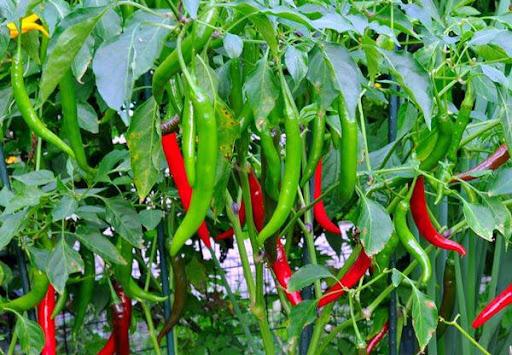
CHILI PEPPER
Capsicum fructescens
1. Traits
Annual or perennial, woody base. Diverse fruit shapes, pointing down or up ("sky pointing").
2. Uses
Fresh spice, dried chili, chili sauce. Herbal remedy for digestion.
3. Farming
Spring-Summer, Autumn-Winter crops. Crop rotation with wet rice recommended.
I. Uses & Benefits
Chili is a widely used spice. Its spiciness stimulates appetite and is a staple in many meals. It is used to season dipping sauces like fish sauce, soy sauce, and soybean paste. Many soups are incomplete without chili, such as fish soup and crab soup.
Chili is also used to make dried chili, chili sauce, and acts as a medicinal herb for treating digestive issues and pain relief. It is a valuable export commodity with high economic efficiency for growers.
II. Biological Characteristics
- Stems & Roots: Annual or perennial plants, woody at the base when mature. Capable of branching.
- Leaves & Flowers: Leaves are alternate, pale green, smooth. Flowers grow from leaf axils, white in color.
- Fruit: Very diverse in size, color, and shape. Most varieties point downwards ("earth pointing"), while some point upwards ("sky pointing").
- Climate: Prefers warm, mild climates, heat tolerance, high light intensity, and drought tolerance. Does not tolerate waterlogging or high humidity during flowering.
- Soil: Grows best in sandy loam or light loam soils, rich in organic matter, well-draining, neutral pH. Acidic soil requires liming.
III. Cultivation Techniques
1. Season
Due to complex climate change, growers need to be proactive. In warm areas, chili can be grown year-round.
2. Nursery & Seeding
- Soil Prep: Rotate with non-solanaceous crops, sun-dry soil, remove weeds, apply organic fertilizer and phosphate.
- Density: 1.5 - 2.0g seeds/m². Mix seeds with fine soil for even sowing, cover with thin soil layer and straw/mulch.
- Care: Water 1-2 times/day. Stop for 3-4 days when 1-2 true leaves appear to harden roots.
- Transplanting: Transplant when seedlings have 4-5 true leaves. Greenhouse seedlings should be planted earlier.
3. Soil & Fertilizers
Land Prep: Rotate crops strictly (best with wet rice). Beds 1.1-1.2m wide, 25-30cm high, furrows 25-30cm wide.
- Organic Manure: 1.5 - 2 tons (Composted poultry manure is excellent)
- NPK: 50 - 60 kg
- Urea: 25 - 30 kg (Do not overuse)
- Potassium Sulphate: 30 - 35 kg
* Basal application: All organic + phosphate + 1/2 NPK + 1/3 Potassium. Mix well in holes.
4. Spacing
Common spacing: Row x Row: 50-60cm , Plant x Plant: 35-40cm . Place plant in hole, firm soil, cover only up to below cotyledons.
5. Care
- Watering: Keep moist after planting (1-2 times/day). Ensure sufficient during flowering and fruiting. Furrow irrigation can be used (fill 1/2 bed then drain). Drain immediately if flooded.
- Cultivation: 15-20 days after planting: break soil crust, weed, lightly hill up. Hill up high before staking.
- upgrade Top Dressing: At rooting, recovery, new leaf growth, budding, peak flowering, peak fruiting. Method: Dilute 1-2% or apply dry 7-10cm from base/between rows then water. Apply potassium when fruiting.
- cut Pruning & Staking: - Prune branches near base to focus nutrients. - Stake after 30-35 days: 1 stake per plant, tie with soft string in zigzag pattern between rows (25-30cm layers).
- pest_control Pest Control: Green worms, borers, anthracnose, wilt... Integrated pest management (rotation, proper fertilization). Use pesticides cautiously only when necessary.
IV. Harvest & Seed Storage
- Harvest: Harvest when ripe or turning color. Pick gently to avoid damaging future fruits.
- Seed Production: Select good plants, pick fruits from the middle of the plant, let them ripen fully. Dry, remove seeds, clean, store in sealed containers. Note: Pungent fumes are irritating; use protective gear (gloves, goggles) when processing seeds.