
How to Choose the Right Bonsai Pot for Each Tree
InBonsai Team
April 7, 2026 · 9 min read
Many new bonsai enthusiasts pour all their energy into selecting trees, wiring branches, and fertilizing — while overlooking one equally critical factor: choosing the right bonsai pot for each tree. The correct pot not only enhances aesthetic beauty but directly determines the tree’s healthy development. A pot that’s too large causes the soil to retain excess moisture, leading to root rot. Too small, and the roots become pot-bound with inadequate nutrition. The wrong color completely disrupts the artistic composition you’ve worked so hard to create.
In this article, we’ll share everything you need to know — from size ratios and materials to shape and color — so you always select the bonsai pot that truly matches the tree you’re growing.
Why Choosing the Right Bonsai Pot Affects Tree Health
A bonsai pot is not simply a container — it’s the direct living environment of the root system. Pot volume determines soil volume, which in turn affects moisture retention, drainage, air circulation, and available nutrients for the tree.
In bonsai, the root system is intentionally confined to a small space to develop proportional, beautifully balanced growth. The pot size must therefore be carefully calculated: large enough to give roots room to grow, but not so wide that excess soil retains water. Additionally, pot material determines soil aeration and temperature regulation — especially important in tropical climates like Vietnam.
Beyond the technical aspects, in traditional Japanese bonsai art, the pot is considered the “stage” while the tree is the “main performer.” The harmony between tree and pot creates a complete artistic whole. For this reason, selecting a bonsai pot requires both technical knowledge and an aesthetic eye.
Pot Size: The Golden Ratio to Tree Height and Spread
This is the most important technical factor when choosing a pot. Two fundamental ratio rules are widely applied by bonsai artists:
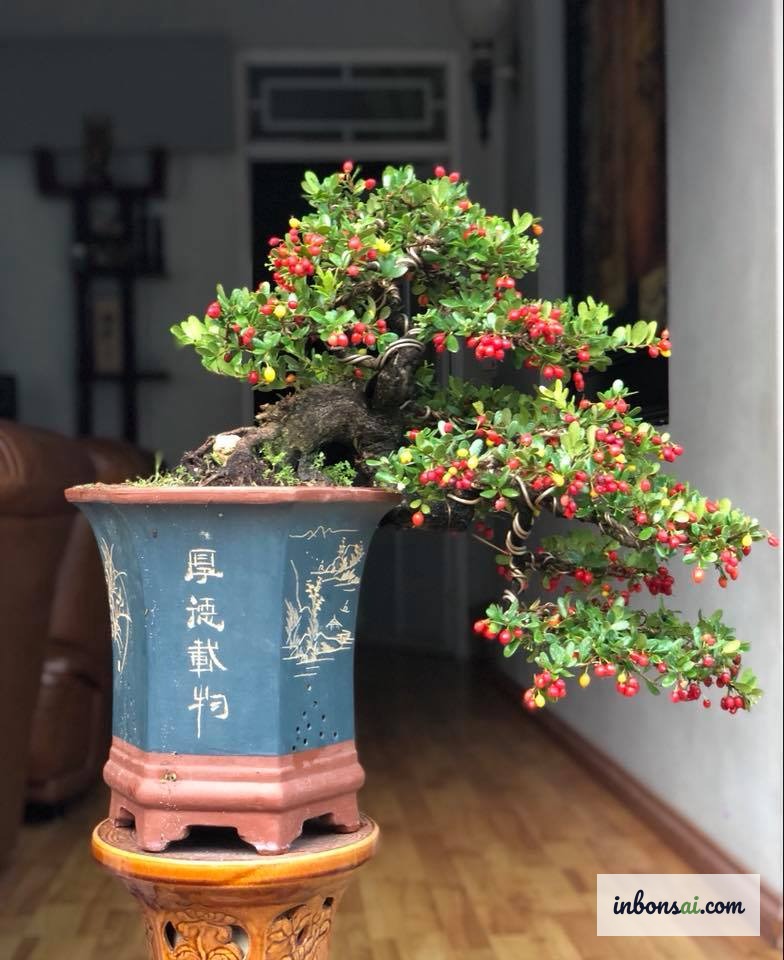
The height rule: Pot length should equal approximately two-thirds of the tree’s height (for upright-style trees). For example, a 45 cm tree should use a pot 28–32 cm long. For trees with a wider canopy than height, use canopy width as the reference instead.
The trunk diameter rule: Pot depth should approximate the diameter of the trunk (measured just above soil level). This ensures roots have adequate depth to develop without becoming pot-bound, while preventing the pot from being visually too tall relative to the overall tree.
Also consider the stage of development. Trees in the training phase are often grown in plastic or simple oversized pots to encourage strong root growth. Once the tree’s shape is established and it transitions to display, move it to a display pot with precise proportions. See our guide on how to repot bonsai correctly for the timing and technique of safe pot transitions.
Pot Materials — Unglazed Stoneware, Glazed Ceramic, or Concrete?
Pot material directly impacts the root microenvironment. Each type has distinct advantages and disadvantages:
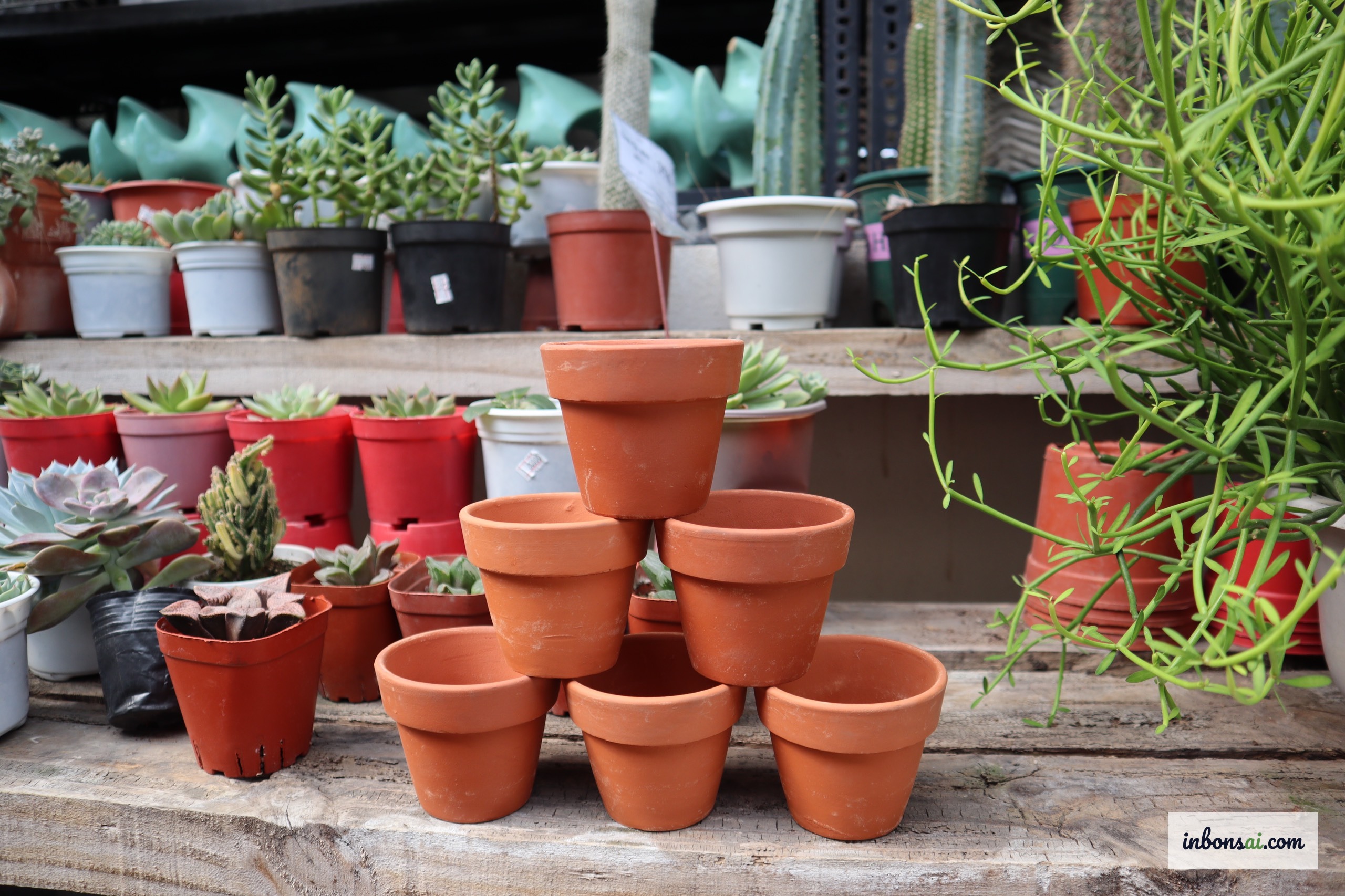
Unglazed stoneware: This is the most recommended choice for bonsai, particularly traditional Japanese ceramic pots. Unglazed pots offer excellent aeration, helping roots breathe and soil drain evenly. They are best suited for conifers, temperate species, and root-loving trees like junipers, pines, and cedars.
Glazed ceramic: Glazed pots reduce aeration but retain moisture better and offer more diverse, attractive colors. These suit broad-leaved tropical species like ficus, banyan, and strangler figs — trees requiring more consistent moisture. Glazed pots are also popular in exhibitions for their high aesthetic appeal.
Concrete, synthetic stone, or plastic: Plastic pots are commonly used during the training phase because they’re lightweight, durable, and inexpensive. Concrete or synthetic stone can be beautiful and durable but are heavy and less breathable than ceramic. These are suitable for outdoor display trees or large specimens.
One important note: avoid metal pots for bonsai. Metal conducts heat strongly, causing extreme soil temperature fluctuations that damage roots.
Pot Shape: Rectangle, Round, or Freeform?
Pot shape isn’t only about aesthetics — it also plays a role in balancing root growing space and the overall compositional harmony of the piece.
Rectangular or oval pots: Suitable for most traditional bonsai styles — formal upright (chokkan), slanting (shakan), and forest groupings (yose-ue). Rectangular pots create a sense of stability, balance, and dignity.
Round or octagonal pots: Suitable for trees with naturally even, symmetrical canopies, or single trees with a balanced upright stance. Round pots are commonly used for mini bonsai, desk bonsai, or trees with compact, tidy canopies.
Freeform or slab pots: Natural stone slabs or thin stoneware slabs are typically used for cascade (kengai), semi-cascade (han-kengai), or rock-planting styles (ishitsuki). These create a wild, naturalistic feeling appropriate for freeform bonsai styles.
General principle: Trees with angular, rugged forms (old trees, wild-collected material) tend to suit pots with strong, angular lines. Trees with soft, graceful forms suit pots with gentle curves.
Pot Color: Harmonizing With the Tree’s Style
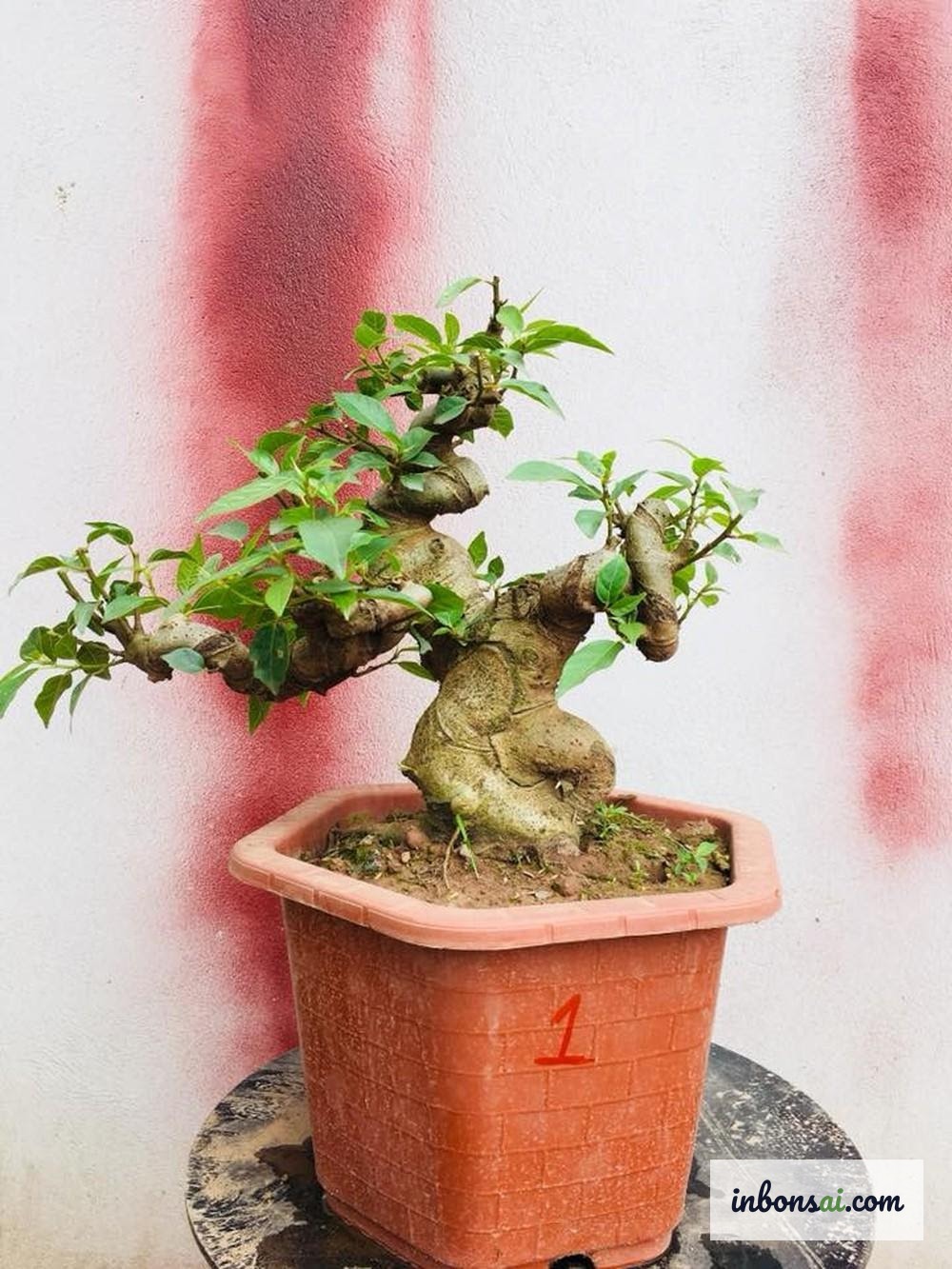
Pot color significantly affects the overall aesthetic impression. The color-matching principle in bonsai differs from interior decoration — here, the pot should “step back” to highlight the tree.
Neutral colors (brown, gray, black, cream): The safest and most popular choice. These colors don’t compete with the tree’s beauty but instead enhance bark texture, leaf color, and canopy form. Unglazed stoneware naturally comes in earth brown or gray tones — excellent for most bonsai species.
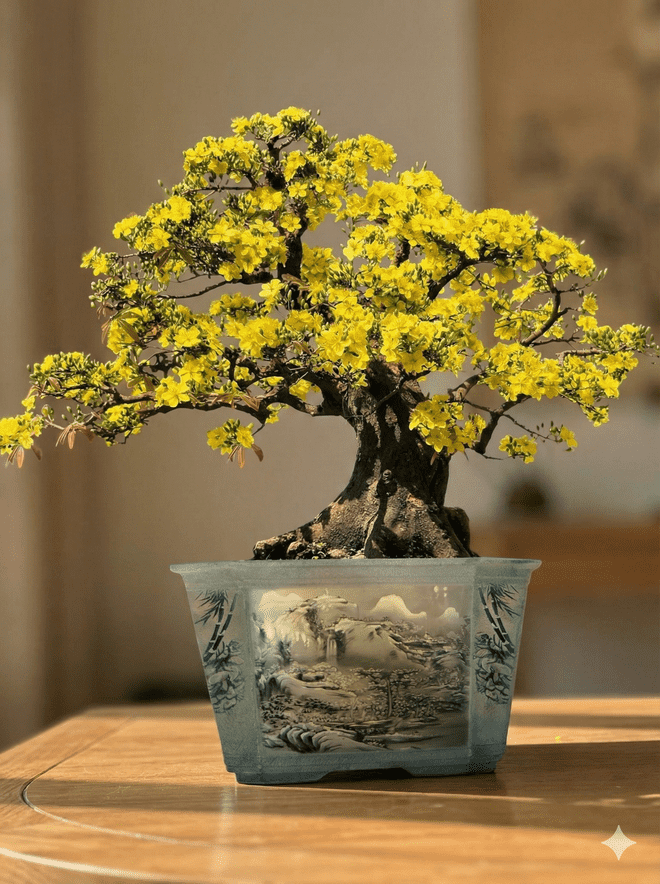
Blue or pale green: Suitable for flowering trees (especially those with white or pink flowers like jasmine and orange jessamine). Blue tones create a peaceful, gentle atmosphere.
Brick red or earthy orange: Suitable for trees with autumn foliage, fruiting trees, or species with distinctive bark. Earthy tones create natural harmony.
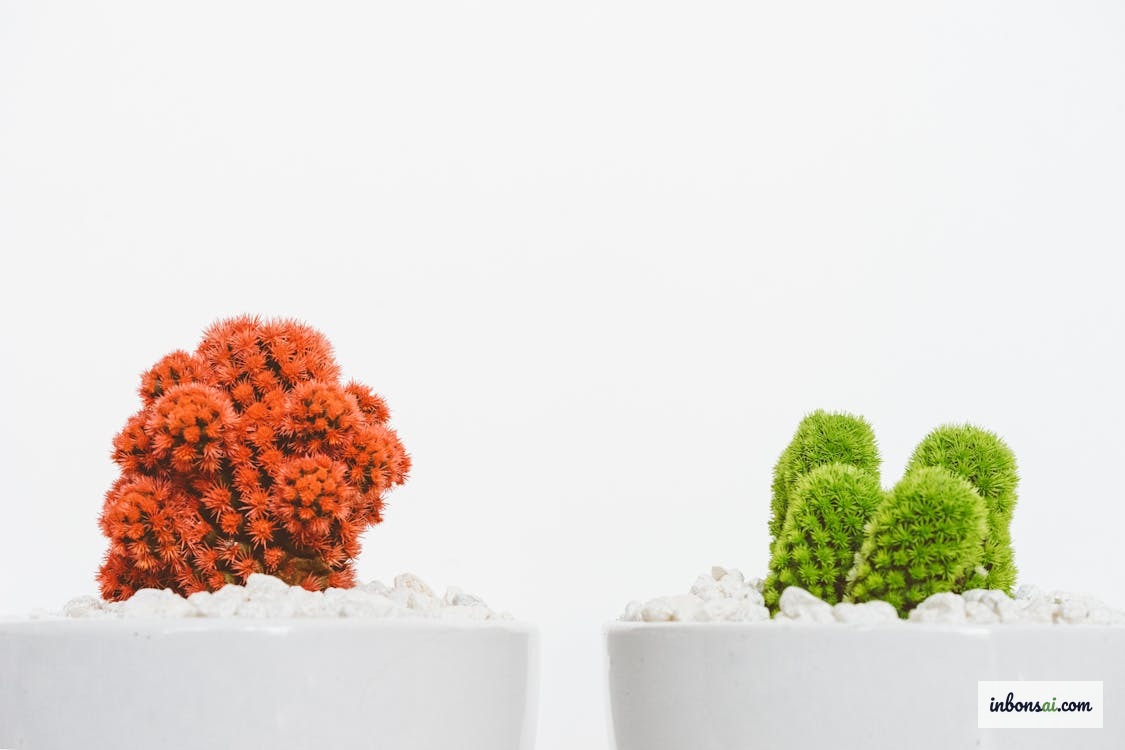
Avoid: Pure white, bright yellow, or neon colors — these draw the eye toward the pot rather than the tree, violating the fundamental bonsai aesthetic principle.
The key is that pot color should complement the tree’s color during its most beautiful season — for example, a yellow-flowered apricot bonsai stands out far better against a deep brown or dark gray pot than a yellow or cream one.
Drainage Holes and Pot Depth — Non-Negotiable Factors
One of the most common mistakes when selecting a bonsai pot is prioritizing appearance over this technical requirement. Drainage holes are a non-negotiable mandatory requirement.
A bonsai pot must have at least one large drainage hole at the bottom (or several smaller ones). Drainage holes not only prevent waterlogging — they also allow you to wire the tree’s roots into the pot after repotting, keeping the tree from shifting. If you find a beautiful pot without drainage holes, drill additional holes with a ceramic drill bit. Never attempt to grow bonsai in a sealed-bottom container, as it will cause root rot.
Regarding pot depth: too shallow a pot starves roots of space, soil dries quickly, and the tree easily topples. Too deep a pot retains excessive moisture and prevents air circulation to deeper roots. Refer back to the trunk diameter rule mentioned earlier to choose appropriate depth.
Also check pot rim quality: the rim must be flat and even for water to drain freely, and the walls must be thick enough to withstand the force of root wiring. You should also explore how to choose the right bonsai soil for each species to pair soil and pot for optimal drainage.
Pot Recommendations for Common Species
Here are practical recommendations for some of the most common bonsai species:
Ficus species (ficus, banyan, strangler fig): Broad-leaved tropical trees with vigorous roots. Choose glazed ceramic pots in brown or olive green, rectangular or oval shape, moderate depth. Fast-growing — repot every 1–2 years.
Buddhist pine, Japanese yew (Podocarpus spp.): Root-aeration-loving species. Choose unglazed stoneware in gray or earth brown, rectangular shape, depth equal to trunk diameter. Avoid glazed pots as they retain too much moisture.
Vietnamese apricot (Ochna integerrima): Vietnam’s signature flowering bonsai. Choose moderately deep pots, unglazed or glazed in muted tones (dark brown, charcoal gray). Avoid very shallow pots as this species needs deep roots to flower well.
Wrightia religiosa, orange jessamine: Small flowering trees with graceful forms. Suit round or oval pots in pale blue or off-white, compact size.
For tools that support pot selection and repotting, see our article on 10 essential tools for bonsai growers — featuring everything from scissors and wire to the right training pots for each development stage.
Common Mistakes When Choosing a Bonsai Pot
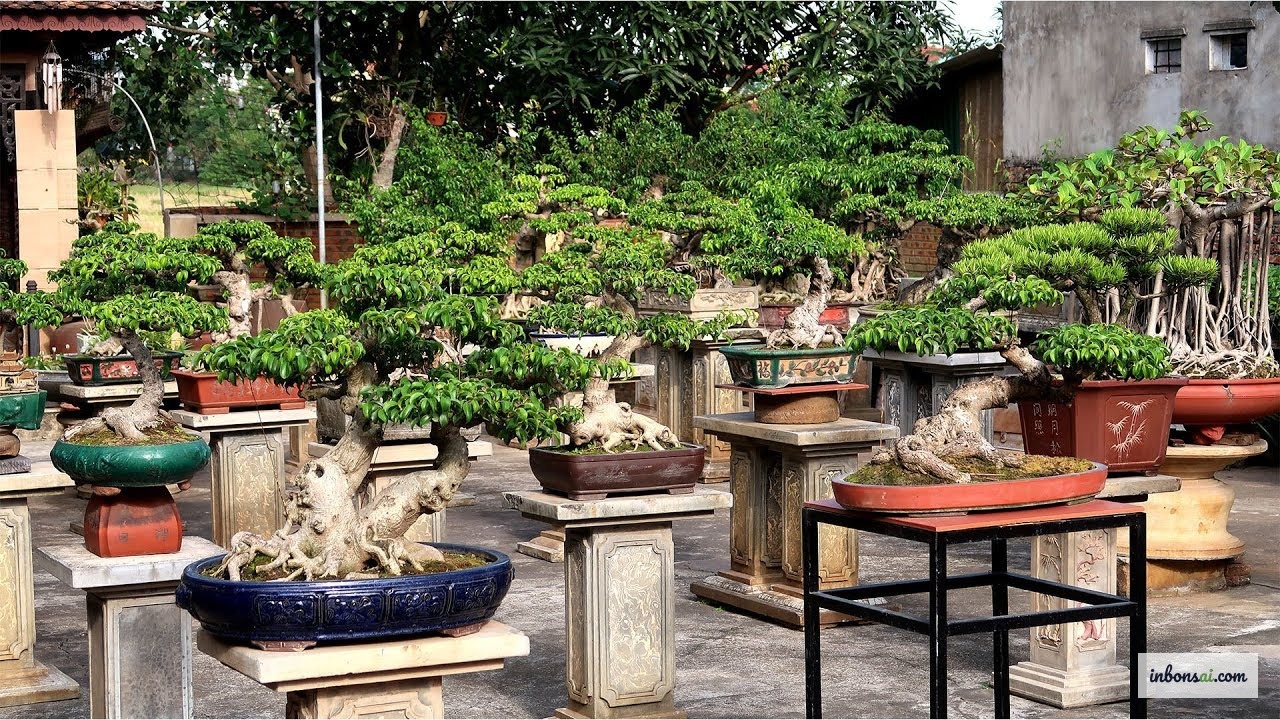
Finally, let’s review the common errors beginners often make so you can avoid them:
1. Choosing an oversized pot thinking the tree needs “room to grow”: This is the most common mistake. An oversized pot doesn’t help the tree grow faster — instead, excess soil retains moisture too long, causing root rot and encouraging leaf and branch growth rather than the characteristic trunk and root development.
2. Ignoring drainage holes: Worth repeating — never grow bonsai in a pot without drainage holes, no matter how beautiful that pot may be.
3. Choosing pot color based purely on personal taste rather than the tree: A sky-blue pot may suit your own taste perfectly, but if it doesn’t match the tree’s tone and style, the overall result will look chaotic.
4. Using pots that are too thin or cracked: Thin or cracked pots will break when wiring roots or after a cold winter. Always inspect carefully before purchasing.
5. Not checking quality and materials of cheap imported pots: Many inexpensive ceramic pots on the market are mass-produced with poor clay quality — they may absorb water unevenly or have glaze that peels off within months. Choose pots from reputable brands or established ceramic studios.
Choosing the right bonsai pot for each tree is a skill that develops over time — you’ll become increasingly perceptive with each repotting, each observation of how the tree grows. The key is mastering the fundamentals: correct size, appropriate material, suitable shape, and colors that harmonize with the tree. When tree and pot come together in harmony, your bonsai becomes a truly complete work of art.
Related Posts
How to Choose the Right Bonsai Pot for Each Tree
Aluminum Wire for Bonsai: Proper Wiring Techniques
Bonsai Soil Mix: Akadama Pumice Perlite Ratios Guide
How to Evaluate a Beautiful Yellow Apricot Blossom Tree
10 Essential Tools for Bonsai Enthusiasts
