If your indoor bonsai has brown, crispy leaf tips even though you water it regularly, the culprit is usually not underwatering — it's low indoor bonsai humidity. This is one of the most misunderstood problems for bonsai grown in modern living spaces, where indoor air humidity can be half of what the tree needs for healthy photosynthesis and transpiration.
This guide will help you correctly identify the cause, measure the real humidity level in your home, and apply proven fixes — from pebble trays to humidifiers — so leaf tips stop drying out and your tree bounces back.
Why indoor bonsai leaves turn brown and crispy at the tips
Brown, crispy leaf tips ("leaf tip burn") happen when a tree loses water through its leaves faster than the roots can replace it. Leaf edges and tips are the farthest points from the water source and have the thinnest vascular tissue, so they're always the first place stress shows up.
Indoor air is often far drier than outdoor air, especially when air conditioning or central heating is running. Dry air speeds up transpiration through the leaf's stomata. When humidity stays too low for too long, the tree sacrifices tissue at the leaf tips to protect the rest of the leaf — that's the dry brown streak you see.
What confuses many beginners is that this symptom looks a lot like underwatering at the roots, so the instinct is to water more. But if the soil is still moist and the tips are still drying out, adding more water doesn't fix the root cause — and repeating it can lead to waterlogged roots. You need to address the air, not the soil.
See also indoor bonsai care for beginners for a full overview of ideal light, temperature, and humidity conditions for indoor trees.
Indoor humidity levels vs. what bonsai actually need
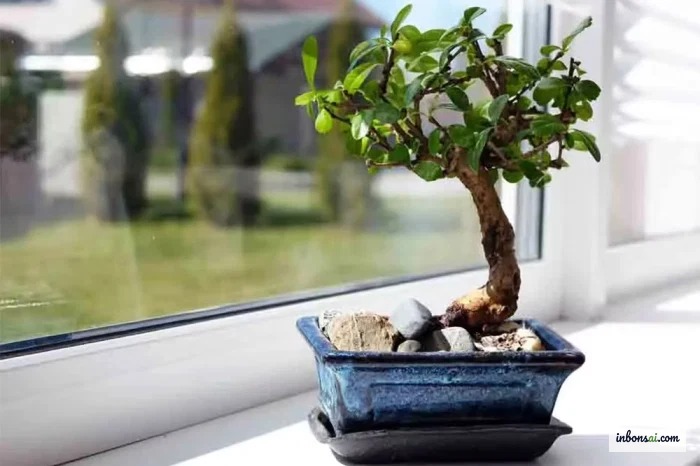
Most homes, especially those with air conditioning or central heating, sit at a relative humidity (RH) of around 20–30%. That's comfortable for humans, but far too low for most bonsai species — particularly tropical and subtropical varieties commonly grown indoors, like ficus, Chinese banyan, or other thin-leaved species.
Bonsai generally thrive at 40–60% relative humidity. At this range, the rate of water loss through the leaves balances with what the roots can absorb, stomata function normally, and the tree doesn't need to sacrifice leaf tissue to protect itself.
The gap between 20–30% (typical indoor reality) and 40–60% (what the tree needs) is the root cause of most brown leaf tip cases indoor bonsai growers run into. That gap widens in winter when heating runs constantly, or in summer when air conditioning runs all day — both pull moisture out of a sealed room's air.
Coniferous bonsai (like junipers and pines) generally tolerate dry air better than thin-leaved broadleaf trees, but even they show stress if humidity stays below 20% for weeks at a time.
How to measure humidity accurately before you conclude anything
Before applying any fix, confirm the actual humidity level instead of guessing. A cheap mini hygrometer placed right next to the bonsai pot — not in the middle of the room — gives you the most accurate reading, since humidity can vary significantly between spots in the same room.
Measure over a few consecutive days, noting both morning and evening readings, especially while the AC or heater is running. If the number hovers around 20–30% and lines up with when the leaf tips started drying out, the air is almost certainly your culprit, not your watering schedule.
An extra check: feel the soil about 2–3 cm down with a finger or wooden stick. If the soil is still cool and moist but the leaf tips are still dry, that's a clear sign of an air problem, not a watering problem. Conversely, if the soil is bone dry and the whole leaf is wilting (not just the tips), check your watering schedule first.
Pebble trays — the simplest, most effective fix
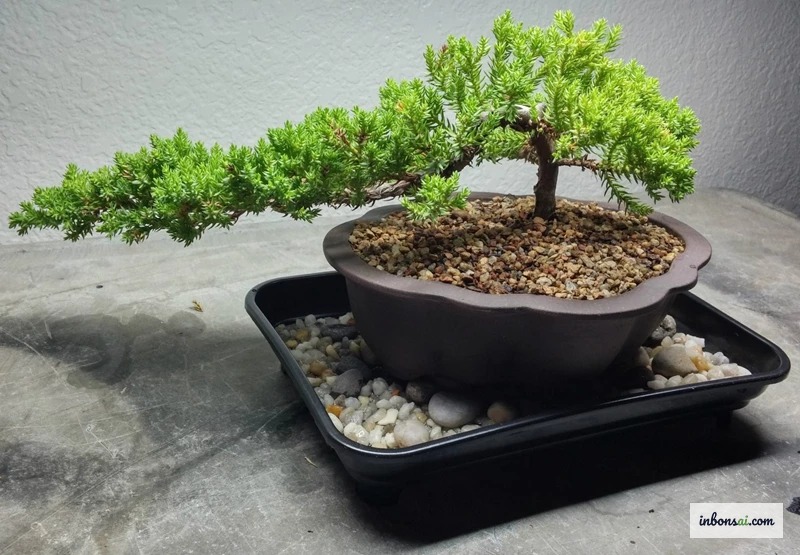
A pebble humidity tray is the top recommended fix because it creates continuous, localized humidity right around the canopy without any daily manual effort.
How to set one up:
- Choose a shallow tray at least 5 cm wider than the bonsai pot's base on each side.
- Add a 2–3 cm layer of pebbles or gravel to the tray.
- Fill with water until it reaches about two-thirds of the pebble layer's height — never let the water reach the top of the pebbles.
- Set the bonsai pot on top of the pebbles, making sure the pot's base never touches the water directly.
The principle is simple: water in the tray evaporates continuously, creating a more humid microclimate right around the canopy, while the roots stay completely dry since they never touch the water directly. That's the key detail — if the pot's base sits in water, the roots will become waterlogged, so always keep the water level below the top of the pebbles.
Pebble trays need topping off every few days depending on evaporation rate, but the upside is they work around the clock without you having to remember a schedule.
Misting: what it really does and its limits
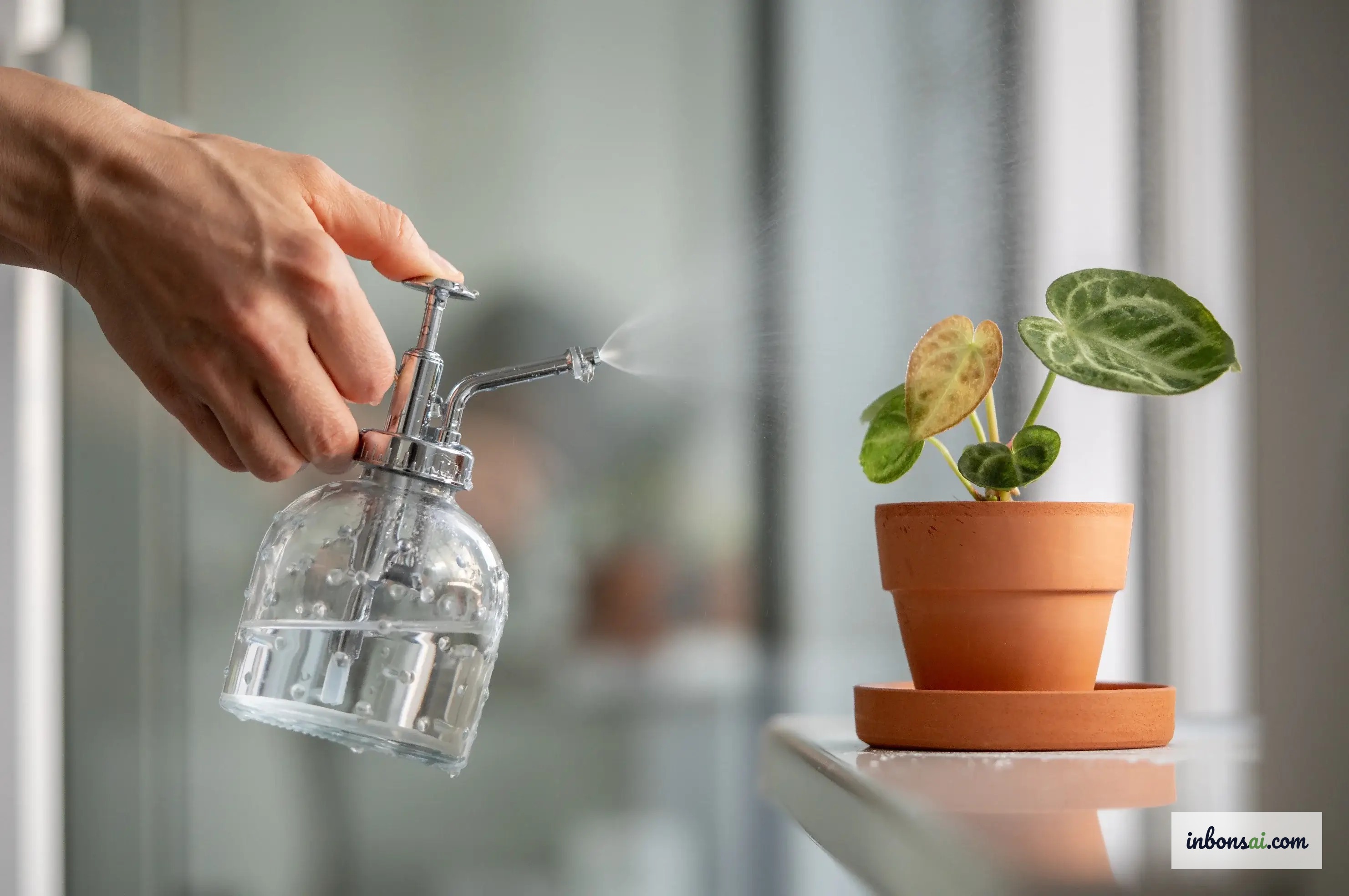
Misting is the most common fix people reach for, but it's also the most misunderstood. Many people assume misting a few times a day is enough to maintain humidity — in reality, the effect of misting lasts only about 10–30 minutes before the moisture evaporates into the surrounding dry air.
That doesn't mean misting is useless — it's still a helpful supplement, especially in the morning when the tree is starting active photosynthesis. But don't treat misting as your primary way to raise the baseline humidity around the tree. If you rely on misting alone and skip a pebble tray or humidifier, the leaf tips will keep drying out between mistings.
When misting, use clean water (filtered or left to sit overnight) to avoid white mineral residue on the leaves, and mist early in the morning so leaves have time to dry before evening — avoid misting at night, since prolonged moisture sitting on leaves overnight can encourage fungal issues.
See also how often to water bonsai for beginners to clearly distinguish root watering from air-humidity support measures like misting.
Humidifiers and other long-term fixes
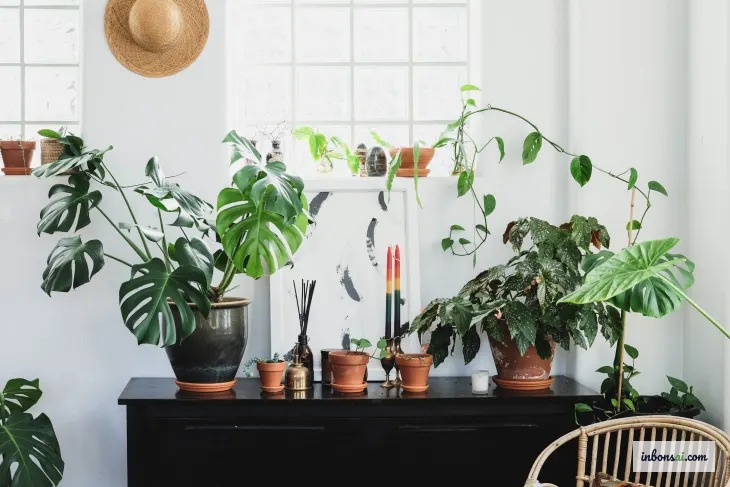
If you keep several plants indoors, live in a dry climate year-round, or run AC/heating constantly, a small to medium humidifier is a worthwhile investment. A humidifier raises the baseline humidity of the whole room steadily, fixing the root cause instead of just treating it locally like a pebble tray does.
Place the unit about 60–90 cm from the tree, and avoid pointing continuous direct mist at the canopy, since excess moisture sitting on leaves can also encourage mold. Set a timer so it runs mainly during the day, or use models with a built-in humidity sensor (common on newer units) to hold a steady 40–60% instead of letting humidity swing up and down.
A low-cost bonus fix: group multiple potted plants together. Plants continuously release moisture through their leaves, and when grouped, they create a more humid microclimate for each other — this effect is especially noticeable if you keep several bonsai indoors at once.
Keep bonsai away from direct moisture-pulling sources like AC vents, heating registers, or a fan running constantly — this is often the silent reason humidity right around the tree is much lower than the rest of the room, even when a central hygrometer reads normal.
Telling humidity-related leaf drying apart from other causes
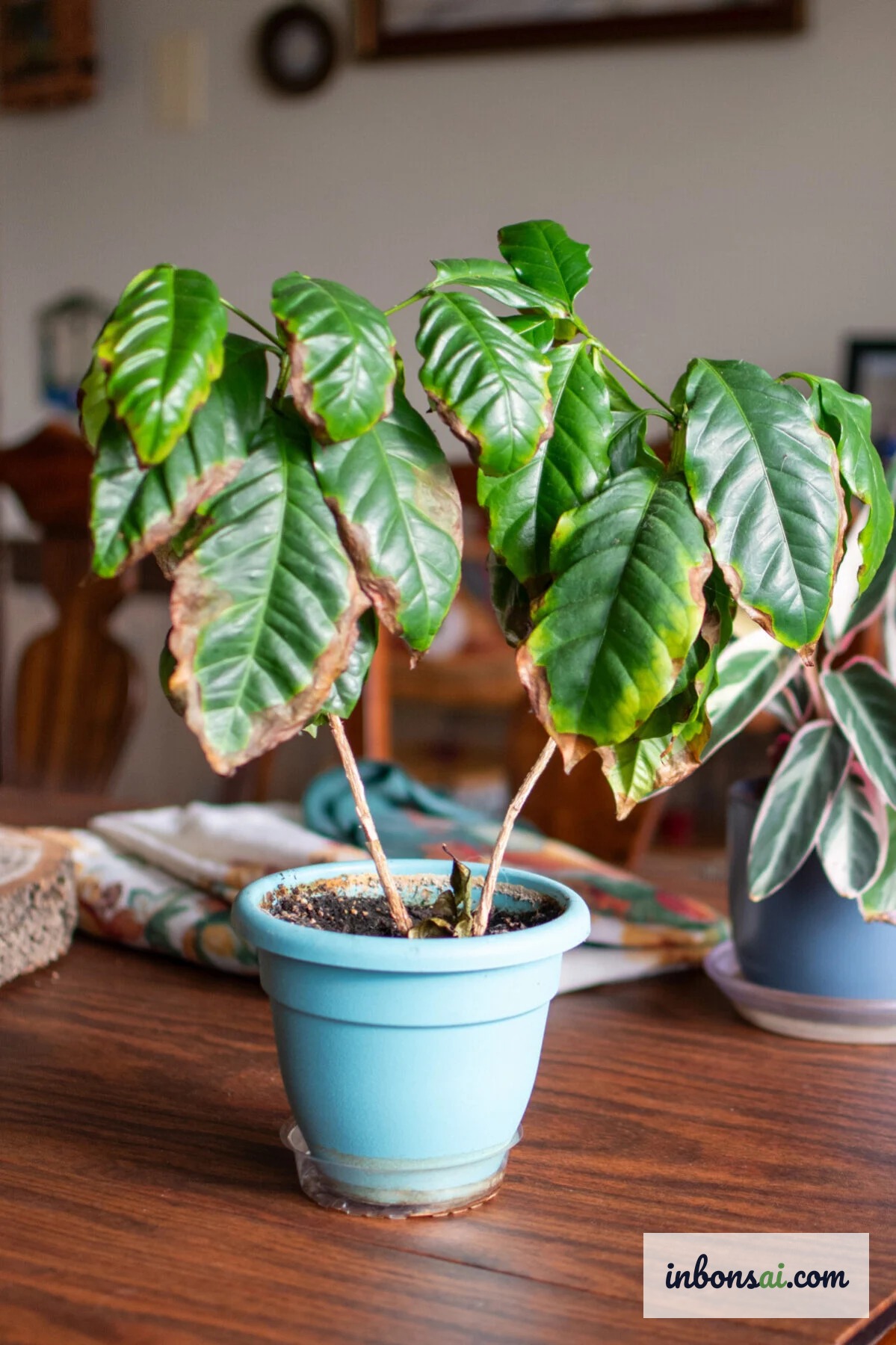
Not every case of dry leaf tips comes from low humidity. Before concluding it's the air, rule out these causes:
Inconsistent watering — alternating between overwatering and letting soil dry out completely stresses roots, producing similar symptoms but usually paired with yellowing or leaf drop rather than just dry tips. Humidity-related drying usually affects only the tips and edges, while the rest of the leaf stays green and healthy.
Sunburn or overly intense light — if the tree sits right against a window that gets harsh afternoon sun, dry patches usually show up across the leaf surface, not just at the tips, and tend to be worse on the side facing the light.
Fertilizer burn — mineral salt buildup in the soil from overfeeding or feeding too often also causes edge scorch, but it's usually paired with a white crust on the soil surface. Flushing the soil thoroughly with clean water several times can help wash out excess salts.
Drafts or sudden temperature swings — placing the tree near a doorway or a winter draft can cause similar stress.
If you've ruled out the causes above and the humidity measured right around the pot is still under 30% while the soil stays consistently moist, low air humidity is almost certainly the main cause — and the pebble tray, correct misting, and humidifier fixes above should resolve it within a few weeks as healthier new leaves grow in.
See also caring for indoor Ficus Ginseng bonsai — one of the species most sensitive to low indoor humidity and prone to leaf tip drying.
Keep in mind that leaf tips that have already turned brown and crispy won't turn green again — that tissue is dead. You can trim the dry tips with sharp scissors for a tidier look, but the real goal is preventing new growth from suffering the same damage by keeping humidity steady at 40–60% around the tree.
Tags
#bonsai-humidity#indoor-bonsai#brown-leaf-tips#bonsai-careGet bonsai guidance every week.
Fresh care guides, styling notes, and bonsai inspiration delivered to your inbox.