Heading off on a two-week trip and worried your bonsai won't survive without you? It's a real concern: unlike garden-grown plants, bonsai live in shallow pots with very little soil, so just 2-3 days without water can leave roots drying out. The good news is you can absolutely keep your bonsai alive while on vacation for two weeks, as long as you prepare correctly before you leave. This guide walks through concrete steps, from simple self-watering solutions to smart pot placement, so you can enjoy your trip without worrying about a wilted tree when you get home.
Why bonsai die so easily when you're away
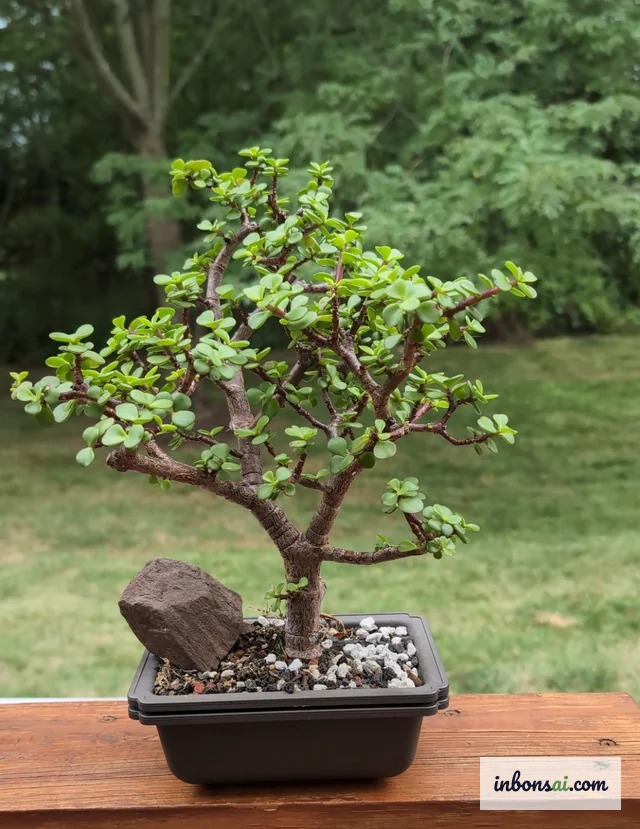
Bonsai are especially sensitive to water loss because of how the pot and root system are structured. Bonsai pots are shallow, usually just 3-8cm deep, holding far less soil than the canopy above would suggest. Less soil means less water-holding capacity, so moisture evaporates and drains away quickly, especially in summer heat.
On top of that, bonsai roots have been repeatedly pruned to keep the tree compact, so the root system isn't robust enough to "save itself" the way a naturally grown plant with deep roots reaching groundwater can. Once the soil in the pot dries out completely, fine feeder roots die off fast — within 24-48 hours in hot conditions. This is why so many bonsai owners lose a tree right after a trip they didn't prepare for.
If you also leave the tree outdoors or near a window with direct sun, soil temperature inside the pot can climb sharply, making water evaporate many times faster than usual. Understanding this helps you plan properly: the goal isn't just "having water available" but maintaining stable moisture the entire time you're gone.
Preparing your tree before departure day
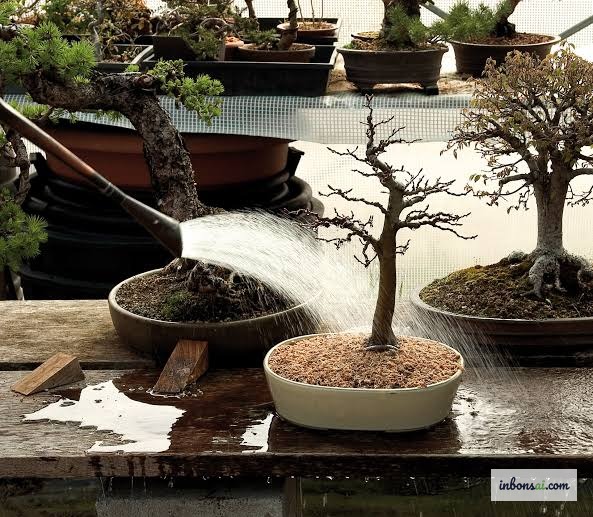
Proper prep 1-2 days before you leave has a huge impact on your tree's odds of survival. First, water the tree thoroughly on the day you depart, watering until it runs freely out the drainage holes so the entire root ball is fully saturated.
Next, inspect the tree closely for pests before you go. Scale insects, spider mites, and fungal issues can flare up fast when nobody's watching, so treat any problem thoroughly before leaving rather than letting the tree "fend for itself."
If your trip runs longer than 10 days, lightly trim back some leaves and young shoots. Fewer leaves means less water lost to transpiration, helping the soil stay moist longer. That said, don't over-prune right before you leave — the tree needs time to recover from cuts, so trim lightly 3-5 days ahead instead.
Finally, avoid fertilizing right before a trip. Excess fertilizer in dry soil can cause root burn if watering isn't consistent, making things worse rather than better.
Self-watering with the wick method
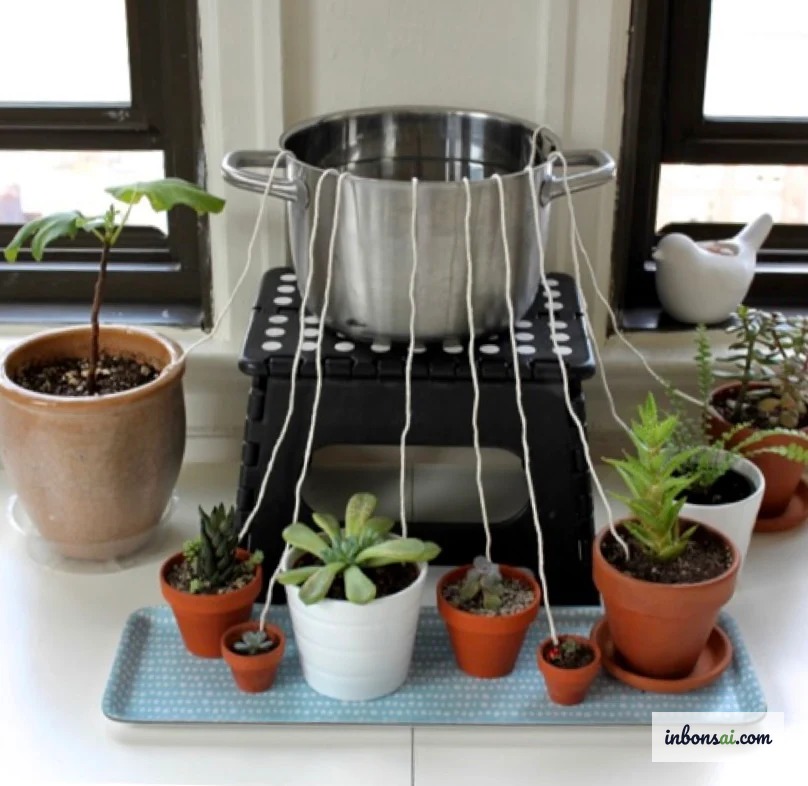
Wick watering is the simplest and cheapest way to maintain moisture for your bonsai when you're away for under two weeks. It works on capillary action: one end of a wick sits deep in the soil, and the other end sits in a basin or bucket of water placed level with or slightly above the pot.
You can use thick cotton cord (like an oil-lamp wick), heavy yarn, or absorbent nylon cord. Push one end about 5-7cm into the soil near the trunk, and drop the other end into a water container set beside the pot. Water slowly wicks upward and drips into the soil over many days, the same way an oil lamp wick draws up fuel.
For a medium-sized bonsai pot, use 2-3 wicks placed at different spots around the base so moisture spreads evenly, avoiding one soggy side and one still-dry side. Test the setup 3-4 days ahead while you're still home to check the drip rate — if the soil gets too wet, reduce the number of wicks; if it stays dry, add more or switch to a more absorbent cord.
Self-watering cones and terracotta spikes
If you'd rather skip the wick method, dedicated drip devices like Blumat-style self-watering cones or terracotta self-watering spikes are widely available online.
Blumat cones work off a soil-moisture sensor: a porous ceramic cone sits in the soil, connected by tubing to a water reservoir hung above the pot. As soil dries, the ceramic contracts, creating negative pressure that opens a valve and releases water; once the soil is moist enough, the ceramic expands and the valve closes. It's a smart solution because it self-adjusts to the tree's actual needs, avoiding both overwatering and underwatering.
Terracotta spikes are simpler: push a hollow ceramic stake into the soil and invert a plastic bottle (like a water bottle) onto the top. Water in the bottle seeps through the porous ceramic wall into the soil at a slow, steady rate. It's a budget-friendly option for anyone trying self-watering for the first time, and you can build one yourself from a reused plastic bottle.
Whichever device you choose, always test it 3-5 days ahead to confirm the drip rate suits your soil type and pot size, so a too-slow device doesn't leave the tree dry anyway.
Placement and creating a humid microclimate
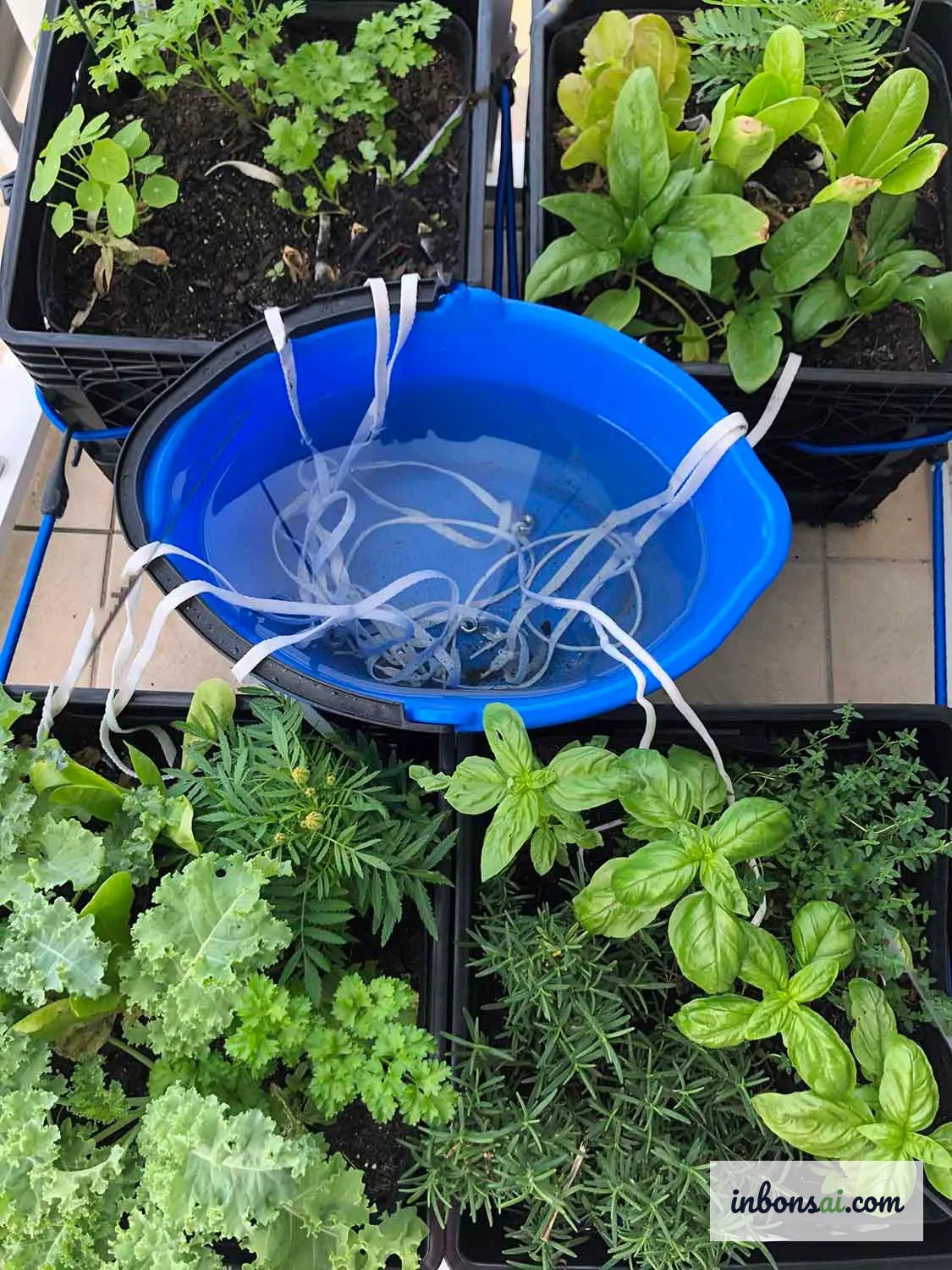
Beyond watering, where you place the tree while you're away matters just as much. The general rule is to move it somewhere cool with partial shade, away from harsh midday and afternoon sun — direct sun dries soil far faster than usual.
If you have several bonsai, group the pots together instead of spreading them out. Clustered pots create a more humid microclimate as moisture evaporates from the leaves and soil of neighboring plants, slowing the evaporation rate for the whole group. Setting pots on a tray of damp gravel works well too: water in the tray evaporates slowly, raising humidity right around the canopy.
For indoor bonsai, keep the tree away from air conditioning vents or fans blowing directly on it, since dry airflow pulls moisture from soil and leaves faster. A shaded balcony or naturally shaded indoor spot is usually a better choice than a sun-baked windowsill all day.
Asking someone to help: what instructions to leave
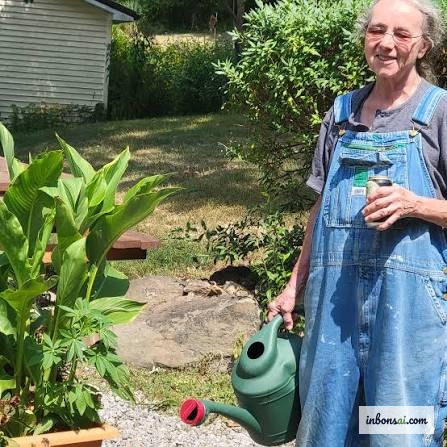
If your trip runs longer than two weeks, the safest approach is still asking a family member, neighbor, or friend to stop by and water on a schedule, layered on top of the self-watering devices above as a backup. Don't just say "please water it" verbally — write out specific instructions and tape them right next to the pot.
Instructions should cover: watering frequency (e.g., every 2-3 days), how to check if soil is dry (press a finger 2-3cm into the soil; water if dry), how much to water (until it runs out the drainage holes), and a clear note not to fertilize or prune during this time. If the person isn't familiar with bonsai, a few clear written lines prevents both overwatering and underwatering.
Choose someone nearby who can drop in regularly rather than someone far away who can only visit once. If possible, leave a phone number or do a short video call to walk them through recognizing a thirsty versus waterlogged tree.
Checking and reviving the tree when you're back
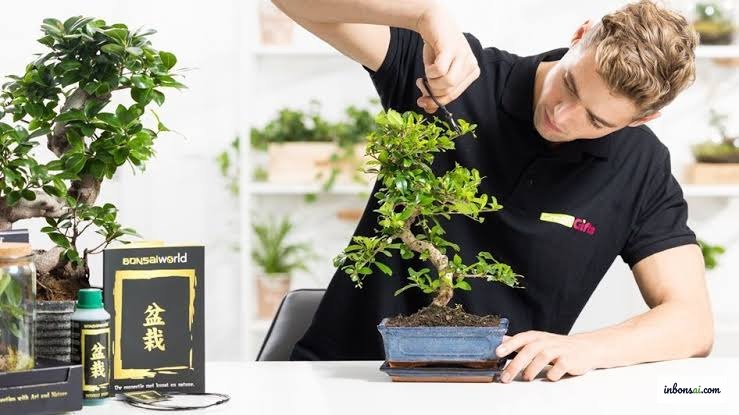
When you get home, don't assume everything's fine just because the leaves still look green — check carefully before returning to your normal care routine. First, feel the soil to gauge moisture: if it's bone dry, water gradually in several small doses rather than soaking it all at once, since long-dried soil can repel water and let it run off without actually soaking into the root ball.
If you used a humidity tray or grouped pots, separate them back to their usual spots and reintroduce the tree to its regular light levels gradually over 2-3 days rather than all at once, to avoid light shock.
Check the leaves: if they're drooping but still green, the tree will typically bounce back after a few days of consistent watering. If leaves have turned yellow, brittle, and are dropping heavily, inspect the roots as well — for more on getting your watering schedule back on track, see how often to water bonsai for beginners. Wait at least a week before fertilizing again, giving the tree time to stabilize before it takes up nutrients.
Conclusion: prepare well and travel with peace of mind
Keeping a bonsai alive during a two-week absence isn't hard if you prepare properly: water thoroughly before you leave, choose a self-watering method that fits like wicks or drip cones, place the tree somewhere cool and humid, and ask someone to help if the trip runs long. Layering several safeguards instead of relying on just one gives you far more peace of mind.
If you're new to bonsai and still deciding between growing indoors or outdoors for easier care when life gets busy, check out how to choose a bonsai for beginners: indoor or outdoor. And if your trip falls in late autumn as your tree heads into dormancy, its water needs will look very different from summer — see autumn bonsai care to prepare for dormancy to adjust your watering plan for whenever you're away.
Tags
#bonsai-vacation-care#self-watering-bonsai#wick-watering#bonsai-for-beginners#bonsai-care-tipsGet bonsai guidance every week.
Fresh care guides, styling notes, and bonsai inspiration delivered to your inbox.