Lemon bonsai mini trees are becoming increasingly popular among plant lovers who want to combine beauty with practicality. Compact, easy to care for, and capable of producing fruit even in small pots — lemon bonsai mini brings a fresh, lively touch and subtle fragrance to any living space. This guide covers everything you need to know about growing, shaping, and encouraging your lemon bonsai mini to produce abundant fruit.
Why Choose a Lemon Bonsai Mini?
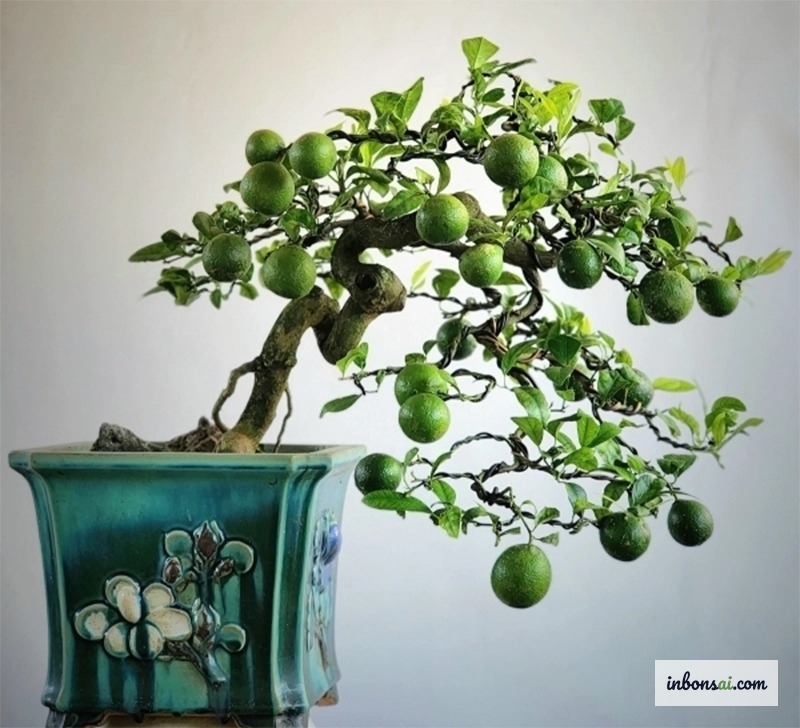
The lemon tree (Citrus limon) is one of the most popular fruit trees for bonsai cultivation. Its key advantage lies in its rapid growth, adaptability to tropical and subtropical climates, and its ability to flower and fruit even when grown in small containers.
Lemon bonsai mini suits any space — from apartment balconies and windowsills to office desks. When the tree blooms with tiny white, fragrant flowers and then develops glossy yellow-green fruits, the result is a striking decorative piece. Beyond aesthetics, the harvested lemons are useful in everyday cooking — beautiful and practical.
In feng shui tradition, lemon trees are believed to purify the air and ward off negative energy. The yellow-green color of the fruit symbolizes freshness and good fortune. Many families place a lemon bonsai mini in the living room or near the front door to invite prosperity.
If you're looking for a bonsai species that's both easy to grow and produces beautiful fruit, the lemon bonsai mini is an ideal starting point.
Choosing the Right Lemon Variety for Mini Bonsai
Not every lemon variety suits miniature bonsai. Choosing the right cultivar largely determines your success in shaping and fruiting.
Paper lemon (four-season lemon / Citrus limon 'Eureka') is the top choice for mini bonsai. This variety fruits year-round, produces appropriately small fruit, and naturally develops an attractive branching structure. Its yellow-green fruit contrasts beautifully with glossy leaves — ideal for decorative purposes.
Key lime (Citrus aurantiifolia) is also widely used. The tree produces small, juicy fruit, and its flexible branches are easy to wire and shape. However, this variety needs more sunlight and tolerates shade poorly.
Rangpur lime (Citrus × limonia), with its striking orange-red fruit, is increasingly favored for decorative bonsai. The unique fruit color creates a high-impact visual element, perfect for indoor display or as a gift.
When selecting a starter plant, prioritize trees propagated by air layering or budding from a proven fruiting mother plant. Avoid seed-grown trees — they take 3–5 years to fruit and are difficult to keep compact.
How to Plant a Lemon Bonsai Mini from Scratch
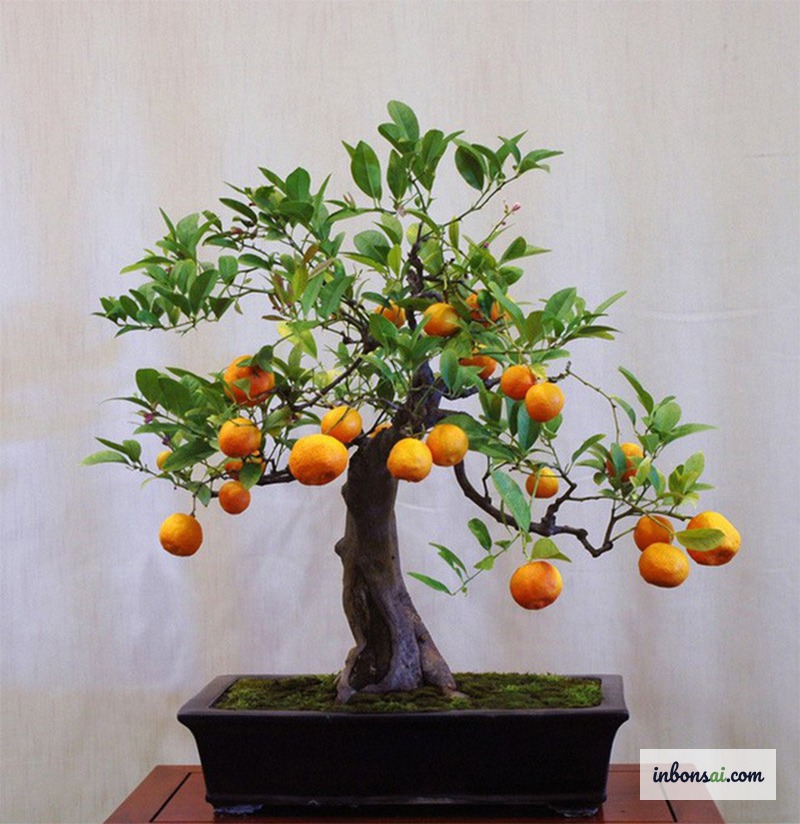
Preparing the right growing medium is the single most important step for long-term health. Never use ordinary garden soil — it's too heavy and prone to waterlogging.
Ideal soil mix: 40% fired clay (akadama or kanuma), 30% coarse sand/pumice, 20% peat moss, and 10% charred rice husk. This blend ensures aeration and drainage while retaining adequate moisture for citrus roots. Target pH of 5.5–6.5.
Choosing a pot: For mini bonsai, use a ceramic or porcelain pot with good drainage holes. The pot size should be approximately 2/3 the tree's height. Round or oval pots suit natural growth forms; rectangular pots complement a well-defined formal style.
Planting: Place a layer of gravel or broken pot shards at the bottom for drainage. Add a thin layer of soil, position the tree at the center, and adjust the angle to match your intended style. Fill in the surrounding soil and use a chopstick to press out air pockets. Water thoroughly immediately after planting.
After planting, place the tree in indirect light for 1–2 weeks to allow recovery. Refer to bonsai pot and soil selection guide for deeper insight into optimal growing media.
Shaping Techniques for Lemon Bonsai Mini
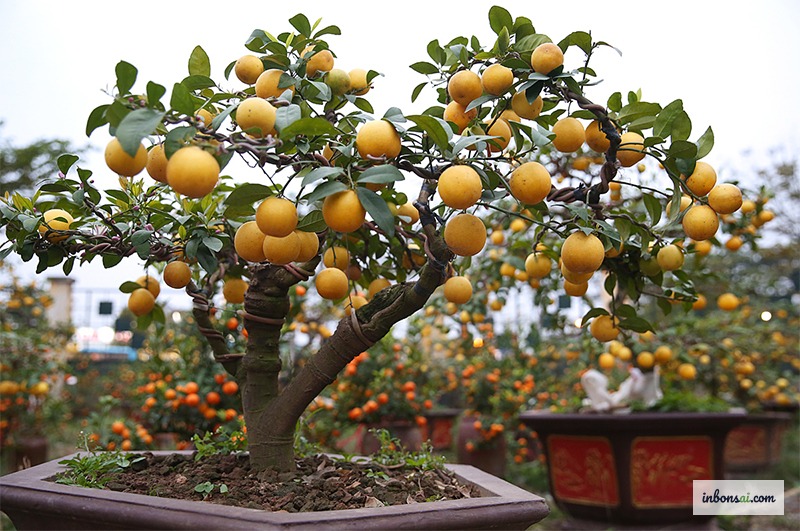
Styling is the core art of bonsai. For lemon bonsai mini, several popular styles suit the tree's natural growth characteristics.
Formal upright (chokkan) — straight trunk, evenly distributed branches — is the simplest style and ideal for beginners. Prune branches in tiers from bottom to top, keeping lower branches longer than upper ones to create a natural triangular silhouette.
Slanting (shakan) — trunk angled at 45–70 degrees — creates a more dynamic aesthetic. When planting, tilt the tree and secure it with wire before the soil sets. The first branch should extend opposite the direction of lean to create visual balance.
Pruning technique: Prune in early spring before new growth emerges. Remove crossing branches, inward-growing branches, and overly dense growth that reduces airflow. Use sharp pruning scissors and cut close to the branch collar for faster healing. Never remove more than 1/3 of the canopy in a single session to avoid shocking the tree.
Wiring technique: For young, flexible branches (< 8mm diameter), use 1.5–2mm aluminum wire wrapped at a 45-degree spiral. Bend gently to the desired angle, leave the wire in place for 3–4 months, then remove. Never let wire cut into the bark. See basic bonsai wiring technique guide for hands-on practice.
Daily Care for Lemon Bonsai Mini
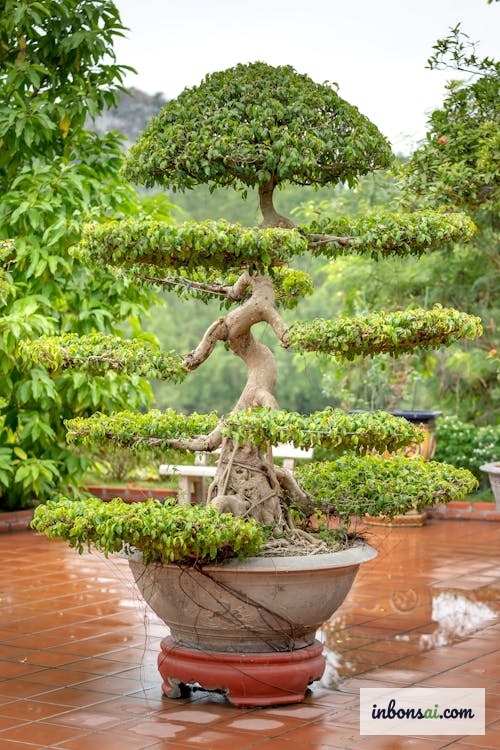
Consistent daily care is the key to keeping your lemon bonsai mini healthy and productive.
Light: Lemon trees love full sun. They need at least 6 hours of direct sunlight daily. Place on a south- or east-facing balcony or windowsill. Insufficient light leads to sparse fruiting and weak, leggy growth. Supplement with LED grow lights at 12–14 hours per day if growing indoors.
Watering: Water when the top 2–3 cm of soil feels dry. Avoid rigid watering schedules — check soil moisture with your finger before watering. Water thoroughly until it drains from the bottom holes. Avoid keeping soil constantly wet, which causes root rot. Use rainwater or filtered water when possible, as tap water chlorine can affect soil pH.
Misting: Lightly mist the leaves each morning to raise humidity — especially beneficial during dry season or in air-conditioned spaces. Avoid misting flowers and young fruit to prevent rot.
Temperature: Lemons thrive at 18–32°C. Keep away from cold drafts and air conditioning vents. In northern regions, bring the tree indoors when temperatures drop below 15°C.
Techniques to Encourage Heavy Fruiting in Lemon Bonsai Mini
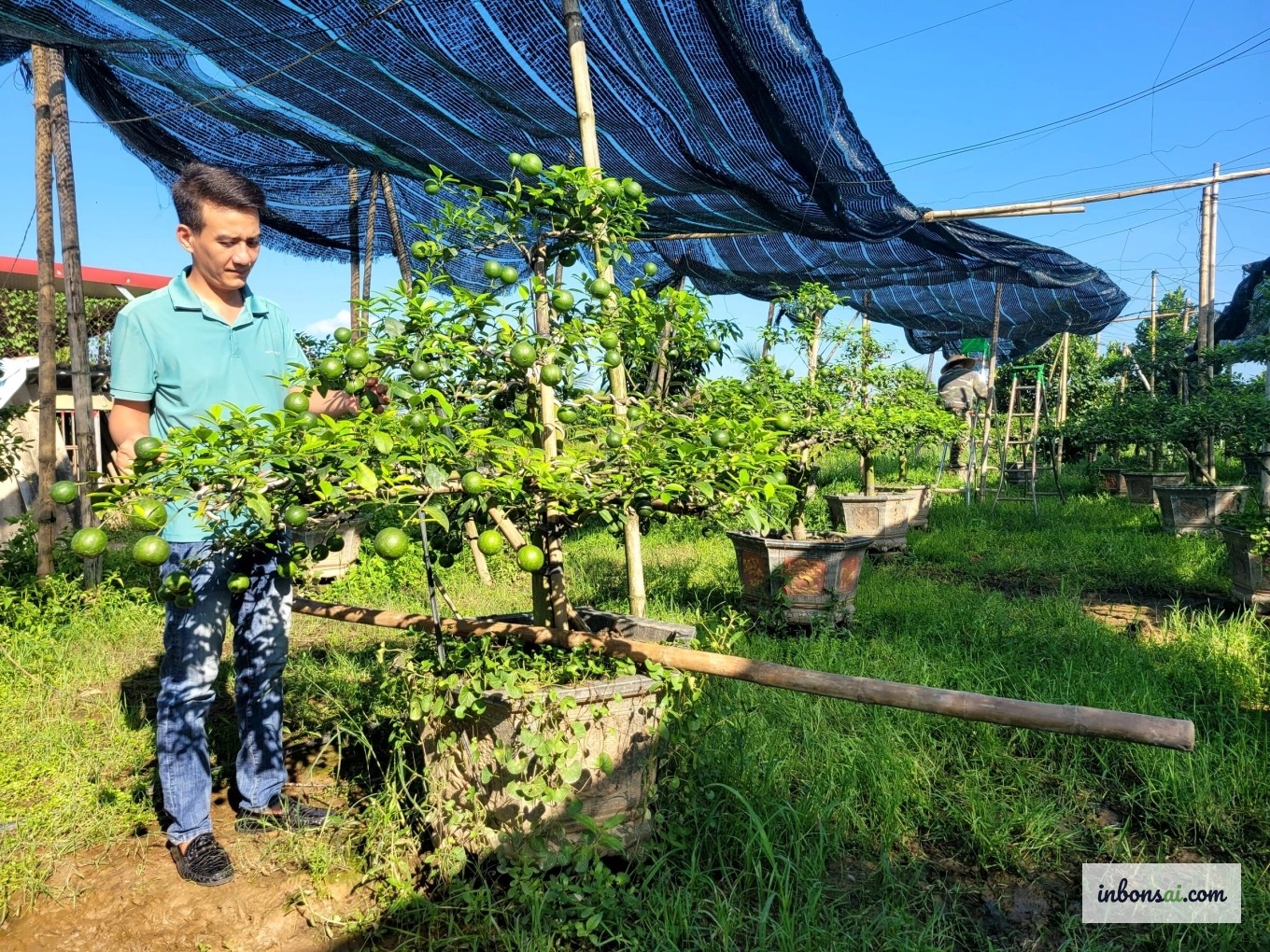
This is what most lemon bonsai growers want to know. Several techniques reliably encourage more flowering and heavier fruiting.
Strategic fertilization: Apply a balanced NPK fertilizer (20-20-20) during the vegetative growth phase. As the tree approaches flowering, switch to a high-potassium, high-phosphorus blend (10-30-20) to stimulate flowers and fruit set. Fertilize every 2–3 weeks during the growing season (March–October), reducing to monthly during winter.
Water stress technique: Reduce watering for 7–10 days (without allowing wilting), then water deeply. The tree responds to mild stress by producing more flower buds. This technique is borrowed from commercial citrus farming.
Hand pollination: Lemon bonsai grown indoors lack insect pollinators. Use a fine cotton swab to transfer pollen from one flower to another each morning during blooming. Repeat daily for 3–5 days during the flowering period to significantly increase fruit set.
Fruit thinning: If the tree sets too many fruits, thin to 4–6 fruits per branch. This allows remaining fruits to develop fully and prevents the tree from exhausting itself, ensuring steady fruiting in subsequent seasons.
Pest and Disease Management for Lemon Bonsai Mini
Lemon bonsai mini are susceptible to several common pests and diseases. Early identification and prompt treatment keep the tree healthy.
Scale insects and mealybugs typically appear on leaf undersides and branch junctions. Apply 70% alcohol with a cotton swab directly to affected areas, or spray diluted neem oil (1:100 ratio) over the entire tree. Repeat 2–3 times at 7-day intervals.
Yellow leaves: Usually caused by iron (Fe) or manganese (Mn) deficiency due to high soil pH. Apply chelated iron or foliar micronutrient spray. Adjust soil pH by adding sulfur or watering with lightly acidified water (1 tablespoon white vinegar per liter).
Root rot: Caused by overwatering or poor drainage. Remove the tree, cut away brown/black soft roots, dust cut surfaces with activated charcoal, let dry 30 minutes, then replant in fresh, better-draining soil. Reduce watering for 2–3 weeks post-repotting.
Trunk borers: Identified by brown frass falling from small holes in the trunk. Use a pin or thin wire to kill larvae inside the hole. Seal the hole with clay or diluted cement. Apply systemic insecticide to the soil to kill eggs and young larvae.
See also comprehensive bonsai pest and disease control guide for broader protection strategies.
Repotting and Root Pruning — Key to Long-Term Health
Lemon bonsai mini require periodic repotting and root pruning to maintain health and appropriate size. Repot young, fast-growing trees every 1–2 years; mature trees every 3–5 years.
The ideal repotting window is early spring (February–March) before new growth begins. Remove the tree from its pot, gently loosen soil around the roots with a bamboo stick, and cut away 1/3 of old roots and any circling roots. Root pruning creates space for new root development and improves nutrient absorption.
After root pruning, replant in a clean pot with fresh bonsai soil. Water thoroughly and place in a sheltered, low-wind spot for 2–3 weeks while roots recover. Withhold fertilizer for 4–6 weeks after repotting to avoid burning new roots.
Tags
#lemon bonsai#mini bonsai#citrus bonsai#bonsai shaping#fruit bonsaiGet bonsai guidance every week.
Fresh care guides, styling notes, and bonsai inspiration delivered to your inbox.