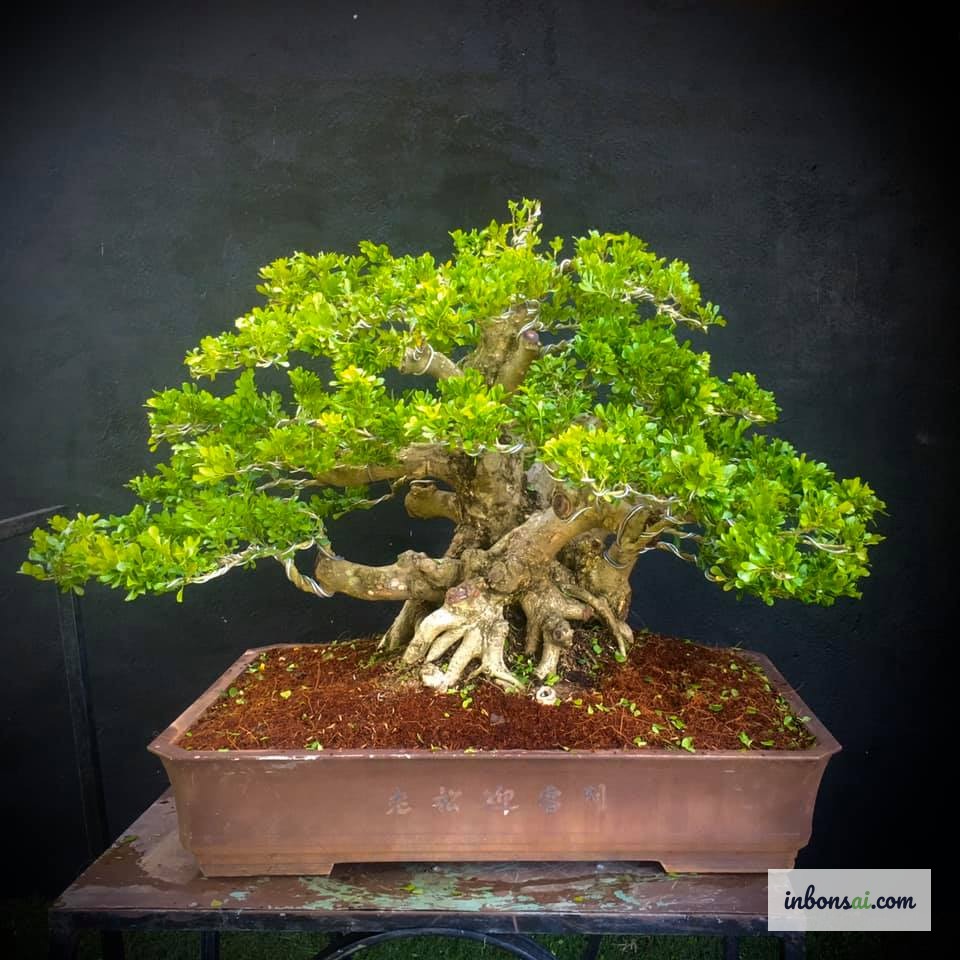
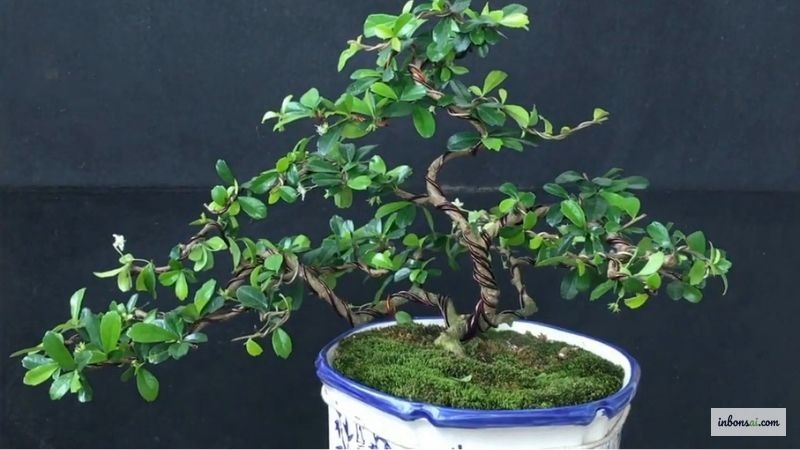
Portulaca bonsai (Portulaca grandiflora) is trending strongly in Vietnam's bonsai community in 2026. With vibrant blooms that open every morning like clockwork, portulaca bonsai mini is not only visually stunning but also extremely easy to care for — ideal for beginners who want a flowering bonsai without years of experience.
What Is Portulaca Bonsai? Key Characteristics
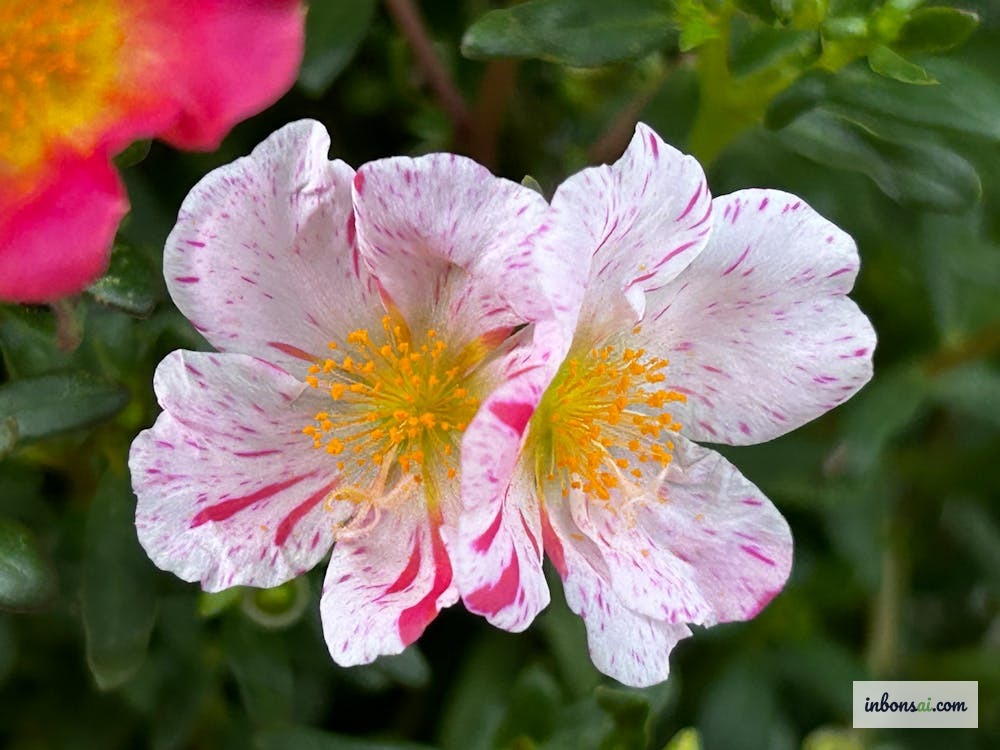
Portulaca bonsai is created from the common portulaca or moss rose plant (Portulaca grandiflora) through pruning and shaping techniques to develop a hardwood trunk and compact canopy that resembles a miniature bonsai tree. The flowers typically open between 9–11 AM and close in the afternoon — hence the Vietnamese name "ten o'clock flower."
Flower colors are remarkably diverse: red, yellow, pink, orange, white, purple, and even multicolored blooms on the same tree. The plant thrives in full sun and handles drought well thanks to its succulent stems, making it perfectly suited to tropical climates. Compared to traditional bonsai species like Fukien tea or serissa, portulaca bonsai is significantly easier to care for as a beginner.
After just 3–4 months of proper care, you can have a mini bonsai that blooms continuously year-round — a timeline that would be impossible with most other bonsai species.
How to Select Portulaca Bonsai Varieties
Success with a portulaca bonsai depends greatly on selecting the right starting material. There are two common approaches: growing from seed or propagating from cuttings.
Growing from seed: Choose double-flower varieties as they produce larger, showier blooms. Seeds are tiny (like pepper flakes), germinate in 7–10 days on moist soil. This approach allows careful selection but takes 6–8 months to develop a thick enough trunk.
Cuttings (recommended): Cut 8–10cm semi-hardwood stems from a healthy parent plant, let the cut end dry for 2 hours in a shaded spot, then insert into moist soil. Roots form in 10–14 days. This method is faster, preserves the parent's characteristics, and produces lignified stems more quickly.
When buying at a nursery, prioritize plants with a thick base trunk (at least 5–8mm diameter), multiple branching layers, and dark green leaves. Avoid plants that are currently in heavy bloom — they're directing energy toward flowers rather than trunk development.
How to Plant Portulaca Bonsai Correctly
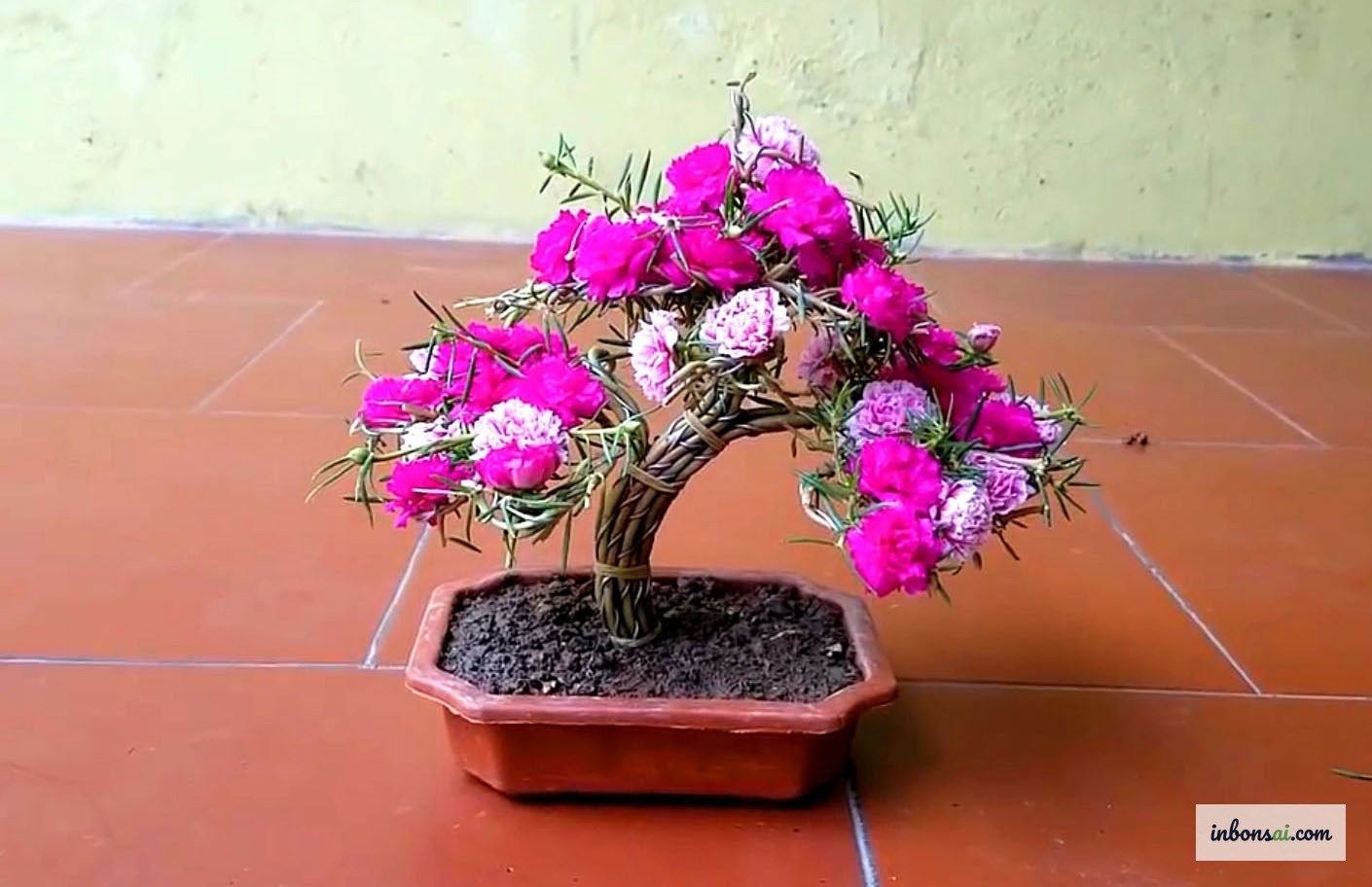
Choose a shallow, wide-mouthed bonsai pot to suit the shallow root system of portulaca. Terracotta or fired clay pots are preferable to plastic because they're breathable and reduce the risk of root rot. An ideal starter pot is 15–20cm in diameter.
Ideal soil mix:
- 50% light loam or sifted garden soil
- 30% coarse sand or perlite for drainage
- 20% well-composted organic matter (worm castings or aged chicken manure)
Important: do NOT use overly rich soil — nutrient-dense soil encourages excessive leaf growth but reduced flowering, and slows trunk lignification. Portulaca actually prefers slightly lean soil compared to many other flowering plants.
Plant the tree in the center of the pot, firm the soil gently around the base, water thoroughly once, then place in a spot with at least 4–6 hours of direct sunlight daily. Hold off on fertilizing for the first 2 weeks post-transplant to let roots establish and anchor in the new soil.
Shaping Techniques for Portulaca Bonsai
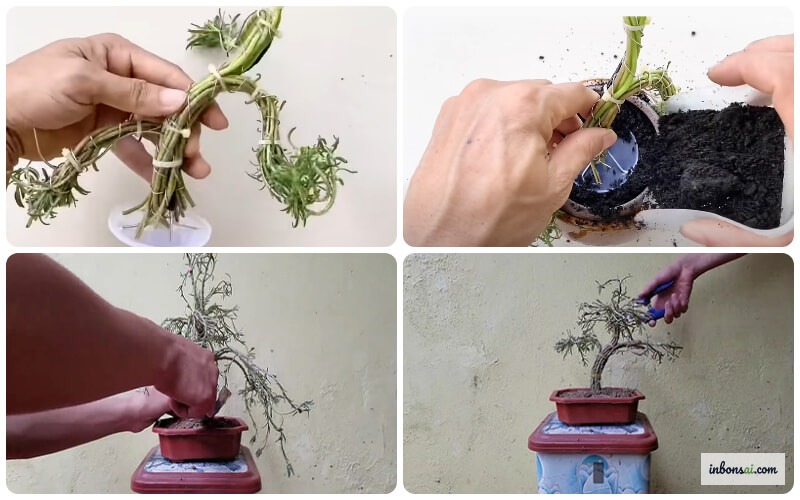
Shaping is the most critical step to transform a regular portulaca into a beautiful bonsai piece. The goal is to develop a thick woody trunk, a balanced canopy, and natural surface roots.
Fast trunk development (crucial): For the first 2–3 months, do NOT prune — let the plant grow freely to maximum size. Once the trunk reaches about 1–1.5cm in diameter, perform the first structural pruning. Remove all branches growing in unwanted directions, keeping only 3–5 main branches to form the framework. Cuts should be clean and smooth to prevent rot.
Upright or slight slant style: Portulaca bonsai is typically styled in the formal upright (chokkan) or slight slant (shakan) form. Use soft aluminum wire wrapped around the trunk to guide the direction while the plant is young and the trunk hasn't fully hardened. Remove wire after 1–2 months before it cuts into the bark.
Maintenance pruning: Once the basic framework is established, every 4–6 weeks shorten new shoots by about 1/3 their length to encourage denser branching and a compact canopy. This is also when to remove branches growing through the canopy or in reverse directions.
See more: Common Bonsai Care Mistakes to Avoid for essential guidance on pruning without damaging the tree.
How to Care for Portulaca Bonsai to Bloom Beautifully
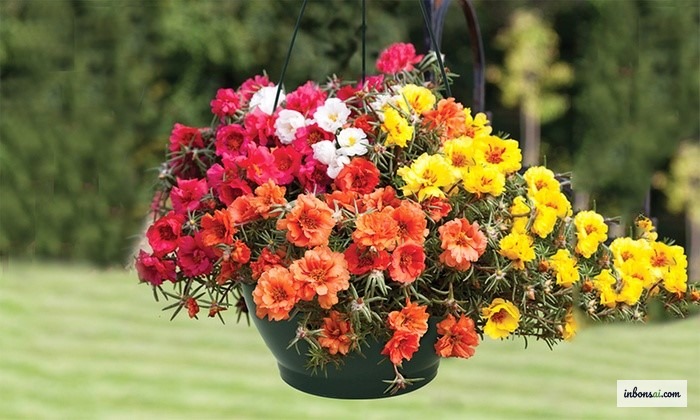
Sunlight — the decisive factor: This is an absolute sun-lover. Place the tree outdoors where it receives at least 5–8 hours of direct sunlight daily. Trees grown indoors will produce few flowers or none at all, regardless of how perfectly you manage everything else. A south- or east-facing balcony is ideal.
Correct watering: Despite being drought-tolerant, portulaca still needs regular watering to bloom continuously. Water when the top 2–3cm of soil is dry. In dry season, water daily or every other day; in rainy season, water 2–3 times per week and ensure good drainage to prevent waterlogging.
Golden rule: water thoroughly — let dry — water again. Never mist lightly every single day — the soil never fully dries, creating conditions for fungal disease and root rot.
Phase-specific fertilizing: Use NPK 15-30-15 or a fertilizer high in phosphorus (P) and potassium (K) to stimulate blooming. Dilute to half the recommended strength and apply every 2 weeks during the growing season (March–October). Strictly avoid high-nitrogen fertilizers — the tree will produce lush green growth but very few flowers.
Techniques to Keep Portulaca Bonsai Blooming Non-Stop
To achieve year-round continuous blooming, apply these specialized flower-stimulation techniques.
Deadhead spent flowers promptly: Immediately after blooms fade, cut off the entire flower stalk with sharp scissors. This prevents the plant from wasting energy producing seeds and redirects it entirely toward forming new buds. This simple technique is the single most important practice for maintaining continuous blooms.
Pruning to stimulate regeneration: When the tree produces several bloom cycles then suddenly stops, cut all branches back by about half their length. New shoots emerge within 1–2 weeks and a fresh bloom cycle begins 3–4 weeks later. This technique is particularly effective mid-rainy season when trees commonly "rest" from flowering.
Mild water stress to trigger buds: Reduce watering slightly for 1 full week (let soil get drier than usual) to stimulate bud formation — the plant perceives mild drought stress and responds by initiating flowering. Then resume normal watering; blooms typically explode 1–2 weeks later.
Boost potassium and phosphorus: Increase K and P applications during the flower-induction phase. Use specialty bloom fertilizers like Growmore 6-30-30 or diluted wood ash water (1 tablespoon ash per 1 liter water) applied weekly.
See also: Caring for Mini Bonsai on a Budget for a complete beginner care schedule.
Common Pests and Diseases
Despite being hardier than most bonsai species, portulaca bonsai can still encounter problems when care conditions aren't right.
Root rot: Caused primarily by poorly draining soil or overwatering. Symptoms: yellowing leaves progressing upward from the base, soft mushy stem at soil level, plant wilting despite moist soil. Treatment: remove from pot, cut away all rotten roots (brown or black, with odor), let dry for several hours, then replant in fresh, better-draining soil mix.
Aphids and spider mites: Appear during hot, dry weather. Spray with diluted insecticidal soap (1 teaspoon per 1 liter water), focusing on the undersides of leaves. Preventively, apply 0.3% neem oil solution every 2 weeks.
No flowers: Usually caused by one of three factors: insufficient sunlight (under 4 hours daily), excessive nitrogen fertilization, or too little soil volume in the pot. Move the tree to more sun, eliminate nitrogen fertilizer entirely, and switch to a high P-K bloom formula.
Leaf drop in winter: Portulaca is cold-sensitive. When temperatures drop below 15°C (common in northern Vietnam December–February), the plant may lose leaves and enter dormancy. Bring indoors, place near a well-lit window, and reduce watering through winter.
Explore more: Fukien Tea Bonsai Care Guide — another great flowering bonsai option for beginners seeking year-round blooms.
Tags
#portulaca bonsai#mini bonsai#flowering bonsai#moss rose bonsai#portulaca grandifloraGet bonsai guidance every week.
Fresh care guides, styling notes, and bonsai inspiration delivered to your inbox.