
Spice Vegetable
CHINESE SCALLION
(Allium chinense)
Chinese Scallion (also known as Rakkyo) is a widely used spice vegetable, delicious pickled or with roasted meat.
Spice Vegetable
Care Notes
Water Needs
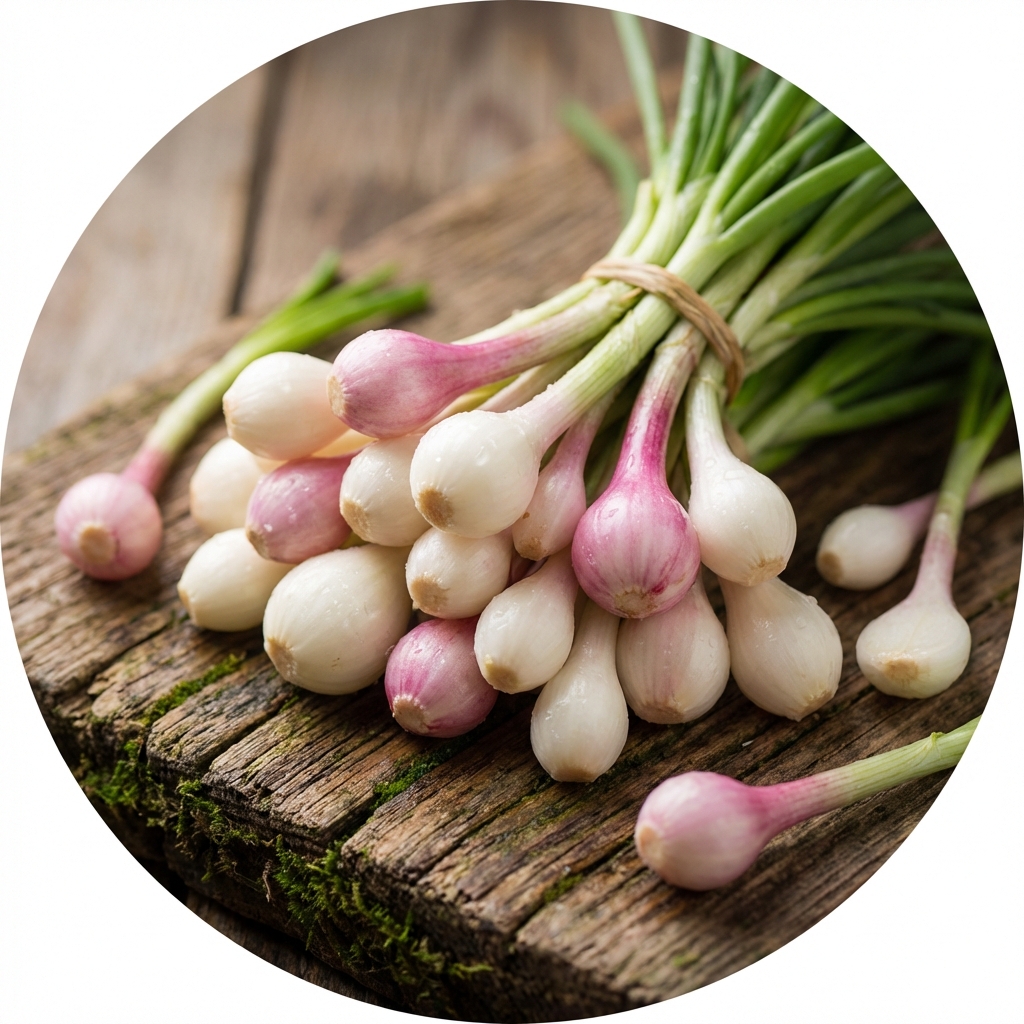
CHINESE SCALLION
Allium chinense
1. Bio Characteristics
Fascicled roots, long white bulbs. Leaves are long, stiff, dark green. Prefers mild climate.
2. Uses
Culinary (pickles, side dish) and Medicinal (treats bloating, indigestion, joint pain).
3. Cultivation
Main season Sep-Oct. Row spacing 20-25cm. Plant bulbs 4-5cm deep.
I. Uses & Value
Chinese Scallion (also known as Rakkyo) is a widely used spice vegetable in Vietnam, Japan, and China. It can be pickled like onions, used in salads, and is particularly delicious when served with roasted pork or duck.
Medicinal Value: Treats bloating, indigestion, joint pain, and acts as an appetite stimulant.
II. Biological Characteristics
- Roots & Stem: Fascicled roots, long, white, penetrating deep into the soil. The true stem is degenerated into a basal plate; the false stem (bulb) is white and is the main edible part.
- Leaves: Leaves are long, linear, stiff, dark green, and glossy. Scallions prefer a mild climate and can tolerate cold.
- Soil: Grows well on light, loose soil, rich in organic matter, pH 6-6.5. Do not plant on soil where plants of the same family were grown in the previous season.
- Rotation: Crop rotation is necessary, preferably with aquatic crops (wet rice).
III. Cultivation Techniques
1. Seasons
- Main Season: Sep 15 - Oct 30
- Late Season: Oct - Jan
- Spring Season: April
2. Soil and Fertilizers
Bed Preparation: Bed width 1.0-1.1m, 0.25-0.30m.
- Organic fertilizer: 2.0 - 2.5 tons
- Urea: 25 - 30kg
- Superphosphate: 30 - 40kg
- Potassium chloride: 15 - 20kg
* Basal application: all organic fertilizer, superphosphate, 1/3 urea and 1/3 potassium at a depth of 15-18cm.
3. Spacing & Care
- Spacing: Row spacing 20-25cm, plant spacing 10-13cm.
- Planting: Plant bulbs 4-5cm deep, cover with soil to bulb level. Seed amount: 120-130kg/1000m².
- Care: - Watering: Use a watering can or furrow irrigation. Do not let the field lack water. - Weeding: Weed by hand, gently. - Top Dressing: 2-3 times (young plants, strong growth, bulb development). 10-12 days apart.
- Pests: Leaf-eating insects, downy mildew, bacterial bulb rot. Use partial pest management.
IV. Harvest & Preservation
- Timing: 100 - 140 days after planting. Harvest when leaves naturally wither.
- Method: Bundle them or cut them loose, wash with clean water, let dry, and then sell.
- Preservation: Select fields with good growth, large, fully mature bulbs. Bundle and dry in the sun. Store in a cool, dry, elevated place; check regularly to remove spoiled bulbs.
Living Conditions
Fertilizer per 1,000m²: Organic fertilizer: 2.0 - 2.5 tons Urea: 25 - 30kg Superphosphate: 30 - 40kg Potassium chloride: 15 - 20kg * Basal application: all organic fertilizer, superphosphate, 1/3 urea and 1/3 potassium at a depth of 15-18cm. 3. Spacing & Care Spacing: Row spacing 20-25cm, plant spacing 10-13cm. Planting: Plant bulbs 4-5cm deep, cover with soil to bulb level. Seed amount: 120-130kg/1000m². Care: - Watering: Use a watering can or furrow irrigation. Do not let the field lack water. - Weeding: Weed by hand, gently. - Top Dressing: 2-3 times (young plants, strong growth, bulb development). 10-12 days apart. Pests: Leaf-eating insects, downy mildew, bacterial bulb rot. Use partial pest management. IV. Harvest & Preservation Timing: 100 - 140 days after planting. Harvest when leaves naturally wither. Method: Bundle them or cut them loose, wash with clean water, let dry, and then sell. Preservation: Select fields with good growth, large, fully mature bulbs. Bundle and dry in the sun. Store in a cool, dry, elevated place; check regularly to remove spoiled bulbs. Fertilizers (for 1,000m²) 2.0-2.5 Ton Organic 25-30 kg Urea 30-40 kg Superphosphate 15-20 kg Potassium Growth Process (100-140 Days) Planting
Sep-Oct - Plant bulbs 4-5cm deep.
Care
Top dressing 2-3 times. 10-12 days apart.
Bulb Development
Keep soil moist, control pests.
Harvest
Day 100-140 - When leaves wither.