
Culinary Herbs
BASIL
(Thai Basil / Sweet Basil)
Basil is a culinary herb used raw with other vegetables or separately with dishes such as pork innards, poultry, etc., due to its attractive aroma.
Culinary Herbs
Care Notes
Water Needs
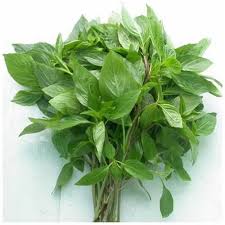
BASIL
Thai Basil / Sweet Basil
1. Characteristics
Herbaceous, >1m high, purple stems. Fibrous roots. Ovate, green leaves.
2. Uses
Culinary herb. Treats bloating, nausea, joint pain, headaches, depression.
3. Cultivation
Sow Aug-Sep. Loose soil. Seeds/Cuttings. Spacing 20-25cm.
I. USES
Basil is a culinary herb used raw with other vegetables or separately with dishes such as pork innards, poultry, etc., due to its attractive aroma.
Health Benefits: Basil is also used to treat flatulence, nausea, joint pain, headaches, depression, etc.
II. BIOLOGICAL CHARACTERISTICS
- Stems: Herbaceous, annual, can grow over 1.0m high. Stems and petioles are purple.
- Roots: Fibrous root system, shallow, moisture-loving, does not tolerate waterlogging.
- Leaves: Leaves ovate, green surface, smooth, shallow serrated edges.
- Climate & Light: Basil prefers mild climates and plenty of light; lack of light is thought to make leaves less fragrant.
- Soil: Grows well on loose soil with good irrigation and neutral pH for high yield and quality.
III. CULTIVATION TECHNIQUES
1. Season
- If planting from seedlings, sow seeds from late August to September.
- Nursery soil needs to be fine, loose, weed-free, fertilized with 2-3kg of rotten manure per m².
- Average seed amount: 2-3g/m².
2. Soil and Fertilizer
- Soil: Must be plowed carefully, fine, loose, and weed-free.
- Bed surface 1.0 - 1.2m wide, 20 - 25cm high, 25cm furrow width.
- Organic Manure: 1.0 - 1.5 tons
- Super Phosphate: 25 - 30kg
- Potassium Chloride: 15 - 18kg
- NPK: 40 - 50kg
* Method: Basal application of all organic fertilizer, super phosphate, 1/3 NPK, and 1/3 potassium into furrows or on bed surface. Mix well with soil before planting.
3. Propagation Method
- Can be propagated sexually (seeds) or asexually (cuttings).
- 30-35 days after sowing, when plants have 4-5 true leaves, transplant to field.
- If using cuttings, choose healthy plants free from pests, cut branches near the base (5-6cm lengths).
4. Planting Distance
Rows 20-25cm apart, plants 15-20cm apart.
Insert cuttings 2-3cm deep into soil (at least 1-2 nodes in soil). Cover and press soil gently to encourage rooting.
Transplanting seedlings follows similar methods.
5. Care
- Watering: Water twice daily after planting. Once rooted (2-3 days), once daily depending on humidity. Use clean water. Avoid flooding furrows.
- Cultivation: After rooting, loosen soil, earth up slightly, and weed.
- Top Dressing: When plants recover, apply first top dressing (1% solution or dry application followed by watering). Total mineral fertilizer: 20kg/1000m². Apply second top dressing after harvest.
- Pests: Basil generally has few pests. Prevention through good cultivation techniques is best.
IV. HARVEST
- Harvesting: First harvest 35-40 days after planting. Subsequent harvests every 15 days. Usually left loose (not bundled), or branches cut (in the South).
- Seed Production: Select healthy plants, harvest whole plant in July-August, dry on tarp (not directly on brick/cement). Yield: approx. 25-30kg/1000m².
Growing Conditions
Fertilizer for 1,000m²: Organic Manure: 1.0 - 1.5 tons Super Phosphate: 25 - 30kg Potassium Chloride: 15 - 18kg NPK: 40 - 50kg * Method: Basal application of all organic fertilizer, super phosphate, 1/3 NPK, and 1/3 potassium into furrows or on bed surface. Mix well with soil before planting. 3. Propagation Method Can be propagated sexually (seeds) or asexually (cuttings). 30-35 days after sowing, when plants have 4-5 true leaves, transplant to field. If using cuttings, choose healthy plants free from pests, cut branches near the base (5-6cm lengths). 4. Planting Distance Rows 20-25cm apart, plants 15-20cm apart. Insert cuttings 2-3cm deep into soil (at least 1-2 nodes in soil). Cover and press soil gently to encourage rooting. Transplanting seedlings follows similar methods. 5. Care Watering: Water twice daily after planting. Once rooted (2-3 days), once daily depending on humidity. Use clean water. Avoid flooding furrows. Cultivation: After rooting, loosen soil, earth up slightly, and weed. Top Dressing: When plants recover, apply first top dressing (1% solution or dry application followed by watering). Total mineral fertilizer: 20kg/1000m². Apply second top dressing after harvest. Pests: Basil generally has few pests. Prevention through good cultivation techniques is best. IV. HARVEST Harvesting: First harvest 35-40 days after planting. Subsequent harvests every 15 days. Usually left loose (not bundled), or branches cut (in the South). Seed Production: Select healthy plants, harvest whole plant in July-August, dry on tarp (not directly on brick/cement). Yield: approx. 25-30kg/1000m². Fertilizer (per 1,000m²) 1.0-1.5 Tons Organic 40-50 kg NPK 25-30 kg Super Phosphate 15-18 kg Potassium Chloride Growth Process Sow / Plant
Late Aug - Sep.
Care
Water 2x/day, top dress when recovering.
First Harvest
After 35-40 days.
Next Harvests
Every 15 days.