
Culinary Herbs
PERILLA
(TIA TO)
Perilla is a very common herb in daily life. It can be eaten raw on its own or mixed with other raw herbs.
Culinary Herbs
Care Notes
Water Needs
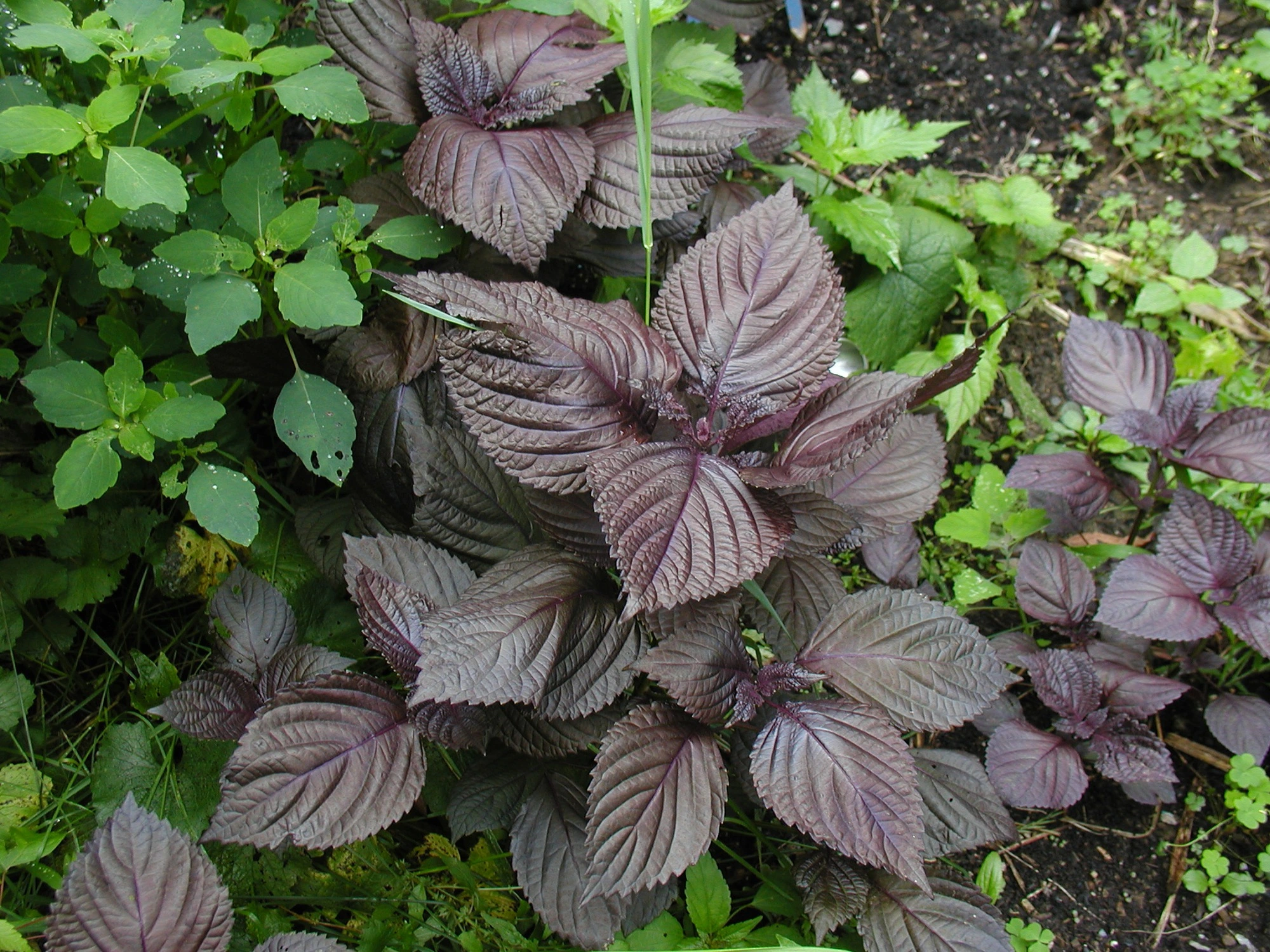
PERILLA
TIA TO
1. Bio Characteristics
Annual herb, cluster roots. Leaves light green or purple, serrated edges. Attractive fragrance.
2. Uses
Common spice. Non-toxic food dye. Medicinal uses: cold, cough, digestion.
3. Technique
Sow Feb-Mar (cool) or year-round (warm). Sow seeds or transplant (4-5 leaves).
I. USES
Perilla is a very common spice vegetable in our daily life. Perilla can be used separately or mixed with other raw vegetables. Some dishes indispensable for perilla such as: tofu snail soup, braised eggplant, cold porridge... Cultivation of perilla brings high economic efficiency and is an export item.
Perilla leaves are also used as non-toxic food coloring. Perilla is a herb used to treat some diseases: cold, cough, indigestion, constipation, etc.
II. BIOLOGICAL CHARACTERISTICS
Perilla is an annual herb with cluster roots.
- Leaves: The upper surface of the leaves is light green or light purple depending on the characteristics of the variety. The underside of the leaves is dark purple, the leaf margins are shallowly serrated. Perilla leaves have an attractive fragrance.
- Climate & Soil: Perilla prefers mild, warm climates and can tolerate heat. Perilla grows well on sandy loam, light loam, medium loam that is porous, rich in organic matter, and has neutral pH.
III. CULTIVATION TECHNIQUES
1. Sowing Season
Places with warm weather can sow many crops a year. However, in places with low temperatures in winter, perilla grows with difficulty such as regions in the Red River Delta, seeds can be sown from February, March, later in April. If sown late, the number of harvests will decrease.
2. Soil and Fertilizers
The soil for sowing perilla also needs to be plowed carefully, free of weeds, and porous like the soil for sowing many other spice vegetables. After harrowing, level the ground and then use a hoe to make beds. Bed surface width 1.0 - 1.2m to 1.5m, bed 0.2 - 0.25m, bed furrow width 0.25 - 0.3m.
- Decomposed manure: 1.0 - 1.5 tons
- Superphosphate: 20 - 30kg
- Potassium chloride: 15 - 20kg
- NPK Compost: 30 - 40kg (Do not abuse inorganic nitrogen fertilizer)
Basal application of all organic fertilizer, phosphate fertilizer, 1/4 of NPK fertilizer and 1/3 of total potassium fertilizer. The above fertilizers need to be mixed into the soil at a depth of 10 - 12cm before sowing.
3. Sowing Technique
Perilla can be broadcast sown and then thinned before sowing seeds, soak seeds in hot 35 - 40°C for 1 - 2 hours, then wash and sow.
When sowing, distribute seeds for the cultivated area, mix seeds with powdered soil to sow evenly. After sowing, cover with a layer of powdered soil to cover the seeds, on top sprinkle humus or old straw. Seed volume for 1,000m² is about 2.5 - 3.0kg. When seedlings in the nursery have 4 - 5 true leaves, they can be planted in the production field. Row spacing x plant spacing 25 - 30 x 15cm.
4. Care
- Watering: After sowing and planting until the plants sprout, take root, and revive, 1-2 times a day. Then every other day depending on the weather and soil moisture. Must use clean to plants.
- Cultivation, Weeding: If sowing directly, the main task is weeding and field sanitation. For fields planted with seedlings, 15-20 days after planting, practice loosening the soil crust, lightly hilling up, combined with weeding. After planting 30-35 days, hill up high.
- Fertilizing: When the plant has 2-3 true leaves, practice the first top dressing, each time using 7-10kg NPK. Can be applied dry or dissolved in clean with a solution concentration of 1.0-1.5%. After watering with fertilizer, use clean to wash the leaves. After each harvest, nutrients must be provided for the plant to continue growing. After top dressing NPK twice, top dress with potassium.
- Pest Control: Generally, perilla is less affected by pests and diseases, plants can be damaged by leaf-eating worms. Effective control measures are integrated control through cultivation techniques, biological pesticides can be used for prevention.
IV. HARVEST AND SEED
Harvest:
After sowing for 40-50 days, harvesting can begin, each crop can be harvested 6-7 times. Distance between harvests 10-15 days. When harvesting, cut across the stem, leaving a stem section near the base 12-15cm. Axillary buds will continue to develop and provide the next harvest. After harvesting, bundle into small bunches, wash with clean and then send for consumption.
Seed Keeping:
When the plant flowers and sets seeds, around December, cut the whole plant and dry it on a flat basket, tray, or canvas, do not dry directly on a brick or cement yard. When the seedlings are dry, thresh the seeds, clean them, dry the seeds and store in bottles or specialized bags depending on the volume of seeds. Seed yield is about 27-30kg/1,000m² of cultivated land.
Conditions
Soil:
The soil for sowing perilla also needs to be plowed carefully, free of weeds, and porous like the soil for sowing many other spice vegetables. After harrowing, level the ground and then use a hoe to make beds. Bed surface width 1.0 - 1.2m to 1.5m, bed 0.2 - 0.25m, bed furrow width 0.25 - 0.3m.
Fertilizer: Fertilizer amount for 1,000m² of cultivated land: Decomposed manure: 1.0 - 1.5 tons Superphosphate: 20 - 30kg Potassium chloride: 15 - 20kg NPK Compost: 30 - 40kg (Do not abuse inorganic nitrogen fertilizer) Application method:
Basal application of all organic fertilizer, phosphate fertilizer, 1/4 of NPK fertilizer and 1/3 of total potassium fertilizer. The above fertilizers need to be mixed into the soil at a depth of 10 - 12cm before sowing.
Pre-Sowing
Soak seeds (35-40°C).
Care
Watering, Top Dressing (at 2-3 leaves).
Harvest
40-50 days after sowing.
Seed/Next Crops
Harvest every 10-15 days.