
Herbs & Spices
GARLIC
(ALLIUM SATIVUM)
A widely used spice vegetable, containing the antibacterial agent allicin, effective in preventing digestive cancer and reducing blood lipids.
Herbs & Spices
Care Notes
Water Needs
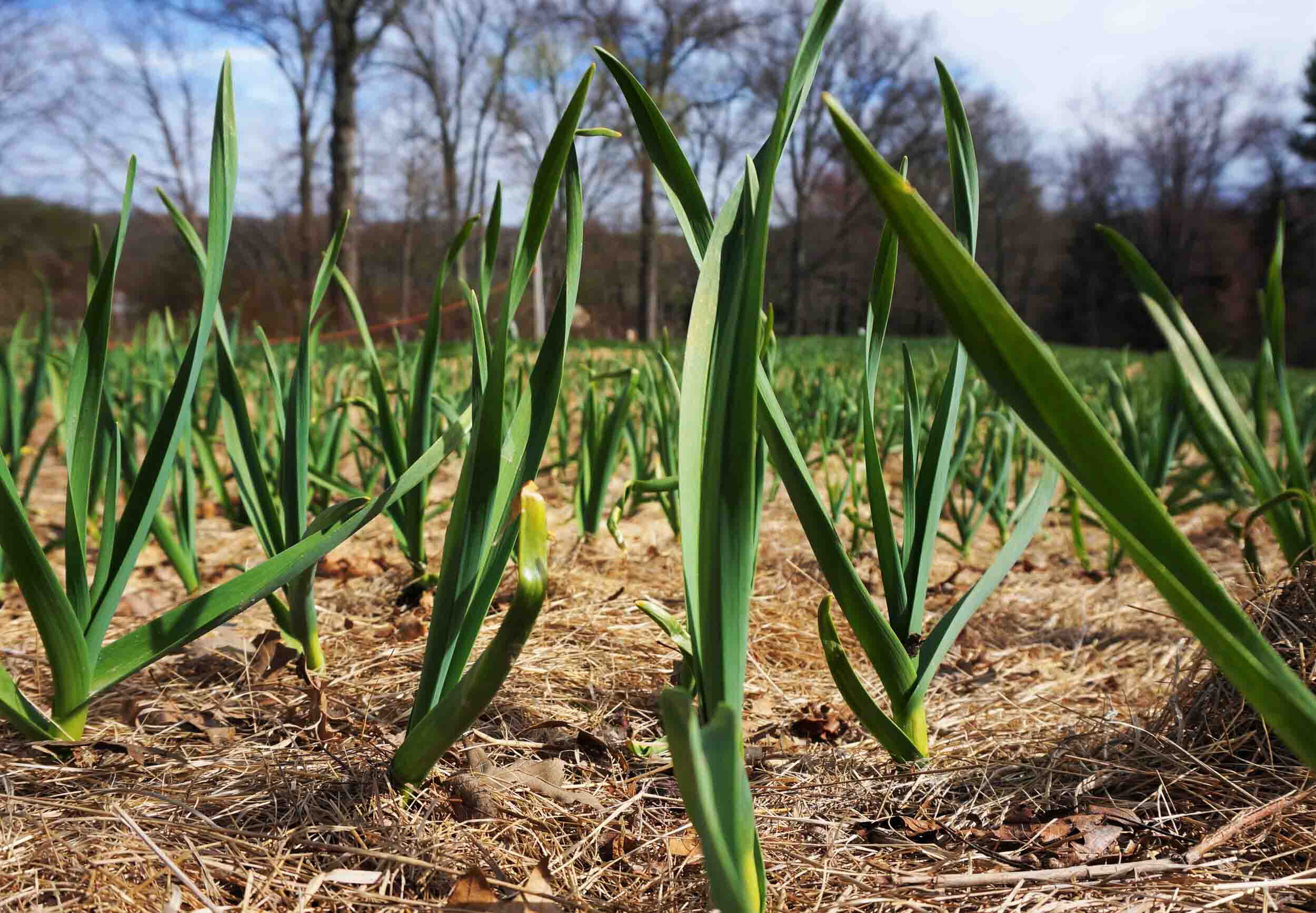
GARLIC
ALLIUM SATIVUM
1. Bio Characteristics
Fascicled, short roots. Bulb stem consisting of multiple cloves. Thin, flat leaves with a waxy layer.
2. Uses
Spice (stir-fry, pickling) and Medicine (antibacterial, lowers blood pressure, prevents cancer).
3. Technique
Winter crop (Aug-Nov). Plant with cloves. Mulch with straw to retain moisture.
I. Uses & Value
Garlic is a spice vegetable widely used in daily meals. Garlic is used for pickling in vinegar and chili, stir-frying dishes, and marinating food.
Medicinal Value:
- Contains the antibacterial agent allicin (a sulfur compound) with strong bactericidal effects, preventing digestive cancer.
- Reduces nitrite in the stomach, reducing nitrosamine formation (carcinogen).
- Treats flu, bloating, indigestion, high blood pressure.
Note: Before cooking, peel and crush garlic, leave it exposed to for 15 minutes to preserve allinase enzyme activity.
II. Biological Characteristics
- Roots: Fascicled roots, short, poorly developed, concentrated in the surface layer. Intolerant to drought.
- Stem: True stem is degenerated (basal plate) lying close under the false stem (bulb). True stem has vegetative and reproductive buds.
- Bulb: Consists of branches (cloves) linked by thin membranes. Each bulb has 7-10+ cloves.
- Leaves: Thin, flat blade leaves with a thin waxy layer.
- Climate: Prefers cool, cold weather, cold-tolerant. Wide temperature adaptability (tolerant to both cold and heat).
- Light: Light-loving, long-day plant.
- Water: Moisture-loving, intolerant to drought and waterlogging.
- Soil: Grows well on light, loose soil rich in organic matter, pH 5.5 - 6.8.
III. Cultivation Techniques
1. Season
- Early crop: Late August - early October. (High price but unstable yield).
- Main crop: Sept 15-20 to end of October.
- South: End of rainy season.
2. Soil & Fertilizers
Rotation: With wet rice or non-allium crops.
Bedding: 1.2-1.5m wide, 0.15-0.2m high, furrow 0.25-0.3m.
- Organic: 2.0 - 2.5 tons (poultry manure best)
- Urea: 20 - 25kg
- Superphosphate: 40 - 45kg
- Potassium Chloride: 20 - 25kg
* Basal application: All organic, phosphate + 1/3 Potassium + 1/4 Urea (mixed in soil 7-10cm deep).
3. Planting & Care
- Seed: Clean base, peel sheath, keep clove skin. (70-80kg seed/1000m²).
- Spacing: Row 18-20cm, plant 8-10cm. (50k plants/1000m²). Press clove 1/3-1/2 depth.
- Mulching: Use 100-200kg straw/1000m² to cover beds for moisture, warmth, weed control.
- Watering: - New planting: 1-2 times/day (morning/afternoon). - 7-10 days after sprouting: Furrow irrigation (flood 1/2 bed then drain). - Stop watering 1 month before harvest.
- Top dressing: 3-4 times. - 1st: 15-20 days after planting (1-2 true leaves). Liquid 1-2% or dry scatter then water. - 2nd: 30-35 days after planting + Potassium 1st time. - 3rd: 45-55 days after planting. - 4th (Potassium 2nd time): 60-65 days after planting.
- Pest control: Downy mildew (use pesticides if needed), weeds (hand pull). Rotate crops.
IV. Harvest & Storage
- Timing: 125-130 days after planting. When bulbs mature, leaves dry and die naturally, neck shrinks.
- Method: Pull plants, shake off soil, dry in field.
- Storage: Bundle (50-100 bulbs or 2kg), dry under mild sun, hang in dry cool place.
- Yield: Avg 13-15 tons/ha, high up to 30 tons/ha.
Conditions
Fertilizer for 1,000m²: Organic: 2.0 - 2.5 tons (poultry manure best) Urea: 20 - 25kg Superphosphate: 40 - 45kg Potassium Chloride: 20 - 25kg * Basal application: All organic, phosphate + 1/3 Potassium + 1/4 Urea (mixed in soil 7-10cm deep). 3. Planting & Care Seed: Clean base, peel sheath, keep clove skin. (70-80kg seed/1000m²). Spacing: Row 18-20cm, plant 8-10cm. (50k plants/1000m²). Press clove 1/3-1/2 depth. Mulching: Use 100-200kg straw/1000m² to cover beds for moisture, warmth, weed control. Watering: - New planting: 1-2 times/day (morning/afternoon). - 7-10 days after sprouting: Furrow irrigation (flood 1/2 bed then drain). - Stop watering 1 month before harvest. Top dressing: 3-4 times. - 1st: 15-20 days after planting (1-2 true leaves). Liquid 1-2% or dry scatter then water. - 2nd: 30-35 days after planting + Potassium 1st time. - 3rd: 45-55 days after planting. - 4th (Potassium 2nd time): 60-65 days after planting. Pest control: Downy mildew (use pesticides if needed), weeds (hand pull). Rotate crops. IV. Harvest & Storage Timing: 125-130 days after planting. When bulbs mature, leaves dry and die naturally, neck shrinks. Method: Pull plants, shake off soil, dry in field. Storage: Bundle (50-100 bulbs or 2kg), dry under mild sun, hang in dry cool place. Yield: Avg 13-15 tons/ha, high up to 30 tons/ha. Fertilizer (for 1,000m²) 2-2.5 Tons Organic 20-25 kg Urea 40-45 kg Superphosphate 20-25 kg Potassium Growth Process Plant & Mulch
Sep-Oct. Mulch to retain moisture.
Care & Dressing
Water, Top dress 4 times.
Stop Watering
1 month before harvest.
Harvest
After 125-130 days.