Bonsai Summer Care: Protect Your Tree from Heat

InBonsai Team
March 25, 2026 · 9 min read
Summer with temperatures exceeding 38–40°C across many regions of Vietnam is the harshest season for bonsai trees. Knowing how to care for bonsai in summer and protect them from heat not only helps your trees survive the season, but also maintains their beautiful form and vibrant health. In this guide, the InBonsai Team shares complete techniques covering watering, shading, fertilizing, and pest prevention specific to the hot season.
Why Is Summer the Most Challenging Season for Bonsai?
Bonsai grown in small containers have very limited soil volume — meaning low water retention and roots that are easily damaged by high temperatures. When outdoor temperatures reach 35°C, the soil temperature inside a directly sun-exposed pot can reach 50–55°C, causing localized root death.
Additionally, Vietnamese summers often bring dry winds (especially in the Central and Northern regions), dramatically increasing transpiration rates through leaves. The tree loses water faster than it can absorb through the roots, leading to wilting and tip dieback even when the soil still feels moist.
The cascade effect is dangerous: heat stress → reduced immunity → pest and disease attack → further weakening. Understanding this mechanism helps you prevent problems proactively rather than only treating symptoms when it’s already too late.
Bonsai Summer Care: Watering at the Right Time and Amount
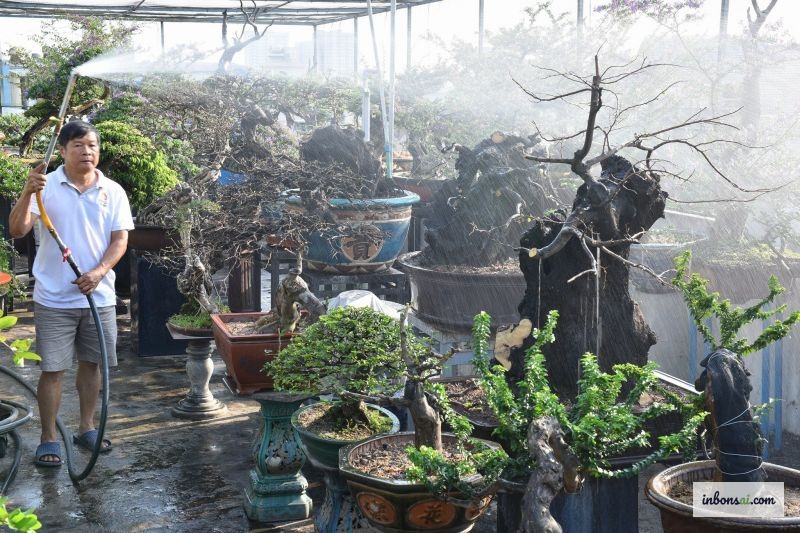
Watering is the single most important technique in summer bonsai care. The golden rule is water early morning, avoid watering at noon. The reason is simple: water applied at 11 a.m. when the pot is already hot causes thermal shock to the roots — the sudden temperature difference between cool water and hot soil severs the delicate root hairs.
Best watering times: 6–8 a.m. and 5–7 p.m. Morning watering supplies water for the tree’s entire day of activity; evening watering replenishes what was lost through transpiration. If you can only water once, prioritize the morning.
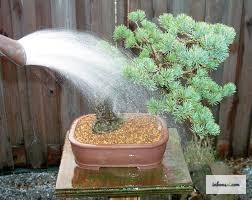
Water quantity: Water thoroughly until moisture reaches all soil layers and water drains from the bottom drainage holes. Never trickle water just to wet the surface — deep roots remain dry. On days with intense heat above 37°C, you may need to water 3 times: early morning, around 4 p.m., and in the evening before bed.
Checking soil moisture: Press a finger 2–3 cm into the soil; if it feels dry, water immediately. Don’t wait until leaves wilt — by then the tree has already experienced significant stress. You can also refer to our detailed bonsai watering techniques guide for watering principles by soil type and species.
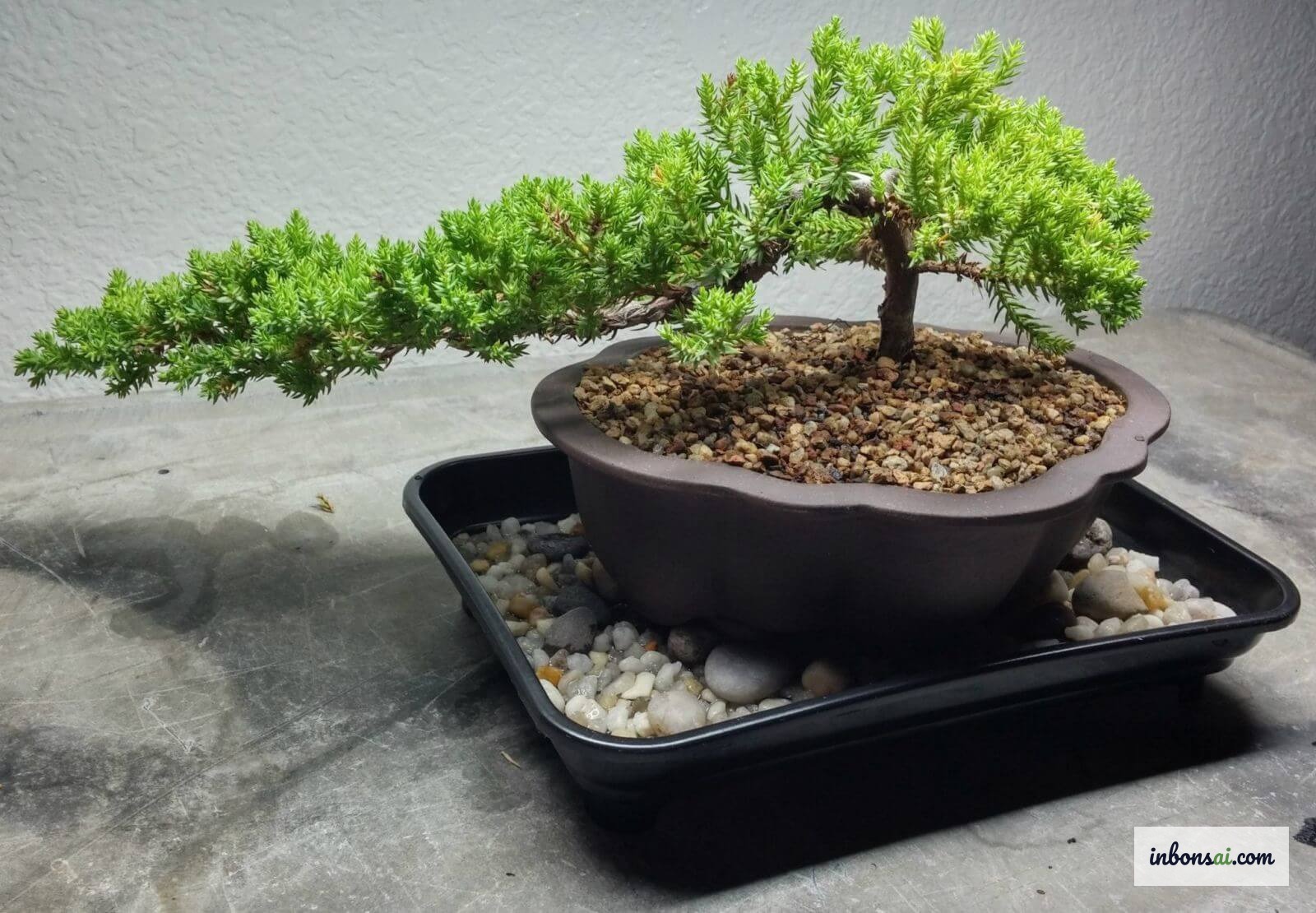
Bonus tip: Place the bonsai pot on a tray of water with pebbles (without letting the pot bottom sit in standing water) to increase ambient humidity around the tree, reducing leaf transpiration pressure on dry, windy days.
Shading Bonsai: Repositioning and Installing Shade Netting
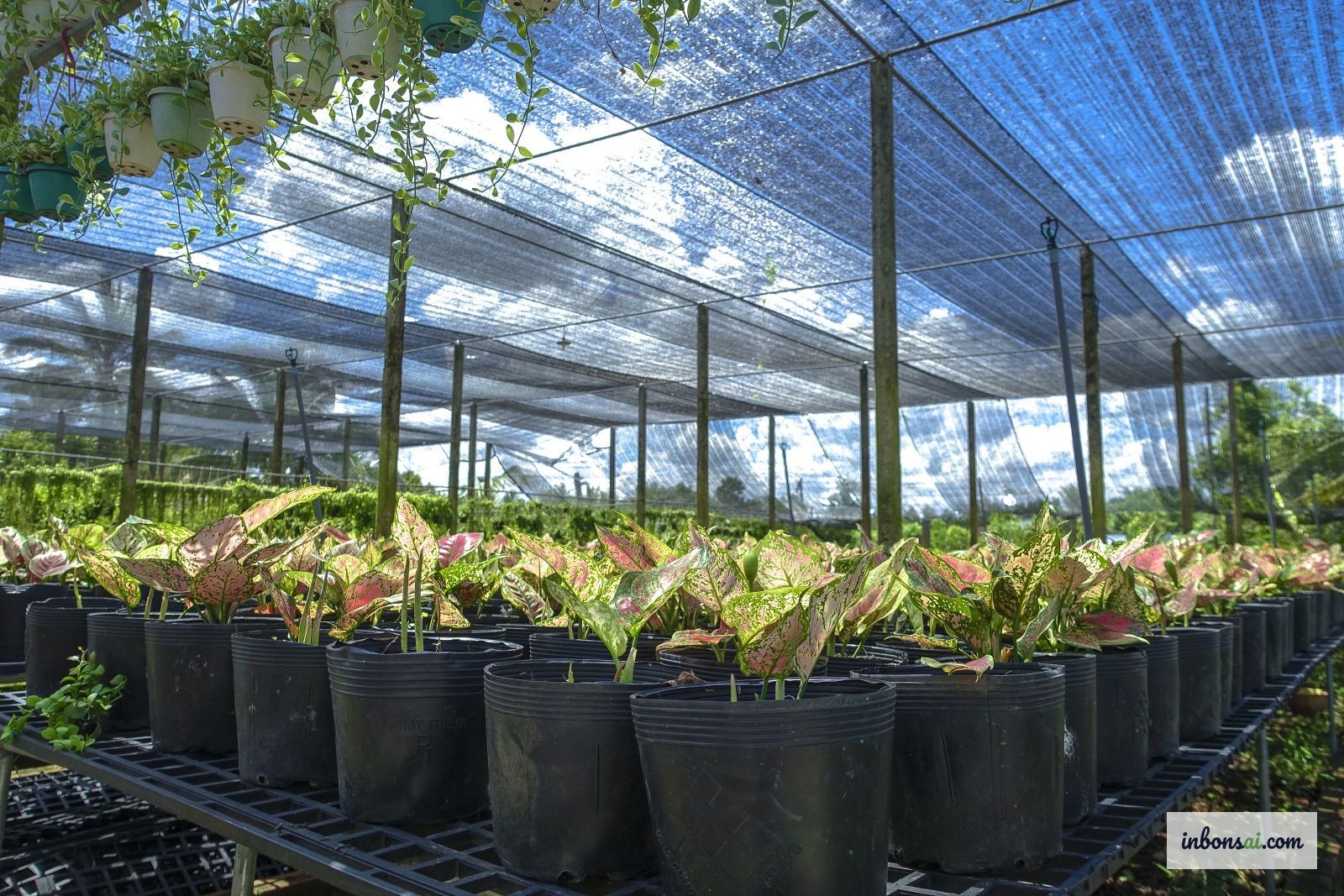
Not every bonsai species needs complete shade — but most need protection from intense direct sunlight between 10 a.m. and 4 p.m. during summer.
Classification by light requirements:
- Sun-tolerant species (need 70–100% light): Yellow apricot (mai vàng), Ficus, Ficus pumila, Bougainvillea. These can stay in full sun all day but still need additional watering.
- Partial shade species (30–50% shade cloth): Linh Nam bonsai, Linh Sam, Podocarpus, Maple (Acer). Shading from 10 a.m. to 3 p.m. is sufficient.
- Shade-preferring species (50–70% shade cloth): Indoor trees brought outside (Ficus, Orange Jasmine), recently repotted trees, or recovering trees.
Practical shading solutions:
- Shade cloth (30–50% density): Inexpensive, readily available at agricultural supply stores, highly effective. Stretch cloth at least 30 cm above the canopy to allow airflow.
- Relocating pots: In summer, move bonsai to covered patios or spots with morning sun but afternoon shade. Morning sun (6–10 a.m.) is ideal — enough light for photosynthesis before temperatures peak.
- Using tall plant shade: Take advantage of natural shade — position bonsai under large tree canopies or climbing plant trellises.
The key is not to over-shade: bonsai with insufficient light grow weakly, develop abnormally large leaves, and produce long, spindly branches. Monitor leaf color — deep glossy green indicates adequate light; pale yellow with weak growth suggests light deficiency.
Adjusting the Fertilizing Schedule in Hot Weather
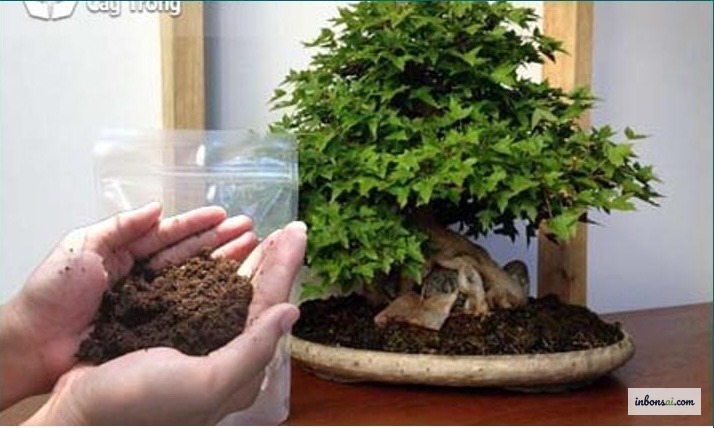
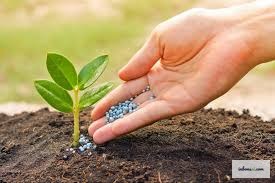
Many hobbyists make the mistake of stopping fertilization entirely in summer for fear of “burning” the roots. In reality, bonsai still need nutrients in summer — just in different quantities and formulas compared to spring.
Summer fertilizing principles:
- Reduce concentration by 50%: Dilute fertilizer more than usual to prevent mineral salt buildup in soil when less watering occurs.
- Prioritize high-Potassium (K) formulas: Potassium strengthens cell walls and improves heat and drought tolerance. Ideal NPK ratio for summer: 5-3-7 or 6-4-8.
- Avoid high-Nitrogen (N) fertilizers: Nitrogen drives vigorous growth, but under heat stress the tree cannot absorb it efficiently, and it easily causes root burn.
- Water the soil before fertilizing: Never fertilize dry soil — this concentrates the mineral salt solution and burns roots.
Frequency: Every 2 weeks (instead of weekly as in spring). Apply in the early morning or cool evening — never during peak midday heat.
If the tree is already stressed (yellowing or wilting leaves), stop fertilizing entirely until it recovers. For bonsai recently repotted or heavily pruned, withhold fertilizer for at least 4–6 weeks. Refer to our bonsai fertilizing guide for a deeper understanding of fertilizer types and application methods.
Summer Bonsai Pest and Disease Prevention
Hot and humid summer conditions create ideal environments for rapid pest and disease proliferation. The most common threats to watch for include:
Spider mites: Appear in hot, dry conditions. Signs: tiny yellow spots on leaves, fine webbing on leaf undersides. Treat by spraying water forcefully on leaf undersides, or apply diluted Neem oil (5ml/liter) sprayed evenly every 3 days for 2 weeks.
Mealybugs: Typically cluster in leaf axils and soft shoot tips, leaving white cottony waxy deposits. Use cotton swabs dipped in 70% alcohol to remove individually, then spray low-concentration Imidacloprid.
Stem borers: Dangerous because they hide inside wood and are hard to detect early. Signs: small holes in bark with sawdust outside, sudden branch wilting despite adequate watering. Use thin wire probed into holes, or inject specialized insecticide.
Fungal diseases and root rot: Conversely, over-watering or poor drainage during summer rain can allow Pythium and Fusarium fungi to attack roots. Irregular leaf yellowing, softness at the base of the trunk are danger signs. Check roots immediately, cut away rotted sections, and treat with Copper Oxychloride fungicide.
Regular inspection schedule: Once per week, gently lift leaves to examine undersides and leaf axils. Early detection makes treatment far easier compared to when disease has spread. Cross-reference with our guide to identifying bonsai diseases for accurate diagnosis.
Signs of Heat Stress in Bonsai and How to Respond
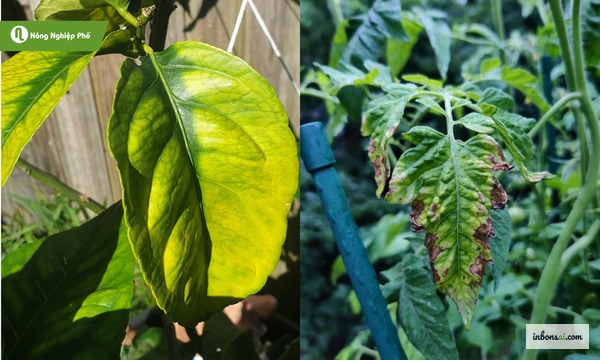
Recognizing heat stress early is the key to saving your tree before damage becomes irreversible.
Warning signs to watch for:
- Leaves curling inward or drooping: The tree’s protective response to excessive transpiration. Typically occurs at midday — if leaves recover after the sun diminishes, the tree is coping; if leaves don’t recover after watering, the situation is more serious.
- Brown scorched leaf margins: Leaf scorch — caused by intense sun or mineral salt accumulation in the soil. Shade the tree immediately and water heavily to flush out salts.
- Mass leaf drop: The tree sheds leaves to reduce transpiration surface area. Don’t confuse with normal autumn leaf drop. If occurring in summer, this signals severe stress.
- Wilting shoot tips despite moist soil: Roots may have been damaged by heat. Move the tree to full shade immediately and reduce watering (incorrect timing worsens root damage).
Emergency protocol for heat-stressed bonsai:
- Move the tree to complete shade (90% coverage) for 3–5 days.
- Mist the canopy 2–3 times daily (only in early morning and cool evening — never during peak sun).
- Water the soil to just adequate moisture — don’t drench or allow standing water.
- Stop all fertilizing until recovery is complete.
- Remove dead, dried leaves and wilted branches so the tree can focus energy on recovery.
During recovery, patience is essential. Don’t expect the tree to bounce back in 1–2 days; it typically takes 2–4 weeks to produce new shoots after severe heat stress.
Tips for Caring for Mini Bonsai and Indoor Bonsai in Summer
Mini bonsai (pots under 15 cm) need extra attention in summer because minimal soil volume means the pot temperature rises extremely quickly and the soil dries out extremely fast. On intensely hot days, watering 3–4 times daily may be necessary.
Practical tips for mini bonsai:
- Group several small pots together: creates a more humid microclimate and reduces heat stress for each individual tree.
- Use ceramic pots instead of plastic: ceramics breathe better and don’t accumulate heat as rapidly as plastic.
- Place a thin layer of moss over the soil surface: retains moisture naturally and reduces surface evaporation.
Indoor bonsai in air-conditioned spaces also need attention: air conditioning creates very dry air (humidity below 40%), causing significant leaf moisture loss. Place water trays or a humidifier near the tree. Additionally, indoor lighting is rarely sufficient for bonsai — bring trees outside for at least 2–3 hours each morning to take advantage of gentle sunlight before the heat peaks.
Summer is actually the season when bonsai grow most vigorously if given proper care. Not only that, it’s also an excellent time for wiring (when branches are supple from active growth) and light pruning to maintain form. Simply mastering the fundamentals of watering, shading, and temperature management will allow your bonsai to pass through summer healthy and thriving.
So don’t let summer become a source of anxiety — treat it as an opportunity to develop deeper understanding of the biological characteristics of each species in your collection.
Related Posts
Bonsai Summer Care: Protect Your Tree from Heat
How to Water Bonsai in Dry Season: Complete Care Guide
Bonsai Autumn Care: Pruning and Fertilizing Guide
How to Prevent Bonsai Pests and Diseases in Hot Weather
Bonsai Care in Rainy Season: Preventing Root Rot