
How to Water Bonsai in Dry Season: Complete Care Guide

InBonsai Team
April 13, 2026 · 8 min read
The dry season is the biggest challenge for bonsai enthusiasts in Southeast Asia, especially from April to May when intense sun and low humidity threaten tree survival. Without proper watering during the dry season, your bonsai will suffer from dehydration, wilting leaves, and potentially death. This guide will teach you the most effective watering techniques to maintain optimal soil moisture and ensure your bonsai thrives through this critical period.
Why Bonsai Needs More Water During the Dry Season
During the dry season, intense sun, strong winds, and extremely low humidity cause rapid water loss. The shallow soil in bonsai pots dries incredibly fast — often in just a few hours. Additionally, bonsai requires more frequent watering than regular plants because of their high leaf-to-soil ratio.
When bonsai lacks water consistently, the plant tissues become damaged and the water transport system is disrupted. Once soil dries completely, it becomes hydrophobic and difficult to rewet, causing prolonged drought stress. Furthermore, dry season weakens the tree’s disease resistance, making it more susceptible to pests and fungal infections.
How to Check Bonsai Soil Moisture?
Before watering, always check whether the soil is still moist or has dried out. This is the most critical step to avoid both overwatering (leading to root rot) and underwatering (causing dehydration).
Method 1: Visual and Touch Inspection Look at the soil surface — if it appears light in color and feels dry, it’s time to water. You can also touch the top 1 cm of soil with your finger: if it feels dry, water immediately.
Method 2: Soil Moisture Meter This convenient tool gives instant readings on a 1-10 scale. For bonsai, aim for a reading of 6-7 (moist but not waterlogged).
Method 3: Pot Weight Method An evenly moist pot weighs more than a dry one. After watering a few times, you’ll develop a feel for the correct weight and can judge moisture accurately by lifting the pot.
Dry Season Watering Frequency
There’s no one-size-fits-all watering schedule because frequency depends on:
- Tree species: Moisture-loving species (apricot blossom, myrtle) need more frequent watering. Drought-tolerant species (pine, maple) can go longer between waterings.
- Pot size: Small pots dry quickly and need daily or twice-daily watering. Large pots retain moisture longer.
- Soil type: Heavy, organic-rich soil holds water longer. Light soil (akadama, coconut fiber) dries fast and needs frequent watering.
- Location: Trees in direct sun or strong wind dry faster than those in partial shade.
General dry season guidelines:
- Small bonsai (pots under 8 inches): Water 1-2 times daily depending on soil moisture
- Medium bonsai (8-12 inch pots): Water once daily, preferably early morning or evening
- Large bonsai (pots over 12 inches): Water once daily, twice if soil remains dry
During the dry season in Southeast Asia (April-May), increase watering frequency by 50-100% compared to normal months.
Correct Bonsai Watering Techniques
Not all watering methods are equally effective. Improper technique can harm your tree or waste water.
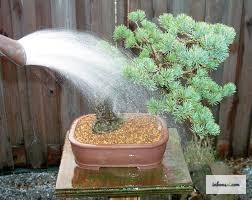
Water with a Fine-Nozzle Can
Use a specialized watering can with a fine rose nozzle. This delivers water gently, avoiding damage to the tree or soil displacement. Water slowly until liquid drains from the pot’s drainage holes — this indicates the soil is fully saturated.
Important: Avoid the careless approach of watering while the pot sits on the ground. Water should be directed to the root zone, not sprayed on foliage (except when rinsing dust).
Bottom Watering Method
This method works exceptionally well during the dry season. Place your bonsai pot in a larger container of water so the water level reaches about three-quarters up the pot’s height. Leave it for 15-20 minutes. The soil will absorb water from below, ensuring even moisture distribution throughout.
Advantages: Even hydration, prevents water runoff, doesn’t displace soil, avoids wetting foliage. Disadvantage: Time-consuming and requires preparation.
Water at Optimal Times
During the dry season, water in early morning (6-8 AM) so the soil has time to absorb moisture before intense midday sun. If your tree dries very quickly, water again in late afternoon (4-6 PM) as the sun weakens.
Never water at midday when the sun is strongest — hot water or rapid temperature changes can shock the roots or cause heat damage.
What Water Should You Use?
Not all water is equally suitable.
Rainwater: Best choice. Rainwater contains no chlorine, has neutral pH, and balanced mineral content. Collect rainwater in containers during rainy season for use in dry months.
Tap Water (Left Standing 24 Hours): Tap water contains chlorine, so let it sit 24 hours to allow chlorine to evaporate before using. Avoid using directly from cold taps — allow water to reach room temperature first.
Avoid: Salty water, water hotter than 86°F (30°C), or water containing chemicals.
Water pH: Slightly acidic water (pH 6-6.5) is ideal for bonsai. Use a pH meter if needed for precision.
Common Mistakes When Watering Bonsai in Dry Season
Despite aiming to keep soil moist, several mistakes can harm your trees:
Mistake 1: Overwatering Some gardeners fear dehydration so they water daily without checking soil moisture. This causes waterlogging, root rot, and fungal diseases — difficult to recover from.
Mistake 2: Inconsistent Watering Watering heavily once then neglecting for days causes stress, leaf drop, and stunted growth. Maintain consistent daily care based on soil moisture.
Mistake 3: Using Water That’s Too Hot Tap water during dry season can reach 86-104°F (30-40°C). Hot water directly applied to roots can cause thermal shock. Let water cool to room temperature.
Mistake 4: Incorrect Moisture Testing Checking only the surface is unreliable — surface may appear dry while deeper layers stay moist. Always test soil 2-3 inches deep for accuracy.
Protecting Your Bonsai During Dry Season
Beyond watering, additional measures reduce water loss:
Shade Protection: During peak sun hours (11 AM-3 PM), use 30-50% shade cloth to reduce direct solar exposure. This lowers water loss through foliage and prevents leaf scorch.
Increase Air Humidity: Mist foliage 2-3 times daily during early morning or evening. This raises humidity around the tree and reduces drought stress.
Mulching: Apply a thin layer of dry straw, grass, or coconut fiber over the soil surface (avoid the trunk base). Mulch reduces soil water evaporation.
Relocate: If your tree sits in full sun all day, move it to partial shade for 1-2 hours. Shade doesn’t mean indoors — just avoid intense midday sun.
Signs Your Bonsai Is Dehydrated and How to Recover
If your tree shows dehydration stress, recovery is possible if caught early:
Dehydration symptoms:
- Wilting leaves with pale color
- Soil separating from pot sides
- Unusually light pot when lifted
Recovery steps:
- Avoid midday watering: Water only in early morning or evening
- Bottom watering: Place pot in warm water (72-82°F / 22-28°C) for 20-30 minutes so soil absorbs slowly without thermal shock
- Mist foliage: Spray leaves 2-3 times daily to reduce stress
- Provide shade: Shade the tree for 3-5 days to aid recovery
- Be patient: Full recovery takes 1-2 weeks if the root system survives
Expert Insights
Experienced bonsai professionals in tropical regions say the dry season is “where serious enthusiasts separate from casual growers”. Those who master dry season care produce vigorous trees that flourish when the rainy season arrives.
Professional recommendations:
- Water consistently: Never skip or neglect care
- Monitor twice daily: Check trees morning and evening during dry months
- Prepare in advance: Stock rainwater and filtered water before the dry season begins
- Reduce fertilizing: Trees cannot absorb nutrients efficiently during stress, so cut fertilizer to 50% of normal rates
Dry Season Bonsai Watering Summary Table
| Factor | Guideline |
|---|---|
| Frequency | 1-2 times daily based on soil check |
| Optimal timing | Early morning (6-8 AM) or evening (4-6 PM) |
| Always check soil | Verify moisture before watering |
| Water type | Rainwater or 24-hour-old tap water |
| Method | Gentle pour from above or bottom watering |
| Target moisture | Moist but not soggy (6-7 on meter) |
| Shade during peaks | 11 AM-3 PM: use 30-50% shade cloth |
| Misting | 2-3 times daily, early morning or evening |
Proper dry season watering isn’t complicated — it requires attention, observation, and consistency. Follow these guidelines and your bonsai will not only survive the harsh dry season but emerge stronger and more vigorous for the growing season ahead. Start today by observing your tree’s specific needs and watering with intention!
Related Posts
How to Water Bonsai in Dry Season: Complete Care Guide
Bonsai Summer Care: Protect Your Tree from Heat
How to Prevent Bonsai Pests and Diseases in Hot Weather
Bonsai Care in Rainy Season: Preventing Root Rot

Bonsai Autumn Care: Pruning and Fertilizing Guide