Kumquat Bonsai for Tet: Complete Growing & Care Guide

InBonsai Team
April 14, 2026 · 9 min read
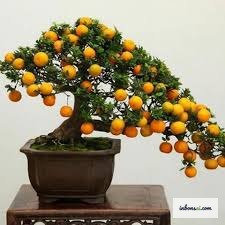
The kumquat bonsai — with its clusters of gleaming golden fruit adorning artfully shaped trunks — has become an iconic symbol of Tet (Lunar New Year) celebrations across Vietnam. From apartment balconies to spacious living rooms, the sight of a kumquat bonsai heavy with fruit radiates a sense of abundance, good fortune, and hope for the year ahead. However, cultivating a beautifully shaped kumquat bonsai that peaks in fruit at just the right time takes patience, knowledge, and proper technique. This guide walks you through the entire process — from planting your kumquat bonsai to daily care routines and the secret to triggering a spectacular golden display for Tet.
Biology and Cultural Significance of Kumquat Bonsai
The kumquat bonsai (Fortunella japonica or Citrus japonica) belongs to the Rutaceae family, a subtropical fruit tree native to Southeast Asia and southern China. In Vietnamese culture, kumquat’s golden fruit symbolizes gold, wealth, and prosperity, while a heavily fruiting tree represents abundance, family harmony, and a fulfilling New Year ahead.
Unlike standard kumquat trees grown purely for fruit, kumquat bonsai are cultivated in small containers with artistically curved trunks, balanced proportions, and characteristic exposed roots. The compact size — typically 40 to 80 cm tall — makes them ideal for indoor display, balconies, or entryways. Key characteristics of Tet kumquat bonsai include:
- Small, round, golden-orange fruit that is highly decorative and clings to the tree for 4–6 weeks
- Brown, textured bark that conveys an impression of age and artistry
- Thick, glossy green leaves that hold up well in indoor conditions
- Good adaptability to temperatures of 15–35°C, making them well-suited for Vietnam’s climate
How to Plant Kumquat Bonsai in a Container
Selecting the Right Variety
The first decision when starting kumquat bonsai is choosing the right variety. Two varieties are most popular for bonsai:
- Marumi kumquat (Fortunella japonica): Flowers and fruits year-round, producing small round golden fruit — by far the most popular choice for Tet bonsai
- Ha Giang kumquat: Larger fruit, sweeter flavor, often used for larger decorative Tet trees
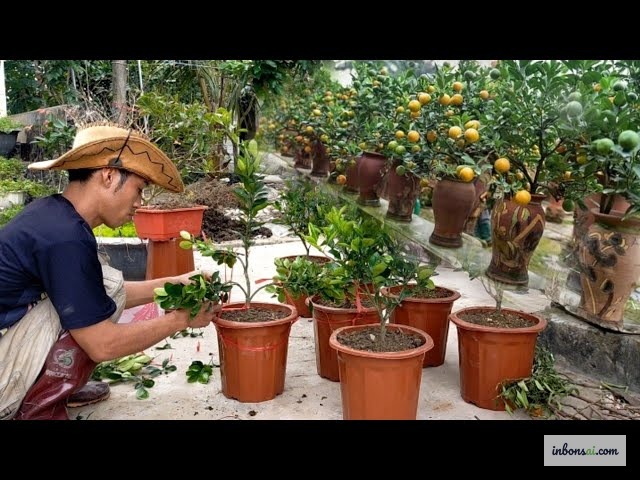
When selecting a young tree to train as bonsai, prioritize specimens with:
- A thick base and naturally curved or easily bendable trunk
- A healthy, evenly distributed root system
- Multiple branches and healthy green foliage
- No signs of pests or large wounds on the trunk
Choosing the Right Pot
The pot must have adequate drainage holes and be the right size — pot diameter should be one-third to one-half the height of the tree. Terracotta, ceramic, or cement pots all work well. Avoid plastic pots, which retain heat and drain poorly.
Preparing the Soil Mix
Kumquat bonsai require loose, well-draining soil that still retains adequate moisture. An ideal soil formula is:
- 60% light loam or garden soil with heavy clay removed
- 20% rice husk charcoal or coconut coir for improved aeration
- 20% well-composted organic matter (cow manure or worm castings)
For a deeper look at substrate options, see our guide on choosing the right bonsai soil for each species. Before planting, lay a layer of small gravel or broken pottery shards over the drainage holes to prevent clogging.
Watering and Fertilizing Techniques
Proper Watering Technique
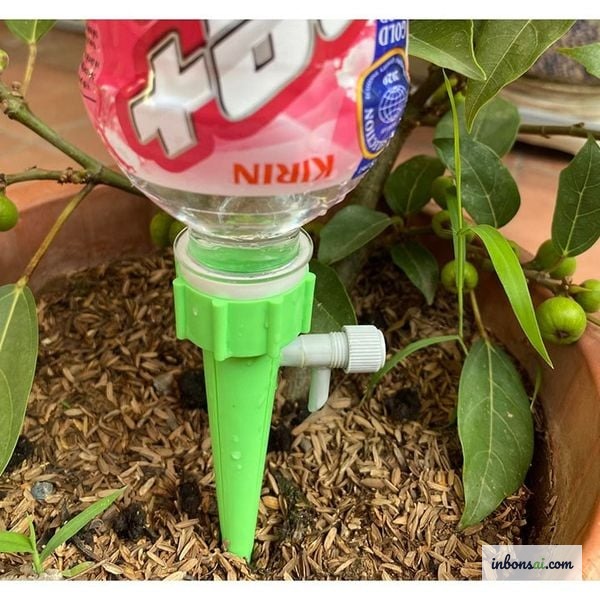
Kumquat bonsai need consistent moisture but cannot tolerate waterlogged conditions. The golden rule: water when the top 2–3 cm of soil is dry. During the dry season or hot weather, you may need to water once or twice daily. During rainy season or cooler months, reduce to 2–3 times per week.
Correct technique: water slowly and evenly until water flows freely from the drainage holes at the bottom — don’t just lightly mist the soil surface. For more detail, see our bonsai watering technique guide. Occasionally misting the foliage helps remove dust and increase humidity around the tree — particularly useful when displayed indoors with air conditioning.
Seasonal Fertilizing Schedule
Applying fertilizer at the right time is the key to kumquat bonsai flowering and fruiting on schedule for Tet:
- January–March (post-Tet): Apply nitrogen-rich fertilizer (NPK 30-10-10 or liquid fish fertilizer) to stimulate new growth and recovery
- April–July (growth season): Apply balanced NPK 20-20-20 every two weeks for all-round development
- August–October (pre-flowering): Switch to high-phosphorus, high-potassium fertilizer (NPK 10-30-20) to trigger flowering and improve fruit sweetness
- November–December (pre-Tet): Reduce fertilizing, focus on consistent watering to keep fruit on the tree longer
Shaping and Pruning Kumquat Bonsai
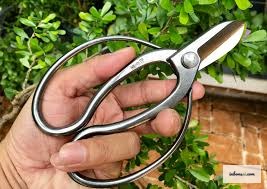
Basic Shaping Principles
Shaping transforms an ordinary kumquat tree into an artistic bonsai. The most popular styles for Tet kumquat bonsai are the formal upright style (straight or slightly leaning trunk, rounded canopy) and the dramatic style (strongly curved trunk, thick base, wide canopy).
The ideal time for major shaping work is after Tet, when the tree enters its recovery and new growth phase (February–March). The tree’s vital energy is at its strongest at this point, ensuring wounds heal quickly.
Pruning Techniques
Regular pruning encourages the tree to direct nutrients toward primary branches, creates a beautiful canopy, and stimulates more flower bud formation:
- Remove vigorous upward shoots: Cut off branches growing straight up that disrupt the canopy shape
- Eliminate crossing branches: Remove branches that cross and overlap to open up the canopy
- Remove old, weak growth: Prune branches that haven’t produced new shoots in a long time
- Thin early fruit sets: If the tree flowers early (April–June), remove some fruit to let the tree build energy for a bigger second flush in September–October
After each pruning session, apply lime or a wound sealant to cut surfaces to prevent fungal infection. Use sharp, clean scissors and cut cleanly in one motion — multiple cuts create ragged wounds.
Triggering Abundant Fruit for Tet
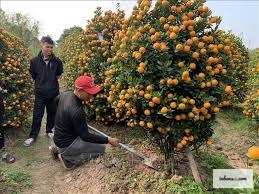
This is the most important technique — and the one every kumquat bonsai grower aspires to master: how to trigger flowering, fruit set, and golden ripening precisely for the Tet holidays.
Counting Backward from Tet
From flowering to fully ripe golden fruit, kumquat takes approximately 5–6 months. Since Tet typically falls in late January or early February, you need to trigger flowering in July–August.
Water Restriction Technique (Xiết Nước)
The most effective method for triggering simultaneous flowering is the “water restriction” (xiết nước) technique:
- Stop watering for 10–15 days (July–August) until leaves begin to droop slightly
- Resume regular watering and apply high-phosphorus/potassium fertilizer (KH₂PO₄ or potassium sulfate)
- After 7–10 days, flower buds will begin to appear at the leaf axils
- Once buds appear, stop restricting water — water consistently to allow good pollination
Watch the tree closely during this process — if leaves curl or drop, water immediately to prevent stress damage.
Supporting Fruit Set and Retention
After flowers open, use a small cotton swab to gently transfer pollen from flower to flower to assist pollination. Spraying a dilute boron micronutrient solution (0.1–0.2% Borax) on leaves and flowers significantly improves fruit-set rates.
Also, thin out very small fruit and those in unfavorable positions (deep inside the canopy or overly clustered) so the remaining fruit can develop to a larger, more uniform size.
Managing Common Pests and Diseases
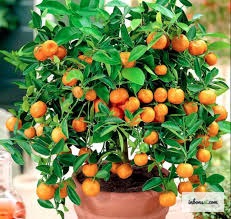
Kumquat bonsai grown in small containers are susceptible to several specific pests and diseases. Early detection and prompt treatment are key to protecting the tree.
Scale Insects and Mealybugs
These are the two most common pests on kumquat bonsai, typically found on the undersides of leaves, along stems, and on young growth. They suck plant sap, causing yellowing leaves and premature leaf drop. Treatment options:
- Dab affected areas with a cotton swab soaked in rubbing alcohol
- Spray diluted neem oil (1%) over the entire tree
- For heavy infestations, use a systemic insecticide such as Confidor or Actara at the recommended dosage
Citrus Canker
Symptoms: raised, brown, corky lesions on leaves, stems, and fruit, caused by the bacterium Xanthomonas axonopodis. Remove and dispose of infected plant parts, then spray Bordeaux mixture (copper hydroxide solution, 1%) every two weeks as a preventive measure.
Citrus Greening (Huanglongbing)
Recognized by uneven yellow mottling on leaves and misshapen, stunted fruit. Caused by the bacterium Candidatus Liberibacter, spread by the Asian citrus psyllid. Prevent by controlling psyllid populations (with Thiamethoxam) and immediately removing heavily infected trees to prevent spread.
Caring for Kumquat Bonsai After Tet
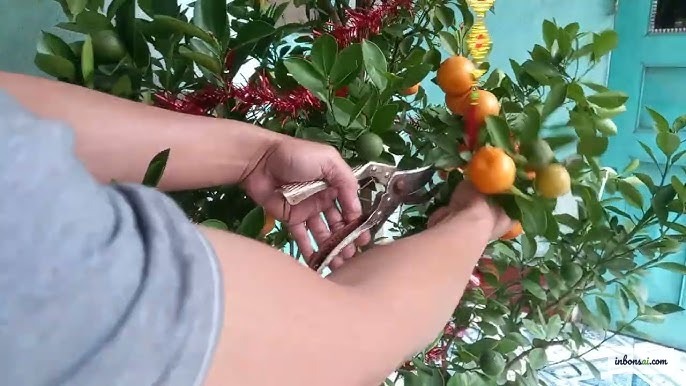
After days of indoor display during Tet, kumquat bonsai are often weakened from insufficient light, overwatering, or underwatering. This post-Tet period is critical for restoring the tree’s health for the next care cycle.
Week 1 after Tet: Move the tree to a spot with soft natural light (avoid strong direct sun for the first 2–3 days). Water moderately; do not fertilize yet.
Weeks 2–3: Begin pruning — remove weak, dead, and tangled branches. This is the ideal window to reshape the canopy for the next season.
February–March: Apply nitrogen-rich fertilizer to stimulate fresh growth and replenish nutrients depleted during the heavy fruiting period. Repot if needed — ideally after new growth has stabilized.
Beyond simple recovery, this period is also the time to evaluate the tree’s overall shape, plan new styling, and begin the fruiting cycle for next Tet. Caring for kumquat bonsai is a long-term journey — with each passing year, a well-tended tree will become more beautiful, more prolific, and more meaningful as a living work of art woven into the rhythm of your family’s New Year celebrations.
Related Posts
Kumquat Bonsai for Tet: Complete Growing & Care Guide
Buddha Hand Bonsai: Complete Growing & Care Guide
Pomegranate Bonsai Yellow Leaves: Causes & Treatment Guide
Starfruit Bonsai Mini: Feng Shui Meaning and Care Guide
Syzygium Myrtifolium Bonsai: Complete Care Guide
Ficus Religiosa Bonsai: Spiritual Meaning and Care Guide
Murraya Bonsai: Complete Growing and Care Guide