Pomegranate Bonsai: Feng Shui Meaning and Care Guide

InBonsai Team
March 26, 2026 · 8 min read
The pomegranate bonsai (Punica granatum) holds a special place in Asian culture for its stunning visual appeal and deep feng shui significance. Beyond its vibrant crimson flowers and swollen, jewel-like fruits, this tree is revered as a symbol of abundance, fertility, and good fortune — values deeply cherished across generations. If you’re looking for a bonsai that combines artistic beauty with powerful feng shui energy, pomegranate bonsai is an unbeatable choice.
What Is Pomegranate Bonsai? Key Characteristics
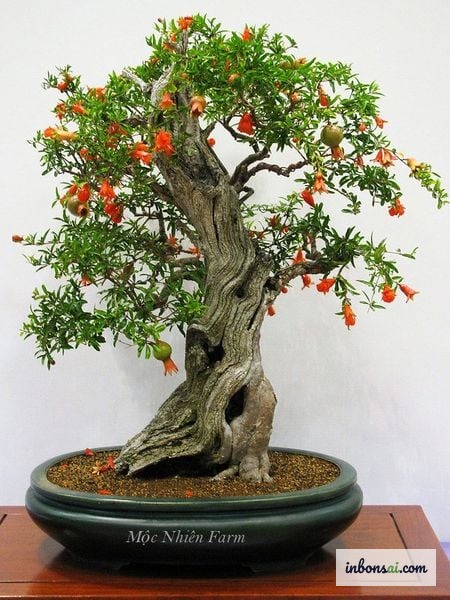
Pomegranate bonsai is a miniaturized version of the common pomegranate tree (Punica granatum), cultivated and shaped using Japanese bonsai artistry. What makes the pomegranate an exceptional bonsai subject is its ability to flower and fruit even when confined to a small pot, creating a breathtaking display that draws every eye.
In appearance, pomegranate bonsai features hard woody trunks with characteristic gray-brown bark that often develops beautiful twisting and gnarled textures over time. Small glossy dark green leaves, brilliant orange-red or yellow flowers blooming in summer, followed by plump red or orange pomegranate fruits — all in a miniature form. The fruit’s hundreds of seeds inside are precisely what creates this tree’s extraordinary feng shui significance.
Several cultivars are popular for bonsai: red pomegranate (red flowers and fruits), yellow pomegranate (yellow flowers, orange-yellow fruits), and dwarf pomegranate (Punica granatum var. nana) — the dwarf variety being the most suitable for bonsai due to its compact size, small leaves, and prolific fruiting. A well-cared-for pomegranate bonsai can live for decades, increasing in artistic value with each passing year.
Feng Shui Significance of Pomegranate Bonsai
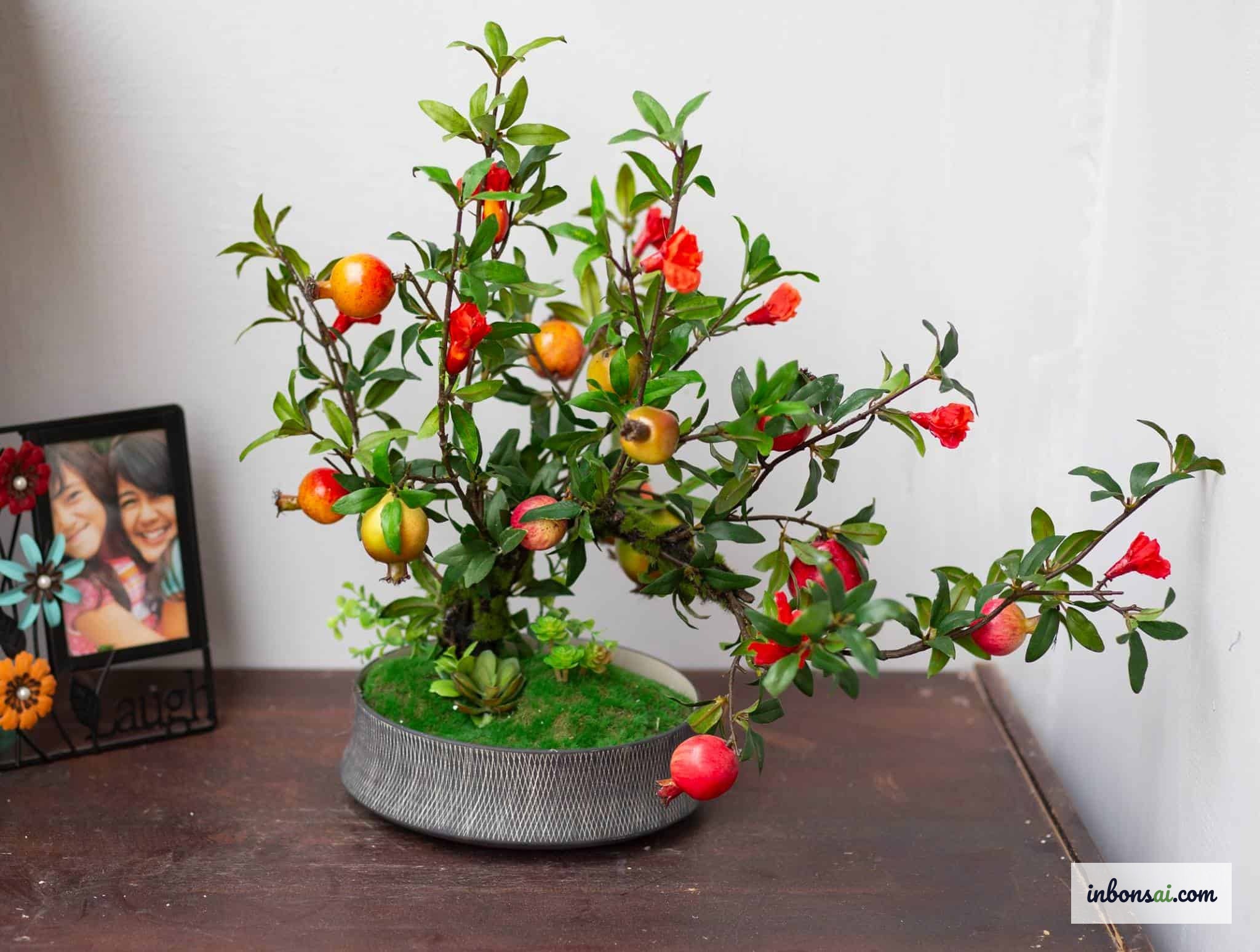
In East Asian culture, the pomegranate is considered one of the luckiest plants with a wealth of positive feng shui meanings. The pomegranate fruit with its hundreds of seeds inside is the ultimate symbol of fertility and abundance — many children and grandchildren, a joyful family, and overflowing blessings. This is why pomegranate bonsai is often gifted to newlyweds or families wishing for future generations.
The red color of pomegranate flowers and fruits represents yang energy, vitality, and good luck in feng shui. According to the five elements theory, red belongs to the Fire element — carrying energy of passion, enthusiasm, and prosperity. People with Wood or Fire as their birth element will benefit most from having a pomegranate bonsai in their home.
Beyond fertility, the pomegranate also symbolizes material abundance, career advancement, and family harmony. Additionally, pomegranate flowers are traditionally regarded as a symbol of enduring love and happy marriage. For more guidance on choosing feng shui bonsai suited to your element, see feng shui bonsai for your birth year.
How to Plant Pomegranate Bonsai in a Container
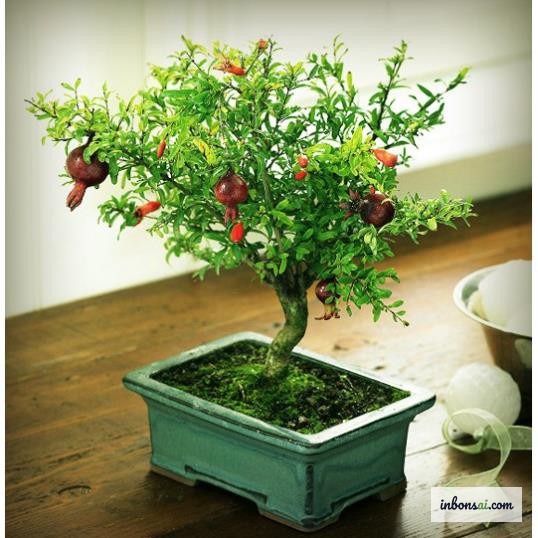
For successful pomegranate bonsai cultivation, soil preparation and pot selection are the critical foundations. Pomegranate prefers well-draining, airy soil with a pH between 5.5 and 7.0. The ideal soil mix consists of 40% akadama, 30% pumice, and 30% coarse sand — this formula ensures roots never become waterlogged while retaining just enough moisture.
The bonsai container should have drainage holes at the bottom, sized appropriately for the root mass — neither too large nor too cramped. Ceramic or unglazed clay pots are best as they allow gas exchange that benefits root respiration. Repotting every 2-3 years in early spring, combined with pruning old roots, keeps the tree vigorous.
Pomegranate can be propagated by stem cuttings (from semi-hardwood cuttings in spring) or air layering (which gives a higher survival rate). When purchasing a young tree, select one with a strong trunk, multiple branches, and a well-developed root system. The best time for planting or repotting is late winter to early spring, just as new buds begin to emerge.
Pomegranate Bonsai Care Techniques
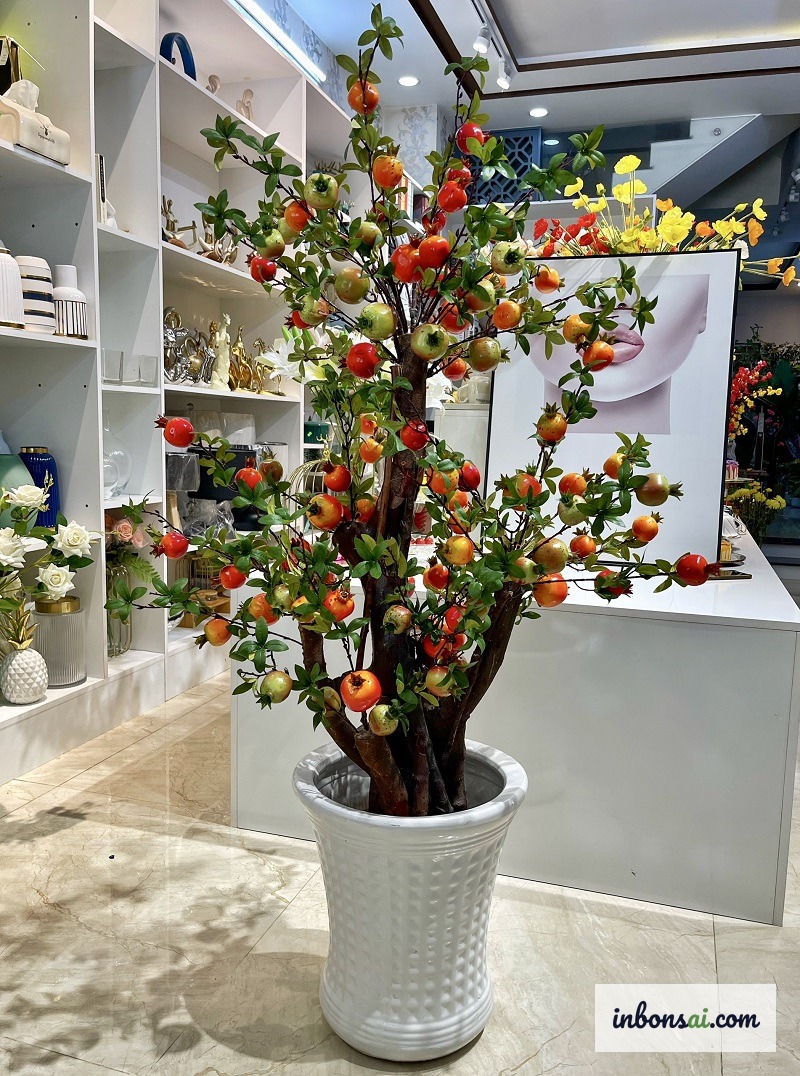
Caring for pomegranate bonsai requires patience and understanding of the tree’s seasonal needs. For light, pomegranate is a sun-loving plant — it needs a minimum of 6-8 hours of direct sunlight daily to flower and fruit well. Placing the tree on a balcony, rooftop, or near a south-facing window is ideal.
Watering: Water regularly but avoid keeping soil constantly moist. In hot summer, water daily or every two days; in winter, only water when the soil is nearly dry. The principle of “water until it flows freely from drainage holes” ensures the entire soil mass gets evenly saturated.
Fertilizing: Spring and summer are the pomegranate’s peak growth seasons — apply a balanced NPK fertilizer (10-10-10) every two weeks. When flower buds begin to form, switch to a phosphorus-rich (P) fertilizer to encourage flowering and fruiting. Avoid high-nitrogen fertilizer during this period as it promotes foliage growth at the expense of flowers. Importantly, stop fertilizing entirely in winter when the tree rests.
Pest and disease control: Pomegranate bonsai is relatively hardy but can be susceptible to mealybugs, spider mites, or fungal diseases if the environment is too humid. Check the undersides of leaves regularly, spray with water or apply organic neem oil at the first sign of pest activity.
Pruning and Shaping Pomegranate Bonsai
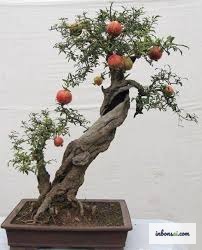
Pruning is the most important step for maintaining the shape and size of pomegranate bonsai. The main pruning time is late winter — before the tree breaks dormancy. At this point, the branch structure is clearly visible, making it easier to make informed decisions about the desired shape.
For maintenance pruning, remove crossing branches, weak branches, inward-growing branches, and any growth that disrupts overall balance. Keep healthy, well-positioned branches that create a harmonious canopy framework. Pinch back new shoots after 3-4 leaves to encourage branching and create a denser, more attractive canopy.
For shaping, pomegranate adapts well to many bonsai styles: formal upright, informal upright, or multi-trunk clump. Use soft aluminum wire to bend branches for 3-6 months, then remove the wire to let branches hold their shape. Avoid wiring old, stiff branches as they break easily — only wire young growth during the growing season. For another beautiful flowering feng shui bonsai, also see crepe myrtle bonsai care.
Feng Shui Placement of Pomegranate Bonsai
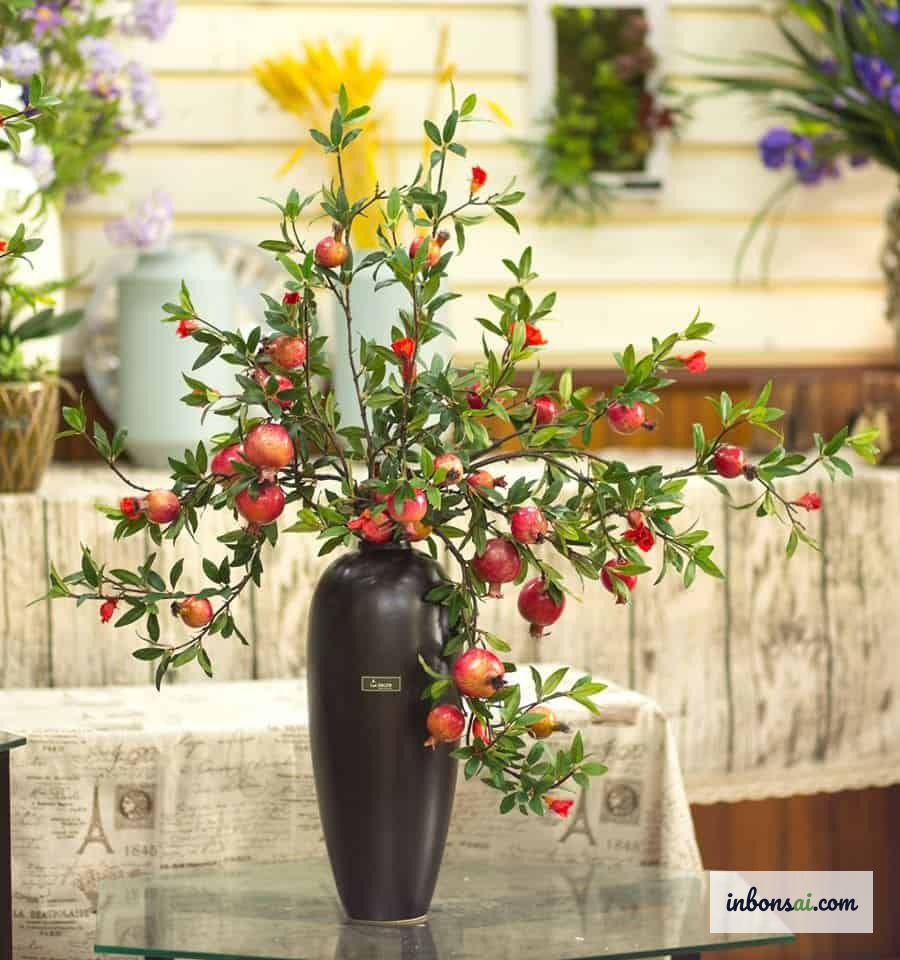
The placement of pomegranate bonsai in your home directly affects its feng shui effectiveness. According to feng shui experts, pomegranate trees should be placed facing South or Southeast — two directions belonging to the Fire and Wood elements respectively, which harmonize with the red energy of pomegranate flowers. Placing the tree in the living room, near the main entrance, or on a work desk invites wealth and prosperity into the home.
Avoid placing pomegranate bonsai in the bedroom (too much yin energy, unsuitable for a sun-loving tree) or the kitchen (fluctuating temperature and humidity). Also avoid low ceilings or dark corners — the tree needs sufficient light to thrive, and feng shui also requires open, airy spaces for chi to circulate freely.
If you grow pomegranate bonsai outdoors, a south or east-facing position is ideal to capture the warm morning sun. In peak summer heat, provide light afternoon shade to prevent leaf scorch. Regardless of placement indoors or out, pomegranate bonsai requires at least 4-6 hours of light daily to grow healthily and bloom on schedule. For another great feng shui companion plant, explore fig bonsai feng shui care.
Key Tips for Growing Pomegranate Bonsai Successfully
A few important points to remember so your pomegranate bonsai thrives and produces beautiful fruit:
Temperature: Pomegranate tolerates cold reasonably well (can withstand near-freezing temperatures briefly), but thrives best at 20-35°C. In southern Vietnam, the tree needs virtually no winter protection. In northern Vietnam, bring the tree indoors when temperatures drop below 5°C to prevent cold damage.
Humidity: Pomegranate tolerates drought quite well but cannot tolerate waterlogged soil. In high-humidity regions like southern Vietnam during rainy season, ensure excellent drainage to prevent root rot. Conversely, during hot dry seasons, increase watering frequency and mist the foliage to maintain adequate humidity.
Flowering and fruiting: If the tree produces many flowers but few fruits set, you may need to hand-pollinate by using a small brush to transfer pollen between flowers. Another common cause is insufficient sunlight or environmental stress from sudden changes — ensure the tree has stable conditions and adequate light.
In summary, pomegranate bonsai is the perfect choice for those who love ornamental plants and feng shui. With proper care and the right placement, pomegranate bonsai brings not only aesthetic beauty to your living space but also good fortune, prosperity, and vitality that grows richer with each passing year.
Related Posts
Pomegranate Bonsai: Feng Shui Meaning and Care Guide
Pomegranate Bonsai Yellow Leaves: Causes & Treatment Guide
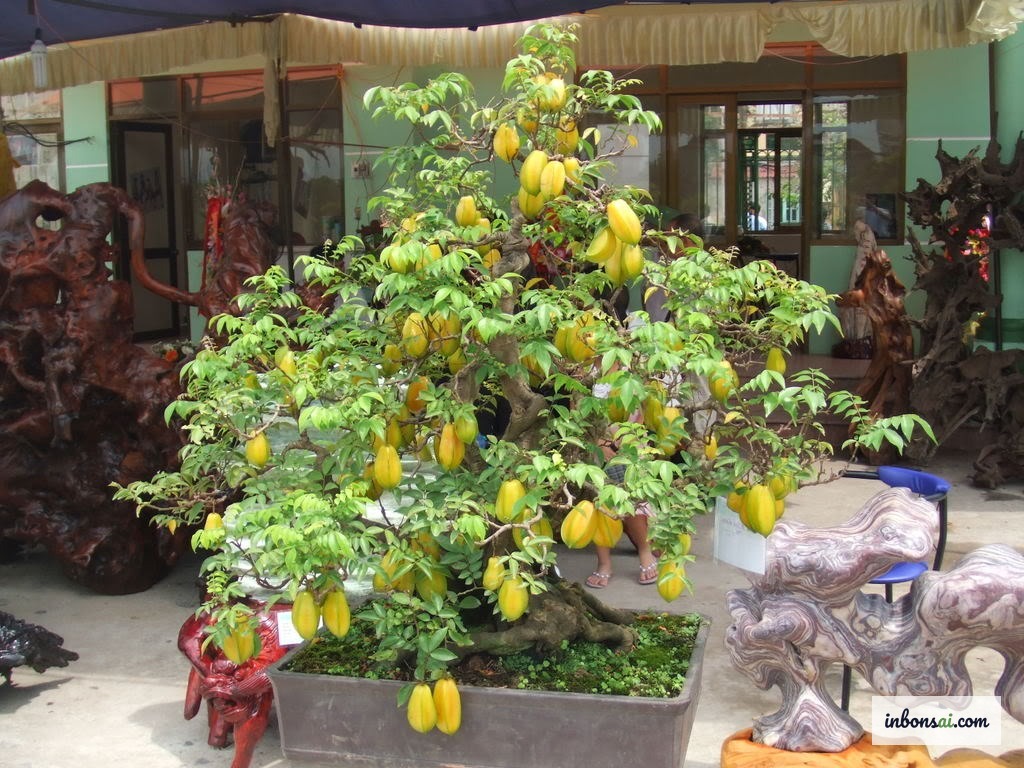
Starfruit Bonsai Mini: Feng Shui Meaning and Care Guide
Syzygium Myrtifolium Bonsai: Complete Care Guide
Ficus Religiosa Bonsai: Spiritual Meaning and Care Guide
Murraya Bonsai: Complete Growing and Care Guide
Ficus Racemosa Bonsai: Feng Shui Meaning & Care Guide