Plumeria Bonsai: How to Grow and Care at Home

InBonsai Team
March 31, 2026 · 9 min read
Looking for a bonsai that combines stunning form with intoxicating fragrance? Plumeria bonsai is the answer that more and more bonsai enthusiasts are falling in love with. With its uniquely swollen, water-storing trunk, gorgeous five-petaled flowers in white, pink, yellow, or red, and an easygoing nature that suits tropical climates perfectly, plumeria bonsai is fast becoming a star in the world of miniature trees. This guide walks you through how to grow and care for plumeria bonsai at home — from selecting a healthy plant and mixing the right soil to watering, fertilizing, shaping, and propagating from cuttings.
What Is Plumeria Bonsai?
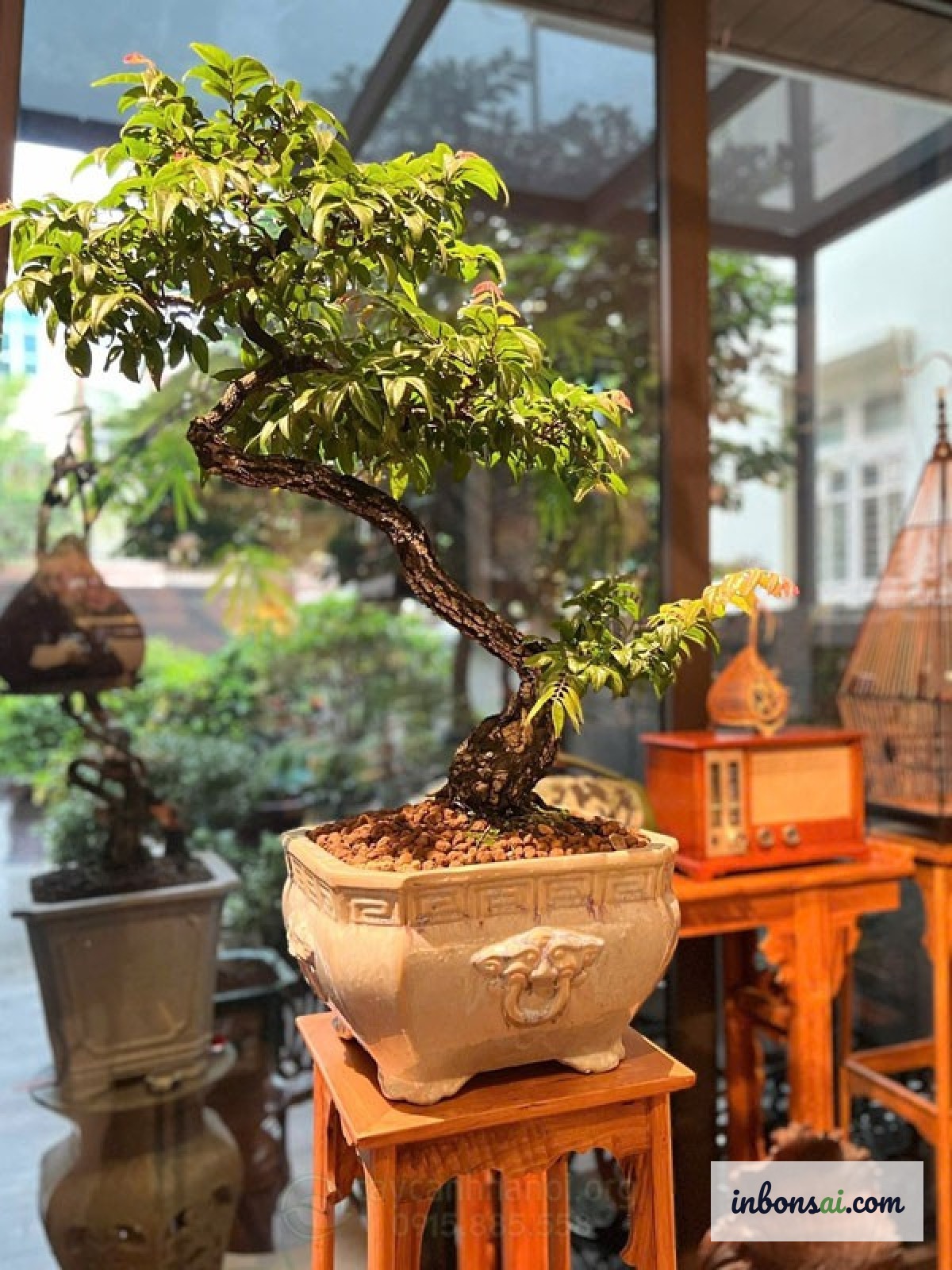
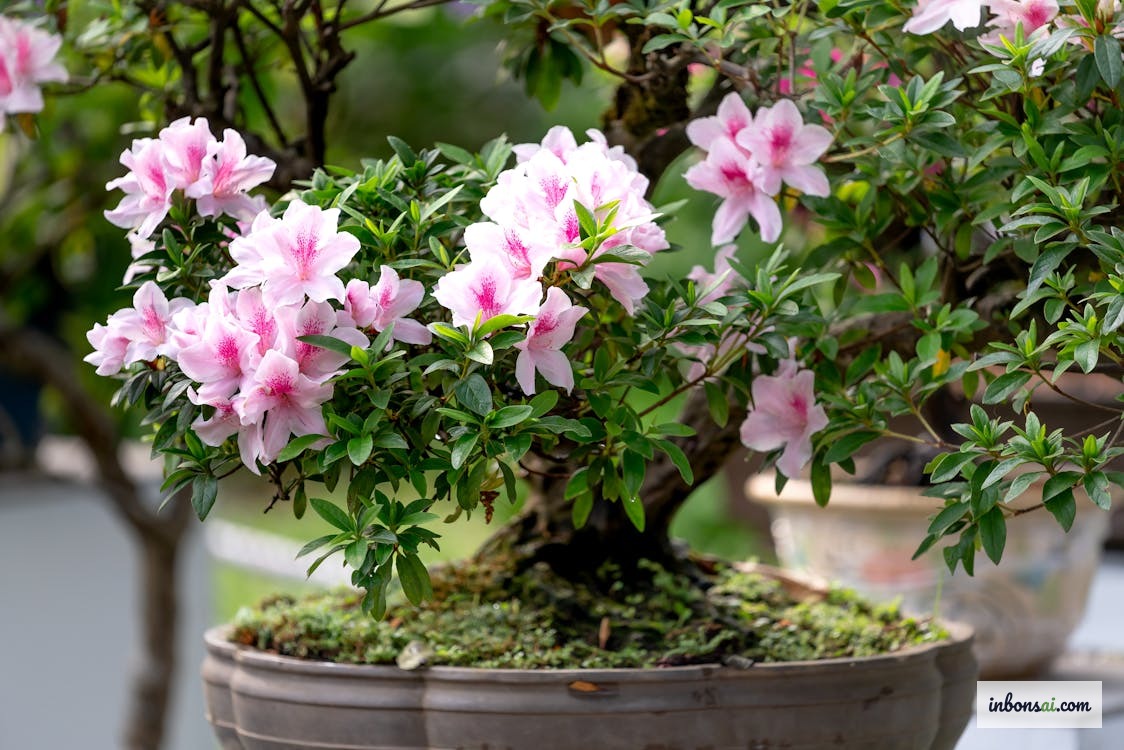
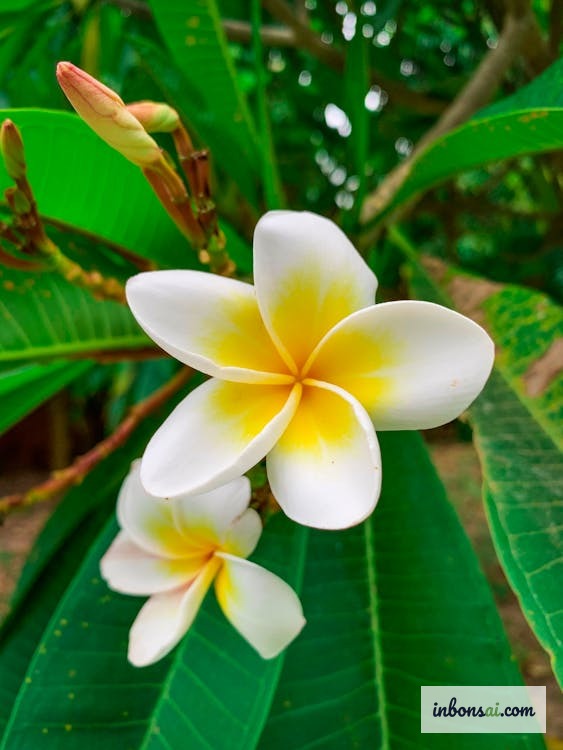
Plumeria bonsai is the miniature-tree art form applied to Plumeria spp. (family Apocynaceae), a genus of tropical trees native to Central and South America, now grown across the tropics worldwide. In Buddhist and Hindu cultures, plumeria flowers carry sacred meaning — symbolizing immortality, devotion, and purity.
What makes plumeria ideal for bonsai is its semi-succulent nature: the thick branches and trunk store water and nutrients, making the plant forgiving of occasional missed waterings. As years pass in a restricted pot, the trunk gradually thickens and develops natural fissures that give the tree a centuries-old appearance in just a few seasons. And unlike most bonsai species, plumeria rewards patient growers with spectacular clusters of intensely fragrant blooms each summer.
Today, plumeria bonsai is especially popular in Vietnam’s southern provinces, where the hot, humid climate mirrors the plant’s tropical origins perfectly. Beyond its aesthetic appeal, many growers also value plumeria as a feng shui tree associated with peace and prosperity.
How to Choose a Healthy Plumeria Bonsai
The quality of your starting plant determines 50% of your success. Whether buying from a nursery, market, or online store, check these criteria carefully:
Inspect the trunk and base: The trunk should be firm and turgid with no soft, mushy spots — a sure sign of root rot. Natural surface cracking is perfectly normal; black rot or white mold is not. A swollen base with emerging surface roots will produce a more dramatic bonsai silhouette over time.
Check branches and foliage: Branches should feel solid without any fungal growth or pest damage. Bare branches are completely normal during the dormant season — plumeria is deciduous. However, shriveled, blackened branch tips indicate disease.
Ask about history: Cutting-grown plants flower within 2-3 years; seed-grown plants need 5-7 years. Pre-shaped specimens cost more but save years of training work.
Whenever possible, prioritize fragrant varieties (Plumeria rubra, P. obtusa) over scentless types for the full sensory plumeria experience.
Soil Mix and Pot Selection for Plumeria Bonsai
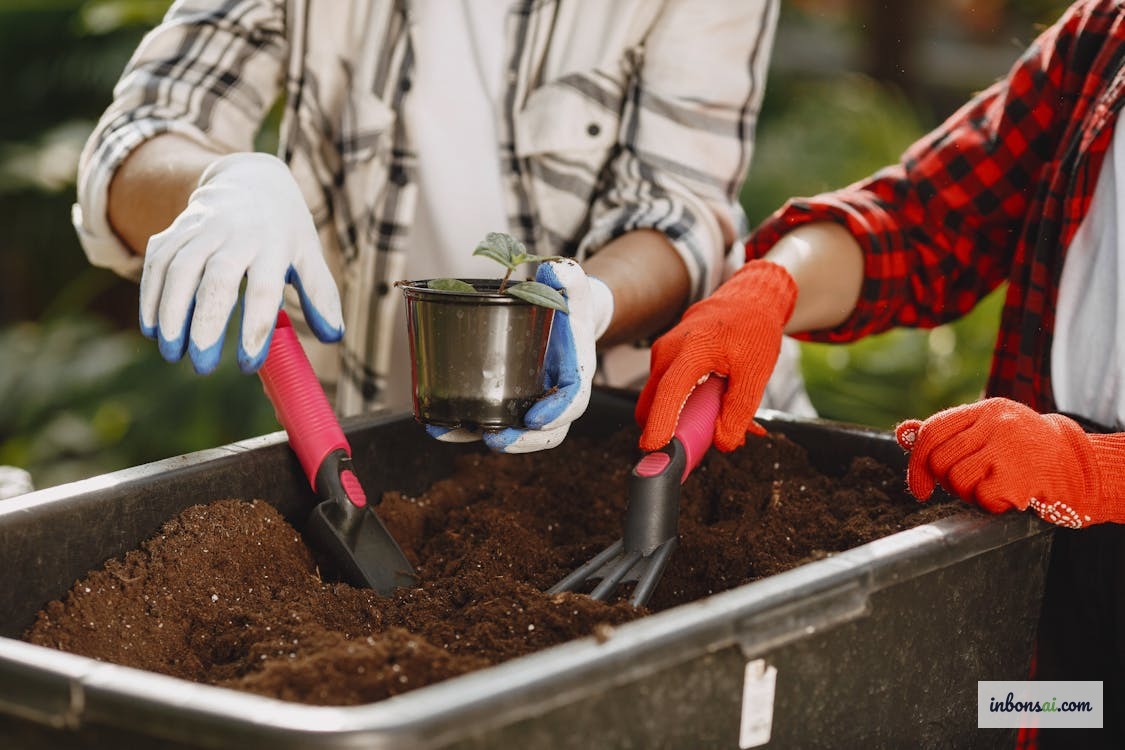
Plumeria is highly sensitive to waterlogged soil — its roots rot quickly in poorly draining media. The soil mix must prioritize rapid drainage and aeration, similar to cactus and succulent mixes.
Recommended soil mix (by volume):
- 40% pumice or perlite — for drainage and aeration
- 30% akadama — retains just enough moisture while providing minerals
- 20% biochar — absorbs toxins, supports beneficial microbes
- 10% worm castings or composted organic matter — baseline nutrients
If specialty materials aren’t available, a simple substitute is 50% commercial bonsai soil + 50% coarse sand or perlite. Never use regular garden soil — its heavy, moisture-retentive texture will cause root rot rapidly.
For more on choosing the right growing medium, see how to choose bonsai soil for each species.
Pot selection: Unglazed terra cotta or coarse ceramic pots with generous drainage holes are ideal — they allow moisture to escape through their walls. Plastic pots work but require more careful watering discipline. Keep pot size moderate; oversized pots hold excess moisture that encourages root rot.
Watering and Fertilizing Plumeria Bonsai
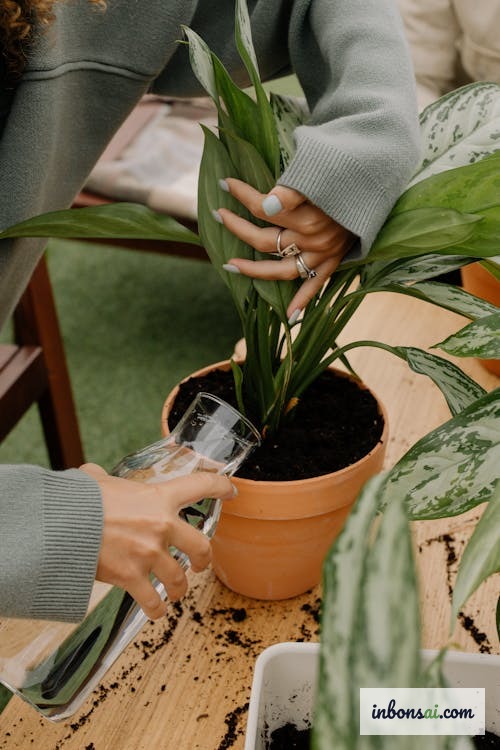
Watering is the most critical — and most common source of failure — in plumeria bonsai care. The golden rule: water deeply but infrequently, and only when the soil is nearly dry.
Seasonal watering schedule:
- Summer (April–September): Active growth; water 2-3 times per week. Test soil by inserting a finger 2-3 cm — water thoroughly when dry, until it drains from the bottom hole.
- Dry season and winter (October–March): Semi-dormancy; reduce to once a week or less. When the tree drops all its leaves, water minimally — just enough to keep the roots from completely drying out.
Fertilizing: Plumeria bonsai responds best to fertilizers high in phosphorus (P) and potassium (K) to encourage flowering, rather than high-nitrogen formulas that push leafy growth at the expense of blooms. Use an NPK ratio like 10-30-10 or a dedicated flowering fertilizer.
- Growing season (April–August): Apply liquid fertilizer twice a month or slow-release organic pellets monthly
- Pre-bloom (March–April): Boost with P- and K-heavy feed to trigger bud set
- Winter dormancy: Stop fertilizing completely when the tree has dropped its leaves
Light and Temperature Requirements for Plumeria Bonsai
Plumeria is a full-sun plant — adequate sunlight is non-negotiable for flowering and healthy growth. Insufficient light is the single most common reason plumeria bonsai fails to bloom despite otherwise good care.
Light requirements: Minimum 6-8 hours of direct sunlight daily. The ideal spot is a south- or southeast-facing balcony or an unshaded garden position. Plumeria kept indoors or in shade typically becomes etiolated (weak and leggy) and rarely or never flowers.
Temperature: Plumeria thrives at 18–35°C, perfectly aligned with Vietnam’s tropical climate. When temperatures drop below 10°C (mainly in northern Vietnam during winter), the tree drops its leaves and enters dormancy. This is natural — simply reduce watering and stop fertilizing until warmer weather returns.
Note for southern Vietnam growers: The climate of Ho Chi Minh City and surrounding provinces is ideal for plumeria — trees can retain leaves year-round and produce multiple flowering flushes if properly fed and watered.
Shaping and Pruning Plumeria Bonsai
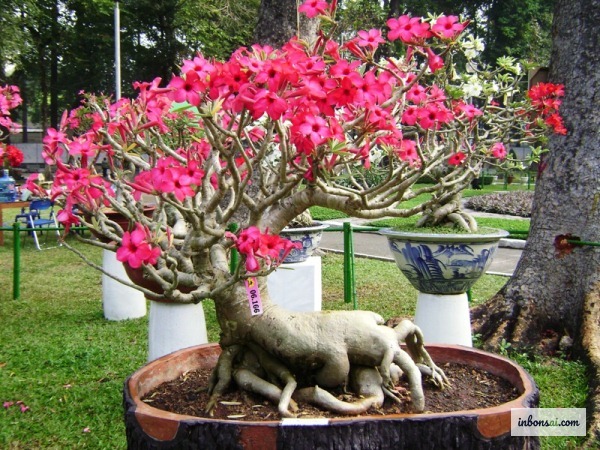
Shaping transforms a plain plumeria plant into a true bonsai masterpiece. Plumeria’s moderate growth rate makes it manageable even for beginners learning bonsai training techniques.
Best time to prune: Late winter to early spring (February–March), as the tree emerges from dormancy and new buds begin to swell. Avoid heavy pruning during flowering or deep winter.
Pruning principles:
- Remove crossing branches, inward-growing branches, and weak shoots
- Build a clear layered branch structure with good airflow
- Leave at least 2-3 pairs of leaves or buds on each branch when cutting
- Always use sharp, clean bonsai scissors to make crisp cuts that heal quickly
- Seal fresh cuts with lime paste or bonsai wound sealant
Wiring: Plumeria branches are relatively brittle, so wire gradually and gently. Use soft aluminum wire (1-2mm) on young, flexible growth. Remove wire after 3-6 months before it cuts into the bark.
For a complete primer on shaping technique, see the basic bonsai pruning guide before working on your plumeria.
Propagating Plumeria Bonsai from Cuttings
Stem cuttings are the most popular propagation method for plumeria — straightforward, with a high success rate, and cutting-grown trees flower years earlier than seed-grown ones.
Best time to take cuttings: Spring to early summer (March–June), when temperatures are warm and the tree is actively growing.
Step-by-step propagation:
-
Select your cutting: Choose a semi-hardwood stem (not too young, not too woody), 30-45 cm long, cut cleanly with sharp scissors. Avoid stems currently bearing flower buds — flowering diverts energy away from rooting.
-
Dry the cut end: This is the most important step. Place cuttings in a cool, shaded, well-ventilated spot for 3-7 days until the white latex sap dries and a callus forms over the cut. Skipping this step is the leading cause of cuttings rotting before they root.
-
Plant in rooting medium: Dip the dried cut end in IBA rooting hormone powder, then insert into a 50/50 mix of coarse sand and perlite. Do not use high-organic soil at this stage.
-
Aftercare: Position in bright indirect light, water very sparingly — just enough to keep the surface slightly moist. After 4-8 weeks, new leaf emergence indicates successful rooting.
For other propagation techniques, see the bonsai air layering guide for high success rates.
Common Problems and Solutions
Plumeria bonsai is relatively trouble-free with proper care, but watch for these common issues:
Root and stem rot is the most dangerous problem, caused by overwatering or poor drainage. Symptoms: soft, dark-colored base, sudden leaf drop. Treatment: remove from pot, cut away all rotted tissue, let dry for 1-2 days, then replant in fresh, well-draining soil. If the trunk is still firm in its healthy sections, recovery is possible.
Frangipani rust (Coleosporium plumeriae) appears as yellow spots on the upper leaf surface and orange powder on the underside. High humidity and poor air circulation are the main triggers. Treatment: remove affected leaves, spray with copper-based or sulfur fungicide, improve airflow around the tree.
Aphids and spider mites tend to appear during hot, dry periods. Check the undersides of leaves regularly. Knock off pests with a strong water spray or apply diluted neem oil as a preventive.
Failure to bloom is common and usually caused by insufficient sunlight, excess nitrogen fertilizer, or an immature tree. Solution: move to a sunnier spot, switch to a low-nitrogen, high-P/K fertilizer, and be patient.
Plumeria bonsai offers one of the most rewarding experiences in the bonsai world — beautiful form, intoxicating fragrance, and a surprisingly forgiving temperament. If you’re exploring how to care for mini bonsai at home as a beginner, plumeria is one of the ideal species to start your bonsai journey. Give it full sun, water wisely, and stay patient — the reward of fragrant blooms you’ve nurtured yourself is well worth every moment.
Related Posts
Plumeria Bonsai: How to Grow and Care at Home
Syzygium Myrtifolium Bonsai: Complete Care Guide
Pemphis Acidula Bonsai Mini: How to Grow and Care
Murraya Bonsai: Complete Growing and Care Guide
Fukien Tea Bonsai: Complete Care Guide at Home
Mai Chieu Thuy Bonsai: Complete Growing & Care Guide
Kumquat Bonsai for Tet: Complete Growing & Care Guide