Mai Chieu Thuy Bonsai: Complete Growing & Care Guide

InBonsai Team
March 21, 2026 · 11 min read
If you’re looking for a mai chieu thuy bonsai mini that is easy to care for, continuously fragrant, and blooms nearly year-round, this guide is exactly what you need. Mai chieu thuy (Wrightia religiosa) — also known as the sacred Buddhist bonsai — has long captivated Vietnamese bonsai enthusiasts with its clusters of pure white star-shaped flowers, gentle sweet fragrance, and remarkable adaptability to indoor conditions. This article walks you through everything from planting to care, shaping, and the techniques to force this beautiful tree into bloom.
What Is Mai Chieu Thuy? Characteristics and Distinctive Beauty
Mai chieu thuy, scientific name Wrightia religiosa, belongs to the Apocynaceae (dogbane) family, native to tropical Southeast Asia including Thailand, Cambodia, Vietnam, and Malaysia. The name “chiếu thủy” (reflecting water) comes from the characteristic of its drooping flowers appearing to gaze into a water’s surface — a poetic image treasured in traditional bonsai art.
What makes mai chieu thuy ideal for indoor bonsai is its pure white star-shaped flowers, approximately 2–3 cm in diameter, growing in cascading clusters from branch tips. Each bloom has 5 delicate petals that release a soft, pleasant fragrance — especially noticeable in early morning and evening. Unlike many bonsai species that only flower seasonally, mai chieu thuy can bloom nearly year-round with proper care.
The leaves are small, glossy, and elliptical in shape, dark green and well-proportioned for bonsai’s miniaturized aesthetic. The trunk develops grey-brown bark with light cracks as it ages, creating the characteristic antiquity of the bonsai art form. Compared to weeping fig bonsai, mai chieu thuy holds the distinct advantage of producing flowers and fragrance — something few indoor bonsai species can offer.
Common sizes for mai chieu thuy bonsai mini range from 15 to 50 cm, perfect for placing on a work desk, bookshelf, or small balcony. With proper care, these trees can thrive for decades.
Feng Shui Significance of Mai Chieu Thuy Bonsai
In feng shui and Buddhist traditions across Southeast Asia, Wrightia religiosa carries special sacred meaning. Its scientific epithet religiosa reflects the tree’s centuries-long presence in Thai and Cambodian temples and shrines.
Purity and Peace: The pure white flowers symbolize clarity, purity, and mental peace. Placing a mai chieu thuy bonsai in a meditation space, reading room, or workspace is said to promote mental focus and reduce stress.
Prosperity and Growth: Flowers that continuously bloom, fall, and bloom again represent the unceasing cycle of wealth — money comes, goes, and returns in greater abundance. Many business owners prefer this species for reception desks or executive offices.
Wood Element, ideal for Water and Wood signs: Like most green plants, mai chieu thuy belongs to the Wood element in feng shui. It particularly benefits people of the Water and Wood signs according to the five-element theory. For personalized bonsai recommendations based on your birth year, explore our feng shui bonsai by age guide.
How to Grow Mai Chieu Thuy Bonsai Mini from Scratch
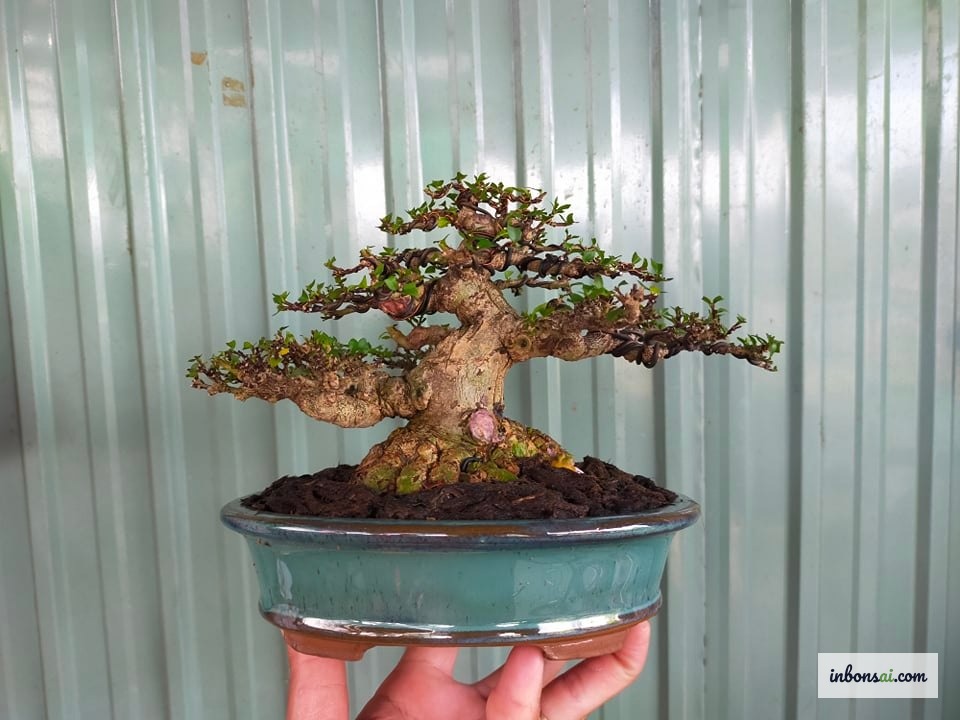
There are two common ways to start with mai chieu thuy bonsai mini: buying a pre-trained specimen or propagating from cuttings. The latter takes more time but offers far greater satisfaction as you watch your creation develop from a small stem.
Propagating by Stem Cuttings
Stem cutting propagation is the most popular method with the highest success rate. Select a semi-hardwood cutting (not too young, not too old) about 10–15 cm long, cut at a 45° angle just below a leaf node. Dip the cut end in rooting hormone powder (IBA), then insert into a 1:1 mixture of coarse sand and rice husk charcoal. Maintain high humidity by covering with a plastic bag or placing in a mini greenhouse. After 3–5 weeks, roots will emerge and you can transfer the cutting to a bonsai pot.
Choosing Pots and Preparing Soil
A bonsai pot for mai chieu thuy should be shallow and wide — depth equal to about two-thirds of the trunk’s diameter, balancing aesthetics with good drainage. A Japanese ceramic pot in brown or moss green beautifully complements the white flowers.
Ideal soil mix for mai chieu thuy bonsai:
- Akadama: 40% (moisture retention, aeration)
- Pumice or Perlite: 30% (fast drainage, prevents root rot)
- Loam or standard potting soil: 30% (baseline nutrition)
This mixture creates an ideal root environment: moist enough but never waterlogged, aerated enough for roots to breathe. For a broader overview of bonsai mini care fundamentals, see our indoor bonsai mini care guide.
Repotting Process
Repotting mai chieu thuy should be done in early spring (February–March) when the tree begins sending out new shoots. Gently remove the tree from its pot, trim away one-third of old roots with clean, sharp bonsai scissors, lay a mesh screen over drainage holes, add a layer of large-grain Akadama, position the tree slightly off-center following the golden ratio, then fill with soil mixture around the roots, firming gently. Water thoroughly immediately after repotting and keep in shade for 1–2 weeks to allow recovery.
Proper Mai Chieu Thuy Care Techniques
Mai chieu thuy is a strong sun-lover — this is the single most important factor for the tree’s vitality and bloom production. Position the tree where it receives at least 4–6 hours of direct sunlight daily: an east- or southeast-facing balcony, or a large south-facing window, are ideal locations.
Indoors, if natural light is insufficient, supplement with a full-spectrum grow light (3000K–6500K) running 12–14 hours per day. This is an effective solution for apartments with limited natural light.
Temperature and Humidity: Mai chieu thuy prefers warm climates, ideally 20–35°C. The tree cannot tolerate temperatures below 10°C — in northern regions, bring it indoors during winter. Maintain air humidity at 50–70%; if air is too dry (common when running air conditioning), mist the leaves lightly in the morning or place a water tray beneath the pot.
Watering and Fertilizing Mai Chieu Thuy
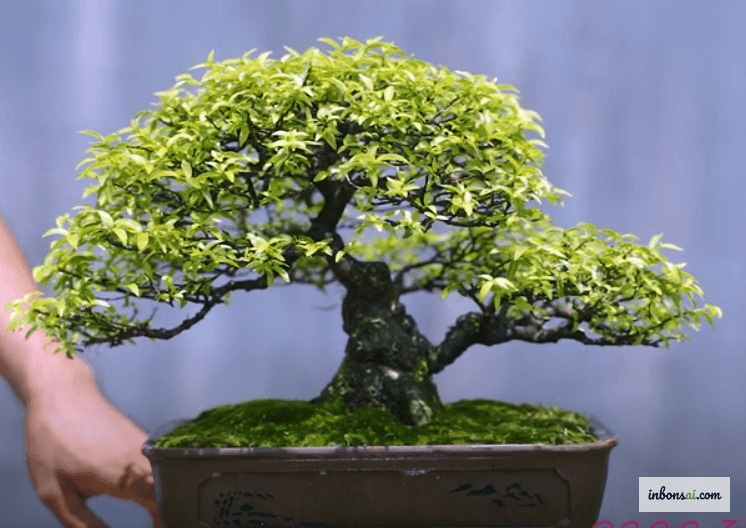
Proper watering is one of the most fundamental skills in caring for mai chieu thuy bonsai. The golden rule: water when the top 1–2 cm of soil is dry, water thoroughly once, allow to drain completely before watering again. Never keep the soil continuously wet — this is the leading cause of root rot.
Watering frequency: in summer (hot climate, fast drainage) water daily or every other day; in winter every 2–3 days. Use a small-spout watering can, watering slowly and evenly across the soil surface so water penetrates all the way to the bottom of the pot. For comprehensive watering technique principles applicable to all bonsai species, see our bonsai watering guide.
Fertilizing: Mai chieu thuy needs adequate nutrition to bloom continuously. Suggested fertilizing schedule:
- Growing season (March–September): Apply balanced NPK fertilizer (10-10-10 or 15-15-15) every 2 weeks, or slow-release fertilizer once monthly.
- Before forcing bloom (3–4 weeks prior): Switch to high-phosphorus, high-potassium fertilizer (low N, high P-K, such as 6-30-30) to stimulate bud formation.
- Winter: Reduce fertilizing to once monthly or stop entirely.
Organic biofertilizer (composted oil cake, worm castings) applied once monthly improves long-term soil structure and microbial activity — highly beneficial for overall tree health.
Shaping and Pruning Techniques for Mai Chieu Thuy Bonsai
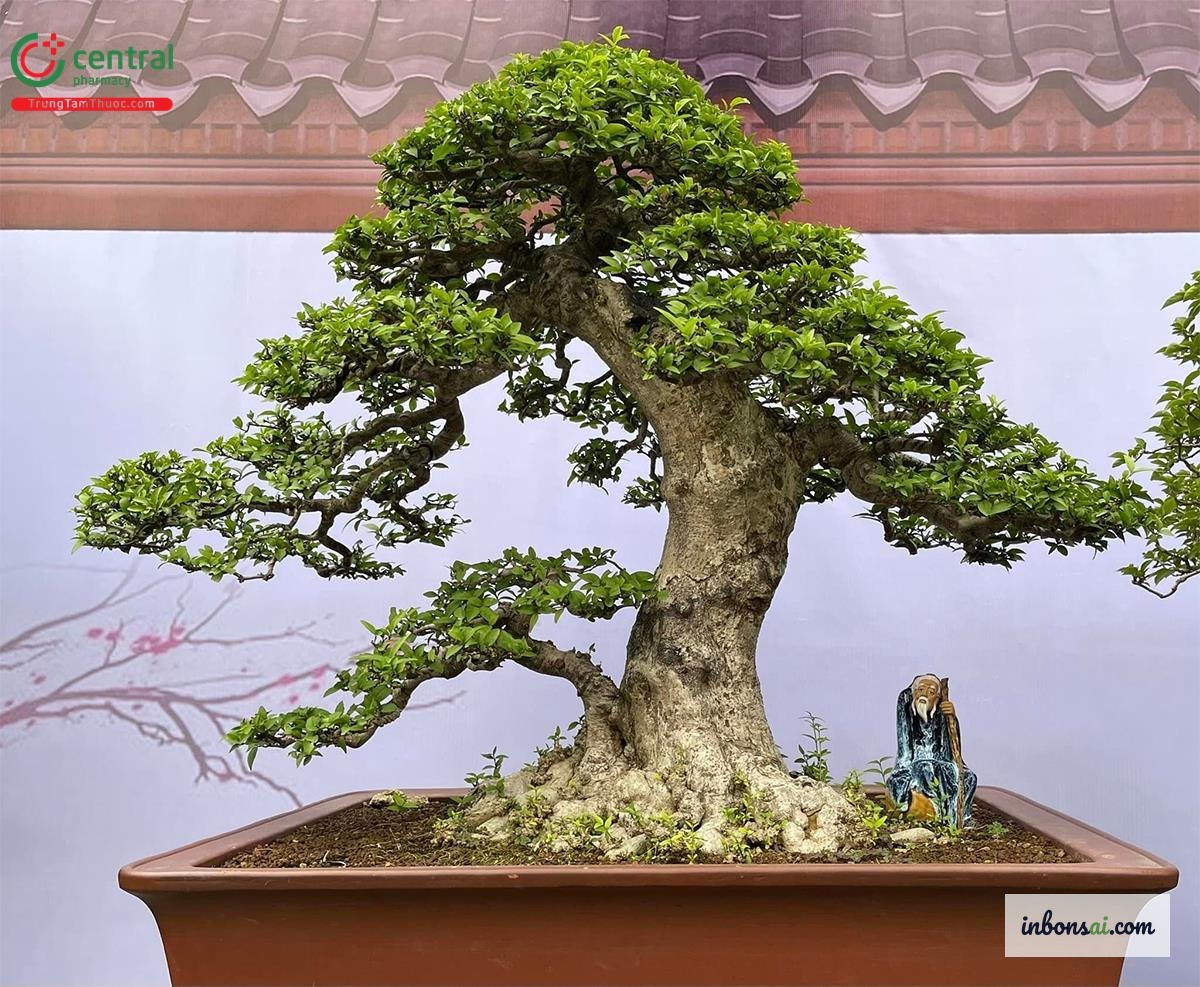
Mai chieu thuy is an excellent species for training — the trunk is flexible when young, easily shaped with copper or aluminum bonsai wire. The most popular styles for mai chieu thuy include:
- Formal Upright (Chokkan): Straight, commanding trunk with balanced branch spread — suitable for formal office settings.
- Informal Upright (Moyogi): Trunk with natural S-curve undulation — the most popular and widely loved style among Vietnamese bonsai enthusiasts.
- Slanting (Shakan): Trunk angled 15–45 degrees, creating a dynamic, natural feel.
- Cascade (Kengai): Branches drooping below the pot rim — perfectly complements mai chieu thuy’s naturally cascading flowers.
When and How to Prune
Regular maintenance pruning should be performed immediately after each flowering cycle ends — typically removing branches that have grown too long, inward-growing branches, and crossing branches. Use sharp bonsai scissors to cut cleanly at a leaf node, leaving no stub that might rot. Mai chieu thuy buds vigorously from cut points — a significant advantage for building dense ramification.
Wire training is best done in early spring when branches are still flexible. Wrap wire at a 45° angle following the branch direction, bending gradually to avoid breakage. After 3–6 months when the branch has set its shape, remove the wire to prevent it cutting into the bark. Note that older mai chieu thuy trunks become relatively brittle — bend carefully and never force.
The Secret to Forcing Mai Chieu Thuy into Bloom
This is the technique most frequently searched for regarding mai chieu thuy — and what separates a tree with just green leaves from one continuously bursting with white flowers.
Artificial drought stress technique: Reduce watering frequency to once every 5–7 days for 2–3 weeks, allowing the soil to dry out more than usual. When leaves begin to slightly soften (but before wilting severely), resume normal heavy watering. Within 1–2 weeks, the tree will respond by producing flower buds en masse.
Defoliation: Remove 30–50% of the older leaves on the tree, combined with high P-K fertilizer application (6-30-30 formula). After 2–3 weeks, new leaves and flower buds emerge simultaneously — creating the most spectacular visual display the tree can offer.
Temperature differential: A day/night temperature difference of approximately 5–10°C stimulates flower production. If the tree is kept in full sun during the day (30–35°C) and moved to a cooler location at night (20–25°C), blooming will increase noticeably.
The best timing for blooming techniques is late dry season (February–March) or early August, so flowers peak during significant occasions such as the Mid-Autumn Festival or Lunar New Year.
Common Pest and Disease Prevention
Mai chieu thuy is relatively resilient, but several common issues deserve attention:
Mealybugs: Appear as white cottony masses at leaf joints and flower bases. Treat by wiping with cotton swabs dipped in 70% isopropyl alcohol, then spray diluted neem oil (0.5%) weekly for 3 weeks.
Spider Mites: Typically attack when air is too dry — identified by small yellow stippling on leaf surfaces and fine webbing on the undersides. Spray with a strong water jet to wash leaves, increase ambient humidity, and use miticide (Abamectin) when necessary.
Root Rot from Overwatering: The most dangerous condition — recognized when the tree suddenly wilts despite wet soil, with leaves turning yellow en masse. Treat by removing the tree from its pot, cutting away all black, rotted roots, soaking remaining roots in diluted Trichoderma solution (0.1%) for 10 minutes, replacing all soil completely, and replanting.
Yellow Leaves: Often caused by iron (Fe) or magnesium (Mg) deficiency — particularly common when tap water high in chlorine is used long-term. Remedy with chelated iron micronutrient fertilizer, or let tap water sit in an open container for 24 hours before using.
General prevention: Inspect the tree weekly, looking carefully at the undersides of leaves — early detection is the key to effective treatment. Ensure good air circulation around the tree; never place it directly against a solid wall. Sterilize pruning scissors with alcohol before and after use to prevent disease transmission between plants.
Mai chieu thuy bonsai mini truly deserves its title as the “queen of indoor flowering bonsai” — beautiful in form, fragrant in character, and rich in spiritual significance. With the knowledge from this guide, you now have everything needed to begin your journey cultivating a truly impressive mai chieu thuy bonsai creation. If you’re new to the world of bonsai and want a broader overview first, our complete beginner’s guide to bonsai will help you build a solid foundation before diving into species-specific techniques.
Related Posts
Mai Chieu Thuy Bonsai: Complete Growing & Care Guide
Murraya Bonsai: Complete Growing and Care Guide
Tamarind Bonsai Mini: Complete Growing Guide
Podocarpus Bonsai Care Guide: Tips for Healthy Growth
Fukien Tea Bonsai: Complete Care Guide at Home
Ficus Bonsai Mini: Feng Shui Meaning and Care Guide
Pomegranate Bonsai Yellow Leaves: Causes & Treatment Guide