Jin Shari Bonsai Technique: Complete Step-by-Step Guide

InBonsai Team
April 19, 2026 · 11 min read
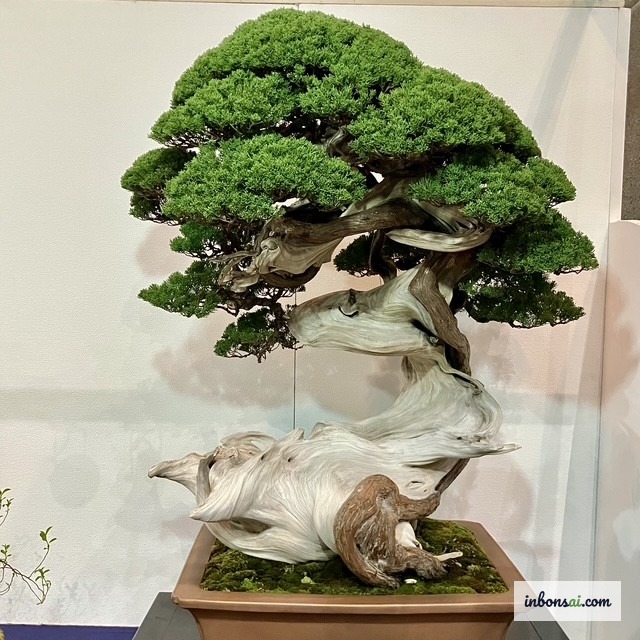
In the world of bonsai, not every dead branch or scar on the trunk is a flaw — sometimes, these “dead” elements create the most striking beauty of the entire composition. The jin shari technique for artistic bonsai transforms dry branches and bark scars into symbols of age, endurance, and raw, primal beauty. Jin refers to a branch stripped of its bark to expose silvery-white wood beneath, while shari is exposed heartwood on the main trunk, evoking ancient trees scarred by lightning strikes or centuries of fierce storms. This guide walks you through each step: selecting the right branch, using the proper tools, and treating and preserving jin shari so that characteristic silvery-white color lasts for years.
What Are Jin and Shari in Bonsai Art?
Jin and shari are two popular deadwood techniques in Japanese bonsai, rooted in observing nature: long-lived trees often develop dry branches, stripped bark, or exposed heartwood through harsh weather conditions.
Jin (神) is a branch or apex from which all bark has been removed, revealing the white wood beneath. These silver-white jin branches create a striking visual contrast against surrounding green foliage — as if the tree has survived brutal conditions and still stands strong. In Japanese, “jin” also carries the meaning of deity or spirit, reflecting the deep philosophical dimension within bonsai art.
Shari (舎利) is an area on the trunk where bark and surface wood have been removed to expose the inner heartwood. Shari typically follows the natural spiral grain of the wood, creating a lightning-strike or wind-carved aesthetic. Unlike jin, which appears at branch ends, shari is an artistic detail carved directly into the main trunk.
Both techniques are used to tell a “story” of age and resilience — particularly suited to wild bonsai styles such as cascade (kengai), literati (bunjin), or multi-trunk forms. You can explore which bonsai styles best complement jin shari in our guide to detailed bonsai styling art.
Essential Tools for Creating Jin and Shari
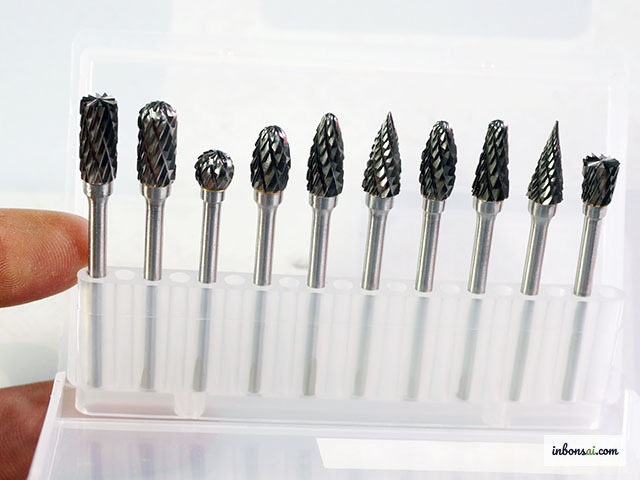
Unlike other bonsai techniques, creating jin shari requires specialized tools and specific preservation chemicals. Having the right equipment from the start makes the entire process smoother and the final result far more refined.
Jin pliers: The single most important tool. Jin pliers have long, narrow jaws with serrated edges that let you peel bark in a controlled, piece-by-piece manner. Never substitute standard pliers — the jaws are too wide and lack the precision needed.
Small chisels and hammer: Used to create shari on the trunk. A set of small wood chisels (3mm to 10mm) lets you carve natural-looking shari lines with depth and dimension.
Mini carving tool (Dremel or equivalent): For larger compositions or deeper texture work, a rotary tool with diamond or grinding bits is invaluable. This is optional equipment — beginners can start entirely with jin pliers and chisels.
Sharp knife: For cutting clean edges through bark before peeling with jin pliers. A grafting knife or dedicated bonsai knife works best.
Soft wire brush: Used to clean the wood surface after peeling and to add natural texture to the jin shari. Brush gently along the wood grain direction.
Lime sulfur: The traditional white preservation solution applied to jin shari after shaping. Lime sulfur bleaches the wood white, kills bacteria, prevents fungal growth, and stops wood rot. It is absolutely indispensable.
You can find a full checklist of essential bonsai tools to prepare before starting your practice.
Creating Jin — The Art of the Dead Branch
Creating jin is the ideal starting point for beginners approaching deadwood techniques. The work is confined to a single branch, making it easier to control and far less risky than shari carved into the main trunk.
Step 1 — Select the right branch: Not every branch should become jin. Good candidates include: branches that don’t contribute to the overall design but are too visually interesting to remove entirely; branches that have died naturally but remain firmly attached to the trunk; or an apex that has been cut to redirect the tree’s height. The ideal branch is at least 5mm in diameter — anything thinner is likely to snap during bark removal.
Step 2 — Make a decisive cut: Use a branch cutter or sharp knife to cut cleanly at the point where you want the jin to begin. Angle the cut slightly rather than cutting straight across — this makes the resulting jin look more natural and avoids an obviously artificial flat end.
Step 3 — Score the bark vertically: Use a sharp knife to score the bark lengthwise in 2–3 cm sections from the branch base to the tip. These score lines allow the bark to peel away much more easily when you apply the jin pliers.
Step 4 — Peel bark with jin pliers: Grip the scored bark strip with jin pliers and twist-pull gently along the wood grain direction. Work one small section at a time — never try to rip a large piece off at once, as this risks snapping the branch. The goal is fully exposing the white wood beneath in a clean, even manner.
Step 5 — Add natural texture: Once all bark is removed, use the jin pliers to grip and twist along the wood grain, creating natural-looking cracks and splits that mimic weathered, sun-bleached wood. A soft wire brush dragged gently along the grain adds even more depth and character.
Step 6 — Shape the jin while wet: While the branch is still fresh (before it hardens), you can wire it with aluminum or copper wire to bend the jin into your desired form — a slight twist, drooping curve, or upward reach. Remember to remove the wire after 2–3 months.
Creating Shari — Artistic Scarring on the Trunk
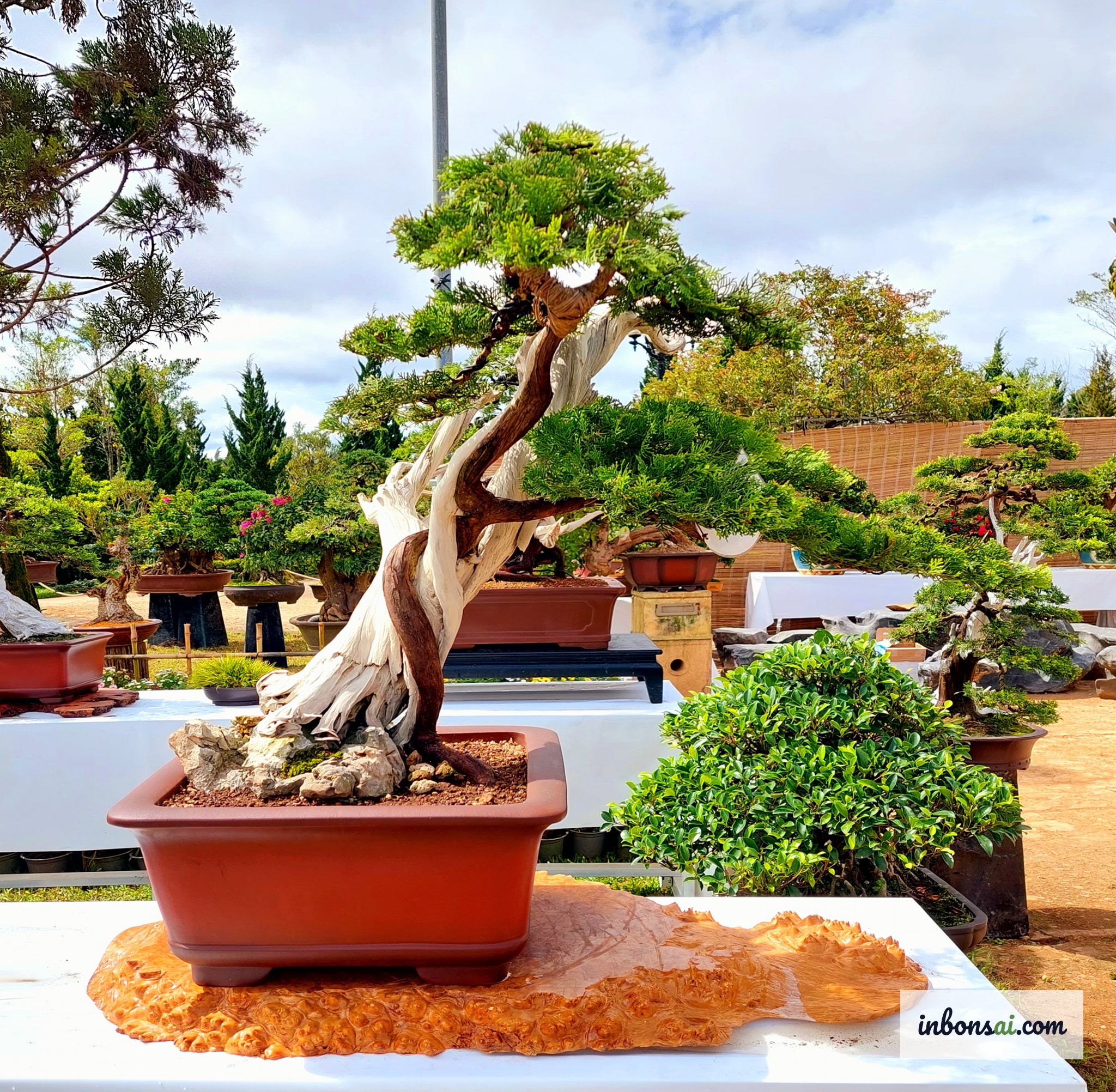
Shari is more complex than jin and demands careful planning, since the work is done directly on the main trunk. Mistakes can seriously compromise the tree’s health if too much of the vascular tissue is removed.
The “one-third” rule: This is the most important rule when creating shari. Never let shari occupy more than one-third of the trunk’s circumference at any given point. The remaining bark must still be sufficient to carry water and nutrients from the roots to the canopy and back.
Plan before you cut: Use a brush pen or chalk to sketch the shari outline directly onto the trunk before making any cuts. The most natural-looking shari follows the tree’s existing grain spiral rather than running in a straight line. Study the wood grain carefully and let it guide your design.
Cut the boundary lines: Use a sharp knife to cut two clean boundary lines defining the shari edge before doing anything else. These cuts must be deep and decisive, leaving no ragged bark edges. The depth should penetrate through bark without cutting into the soft inner heartwood.
Remove bark and add texture: Use small chisels and a hammer to remove bark within the shari area. Then use a rotary tool or chisel to add deeper texture — natural-looking ruts, cracks, and channels following the wood grain, evoking wind erosion or a lightning scar.
Protect the live bark edges: Once the shari is complete, apply bonsai sealant or petroleum jelly along all live bark edges to protect them from drying out or fungal infection during the tree’s recovery period.
Treating and Preserving Jin Shari with Lime Sulfur
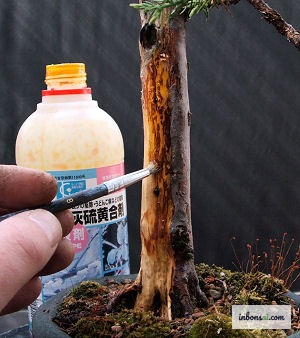
This step determines both the color and longevity of your jin shari. Lime sulfur is the traditional solution used by Japanese bonsai masters for centuries to treat and preserve deadwood.
Mixing lime sulfur: Lime sulfur is typically sold as a concentrate. Dilute with water at a 1:10 ratio (1 part lime sulfur to 10 parts water) for the first application. Subsequent applications can be stronger (1:5) for a more intense white finish. Always wear gloves and a mask when working with lime sulfur — the smell is strong (hydrogen sulfide, H₂S, like rotten eggs).
Timing the first application: Wait at least 2–3 weeks after creating jin shari before applying lime sulfur. Applying it to damp wood results in uneven penetration and increases the risk of mold.
Apply evenly in multiple coats: Use a soft brush to apply lime sulfur across the entire jin shari surface. Work slowly and evenly, making sure the solution penetrates into every crack and groove. Once the first coat dries (approximately one hour in direct sunlight), apply 2–3 additional coats.
Maintenance schedule: Lime sulfur needs to be reapplied every 6–12 months, depending on exposure to rain and sun. Fading white color is the signal that retreatment is needed. Before the rainy season is an ideal time to refresh the treatment on all jin shari.
One critical caution: never brush lime sulfur onto living bark. The acidic solution can burn and kill bark tissue. Carefully tape off all live bark areas before applying.
Suitable Bonsai Species for Jin Shari
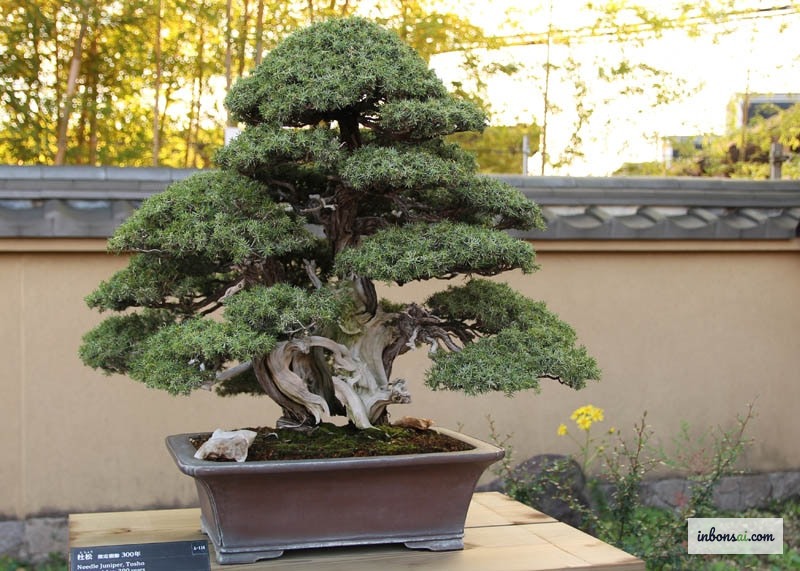
Not every tree species is appropriate for jin shari. Species with dense, beautiful wood grain and good wound-healing capacity are the ideal candidates.
Juniper (Juniperus spp.): The most popular species for jin shari in Japanese bonsai. Juniper wood has a naturally spiraling grain that bleaches to an impressive silver-white with lime sulfur treatment. Junipers also grow slowly, well-suited to the ancient-tree aesthetic that jin shari creates.
Podocarpus (Buddhist pine): Common in Vietnam, with dense and attractive wood. Exercise more caution with shari technique, as the bark is thinner than on Japanese juniper species.
Thuja (arborvitae) and Cypress: Lighter wood with beautiful grain. Jin and shari on these species tend toward a warm amber-brown tone rather than the brilliant white of juniper.
Ficus (Ficus microcarpa) and related species: Although popular in Vietnam, ficus is not the ideal choice for jin shari as the wood is soft and prone to rot. If you do attempt it, lime sulfur retreatment is needed more frequently.
Hackberry (Celtis sinensis): Dense wood with good recovery capacity, suitable for trying smaller-scale shari work.
One principle applies to all species: the tree must be in excellent health before you attempt jin shari. Never create deadwood on a sick tree, a recently repotted tree, or a tree under stress. See our guide to basic bonsai branch pruning to understand when your tree is ready to handle significant intervention.
Common Mistakes When Creating Jin Shari
Jin shari may look straightforward, but beginners commonly make errors that damage both the artwork and the tree’s health.
Mistake 1 — Shari too wide: This is the most serious error. The aesthetic pull of deadwood can tempt you to expand the shari beyond safe limits, cutting through the main vascular pathways. The result is foliage above the shari dying from lack of water and nutrients. Always respect the “no more than one-third of trunk circumference” rule.
Mistake 2 — Wrong season: The best time to create jin shari is late winter or early spring (February–March), when the tree is dormant or just beginning to wake up. Working in peak summer heat or when the tree is flowering or fruiting stresses the tree severely and slows recovery.
Mistake 3 — Skipping live bark edge protection: After creating shari, unprotected live bark edges will gradually dry out and die, expanding the deadwood area beyond your intentions. Always apply bonsai sealant or petroleum jelly to all live bark edges immediately after finishing.
Mistake 4 — Lime sulfur on live bark: Even one accidental brush stroke can create an irreversible burn on living bark tissue. Tape off carefully and rinse immediately if any lime sulfur contacts live bark.
Mistake 5 — Jin that looks artificial: Jin with perfectly straight edges, too-flat ends, or unnatural uniformity breaks the illusion of aged, weathered wood. Study photographs of jin on old trees in nature and recreate that randomness — irregular breaks, spiral twists, uneven splits.
Making mistakes isn’t the end of the world — jin shari is an art that demands long-term practice and observation. Begin with smaller branches and practice trees before attempting anything on the main trunk of a prized specimen.
Related Posts
Jin Shari Bonsai Technique: Complete Step-by-Step Guide
How to Grow Natural Moss on Your Bonsai Pot
Cascade Bonsai Style: A Beginner's Complete Guide
Bonsai Grafting Techniques for Beginners
Bonsai Root Over Rock: Complete Ishitsuki Guide
Air Layering Bonsai: Achieve a High Success Rate
Nebari Bonsai Technique: How to Develop Beautiful Surface Roots