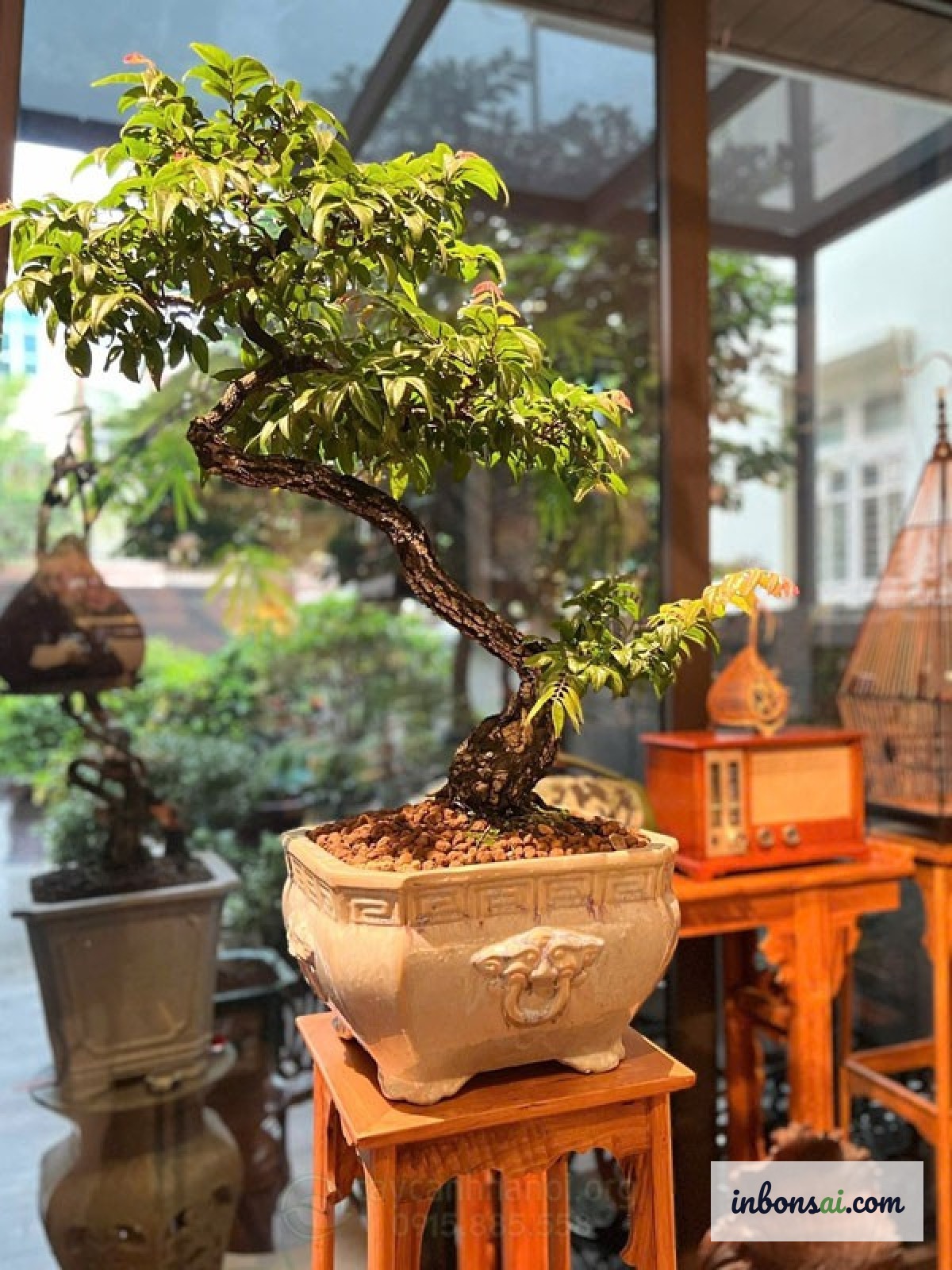
Ficus Racemosa Bonsai: Feng Shui Meaning & Care Guide

InBonsai Team
March 23, 2026 · 9 min read
In Vietnamese culture, the cluster fig tree (sung) has long symbolized abundance, prosperity, and good fortune. As a Ficus racemosa mini bonsai, this remarkable tree combines deep feng shui significance with living artistry that fits beautifully in modern spaces. This guide will help you understand the feng shui value of cluster fig bonsai, how to select a healthy specimen, and the complete care techniques to keep your tree thriving and fruiting year-round.
What Is Ficus Racemosa Bonsai? Key Identifying Features
The cluster fig, Ficus racemosa (also known as Ficus glomerata), belongs to the Moraceae family — the same family as banyan, weeping fig, and rubber tree. This tropical species is native across Southeast Asia, South Asia, and northern Australia, thriving naturally in the hot, humid climate of Vietnam.
The most distinctive feature of the cluster fig is its cauliflory — the tree produces fruit directly on its trunk and main branches, not just on the tips of small twigs. Clusters of orange-red or purple-red figs appear densely along the trunk, creating an image of extraordinary abundance that no other bonsai species can replicate.
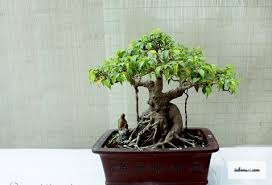
Ficus racemosa mini bonsai typically stands between 20 and 60 cm tall. Trained from cuttings or seedlings, it undergoes years of careful pruning and shaping to achieve a complete miniature form. Even at small scale, the cluster fig bonsai fully expresses the grandeur of a mature tree — with impressive aerial roots, artistic trunk movement, and dense green foliage.
Compared to other Ficus bonsai like weeping fig (benjamina) or retusa, Ficus racemosa has a significant advantage: it fruits earlier and more consistently, even at mini size. This is the primary reason cluster fig bonsai is so popular as a feng shui ornament and meaningful gift.
Feng Shui Meaning of Cluster Fig Bonsai
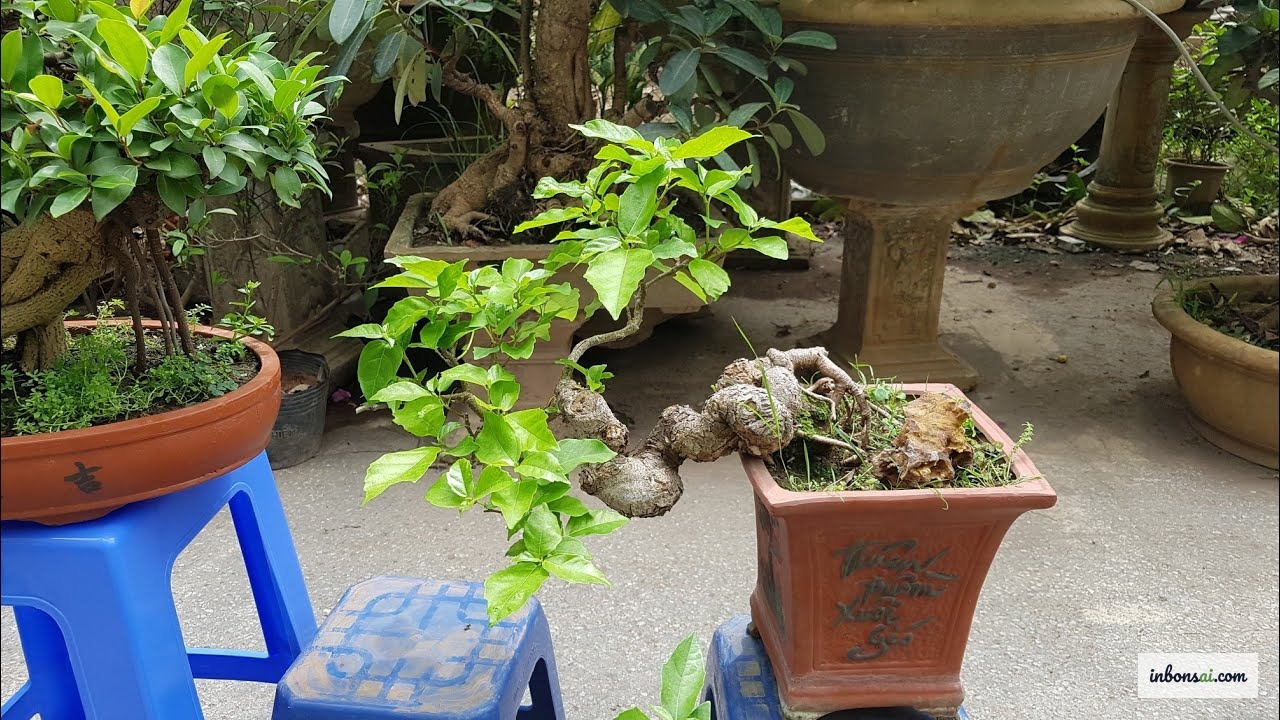
The Vietnamese word sung is a homophone for “sung túc” (affluence), “sung sướng” (happiness), and “sung mãn” (fulfillment) — which is why the cluster fig has been regarded as a symbol of wealth and prosperity in Vietnamese folk tradition for generations.
According to feng shui principles, Ficus racemosa bonsai carries strong yang energy, particularly when the tree is laden with fruit. The dense clusters of red figs along the trunk symbolize overflowing abundance, a large and joyful family, and many descendants. Placing a cluster fig bonsai in your home is believed to:
- Attract wealth and prosperity into living and working spaces
- Boost vital energy (qi) in areas with limited natural light
- Bring good fortune in business and relationships
- Symbolize fertility and family growth, making it ideal as a gift for engagements and business openings
Beyond that, the cluster fig holds spiritual significance in Buddhism and Vietnamese folk religion. In many rural villages, it is planted before ancestral homes or communal halls as a sacred tree.
From a spatial feng shui perspective, compact green plants like mini bonsai help balance the five elements and soften the overwhelming metal and electronic energy typical of modern offices.
How to Choose a Beautiful Ficus Racemosa Mini Bonsai
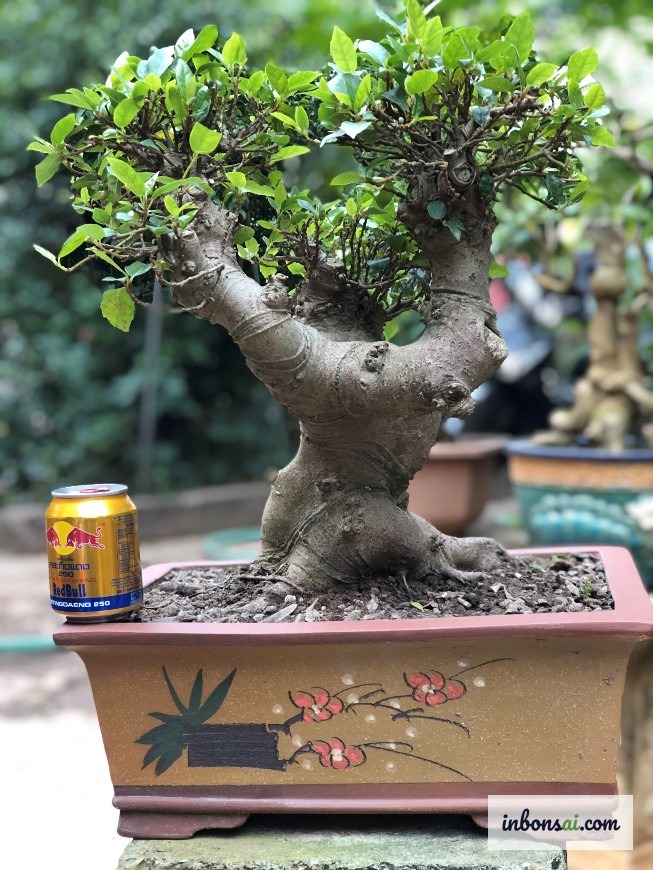
Selecting a healthy, beautiful Ficus racemosa mini bonsai is the most important first step. Here are the key criteria to check before purchasing:
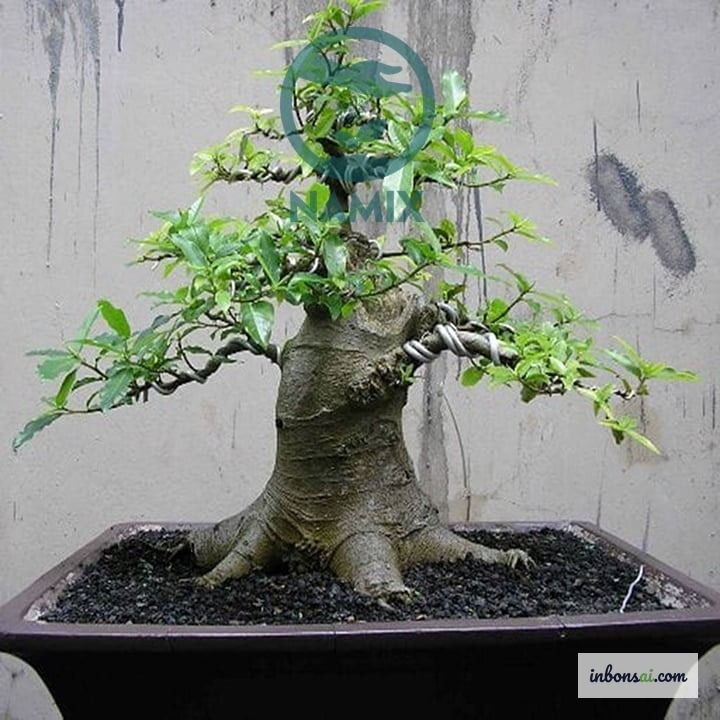
Trunk quality: Look for a trunk with natural roughness and texture — a sign of an older tree. The trunk diameter should be at least 2 cm, with no large unhealed cracks or wounds.
Branch structure: A beautiful bonsai needs a balanced silhouette with branches distributed harmoniously in all directions. Avoid trees with unnaturally twisted branches or no secondary branching.
Leaf condition: Leaves should be uniformly green and glossy, not yellowing or showing black spots. Uniformly small leaves are a good sign — oversized leaves indicate the tree hasn’t been consistently defoliated.
Fruit quality: If buying during fruiting season, choose a tree with even, well-colored fruit clusters. However, don’t prioritize fruit over trunk quality — a beautiful trunk is the lasting value of a bonsai.
Pot selection: Traditional ceramic pots suit cluster fig feng shui bonsai best. Choose a pot with a color that contrasts lightly with the trunk — earthy red, teal, or matte black all work well.
For more guidance on bonsai evaluation criteria, see our beginner’s guide to bonsai.
How to Plant Ficus Racemosa Mini Bonsai
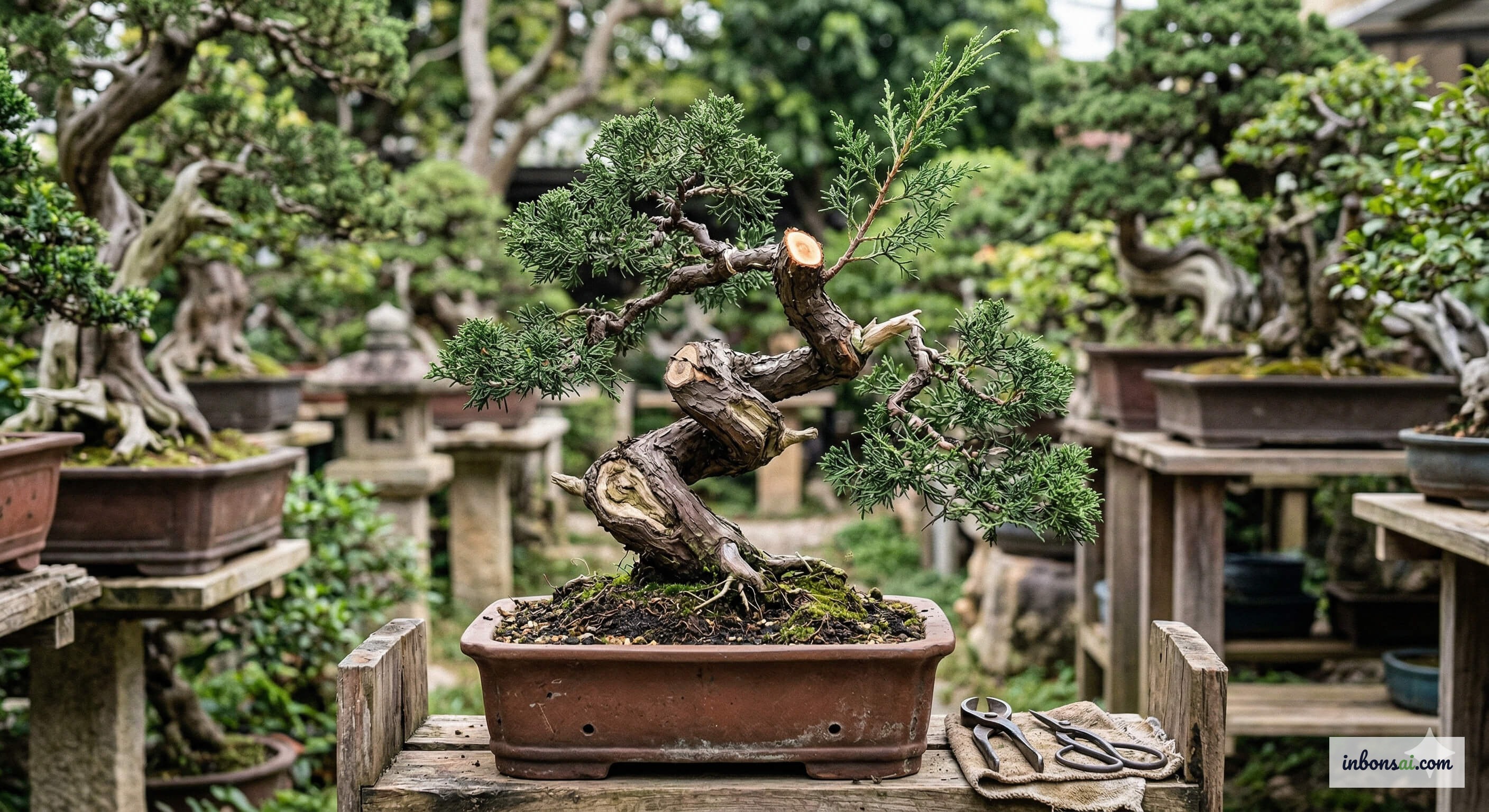
Ficus racemosa is a relatively easy species to grow, adapting well to various substrates. However, to keep your mini bonsai healthy and consistently fruiting, you need the right conditions:
Growing substrate: Cluster fig needs well-draining, aerated soil that still retains adequate moisture. The ideal mix consists of:
- 40% nutrient-rich potting mix (alluvial soil or compost)
- 30% perlite or coarse sand (improve drainage)
- 30% akadama or fired clay (retain moisture and aeration)
Pot selection: Choose a pot with adequate drainage holes. A wide, shallow pot encourages surface root development, creating the impressive nebari (visible root spread) that develops beautifully over time.
Repotting timing: Best done in early spring (February–March) or late autumn (October–November), before the tree enters its fruiting phase. Repot every 2–3 years, depending on root growth rate.
Repotting technique: Gently remove the tree from its old pot, prune older thick roots and hard fibrous roots, retaining fine feeder roots. Rinse off old soil from the roots, then settle the tree into the new pot with fresh prepared substrate.
Daily Care Routine for Cluster Fig Bonsai
Consistency is key. Ficus racemosa mini bonsai is not demanding, but requires these fundamental conditions to be met reliably:
Light: The tree needs at least 4–6 hours of light daily. Position near an east- or south-facing window. If growing indoors without sufficient natural light, supplement with a grow light.
Watering: Water when the top 2–3 cm of soil has dried out. Water thoroughly until water flows from the drainage hole — never let the soil become waterlogged. In summer, daily watering may be needed; reduce to every 2–3 days in winter.
Fertilizing: Apply diluted liquid NPK or organic fertilizer every 2 weeks during the growing season (March–September). Reduce fertilizing in winter when growth slows. Never fertilize a sick tree or one that has just been repotted.
Humidity: Cluster fig enjoys high humidity. During dry seasons, mist the leaves daily or place a water tray near the pot to raise ambient humidity.
For more details on proper bonsai watering technique, see our guide to caring for mini bonsai at home.
Shaping and Styling Ficus Racemosa Mini Bonsai
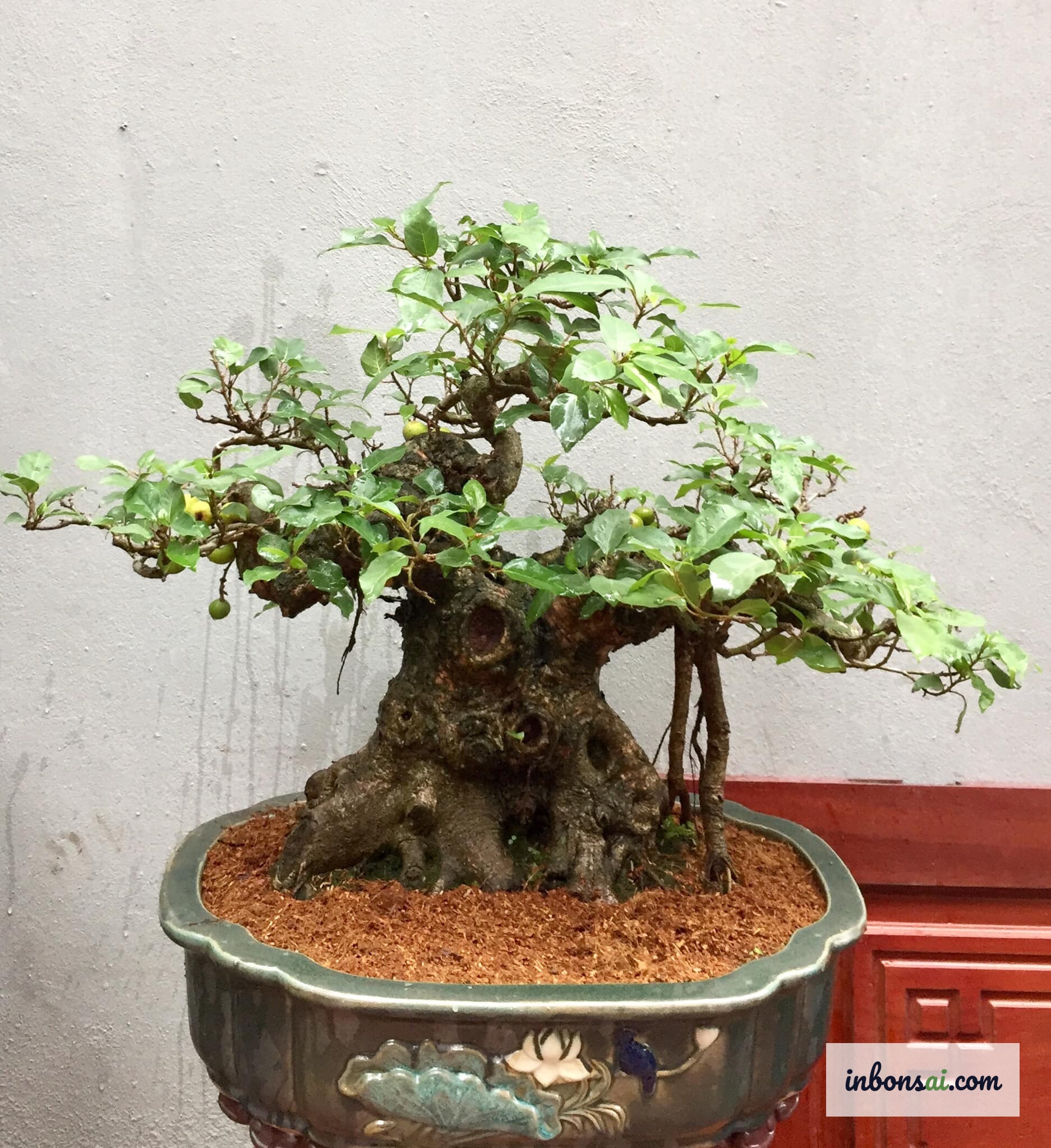
Styling is the most important step in elevating the artistic value of your Ficus racemosa mini bonsai. Done correctly, pruning also stimulates even fruiting and healthier growth overall.
Regular branch pruning: Prune in early spring before new growth surges. Remove water shoots (branches growing straight upward too vigorously), crossing branches, and inward-growing branches. Never remove more than 1/3 of the tree’s total leaf volume in a single pruning.
Defoliation for smaller leaves: Around May–June, you can strip all leaves (defoliation) to stimulate a flush of smaller, denser new growth. This technique should only be applied to completely healthy trees.
Wiring: Use aluminum or copper wire to bend branches while still flexible, typically in spring. Wire gently without sharp bends, and remove after 3–4 months to prevent wire bite into the bark.
Suitable bonsai styles for cluster fig mini: Formal upright (chokkan), slanting (shakkan), and semi-cascade styles all suit the cluster fig. Choose a style that showcases the trunk, allowing the fig clusters that emerge directly from the bark to display beautifully.
Best Feng Shui Placement for Cluster Fig Bonsai
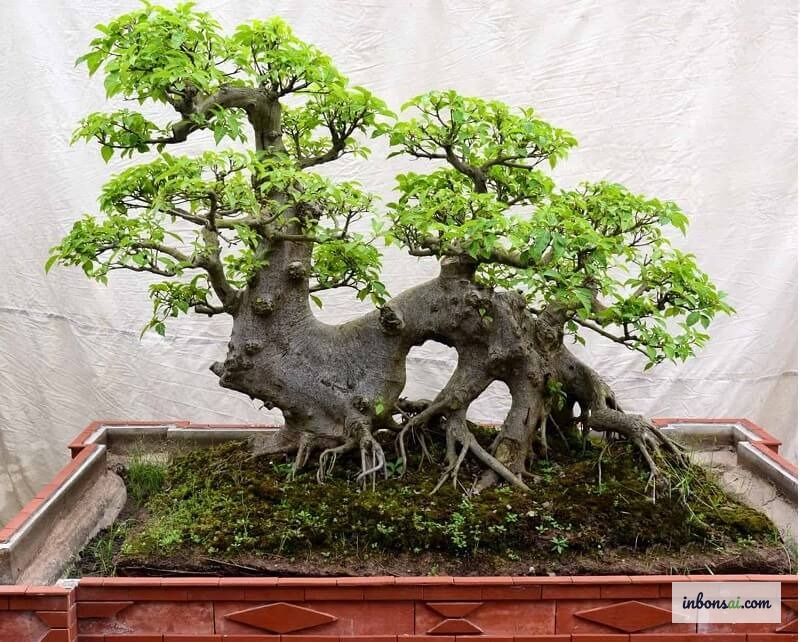
Where you place the tree significantly influences its feng shui value. Here are the placements recommended by feng shui practitioners:
Living room: Place the cluster fig in the southeast corner of the living room — the feng shui direction associated with wealth and prosperity. Position where morning sunlight reaches the tree, benefiting both the plant and enhancing vital energy flow.
Home office: The far left corner from the main door (the “wealth corner” in the Bagua map) is ideal. A cluster fig mini bonsai on the desk carries the wish for smooth work, career advancement, and financial fortune.
Café, shop, or business: Place near the cash register or main entrance to attract customers and prosperity. Many business owners believe a heavily fruiting cluster fig bonsai is an omen of thriving business.
Positions to avoid: Not in the bedroom (plants consume oxygen at night, and strong yang energy may disturb sleep), not under stairs, and not in dark corners lacking light.
For more on choosing the right bonsai species for your feng shui needs, see our article on feng shui bonsai compatible with your birth year.
Treating Common Pests and Diseases
Ficus racemosa mini bonsai is fairly hardy and less prone to disease than many other bonsai species. However, in indoor growing conditions, some issues may arise:
Scale insects: Appear as small brown bumps clinging to branches and leaf undersides. Treat by wiping with 70% isopropyl alcohol, then spray with organic neem oil insecticide.
Spider mites: Leaves appear dull and dusty; close inspection reveals fine webbing on leaf undersides. Blast leaves with water to wash off mites, increase ambient humidity, and spray with diluted insecticidal soap.
Sudden leaf drop: Usually caused by abrupt environmental changes (moving the tree, temperature fluctuations, cold drafts). Cluster fig is very sensitive to environmental shifts — once acclimated to a position, minimize moving it.
Yellowing leaves: May indicate insufficient light, overwatering, or nutrient deficiency. Review your watering schedule and supplement with trace element fertilizer if needed.
The best prevention remains proper care from the start — well-draining soil, adequate light, and disciplined watering. A healthy tree is naturally resistant to most pests and diseases.
Ficus racemosa mini bonsai is a perfect combination of artistic beauty, cultural significance, and feng shui benefit — a worthy choice for any home or workspace. With the detailed guidance above, you can confidently care for and shape your own cluster fig mini bonsai. The key is patience — bonsai is the art of time, and your cluster fig will reward your dedication with vibrant red fruit clusters, an enduring symbol of abundance and fulfillment.
Related Posts
Ficus Racemosa Bonsai: Feng Shui Meaning & Care Guide
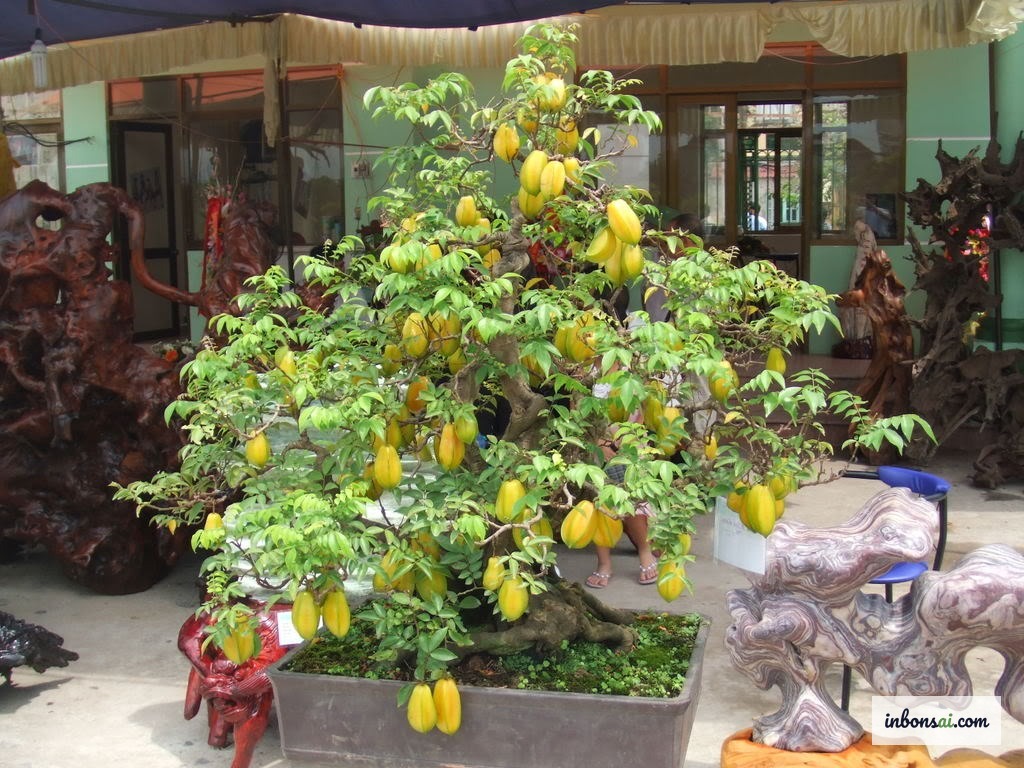
Starfruit Bonsai Mini: Feng Shui Meaning and Care Guide
Bougainvillea Bonsai Mini: Feng Shui Meaning & Care Guide
Ficus Religiosa Bonsai: Spiritual Meaning and Care Guide
Loc Vung Bonsai: Feng Shui Meaning and Shaping Guide
Ficus Benjamina Mini Bonsai for Your Desk: Care Guide
Ficus Bonsai Mini: Feng Shui Meaning and Care Guide