Discussing Lingnan Bonsai Art
InBonsai Team
December 9, 2024 · 23 min read
Discussing Lingnan Bonsai Art
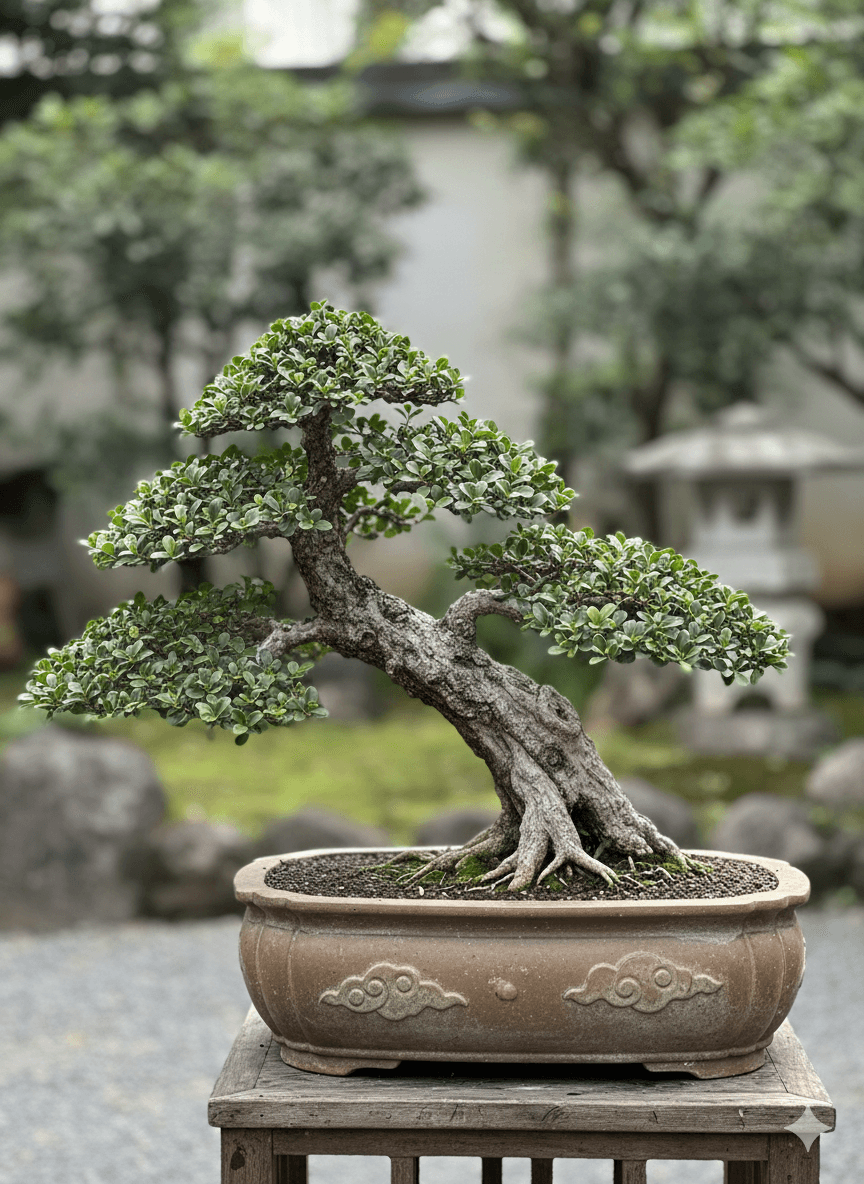
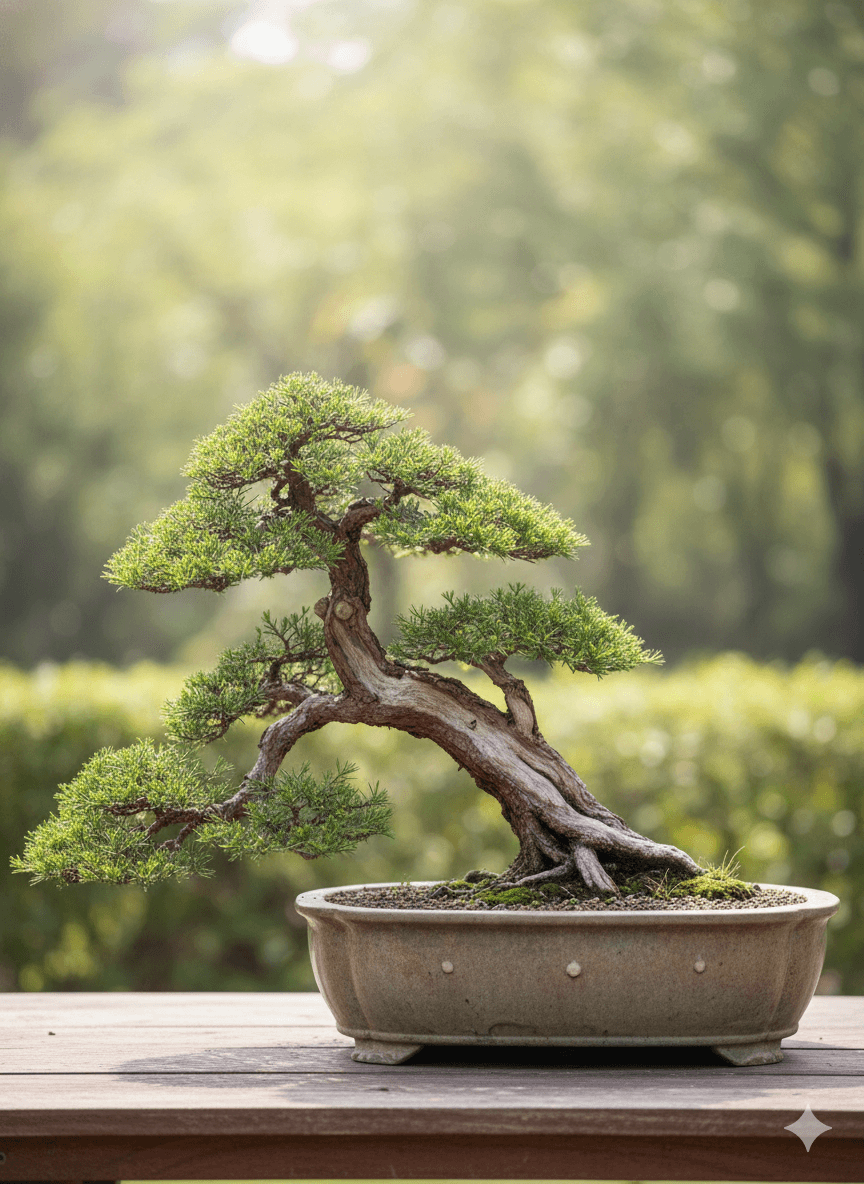
In the creative process, a Bonsai pot can be considered an excellent work only when its parts are united and harmoniously unified; otherwise, it is not an excellent work. In the process of shaping Bonsai, the parts for appreciation including roots, trunk, branches, leaves, flowers, and fruits should be unified with each other and shaped harmoniously. This means the shape, volume, lines, color, form, style, etc., of the potted tree all require a certain degree of uniformity, similarity, and consistency, bringing the viewer a sense of harmonious unity. A successful Bonsai work must combine the complex changes in shaping the trunk and branches… into a unified whole, only then can it create a “harmonious” artistic whole. Unity in Bonsai shaping includes: unity of artistic inspiration, form, technique, lines, and unity of parts and the whole. Only in this way can the goal of harmonious unity be achieved. Therefore, attention must be paid to the relationship between the style and posture of the tree in Bonsai shaping.
Totality and Partiality in Bonsai Shaping
(1) Must revolve around the theme, highlighting artistic inspiration and harmonious style. The shaping of parts such as roots, trunk, branches, apex, and other parts of the Bonsai tree must be harmonious; this standard is the key point and direction for Bonsai creation. For example, if you want to express an image that is ancient, old, damaged, but with persistent and resilient vitality despite having gone through many ups and downs of time, then you can create a Bonsai pot in the style of a decaying trunk. The bark of the trunk should be peeling off, revealing many parts of the wood core, with grooves, holes, gaps, pits, and rough spots, scars on the tree due to rotten wood, bark, and old wrinkled branch bark on the trunk. All visible branches and the tree top are relatively simple and consistent with the old appearance, suitable for Table Dragon roots or large, round, old roots. Only then will the overall shaping coordinate well and unify harmoniously.
(2) The base, branches, apex, and posture of the main trunk must coordinate harmoniously with each other. A Bonsai work should be based on the trunk style, other parts should serve as a background for the main trunk, highlighting the main trunk, and the parts of the tree need to coordinate harmoniously with each other. Only when the main trunk runs through the entire Bonsai work can the overall effect be highlighted in an instant. For example, if the trunk is in an upright form, with strong and majestic artistic connotation, then all partial elements should focus on this characteristic for shaping.
If you use strong chicken-claw branches, large round and spreading roots, and a spiral-shaped tree top to coordinate with the main trunk, it will demonstrate the aesthetic standard of “energy arrives, spirit arrives”, connecting the energy and posture of the tree together and transforming each other to create an artistic effect. If one only presents and analyzes the arrangement and layout, it can only prove one aspect of the structure of painting principles; moreover, on the other hand, it is necessary to combine the “Qi” (energy) of temperament and spirit to present it clearly. Arranging a Bonsai layout is not as good as a Bonsai having “posture”. If a magnificent Bonsai wants to achieve “posture”, it is mandatory to combine “Qi” with “posture” and apply them to the Bonsai; that is the so-called “Qi” and “posture”. How to understand “Qi” and “posture” in Bonsai art? Qi belongs to Yin and Posture belongs to Yang. Yin and Yang is a substitute noun; it represents the philosophical relationship of opposing and unified things, relying on each other to exist, affecting each other, and transforming each other. For example: if the sky is Yang and the earth is Yin, without the earth there is no sky.
Changes in the weather affect the changes and movements of the earth. The presentations and analyses of “Qi” and “posture” in Bonsai art are precisely the same philosophy about the relationship between Yin and Yang, a relatively profound level, not like visually seeing a branch facing the light as a Yang branch and a branch not facing the light as a Yin branch; it is completely hidden in an implicit way, relying on the exploitation, explanation, and interpretation of artists. From showing that, with the promotion of the tree’s Qi, there is a feeling of “posture”, the so-called “posture” naturally must be done, “posture” like a storm, unstoppable; arrangement is just an original version of the layout of posture and form, the essence should lie in “Qi”; having the tree’s Qi leads to momentum, leads to a way of expressing inspiration, spirit taking “Qi” as the driving force.
The Meaning of Posture in Overall Effect
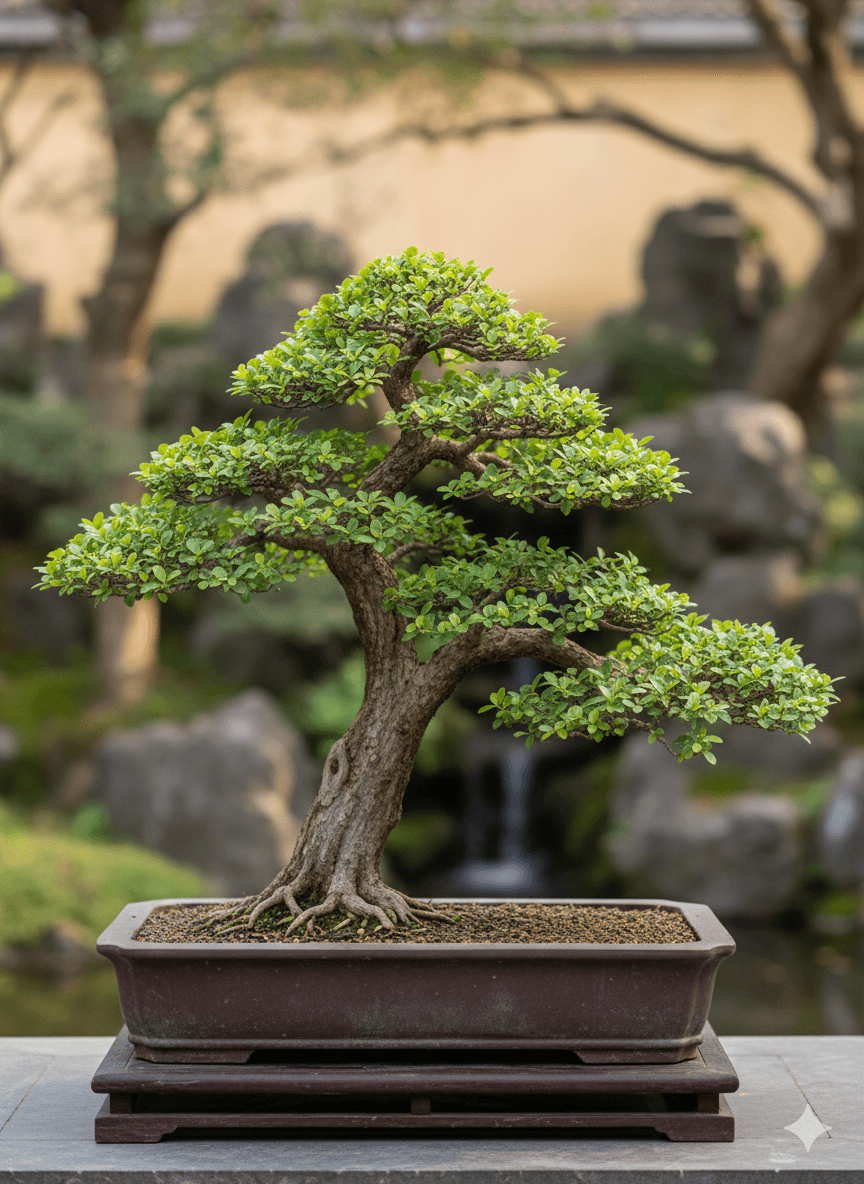
Human visual habit is to first look at the whole and then look at other parts. The feeling of the first glance is the key point of shaping, “Tree Posture” is the most intuitive and deeply impressive. When appreciating Bonsai, it is no exception: start from the overall effect of the work, and then go deep into roots, trunk, branches, leaves, pot, and decoration. “Tree Posture” is the first factor to evaluate Bonsai. Design is the expression of creativity and is a process of image thinking. The design of landscaping in Bonsai must grasp the essential characteristics of the design object, arrange and organize the objects to be expressed. The best way to create a design is to redraw the visual content to be expressed graphically on paper. Sometimes to increase expressiveness and artistic appeal, the layout and overall rules can use the method of exaggeration to complete. Exaggeration is the most effective way to create “Bonsai Posture”, and it is necessary to consider empty space as the focus of the design. “Dense does not ventilate, sparse does not stand firm” is the opposition and unity of contradiction, is the most effective method and the key to creating Bonsai posture. Shaping is the use of artistic techniques to create and perfect the overall image that one wants to express. Shaping Bonsai trunks is the entire process of creation, perfecting the product through optimizing and combining trunks, branches, leaves, pots, decorations, and tree stands. Moreover, the overall effect of the work is the external expression of Bonsai posture, is a kind of aura, temperament, characteristic that the whole work expresses, is the combination of external lines and internal content, is the reproduction and sublimation of natural landscapes. In which, the connotation is the union of external aura and internal soul essence of the scenery. Looking from afar, there is a magical artistic effect like captivating the viewer’s soul, making them unable not to stop and appreciate. Appreciating Bonsai is first of all valuing its posture. “Rising straight up” - Rising like a kite meeting the wind, “Overturning rivers and seas” - Moving rivers and filling seas” are all tree postures showing off their beauty to the outside. “Sitting firm as a bell, standing firm as a pine”, “Smooth thanks to spring rain, warm as just-refined jade”, this is the static posture hidden inside. Tree posture can move people’s hearts and can affect the human soul. Going deep into the artistic concept through the expression of tree posture, enhancing artistry is the key issue to affirm whether that work is successful or failed.
Forms of Expression of Bonsai Posture
Tree posture is everywhere. All exteriors of things exist with an implicit “Posture” inside and a “Posture” showing off outside. “Posture” and “State” exist depending on each other, “Posture” and “Movement” blend into each other both outside and inside. A strong, lush tree posture means overflowing vitality; a welcoming tree posture is elegant and polite; a rolling down tree posture is “Three thousand feet high straight down”; a majestic, magnificent tree posture disturbs the blue sky; a magnificent tree posture hanging on a cliff like a rock swooping down from a high mountain peak, a super strange tree posture is noble and soaring, transcendent, not entangled in earthly dust… too many to count. The posture of Bonsai - Ornamental Trees is a physical image, tangible, can be seen, touched, and felt.
Morphological Characteristics of Bonsai Posture
Bonsai Posture is formed from Volume Sense, Motion Sense, and Force Sense. Volume Sense is produced from weight and volume, so large-scale works displayed in exhibition yards always bring people a particularly eye-catching feeling. Motion Sense is produced from people’s observation of moving objects. Movement will definitely have characteristics; when the viewer sees similar or comparable movement again, they will understand “Motion Sense”, through Motion Sense to comprehend Force Sense. This is the harmonious combination, close unity between Motion Sense and Force Sense to create “Posture”.
Relationship Between Posture and Force of Bonsai
Force is the extension of Posture, Posture is the gathering of Force, having Force will have Posture. Posture develops and moves, Force follows that and generates movement. A successful Bonsai work, the great posture and high effect surrounding it can suggest, change the emotions of the viewer, can bring a common voice, specifically speaking, it is self-scene realizing emotion, reaching the attachment, harmony between scene and emotion, the unity between external appearance and internal idea, that is, comprehending the creative intention, the author’s theme thought from the work’s external appearance, thereby deeply understanding the connotation of emotion and scene that the author wants to express, finally causing the viewer to have different emotional associations, producing artistic inspiration for Bonsai.
How to Take Posture and Create Bonsai Posture
The way to take Bonsai posture is to discover and use the inherent posture of the ornamental tree through repeated observation and comparison. Creating Bonsai posture is creating a tree posture with a completely new form by artificial manual methods. As an art, Bonsai certainly must express the author’s thoughts and feelings; the author’s subjective elements play an extremely important role. The way to take Bonsai posture is mainly to fully discover the personality and essence of the ornamental tree, thereby taking it as a design idea, which is also taking materials, collecting materials to determine the theme. Creating Bonsai posture is mainly determined by the arrangement of positions, the way to end at the top, and the way to leave space for the trunk and branches, the overall nurturing of branches and landscape posture. Ornamental trees in Lingnan Bonsai have a strong point in expressing branches, which is also one of the important points for appreciation. The strokes in Chinese painting and calligraphy can express certain emotions, can express intensity, rhythm, and tone, and can even more express the posture of the entire Bonsai landscape. Using lines to shape is a unique feature of Chinese national painting. Bonsai and calligraphy are “sister arts” - basic art forms are almost the same, so lines in Bonsai art can also express certain emotions, even can reflect specific characteristics of the times.
Modern art emphasizes expressing the beauty of structure, rhythm, and tone in the work. As an art form, Bonsai must also keep up with the times. Superb beauty is the highest level of Bonsai art: in Bonsai creation, the author puts profound research and understanding of nature, personal thoughts, and feelings into Bonsai, making the style of the work clear, reaching the level of scene following self but not exceeding the rules, that is superb beauty. To reach this level, Bonsai authors must have a strong point in applying the way of taking posture and creating Bonsai posture to enrich artistic effects.
DISCUSSING LINGNAN BONSAI ART SHAPING
In the creative process, a Bonsai pot can be considered an excellent work only when its parts are united and harmoniously unified; otherwise, it is not an excellent work. In the process of shaping Bonsai, the parts for appreciation including roots, trunk, branches, leaves, flowers, and fruits should be unified with each other and shaped harmoniously. This means the shape, volume, lines, color, form, style, etc., of the potted tree all require a certain degree of uniformity, similarity, and consistency, bringing the viewer a sense of harmonious unity. A successful Bonsai work must combine the complex changes in shaping the trunk and branches… into a unified whole, only then can it create a “harmonious” artistic whole. Unity in Bonsai shaping includes: unity of artistic inspiration, form, technique, lines, and unity of parts and the whole. Only in this way can the goal of harmonious unity be achieved. Therefore, attention must be paid to the relationship between the style and posture of the tree in Bonsai shaping.
Totality and Partiality in Bonsai Shaping
(1) Must revolve around the theme, highlighting artistic inspiration and harmonious style. The shaping of parts such as roots, trunk, branches, apex, and other parts of the Bonsai tree must be harmonious; this standard is the key point and direction for Bonsai creation. For example, if you want to express an image that is ancient, old, damaged, but with persistent and resilient vitality despite having gone through many ups and downs of time, then you can create a Bonsai pot in the style of a decaying trunk. The bark of the trunk should be peeling off, revealing many parts of the wood core, with grooves, holes, gaps, pits, and rough spots, scars on the tree due to rotten wood, bark, and old wrinkled branch bark on the trunk. All visible branches and the tree top are relatively simple and consistent with the old appearance, suitable for Table Dragon roots or large, round, old roots. Only then will the overall shaping coordinate well and unify harmoniously.
(2) The base, branches, apex, and posture of the main trunk must coordinate harmoniously with each other. A Bonsai work should be based on the trunk style, other parts should serve as a background for the main trunk, highlighting the main trunk, and the parts of the tree need to coordinate harmoniously with each other. Only when the main trunk runs through the entire Bonsai work can the overall effect be highlighted in an instant. For example, if the trunk is in an upright form, with strong and majestic artistic connotation, then all partial elements should focus on this characteristic for shaping.
If you use strong chicken-claw branches, large round and spreading roots, and a spiral-shaped tree top to coordinate with the main trunk, it will demonstrate harmonious unity. Another example is the shaping of a curved trunk Bonsai pot which should use the “branch nurturing and pruning method”, the tree trunk winds and twists, branches and leaves are clear. Therefore, “Rigidity” is its main characteristic, but its side branches should also use hard and strong “curved branches” to coordinate harmoniously with the main trunk, absolutely should not use too many curved branches, breaking the basic principles of harmonious development.
(3) Harmonious balanced coordination of the posture of the main tree and secondary tree, tree and accessories, individual and group. For double-trunk form Bonsai pots, the growing direction of the two trunks must coordinate and unify with each other, this is harmony. The double-trunk form of wild-growing trees with a layout of one straight trunk, one slanted trunk is also a type of natural harmonious coordination. But in clump-style Bonsai pots, if the main trunks are all straight trunks, they will coordinate harmoniously, while mixed growing types with the main branch center being vertical branches, and remaining branches all growing slanted, forming a radiating shape structure, is also a type of harmonious coordination. In clump-style Bonsai pots, selecting trees should choose both big and small, tall and short, having straight trees and slanted trees, aiming to reach harmonious coordination, unifying style, natural posture of the main tree and secondary tree. With a clump-style pot having more than 5 trees, it should be divided into 2 to 3 groups to arrange the ground layout, this is also harmony in layout. When embellishing with accessories in creating a Bonsai pot, the shape of the accessories must unify harmoniously with the intended expression of the main tree, serving its main trunk, must not let the secondary overwhelm the main, destroying the overall artistic effect.
Using the Relationship Between Proportion and Harmonious Balance Skillfully
Proportion is an important element in the aesthetics of Bonsai ornamental trees. The so-called “Cun” (size) in “Shrinking dragon into inches” (very reasonable length and size, exquisite) has clearly stated the reason hidden in it.
If the tree type and tree shape have the same size, but the proportion is not harmonious, it will greatly reduce its artistic effect. Proportion runs through the entire creation process in Bonsai shaping, including large-small, tall-short, thin-thick, long-short proportions… Listed as follows: Harmony in main trunk proportion, mainly includes harmony in proportion of parts of the main trunk and harmony in proportion between main trees. If the main tree has a thick lower part and thin upper part, the tree is transitioning to a natural process. If the main tree has a curved shape, it tapers from the lower part to the upper part. For shaping double-trunk or more than 2-trunk Bonsai, the trunk of the main tree should be thick and tall, while the secondary tree should be relatively low and small. Clump-style Bonsai pots often prefer big in front, small in back, meaning the near scene should be large and the far scene should be small. In double-trunk Bonsai, the proportion between the height and width of the secondary tree’s canopy should have an appropriate proportion with the main tree, and the proportion of the secondary tree’s top is also usually smaller than the main tree’s top.
Synchronous Coordination Between Scene, Pot, and Stand
The perspective proportion of the size of the stand, pot, and scene should be harmonious; although the perspective proportion of the shaping form of different Bonsai and pots are not the same, from a visual perspective, if the pot is too large, the planted tree will look short and weak. Conversely, if the tree is big and the pot is small, it looks top-heavy and foot-light, very unstable. Usually, when using a long pot for straight or slanted trunk Bonsai pots, the pot length being about 2/3 of the width of the entire canopy of branches will be relatively appropriate. The size of some tree stands should be used according to the size of the pot; long pot implies long stand, short pot implies short stand. The proportion of decorative accessories should also be harmonious, including both harmonious proportion between accessories and tree, and harmonious proportion between accessories themselves. As when discussing painting issues, it is said: “Ten-foot mountain, one-foot tree, one-inch horse, one-tenth-inch person”, meaning when painting a mountain ten feet high, the tree must be one foot high, painting a horse one inch high then painting a person one-tenth of an inch high; in Bonsai, it is also necessary to pay attention to such proportional relationships, accessories should also grasp the principle of near-big far-small space; if accessories are too large, this will make the idea originally intended to depict tall trees become tiny.
Color Harmony in Bonsai Tree Shaping
(1) Different types of trees should all have harmony and balance in color. In double-trunk, triple-trunk, or clump-style Bonsai pots, the same type of tree is often used. The same type of tree not only has similar postures but color also balances harmoniously with each other. If in a clump-style Bonsai pot many types of trees with different colors are used, they should be divided into main and secondary; secondary trees only play a coordinating role to embellish, absolutely must not overwhelm the main tree, breaking the color harmony in the pot.
(2) The color of the pot harmonizes with the tree’s scene. When choosing a pot, the color of the pot must coordinate harmoniously with the tree. For old trunks and peeling bark, dark-colored pots with ancient styles are often used; trees with light-colored leaves and delicate soft postures are suitable for plain light-colored pots; while appreciating potted landscapes with flowers and fruits, if the flower and fruit colors are dark, dark-colored pots are often chosen, and if flower and fruit colors are light, light-colored pots are often chosen.
(3) The color of accessories should be coordinated harmoniously with the scene and pot, but the color of small accessories should be different from the color of the potted landscape. In short, it should not be too troublesome, messy, making the viewer confused; strictly thinking, following rules, and visibly cultivating artistic level allows creating perfect Lingnan Bonsai pots.
APPRECIATION VALUE OF LINGNAN BONSAI
Demeanor of Different Bonsai Pots
A young tree reaching up high is blown by the wind to bend and the whole trunk bends down; fortunately, the wood quality has high flexibility so the tree does not break. Just passing this accident, another accident comes: floods rush in fiercely and wash away all the mud and soil; fortunately, the tree roots penetrate deep into rock crevices so the tree is not uprooted; wind and rain are unintentional, unpredictable, unpredictable ups and downs, not knowing how many disasters and struggles it has gone through… The Nine Miles Fragrance (Murraya paniculata) Bonsai pot in the curved trunk style is a heroic epic about a resilient life constantly struggling against harsh environments. Struggling is the life instinct of Bonsai, only struggling can survive, and those Bonsai lives have even more durable and flexible resistance!
Unique Appearance, Overflowing Inspiration
Roots exposed large and protruding, reflecting long, distant days and severe soil erosion. The thickness and straight downward force penetrating deep into the ground of the tree show survival wisdom, resistance ability, and firm determination. Thick trunks, winding down and lying long in the air, have shown the tree posture like a giant dragon exploring the blue sea; that scene is extremely strange and magnificent, making people amazed! The secondary trunk located in the land behind, unified with the fortune of the main trunk, adds strength. The shapes of main and secondary branches vary diversely, mostly facing upwards; this is a characteristic trend of plants and vividly expresses the spirit of not fearing difficulties and always striving upwards of humans. The tree image of the unique and generous Bonsai work shows the power of time having gone through so many years, the young tree has turned into an ancient tree, revealing a long journey of magnificent scenery.
BONSAI IS A HIGH-CLASS ART
Difference in Status (High or Low) of Art Forms
Bonsai art has a broad and profound national culture, also a succession of Chinese traditional culture and integration with the Chinese national spirit. The core of the Chinese cultural spirit is “Unity of Heaven and Man”, the unity of all things and self, considering that humans and nature are an inseparable whole. In the relationship between humans and nature, harmonious unity and obeying heaven’s will are always advocated.
Comrade Chen Yi said that Bonsai is a “high-class art” form. This shows the most basic attribute of Bonsai art. Among countless art forms, why is Bonsai art qualified to be called high-class art? Any art form carries artistry and commercial product nature, but besides that, Bonsai art also has life nature; the life nature of Bonsai art is the most essential attribute to distinguish it from other art forms and plays a decisive role.
The weakness of Bonsai art is the lack of research and exploration development, but the development and movement of things are unbalanced. China is a country with a long-standing civilization and rich historical culture; in recent years, a large number of Bonsai enthusiasts have participated in discussions on Bonsai art theory. Bonsai art being brought into discussion is a hope; only upgrading from traditional art to academic height can easily internationalize and modernize.
Bonsai Deserves the Title of High-Class Art
Between art forms, there are common points and their own points. Individuality is a characteristic in the contradiction between different things, also called the particularity of contradiction. This is also the internal factor clearly explaining the difference of things in the world. The life nature of Bonsai art is the essential attribute of Bonsai. Also because of having this attribute, it is called high-class art.
Here, a point needs to be emphasized: Bonsai is called high-class art, referring to the inherent characteristics of Bonsai; currently, there is a large number of poor quality products in the Bonsai market, it is not even called an art product but just a potted plant.
The dynamic beauty of Bonsai has strong visual impact and soul-moving power. When appreciating art works, people often use the two words “vivid”; the movement form of life has characteristics carrying the most beauty. The dynamic beauty of Bonsai art can best inspire people to explain the meaning of life. The visual impacts and soul-moving power evoked when appreciating an excellent Bonsai work are things that other forms find very difficult to achieve.
The dynamic beauty of the work is expressed in the extension of life and the change of seasons in the year. The extension of life is divided into internal force and external force. Under the effect of internal force, roots will spread out on the pot surface, the trunk will grow thicker and taller, branches more dense and lush, thereby expressing life in a process of strong development. Under the effect of external force, the ornamental tree will show many different postures, such as being oppressed, rising high, hanging precariously, withering, etc… this is the most realistic description of the struggle between life and external force. The beauty of lines, posture, form, and artistic inspiration in Bonsai works is also difficult to describe in words. The seasonal change of ornamental trees includes two types: long-term and momentary; even evergreen trees have laws of life movement. Along with the change of seasons, in the Bonsai pot, leaves will grow and then fall, will turn from green to red, fruits large and dense, indescribably beautiful; watching frequently will often see new things and also make people comprehend the joy of life.
Life nature leads to non-subjective phenomenon (far from original intent) in the Bonsai creation process. What this non-subjective phenomenon refers to is the actual effect of the work that Bonsai creation artisans create unintentionally separating from the original creative direction. This non-subjective phenomenon is even more prominent in Bonsai creation; this is because the initial form of materials used in creation has limitations, the moldability of tree materials is also limited, added to that is the instability in the tree’s development process; these unsatisfactory aspects lead to the fact that perfect Bonsai works are very few, creation difficulty is high, creation time is long, and creation efficiency is low; under the effect of the value law, Bonsai prices, originally not high, have also been increased.
Lingnan Bonsai Aiming for Internationalization
Chinese Bonsai art from the beginning has been influenced by landscape gardens and landscape paintings, the landscaping of paths when combining paths with trees and stones; right from the Tang Dynasty, Chinese Bonsai artisans sublimated simple potted plants into Bonsai art with artistic inspiration; to modern times, the main direction of Chinese Bonsai still develops in many genres, including Rockery Bonsai, Rock-clinging Bonsai, and Miscellaneous Tree Bonsai, also Large Tree Bonsai, Clump-style Bonsai, and Strange Tree Bonsai. We believe that in the not-too-distant future, Lingnan Bonsai art will definitely shine in the world art forest.
Related Posts
Linh Nam Bonsai Collection (Part 1)
Discussing Lingnan Bonsai Art
Methods for Creating Scenery for Lingnan Rockery Bonsai (Penjing)
How to plant Yellow Mai suitable for climate and ecological conditions
Why is the Yellow Apricot Tree considered a precious ornamental plant?
Ling Nam Bonsai Trunk Styling Method (Grow-and-Prune Technique) (Part 1)
Methods for Creating Root Styles for Lingnan Bonsai