Lingnan Bonsai: History, Origins & Distinctive Techniques

InBonsai Team
April 17, 2026 · 8 min read
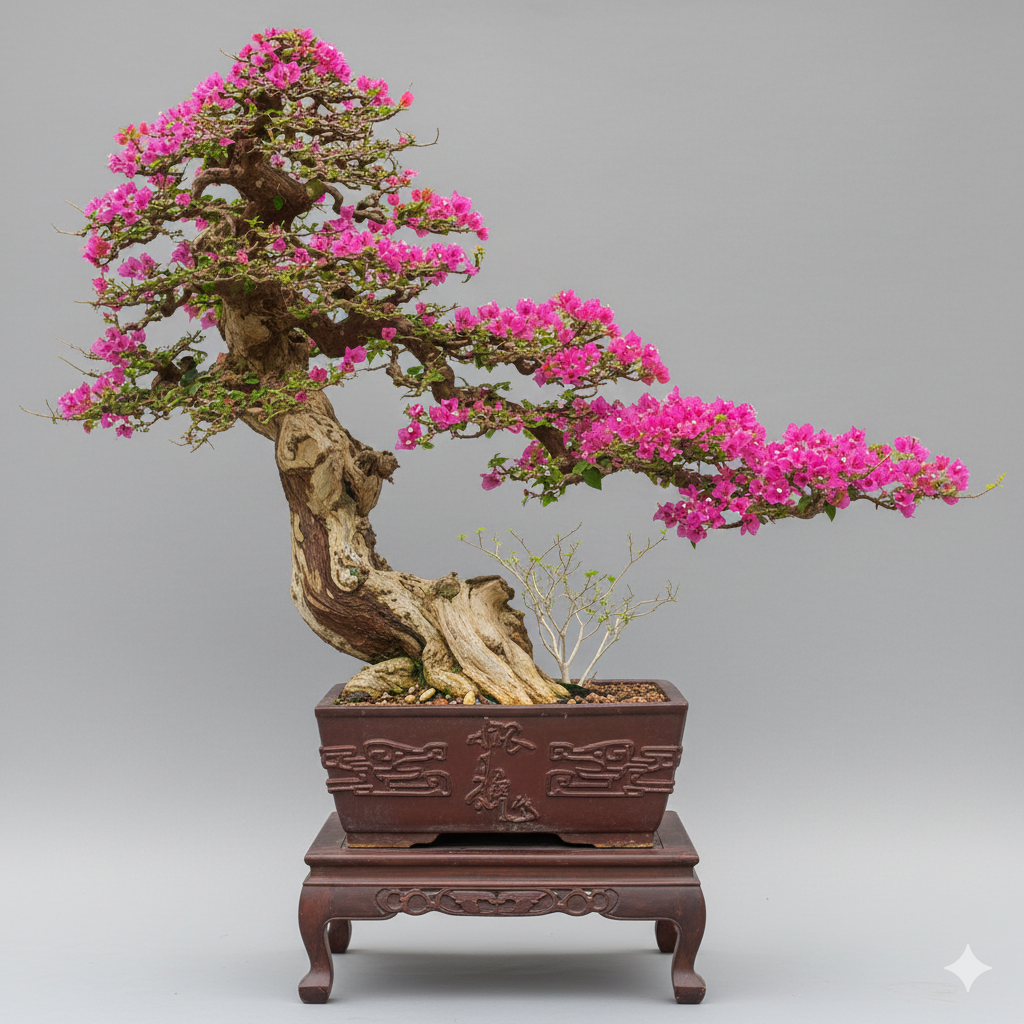
Lingnan bonsai — the penjing school from South China — is one of the most influential forces shaping Vietnamese bonsai culture. If you have ever wondered why bonsai from Southern Vietnam tend to feature naturalistic forms, powerful exposed roots, and elegantly tiered branching, the answer lies in the history, origins, and distinctive techniques of the Lingnan school. This article takes you on a journey through the formation, core methods, and enduring influence of Lingnan bonsai art.
The History of Lingnan Bonsai
Lingnan bonsai (岭南盆景) is rooted in the Lingnan region — the territories south of the Nanling mountain range, encompassing the modern provinces of Guangdong, Guangxi, and Fujian. The tropical monsoon climate of this area, with abundant rainfall and warm temperatures year-round, created ideal conditions for a rich diversity of subtropical and tropical tree species.
The earliest records of ornamental container gardening in Lingnan can be traced to the Tang dynasty (618–907 CE), when nobles and scholars began collecting miniaturized ancient trees for contemplation. By the Song dynasty (960–1279), the practice of growing trees in pots had spread widely among the literati class, and penjing gradually developed as a distinct aesthetic discipline. The Ming and Qing dynasties (1368–1912) saw Lingnan bonsai reach its greatest flowering, as craftsmen in Guangzhou and Foshan began systematically codifying the school’s characteristic shaping techniques.
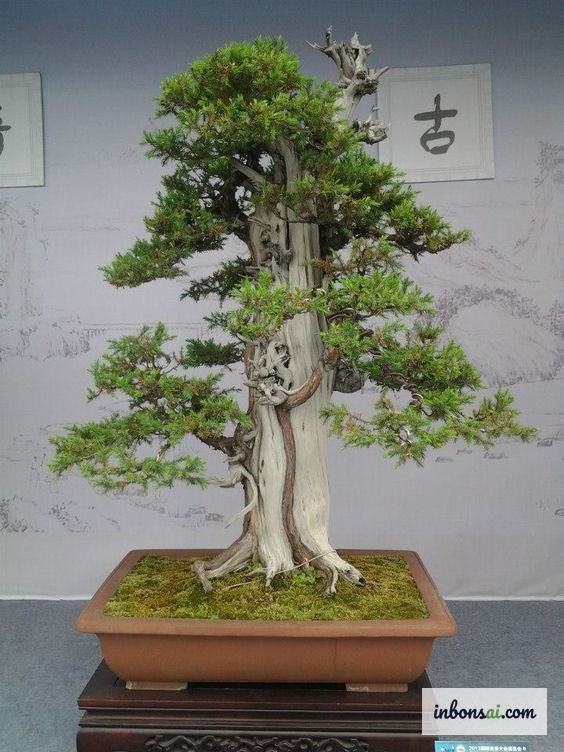
What set Lingnan bonsai apart from the very beginning was its aesthetic vision: Lingnan artists sought to capture the grandeur of Southern Chinese wilderness — ancient trees shaped by wind, rain, and time — rather than idealized or symbolic forms.
Geographic Origins and Cultural Character
The Lingnan terrain is varied, ranging from karst limestone mountains and tropical rainforests to fertile river deltas. This environment produced tree species with remarkable adaptive resilience, roots gripping rock faces and trunks twisted by the elements into powerfully expressive forms. From these images of raw nature, Lingnan artists drew their creative vocabulary.
Unlike Japanese bonsai, which favors refined symmetry and formal styles, or Northern Chinese bonsai with its scholarly grandeur, Lingnan bonsai prizes naturalism and vitality. A Cantonese saying sums up the school’s priorities: “First the root base, second the surface roots, third the trunk, fourth the branches” — a hierarchy that places the nebari (root flare) as the compositional anchor of every piece.
The classical center of Lingnan bonsai was the Pearl River Delta — encompassing Guangzhou, Foshan, and Dongguan. This region was also the origin point for many overseas Chinese communities in Southeast Asia, and it was likely through merchants and migrants passing through these cities that Lingnan methods first reached Southern Vietnam.
For a deeper look at Lingnan’s foundational aesthetics, the article What is Lingnan Bonsai? offers a useful overview before diving into the historical context.
The Cut-and-Grow Method — The Heart of Lingnan
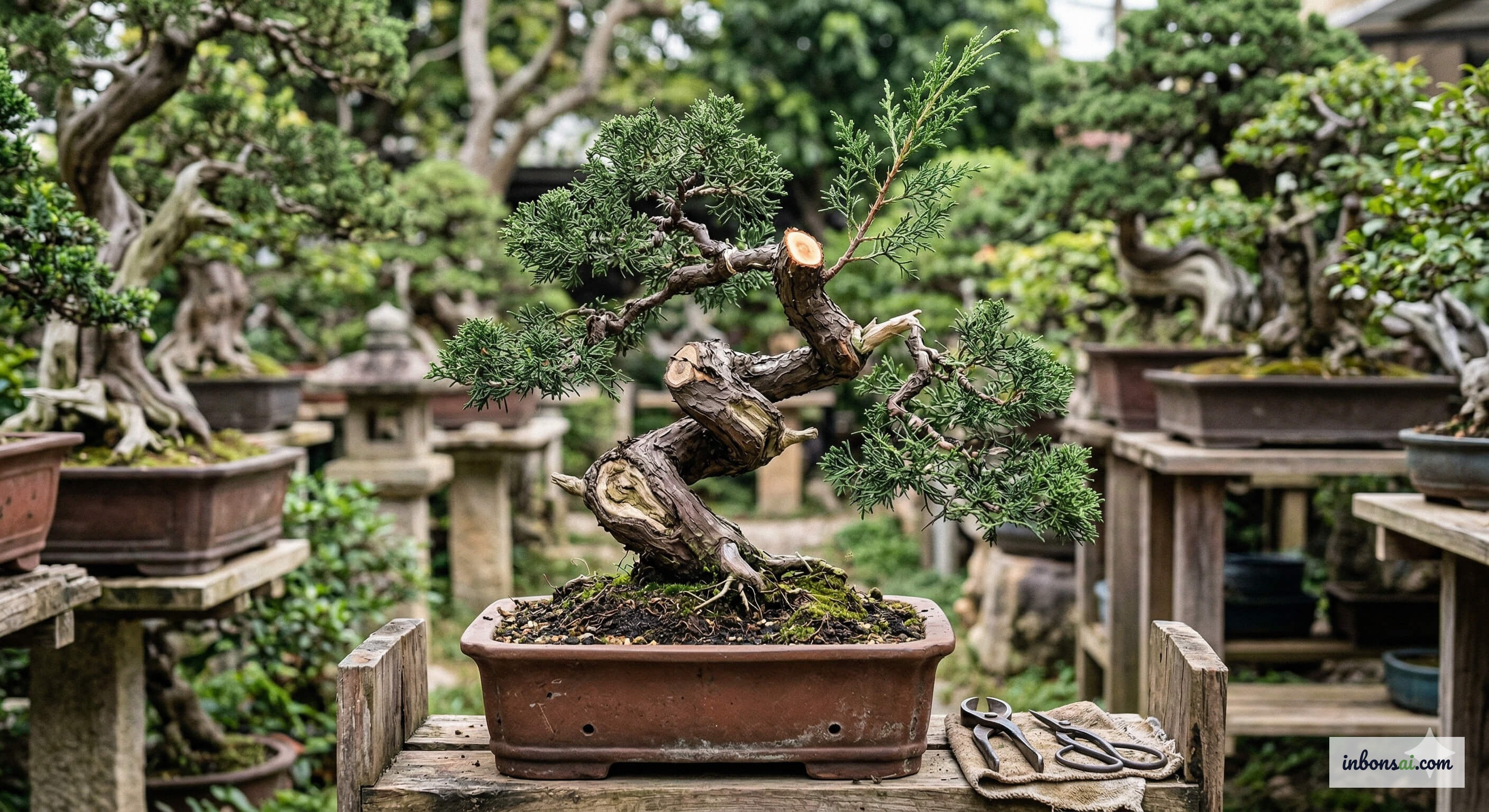
The most famous and defining technique of Lingnan bonsai is the cut-and-grow method (蓄枝截干, pronounced “xù zhī jié gàn”), often shortened to the “grow-then-cut” approach. This is the clearest point of distinction between Lingnan and all other major bonsai schools.
The core principle: instead of using wire to shape branches (as in Japanese bonsai), Lingnan artists allow a branch to grow freely until it reaches a target length and girth, then cut it back entirely. The new shoot that emerges from the cut point will be proportionally smaller, creating natural taper between internodes. This process is repeated many times over — sometimes across 5 to 20 years — to build a complete branch structure.
The result is branching with perfect proportional taper: thick at the base, diminishing evenly toward the tips, with clearly defined joints and maturity that no amount of wire could replicate. There are no wire marks, no artificial distortion — only the patient product of time. The article Lingnan Bonsai Cut-and-Grow Technique provides a detailed practical guide to this method.
Beyond the cut-and-grow approach, Lingnan bonsai also uses root-lifting techniques (提根法), aged trunk treatment (老干处理), and branch grafting to fill compositional gaps.
Characteristic Species of Lingnan Bonsai
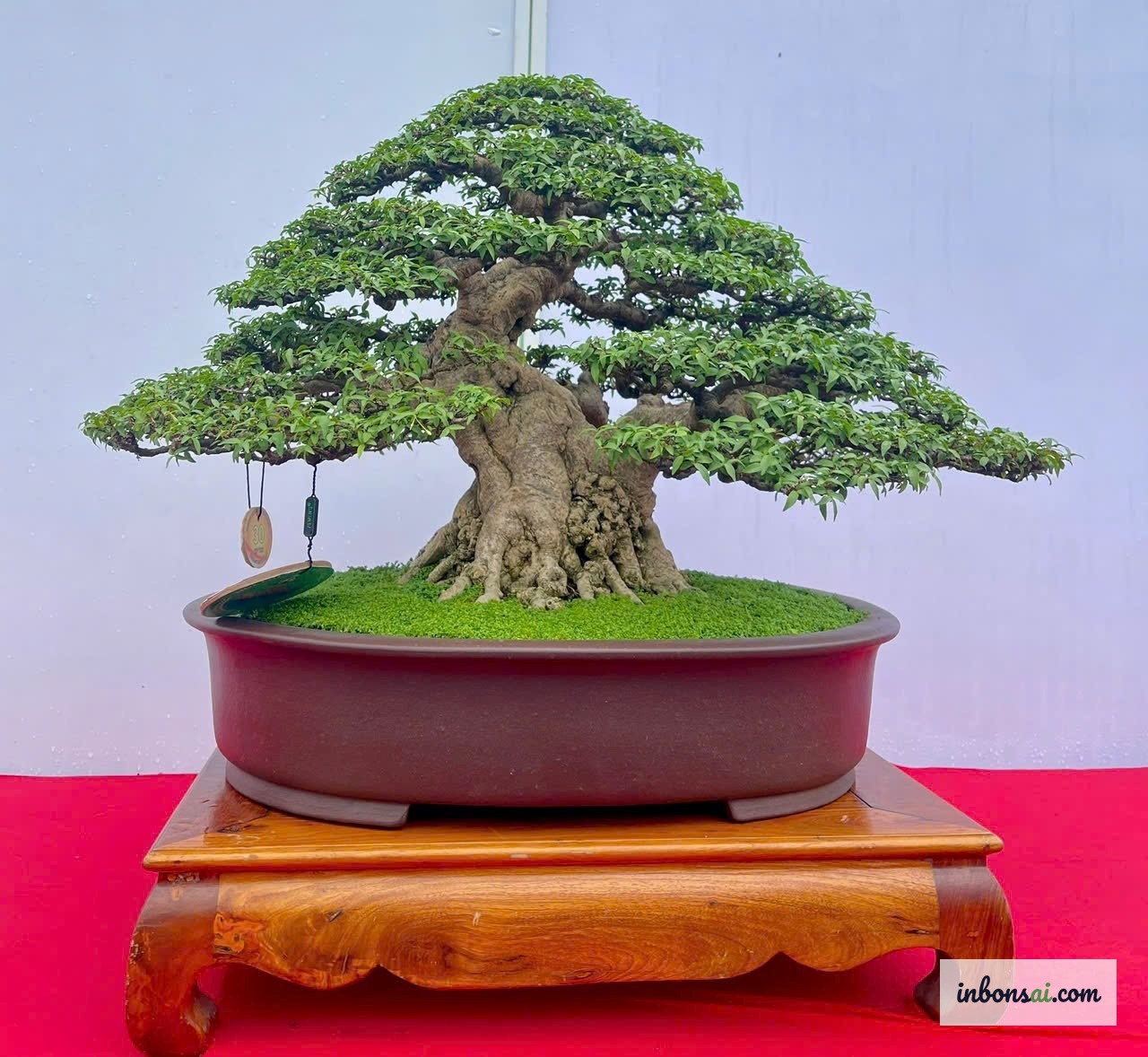
The tropical climate of Lingnan permits a far wider palette of tree species than temperate bonsai traditions. The most prized and commonly used species include:
Chinese Box Orange (九里香, Murraya paniculata) — called the “king of Lingnan bonsai,” revered for its silvery-white bark, fragrant flowers, and capacity to develop aged, gnarled bases. It remains one of the most popular bonsai species in Southern Vietnam.
Chinese Banyan / Tiger Bark Ficus (细叶榕, Ficus microcarpa) — small-leafed fig varieties that lend themselves to dense foliage pads and dramatic aerial roots, ideal for forest-style compositions.
Kumquat (金橘) and other Citrus species — valued for both their decorative appeal and their feng shui symbolism of good fortune.
Chinese Sagebrush (雀梅, Sageretia thea) and Lingnan Azalea (杜鹃) also appear frequently in classical compositions.
A notable feature of the Lingnan philosophy is its openness: practitioners are not restricted to a canonical species list. Any species with characteristics suitable for Lingnan-style shaping can be incorporated.
Lingnan’s Influence on Vietnamese Bonsai
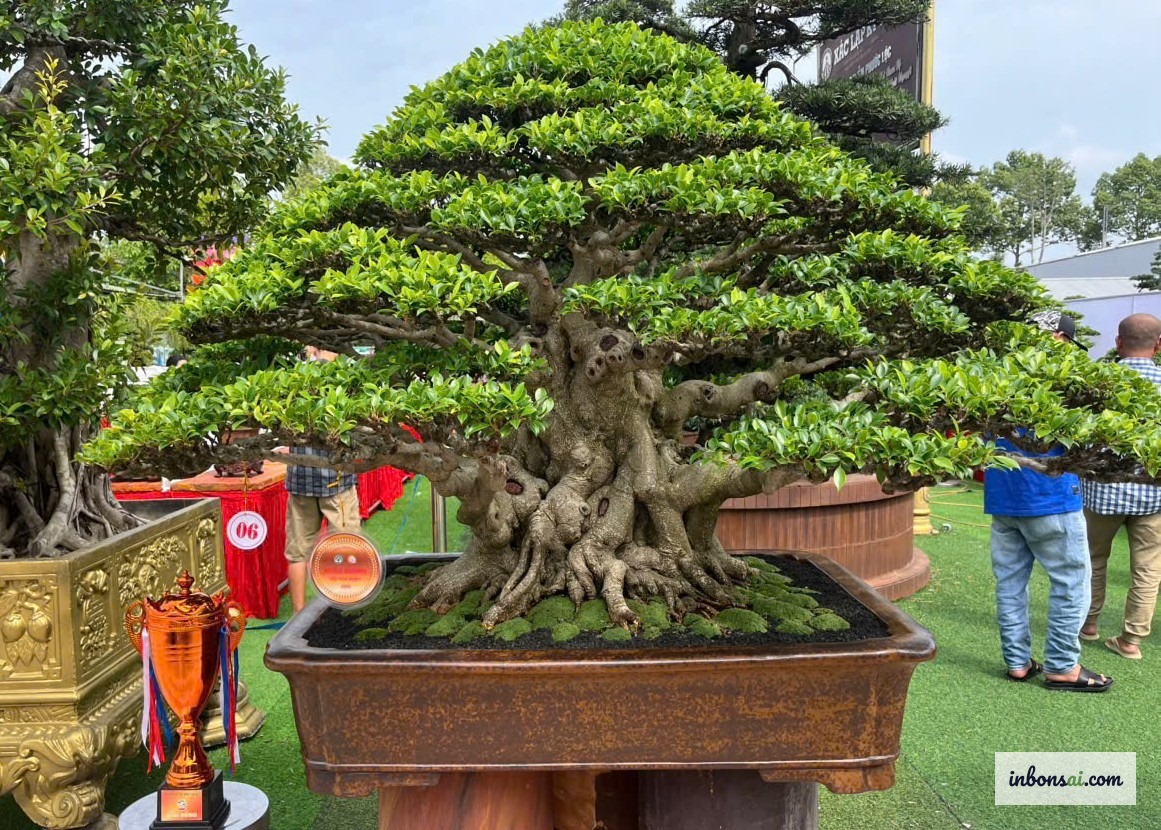
The arrival of Lingnan bonsai in Vietnam is inseparable from the history of Chinese migration to the South. From the 17th and 18th centuries onward, Cantonese and Fujianese communities settling in Saigon, Hội An, and Biên Hòa brought their tradition of ornamental container gardening with them.
Vietnamese practitioners absorbed these traditions and made them their own. They applied Lingnan’s cut-and-grow technique to native species — sanh (Ficus benjamina), si (Ficus microcarpa), lộc vừng, mai chiếu thủy, and most distinctively, mai vàng (yellow apricot blossom) — a species absent from the Chinese canon that became the defining emblem of Southern Vietnamese bonsai.
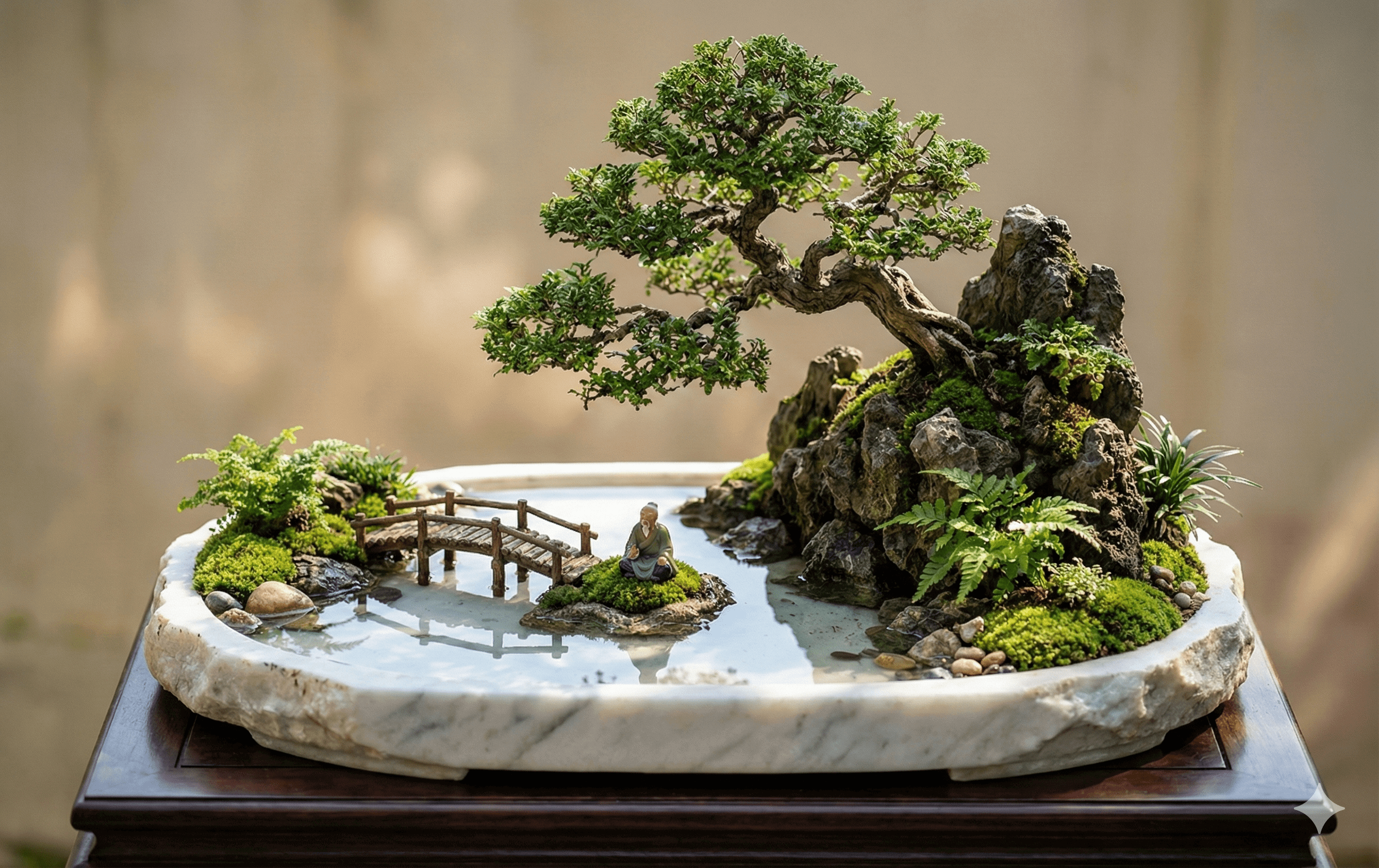
The “hòn non bộ” (landscape-in-tray) tradition — combining miniature trees, stones, and scenic elements — also developed in Vietnam under Lingnan influence, though it took on distinctly local character with imagery of Southern rivers and wetlands.
Today, bonsai from the southern provinces of Bình Dương, Long An, and Tiền Giang are recognized by international experts as having evolved into a distinct style: inheriting Lingnan’s technical foundation while expressing a uniquely Vietnamese aesthetic sensibility. For more on the artistic philosophy behind this tradition, see On the Art of Lingnan Bonsai.
Comparing Lingnan with Other Bonsai Schools
Understanding how Lingnan differs from other major schools sharpens its identity:
vs. Japanese Bonsai: Japanese bonsai prioritizes refined balance, formal style classifications (chokkan, moyogi, shakan, etc.), and typically employs copper or aluminum wire to shape branches from the tree’s youth. Lingnan eschews wire entirely — branches are allowed to “find their own path” within the disciplined framework of the cut-and-grow cycle.
vs. Northern Chinese Schools (Beijing, Shanghai): Northern schools favor temperate species (pines, junipers, larch) and carry the formal, scholarly influence of literati landscape painting. Lingnan, rooted in the tropical South, prioritizes wild, elemental naturalism over academic refinement.
vs. Taiwanese Style: Taiwan developed a hybrid approach, blending Lingnan cut-and-grow methods with Japanese styling principles — visible in the tightly fused aerial root structures of many Taiwanese banyan bonsai.
What unites all these schools is their shared ancestry in the thousand-year Chinese penjing tradition. Each has been shaped by the climate, flora, and aesthetic philosophy of its homeland.
Lingnan Bonsai in the 21st Century
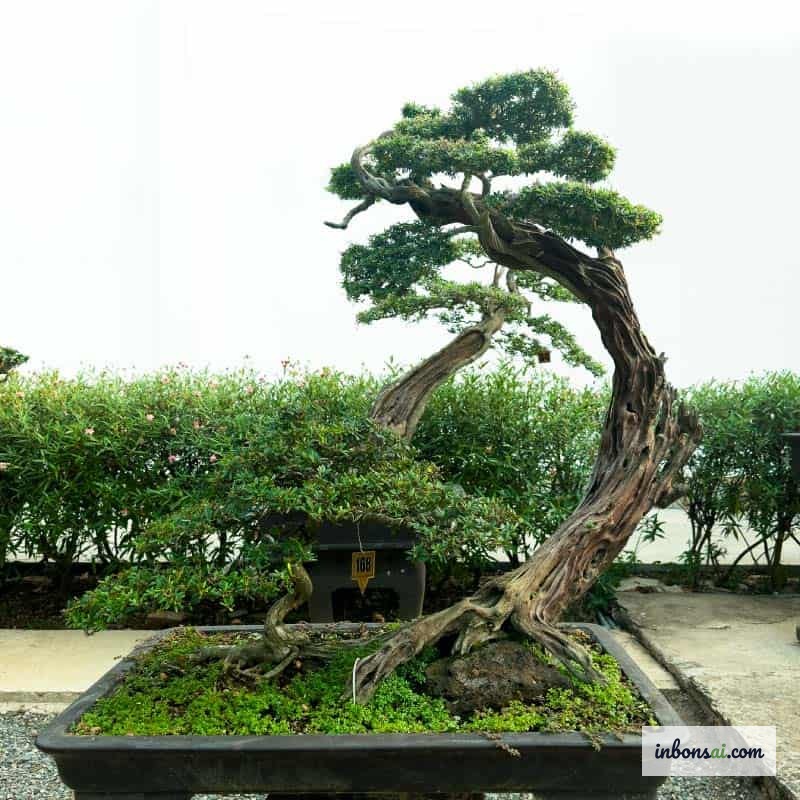
Lingnan bonsai is experiencing a powerful revival across China, Hong Kong, and overseas Chinese communities worldwide. International exhibitions such as the Guangdong Lingnan Penjing Exhibition draw thousands of entries and tens of thousands of visitors each year.
In Vietnam, the bonsai movement has flourished with the emergence of clubs, competitions, and dedicated trading markets. Young practitioners are not only learning traditional cut-and-grow methods but combining them with modern botanical science to accelerate the creation timeline.
Furthermore, technology — from timelapse photography to social media sharing and online instruction — is helping Lingnan knowledge reach a generation of practitioners who would never have had the opportunity to apprentice directly with master craftsmen.
However modern the world becomes, the core values of Lingnan bonsai remain unchanged: patient observation of nature, respect for a tree’s inherent vitality, and the creation of works that carry the breath of time itself. That is an artistic philosophy that transcends all cultural borders.
Beginning your Lingnan bonsai journey? Explore detailed technique articles in our Lingnan collection.
Related Posts
Lingnan Bonsai: History, Origins & Distinctive Techniques
How to Select Lingnan Bonsai Raw Material from Nature

Lingnan Bonsai Grow-and-Cut Technique: A Complete Guide
Linh Nam Bonsai Cascading Style - Step-by-Step Shaping Guide
Linh Nam Bonsai Trunk Chop & Branch Keeping Technique
Methods for Creating Scenery for Lingnan Rockery Bonsai (Penjing)