How to Prepare Bonsai for the Rainy Season in Southern Vietnam

InBonsai Team
April 15, 2026 · 9 min read
Southern Vietnam’s rainy season typically begins in May, bringing heavy daily downpours. This is the most challenging time of year for bonsai enthusiasts — water accumulates in pots, humidity soars, and fungal diseases thrive. However, if you know how to prepare your bonsai before the rainy season in Southern Vietnam, your trees will not only survive but take advantage of the abundant water to grow vigorously. This guide walks you through every step to complete in April — from checking drainage, pruning, and improving soil to fertilizing and preventing pests — so your bonsai enters the rainy season healthy and strong.
Why You Need to Prepare Bonsai Before the Rainy Season
Many bonsai growers skip the pre-rainy season preparation phase, only acting when leaves turn yellow or roots begin to rot. This is a common mistake — by the time the tree is damaged, recovery is far more time-consuming than prevention would have been.
The rainy season creates three main threats for bonsai. First, waterlogging: continuous heavy rain keeps pot soil constantly wet, creating an anaerobic environment that starves roots of oxygen, leading to rot. Second, fungal disease: sustained humidity above 80% creates ideal conditions for powdery mildew, leaf spot, and anthracnose to spread rapidly. Third, light deficiency: extended overcast and rainy days reduce photosynthesis, leaving trees without the energy reserves needed to fight off disease.
Preparing in advance lets you address each issue systematically rather than scrambling when the rain hits. Ideally, complete all preparation during April — 3–4 weeks before the rainy season officially starts. This window gives roots time to recover from any interventions such as repotting or soil work. It is also the period when trees are actively growing after Tet, with strong resilience and fast recovery — ideal conditions for maintenance work.
Check and Improve Pot Drainage
The drainage holes are the single most important factor determining whether a bonsai survives the rainy season. No matter how good the soil is, if the drainage holes are blocked, heavy rain will cause waterlogging within 24–48 hours.
How to check: Flip the pot and inspect the drainage holes — are they blocked by roots or compacted soil? Then pour a large amount of water and time how long it takes to drain: water should clear completely within 30–60 seconds. If slower, fix it immediately.
Cleaning drainage holes: Use a thin stick (a toothpick or thin wire) to gently clear each hole. Avoid using force — you could sever roots. After clearing, test again with water. This is a simple step with high impact; do it every 2–3 months, not only before the rainy season.
Drainage mesh: A plastic or aluminum mesh placed over the drainage holes holds soil inside while allowing free water flow. If the old mesh has degraded or has roots growing through it, replace it before the rainy season. When repotting, always place fresh mesh before adding soil.
Pot stand: A pot sitting directly on the ground blocks its own drainage hole. Use a wooden stand, a brick, or a metal rack to raise the pot at least 5 cm. This small detail makes a major difference on heavy rain days when water pools on the ground and can back up through the drainage hole.
For more on managing waterlogging once the rainy season is underway, see Bonsai Care During the Rainy Season: Preventing Root Rot.
Prune Your Bonsai Before the Rainy Season Arrives
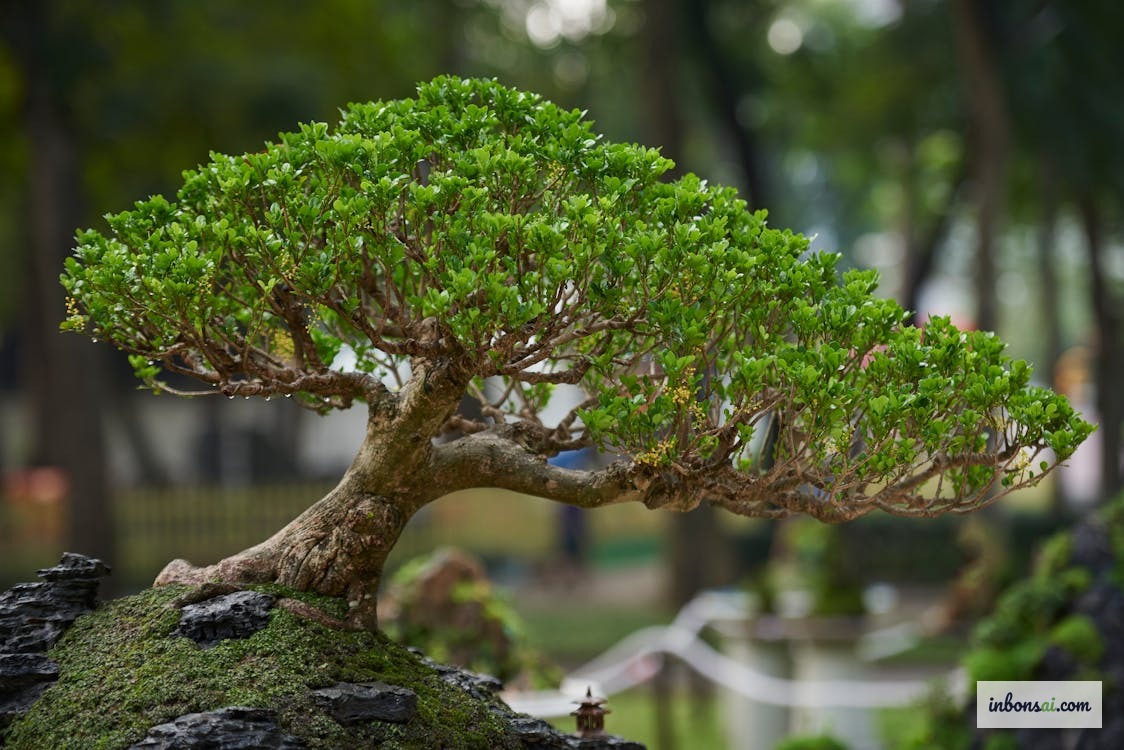
A dense canopy retains moisture long after rain, creating a refuge for fungi and insects. A light pruning session before the rainy season improves airflow within the canopy and shapes the tree before it enters its peak growing phase.
Pruning principles before the rainy season:
- Remove crossing branches or branches growing inward, creating gaps for air circulation
- Thin out leaves in overly dense areas, especially in the center of the canopy
- Completely remove diseased or dying branches — these are potential fungal infection reservoirs
- Never remove more than 1/3 of total foliage or branches in a single session
Treating cut wounds: After pruning, immediately seal each cut with diluted lime paste or a specialized bonsai wound sealant. This is especially critical before the rainy season because open wounds on branches are highly susceptible to fungal penetration when humidity stays elevated for days.
Best timing: Prune on a sunny morning so cuts can dry before the damp evening air sets in. Never prune on an overcast day or when rain is expected. April is ideal because trees are in active growth, enabling fast recovery from cuts.
In addition, take the opportunity to wipe both sides of leaves with a damp cloth or gentle spray — removing dust, insect eggs, and fungal spores that accumulated during the dry season before the rainy season activates them.
Improve Soil and Consider Repotting Before the Rainy Season

Bonsai soil after a year of use typically becomes compacted, losing its porosity and drainage capacity. This is the leading cause of waterlogging during the rainy season, even when drainage holes are completely clear.
Testing soil compaction: Push a wooden stick into dry soil — if you meet significant resistance or cannot penetrate it, the soil is compacted and needs attention. Alternatively, observe when watering: if water pools on the surface and soaks in slowly, the soil is compacted.
Improving without repotting: If the tree is not yet due for repotting (typically every 2–3 years), you can gently loosen the top 2–3 cm of soil to break up the compacted layer. Then top-dress with a thin layer of coarse material — pumice, perlite, or coarse coco coir — to improve surface drainage.
When to repot before the rainy season: Repot immediately in April if: roots are growing out through drainage holes, the soil is completely devoid of porosity, or the tree has been in the same pot for over 3 years. However, do not repot within 3 weeks of the rainy season start — roots need at least 2–3 weeks to settle in new soil before facing heavy rain.
A good soil mix for Southern Vietnam’s rainy season: akadama + pumice + organic fertilizer pellets in a 2:1:1 ratio — drains quickly but retains just enough moisture between rains. Read Step-by-Step Guide to Repotting Bonsai for the complete safe repotting process.
Fertilize to Prepare Bonsai for the Rainy Season
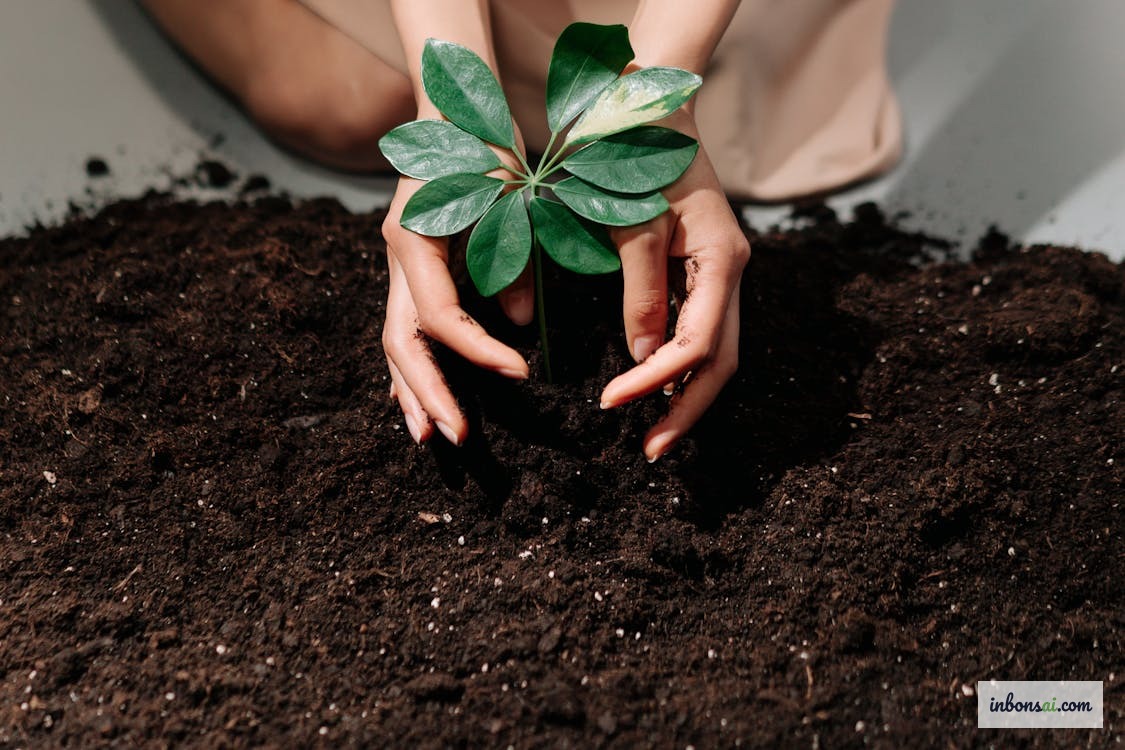
The rainy season is bonsai’s peak growth period thanks to abundant water and stable temperatures around 26–30°C. However, heavy rain also leaches nutrients from soil faster than usual. Fertilizing correctly before the rainy season builds a stable nutrient base to support growth and disease resistance.
Pre-rainy season base fertilizing (April):
- Apply a single slow-release organic fertilizer: worm castings, compressed organic pellets, or fermented rapeseed cake
- Dosage: 1 tablespoon of granular fertilizer per 10 cm of pot diameter, placed on the soil surface or lightly worked in 1–2 cm
- Slow-release organic fertilizer releases nutrients gradually with each rain, not washed away entirely like quick-dissolving chemical fertilizers
Adjusting fertilization during the rainy season: Reduce the frequency of quick-dissolving chemical fertilizers to once every 2 weeks (vs. weekly in the dry season) because rain dilutes the concentration and increases the risk of root burn with excess application. Prioritize fertilizers with a high Potassium (K) content — K thickens cell walls in leaves, making the tree harder for fungi to penetrate.
Importantly, do not apply high-Nitrogen (N) fertilizers early in the rainy season — excess nitrogen stimulates fast growth of tender new shoots, but soft young tissue is exactly what fungi target most in humid conditions. See The Right Technique for Fertilizing Bonsai for a seasonal dosage reference table.
Prevent Disease and Adjust Tree Placement
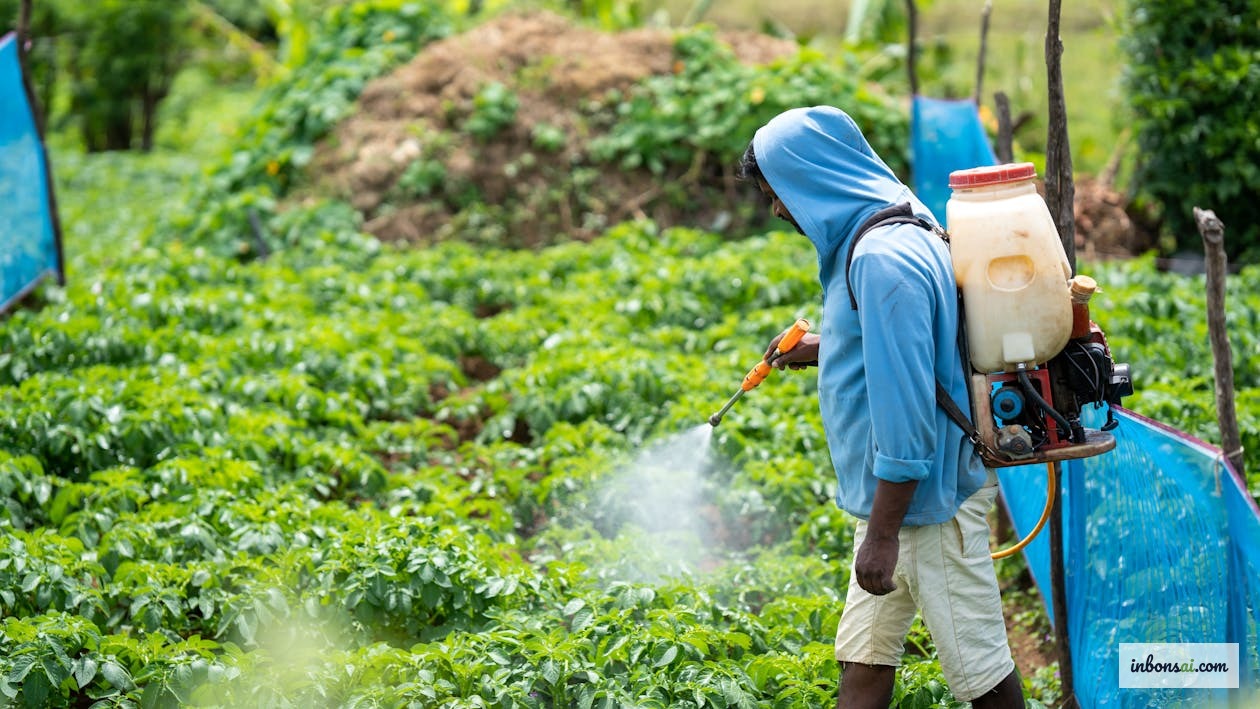
One week before the rainy season begins is the most effective time to spray preventive fungicide — when the spray has not yet been washed away by rain and fungal spores have not yet had a chance to develop.
Preventive sprays before the rainy season:
- Bordeaux mixture (copper-based): highly effective against powdery mildew and leaf spot — dilute 1:200 with clean water, spray evenly on both upper and lower leaf surfaces
- Neem oil: safe, organic, both antifungal and insect-repelling — mix 5 ml/liter of water, spray in the cool morning or evening to avoid leaf scorch
- Mancozeb 80WP: broad-spectrum, effective against many fungal strains — follow label directions, do not exceed the recommended dose
After the first application, repeat every 10–14 days throughout the rainy season. Do not spray when rain is expected or immediately after rainfall — the fungicide will be washed off right away.
Adjusting bonsai placement:
- Water-sensitive species (pine, juniper, cypress, Oriental arborvitae): move under a roof overhang or cover to avoid direct rain, supplement with watering only when the soil dries
- Broad-leaved tropical species (fig, banyan, ficus, bodhi): can be exposed to light rain, but ensure the pot drains well and standing water does not remain on leaves
- Light: All bonsai need at least 4–6 hours of sunlight per day, even indirect light — position trees where they can capture whatever sun breaks through overcast skies
Ongoing monitoring: After completing all preparations, check your trees every 3–4 days throughout the rainy season. Look for: leaf color (premature yellowing signals waterlogging or nutritional deficiency), undersides of leaves (checking for eggs or early fungal development), and soil moisture (push a finger 2–3 cm into the soil — if still damp, do not water).
Thorough preparation before the rainy season takes only 2–3 weekend sessions in April. The payoff is bonsai that enters the rainy season with a healthy root system, an open canopy, and quality soil — ready to absorb Southern Vietnam’s generous rainfall and push into strong, vigorous growth.
Related Posts
How to Prepare Bonsai for the Rainy Season in Southern Vietnam
How to Prevent Bonsai Pests and Diseases in Hot Weather

Bonsai Spring Fertilizing Guide to Boost Growth
Protecting Bonsai in Northern Vietnam's Winter: Full Guide
How to Water Bonsai in Dry Season: Complete Care Guide
Bonsai Care in Rainy Season: Preventing Root Rot

Bonsai Autumn Care: Pruning and Fertilizing Guide